








How to Skip Count by 10 with Patterns Charts and Real Examples
Skip counting is a method of counting a particular number by adding again and again every time to the previous number. This can be forwarded by a number which is greater than 1.
For example, skip counting of 4 then we get as a resultant 4, 8, 12, 16... and so on.
There are two types of skip counting
Forward Skip Counting
Backward Skip Counting
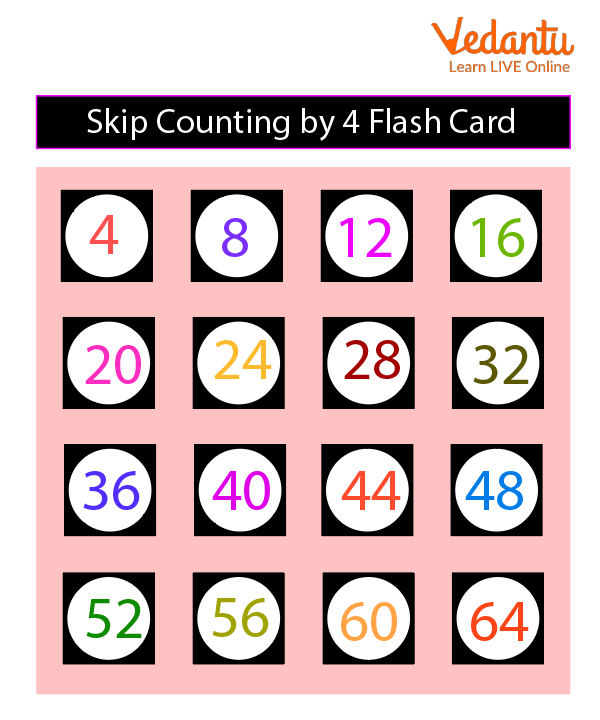
Flash Example
Skip counting is a quick way to count equal groups and a different strategy to introduce learning tables. Skip count is also an important part to get new science about numbers because it helps a student to see different patterns with numbers and learn with fun.
Skip Counting By 10
Skip counting is a process to count a particular number by adding every time to the respective previous number. When we add 10 or tense to again and again to the previous number gives us a particular table of 10. In other words we count by tens the rate that we are adding a number is by a unit of 10. Skip counting by 10 can also mean by adding or subtracting 10 each and every time to the previous number.
The basic concept of escape counting by tens (10) is a unique skill to learn to jump a respective number from counting to the basic addition method. Skip count by 10 is very easy and quick to learn about numbers.
How to Count by 10:
As we know the concept of skip count by 10 is a very quick and easy method. We can count by 10 to the respective types:
Forward Skip Counting by 10: when we use forward skip count, we add numbers to forward direct to a number. We have to follow respective pattern for this method,
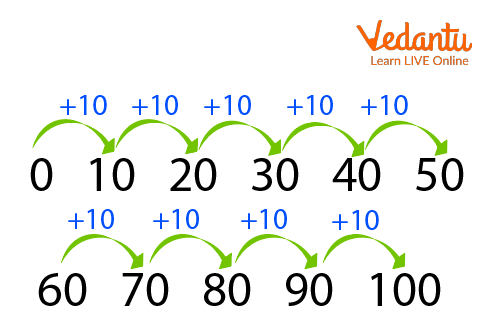
Skip Forwarding by 10.
0+10 = 10
10+10 = 20
20+10 = 30
Backward Skip Counting by 10: when we perform backward skip count we have to subtract 10 from particular numbers,
for example –
100 – 10 = 90
90 – 10 = 80
2 Tens are 20:
In the term of skip counting by 10, tens are adding on 10, the respective answer was 20. In other words, 2 tens are 20, representing that if we are adding 10 to again with 10, we get 20 as a skip account number by 10. We can also say that two times out of 10 is represented as 20.
10 + 10 = 20
2 * 10 =20
Counting by 10s Chart Printable:
This chat will help us to get information about the concept of skip counting by the number 10.
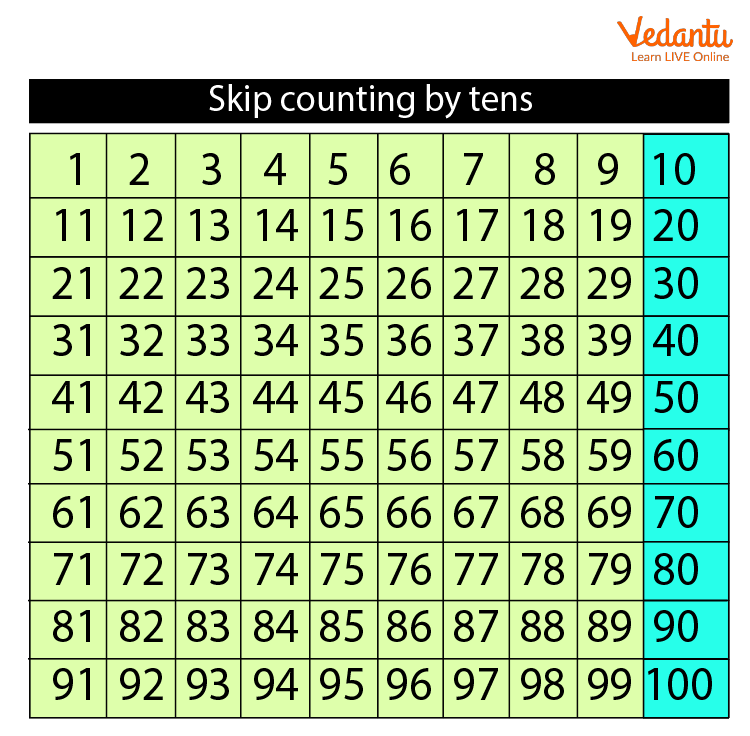
Skip Counting By 10.
Skip Counting By 10 to 100 Worksheet:
This worksheet will help the students to understand the concept of skip counting by 10 to 100.
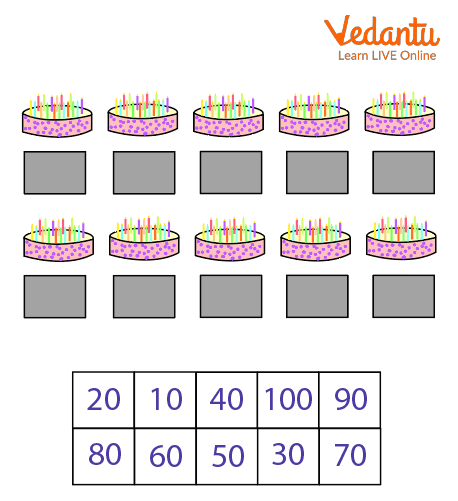
Question of Skip Counting
Ans: 10, 20, 30, 40, 50, 60, 70, 80, 90, 100.
Solved Example
1. Complete the following.
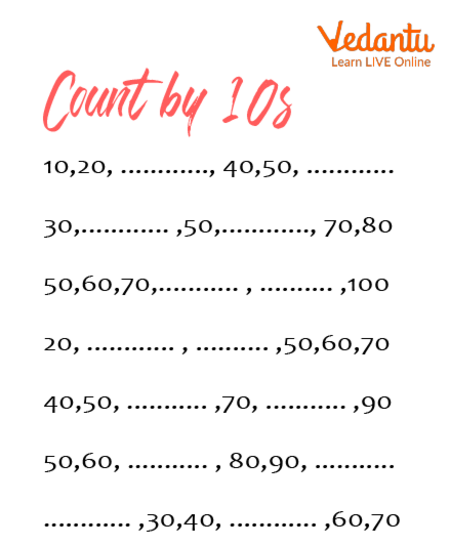
Count By 10
Ans: 30,60
40,60
80,90
30,40
60,80
20,50
Solved Questions
1. Count by 10 and fill in the missing numbers.
Ans: 20, 40, 60, 80, 90 110, 120, 140, 150
2. Count objects in tens and write the numbers in the boxes.
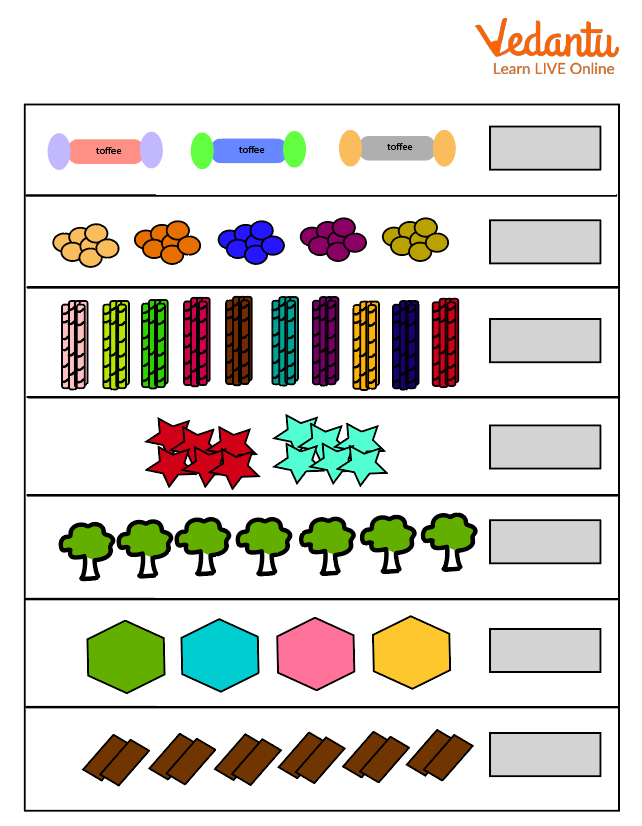
Questions
Ans: 30, 50, 100, 20, 70, 40, 60.
Summary
Skip counting helps every student to count many things very easily and quickly. It also helps to learn multiplication terms as a form of tables. The skip counting helps students to count and learn new things about the number system. This concept also helps the student for basic tasks such as getting information about time or getting knowledge about how to deal with money.
FAQs on Skip Counting By 10 Made Simple for Kids
1. What is skip counting by 10?
Skip counting by 10 means adding 10 to a number repeatedly to get the next number in the sequence. It is a method of counting in equal steps of ten.
- Start at any number (for example, 0 or 5).
- Add 10 each time.
- Example: 0, 10, 20, 30, 40, 50.
2. How do you skip count by 10?
To skip count by 10, keep adding 10 to the previous number in the sequence. Follow these simple steps:
- Choose a starting number.
- Add 10 to get the next number.
- Repeat the process.
3. What are the first 10 numbers when skip counting by 10?
The first 10 numbers when skip counting by 10 from 10 are 10, 20, 30, 40, 50, 60, 70, 80, 90, 100. Each number increases by 10.
- 10 + 10 = 20
- 20 + 10 = 30
- Continue the pattern up to 100.
4. Why is skip counting by 10 important?
Skip counting by 10 is important because it builds understanding of place value and prepares students for multiplication. It helps learners:
- Recognize number patterns.
- Understand the tens place.
- Learn the 10 times table.
5. Is skip counting by 10 the same as multiplying by 10?
Yes, skip counting by 10 is closely related to multiplying by 10. Each step in skip counting represents one more group of 10.
- 10, 20, 30, 40…
- This is the same as 1×10, 2×10, 3×10, 4×10…
6. Can you skip count by 10 starting from any number?
Yes, you can skip count by 10 starting from any number by adding 10 each time. For example:
- Starting at 3: 3, 13, 23, 33, 43.
- Starting at 7: 7, 17, 27, 37, 47.
7. What pattern do you notice when skip counting by 10?
When skip counting by 10, the ones digit stays the same and the tens digit increases by 1 each time. For example:
- 4, 14, 24, 34, 44
8. How does skip counting by 10 help with place value?
Skip counting by 10 helps with place value because each step increases the tens place by 1. For example:
- 20 → 30 → 40 → 50
9. What is an example of skip counting by 10 to 100?
An example of skip counting by 10 to 100 is 0, 10, 20, 30, 40, 50, 60, 70, 80, 90, 100. Each number increases by 10.
- 0 + 10 = 10
- 10 + 10 = 20
- Continue adding 10 until reaching 100.
10. What are common mistakes when skip counting by 10?
A common mistake in skip counting by 10 is forgetting to add exactly 10 each time. Students may:
- Accidentally add 1 instead of 10.
- Change the ones digit incorrectly.
- Skip a number in the pattern.
