









What Is the Shape of a Cuboid Definition Properties Formula and Solved Examples
Take a few moments and look around you. Can you see any object that has the shape of a rectangular box? This can be anything from a book to a box to a piece of furniture. This type of shape is called a cuboid, and it is the most common shape that we see in the world around us.
So, here we have provided some images of cuboid-shaped objects or examples of cuboids to demonstrate what the shape of a cuboid looks like. But before that, explore the definition and properties of a cuboid.
So, let’s start with the definition of a cuboid.
What Is a Cuboid?
A cuboid can be defined as a three-dimensional solid shape that has 12 edges, 8 vertices, and 6 faces and each of its faces is rectangular in shape. In a cuboid, all the angles formed are right angles. Three dimensions of a cuboid are length, width, and height.
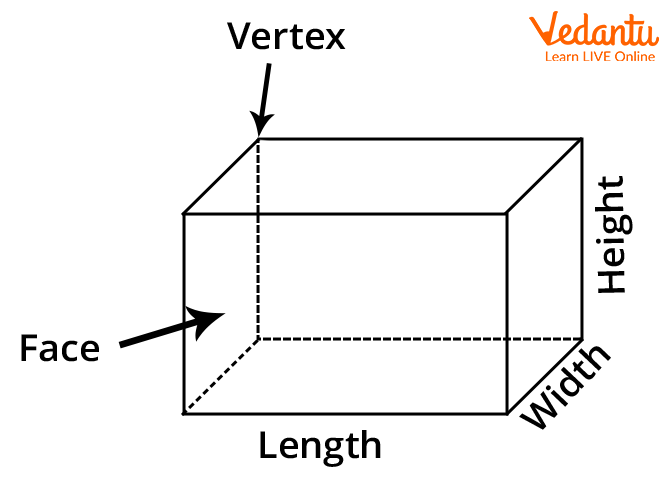
A Cuboid
We can see from the above image that the shape of a cuboid is formed when many congruent rectangles are placed one on top of the other.
Now, let’s learn the properties of a cuboid.
Properties of a Cuboid
The key properties of a cuboid help us to recognise a cuboid shape effortlessly. The properties are as follows:
All cuboids have six faces, eight vertices, and twelve edges.
All cuboids are three-dimensional; so, the dimensions are height, length, and width.
The sides of all the cuboids are rectangular in shape.
In a cuboid, all the angles formed are right angles.
All the faces are rectangular in shape.
In the cuboids, all the opposite edges are parallel to each other.
Often, a cube is confused with a cuboid as they share the same properties but they are different from each other. The main difference between a cube and a cuboid is the shape of their faces. A cuboid has 6 faces that are all rectangles while a cube has 6 square-shaped faces, such as dice.
Now, let’s find out what the shape of a cuboid looks like using some real-life examples.
A Few Real-life Examples of Cuboids
We have created a list of some real-life examples of cuboids. Check out the list and see whether you can find any of these when you’re out and try to see if you have got your own to add.
Buildings: When you walk around a town or city, look at the buildings. You will notice that a lot of them are in the shape of cuboids.
Boxes: When you walk around the supermarket, getting some new shoes or unwrapping a present, look at the boxes. You will notice that a lot of the boxes are in cuboid shape.
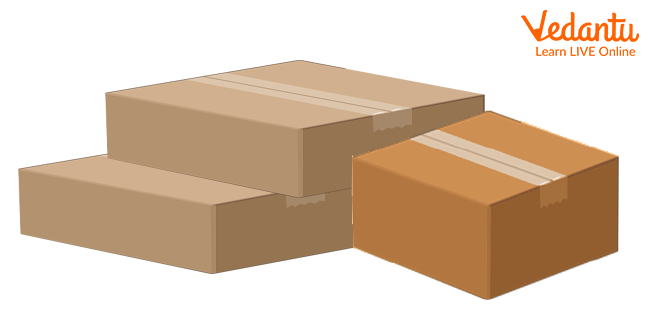
Cuboid Boxes
Books: The most common example of a cuboid is a book. So, the next time you are in the library, check whether you can find any books that are not in cuboid shape.

Books that are Cuboid-Shaped
Mattresses: You can easily observe the cuboid-shaped objects used in real life by looking at the shape of mattresses.
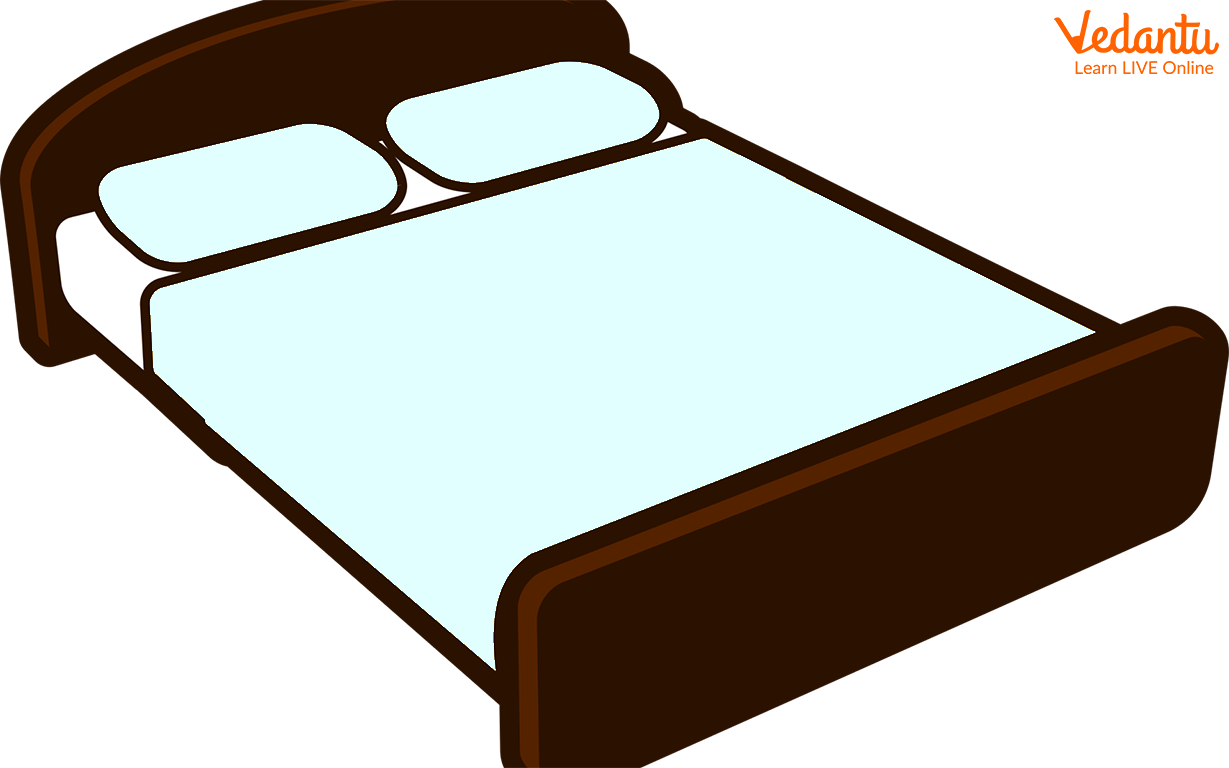
A Cuboid-Shaped Mattress
Tissue Box: Tissue boxes are cuboid-shaped containers to hold tissue papers.

A Tissue Box is Cuboid Shaped
Refrigerator: Refrigerators are another example of cuboid-shaped objects that are used in real life.
Fun Quiz!
From the below list, find out the object which is not a cuboid.
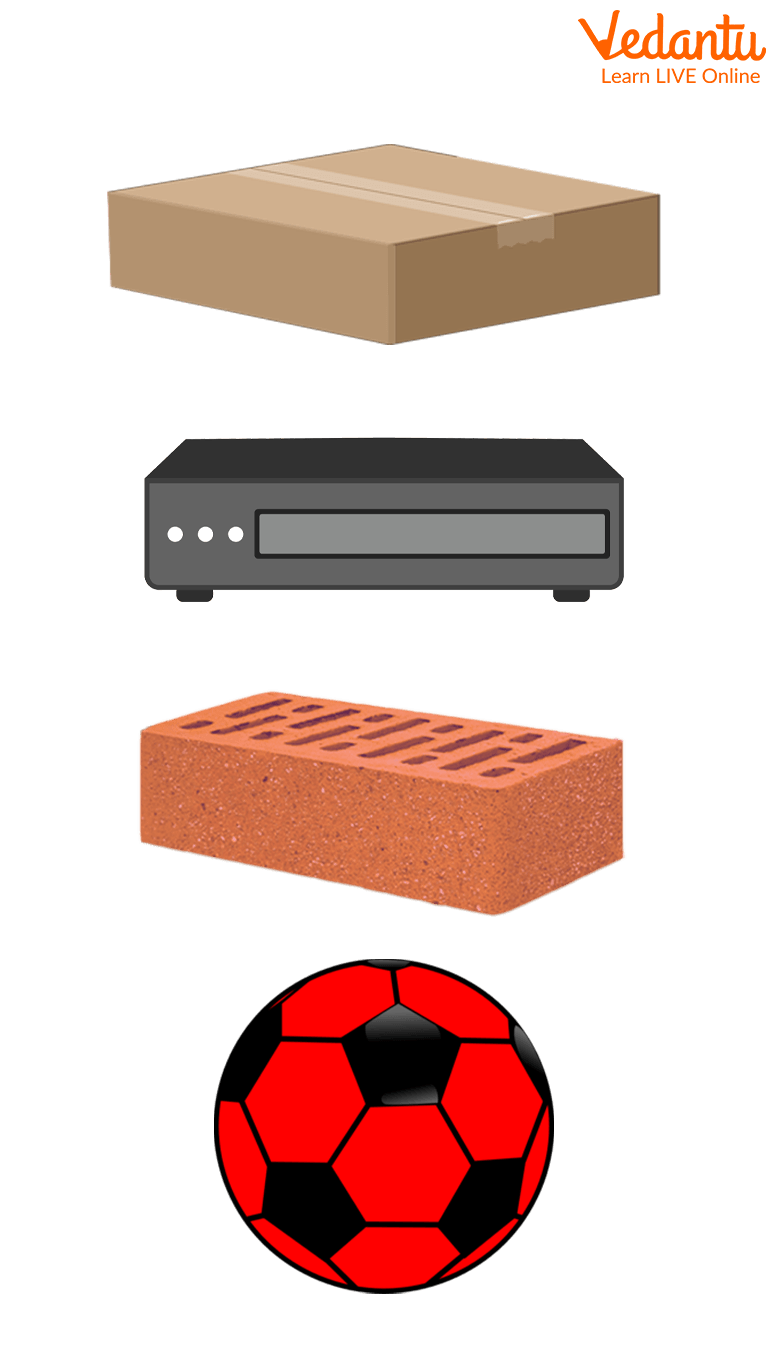
The Red Ball
Ans. The red ball. It is spherical in shape.
We hope that it is clear to you what the shape of a cuboid looks like. We have also provided some examples of a cuboid. Additionally, we hope to have helped you learn about the properties of a cuboid which are helpful while studying geometry.
FAQs on Shape of Cuboid in Geometry with Definition and Visual Understanding
1. What is the shape of a cuboid?
A cuboid is a three-dimensional solid shape with six rectangular faces, twelve edges, and eight vertices. It is also called a rectangular prism.
- All faces of a cuboid are rectangles.
- Opposite faces are equal and parallel.
- All angles are right angles (90°).
2. What are the properties of a cuboid?
A cuboid has 6 rectangular faces, 12 edges, and 8 vertices with all angles equal to 90°. Its key properties include:
- Opposite faces are equal and parallel.
- Opposite edges are equal in length.
- All interior angles are right angles.
- It has three dimensions: length, breadth, and height.
3. What is the formula for the volume of a cuboid?
The volume of a cuboid is calculated using the formula V = l × b × h. Here:
- l = length
- b = breadth (width)
- h = height
4. What is the surface area of a cuboid?
The total surface area of a cuboid is given by 2(lb + bh + hl). This formula adds the areas of all six rectangular faces.
- Area of top and bottom = 2(lb)
- Area of front and back = 2(bh)
- Area of left and right = 2(hl)
5. How many edges, faces, and vertices does a cuboid have?
A cuboid has 6 faces, 12 edges, and 8 vertices. Specifically:
- 6 rectangular faces
- 12 line segment edges
- 8 corner points (vertices)
6. What is the difference between a cube and a cuboid?
The main difference is that a cube has all sides equal, while a cuboid has rectangular faces with possibly different lengths, breadths, and heights.
- Cube: l = b = h and all faces are squares.
- Cuboid: l, b, and h may be different and faces are rectangles.
7. How do you find the diagonal of a cuboid?
The space diagonal of a cuboid is calculated using the formula d = √(l² + b² + h²). Steps:
- Square the length, breadth, and height.
- Add them together.
- Take the square root of the sum.
8. Is a cuboid a three-dimensional shape?
Yes, a cuboid is a three-dimensional (3D) shape because it has length, breadth, and height. Unlike 2D shapes such as rectangles, a cuboid occupies space and has volume.
- It has measurable volume.
- It has six rectangular faces.
- It exists in three dimensions.
9. What are some real-life examples of a cuboid?
Common real-life examples of a cuboid include objects shaped like rectangular boxes. Examples:
- Books
- Bricks
- Matchboxes
- Shipping boxes
- Classroom chalk boxes
10. How do you draw a cuboid?
To draw a cuboid, start by sketching a rectangle and then extend it to show depth. Follow these steps:
- Draw a rectangle for the front face.
- Draw a second rectangle slightly shifted behind it.
- Join corresponding corners with straight lines.
