






World Milk Day 2026: History and Importance
World Milk Day 2026 will be celebrated on Monday, June 1, 2026, to recognise the importance of milk as a global food and to highlight the contribution of the dairy sector to nutrition, livelihoods, agriculture and sustainable development. Observed every year on June 1, world milk day spreads awareness about the nutritional value of milk and honours the efforts of dairy farmers who support food systems across the world.
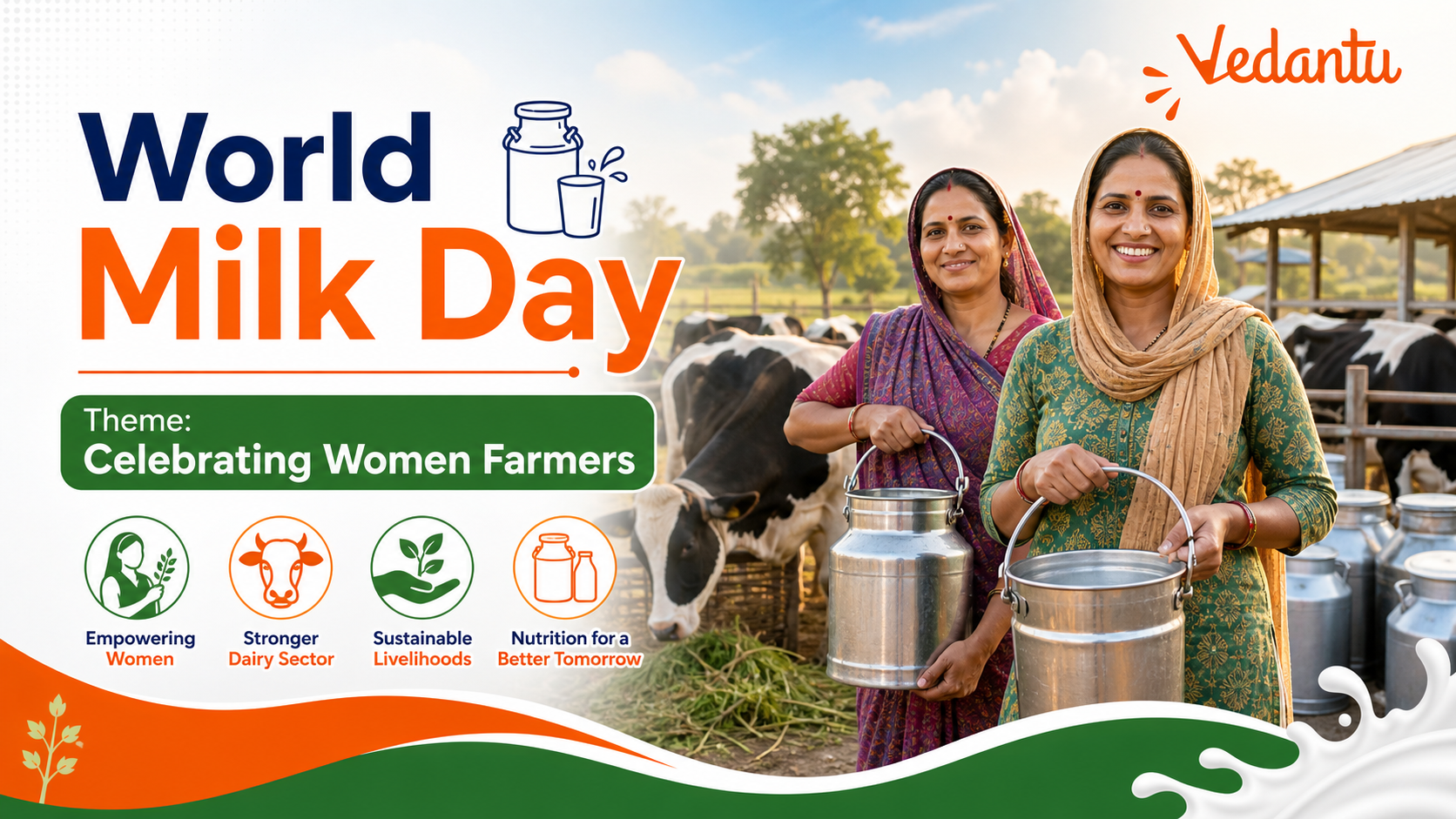
The world milk day 2026 theme is “Celebrating Women Farmers.” This theme focuses on the vital role played by women in dairy farming and aligns with the global effort to recognise women’s contribution to agriculture, rural livelihoods and food security.
World Milk Day 2026 Highlights
What is World Milk Day?
World Milk Day is a global observance started by the Food and Agriculture Organization of the United Nations in 2001. It was created to provide a common platform for countries to celebrate milk and recognise its importance in daily nutrition, food security and economic development.
The date June 1 was selected because many countries were already holding milk-related celebrations around this time. Since then, the day has grown into a global awareness campaign involving governments, schools, dairy organisations, farmers, nutritionists and consumers.
World Milk Day 2026 Theme
The world milk day theme 2026 is:
“Celebrating Women Farmers”
The theme recognises the important role women play in the dairy sector worldwide. Women are deeply involved in dairy farming, animal care, milk production, rural entrepreneurship and family nutrition. The campaign highlights their contribution to sustainable agriculture, economic growth and food systems.
The world milk day 2026 theme also aligns with the broader global focus on women farmers and their role in building stronger and more inclusive agricultural communities.
Why the 2026 Theme is Important
The theme “Celebrating Women Farmers” is important because women are a major part of the dairy workforce across the world.
Key Focus Areas Include:
Recognising women’s contribution to dairy farming
Supporting rural women’s livelihoods
Encouraging women empowerment in agriculture
Promoting sustainable dairy practices
Highlighting the role of women in providing nutritious food
Strengthening economic participation in rural areas
More than 80 million women are associated with dairy farming worldwide, making their contribution central to the growth of the dairy sector.
History of World Milk Day
World Milk Day was launched by the FAO in 2001 to celebrate milk as an important global food. It was designed to bring attention to the nutritional, social and economic value of milk.
Key Historical Facts:
Over time, World Milk Day has become an important observance for spreading awareness about nutrition, sustainable dairy farming and the role of farmers in global food supply.
Importance of World Milk Day
World Milk Day is important because it connects health, agriculture, economy and sustainable development. It reminds people that milk is not only a daily food item but also a source of livelihood for millions of families.
1. Nutritional Importance
Milk is considered a nutrient-rich food because it provides essential nutrients needed for growth and health.
Milk contains:
Calcium for strong bones and teeth
High-quality protein for muscle growth
Vitamin D for bone health
Vitamin B12 for body functions
Riboflavin for energy metabolism
Phosphorus and potassium for overall health
For students, children and young adults, milk supports growth, strength and balanced nutrition.
2. Economic Importance
The dairy sector supports millions of people across the world. It creates income opportunities for farmers, workers, transporters, cooperatives and dairy businesses.
World Milk Day highlights how dairy farming:
Provides livelihood to dairy farmers
Supports rural employment
Contributes to national economies
Encourages women empowerment
Strengthens rural development
3. Agricultural and Sustainability Importance
The day also promotes sustainable dairy farming practices. It encourages responsible production methods that support farmers while protecting the environment.
Sustainable dairy focuses on:
Better animal care
Efficient resource use
Climate-friendly practices
Farmer welfare
Long-term food security
World Milk Day in India
India is the largest milk producer in the world, making World Milk Day 2026 highly relevant for Indian students and readers. Dairy farming is a major part of India’s rural economy and supports millions of small farmers.
India’s dairy sector is also closely linked with cooperatives such as Amul, which have played an important role in strengthening milk production, farmer income and dairy awareness.
In India, World Milk Day is often observed through:
School awareness programmes
Dairy cooperative events
Nutrition campaigns
Poster-making competitions
Essay-writing activities
Milk distribution drives
How World Milk Day is Celebrated
World Milk Day is celebrated in schools, colleges, communities, dairy farms and public institutions through educational and awareness-based activities.
Common Celebration Activities Include:
Awareness campaigns about the benefits of milk
Quiz competitions for students
Poster-making and drawing competitions
Essay writing on milk and nutrition
Dairy farm visits
Workshops on sustainable dairy farming
Milk distribution drives
Social media campaigns using #WorldMilkDay and #EnjoyDairy
These activities help people understand the value of milk in health, farming and society.
World Milk Day 2026 Celebration Ideas for Students
Students can celebrate World Milk Day 2026 in creative and educational ways.
Ideas for schools and students:
Create a poster on the importance of milk
Write an essay on World Milk Day
Prepare a chart on nutrients present in milk
Conduct a quiz on dairy farming and nutrition
Organise a speech competition on women farmers
Make a project on India’s dairy sector
Share awareness messages about balanced diets
Since the world milk day 2026 theme is Celebrating Women Farmers, students can also prepare content highlighting the role of women in dairy farming and rural development.
Major Milk Producing Countries
Relevance of World Milk Day for Competitive Exams
World Milk Day is useful for general knowledge, current affairs and competitive exam preparation.
Students preparing for exams like UPSC, SSC, State PSC and other government exams should remember:
World Milk Day date: June 1
Started by: FAO
First celebrated: 2001
World Milk Day 2026 theme: Celebrating Women Farmers
India’s role: Largest milk producer
Focus areas: Nutrition, dairy sector, farmers and sustainable development
For NEET and science students, the topic is also useful for understanding balanced diet, nutrition and human health.
Key Facts About World Milk Day 2026
Conclusion
World Milk Day 2026 is a global celebration of milk, nutrition, dairy farmers and sustainable agriculture. With the theme “Celebrating Women Farmers,” the day highlights the contribution of women in dairy farming and recognises their role in feeding communities, supporting rural economies and strengthening the dairy sector.
World Milk Day reminds us that milk is not just a daily food item. It is connected to health, farming, livelihoods, women empowerment and sustainable development.
FAQs on World Milk Day 2026: Theme, Date, Significance and Celebration
1. What is World Milk Day?
World Milk Day is celebrated every year on June 1 to recognise the importance of milk and the contribution of the dairy sector to nutrition, livelihoods and sustainable development.
2. When is World Milk Day 2026?
World Milk Day 2026 will be celebrated on Monday, June 1, 2026.
3. What is the World Milk Day 2026 theme?
The world milk day 2026 theme is “Celebrating Women Farmers.”
4. Who started World Milk Day?
World Milk Day was started by the Food and Agriculture Organization of the United Nations in 2001.
5. Why is World Milk Day celebrated?
It is celebrated to spread awareness about the nutritional value of milk, support dairy farmers and highlight the importance of sustainable dairy farming.
6. Why is the World Milk Day theme 2026 important?
The world milk day theme 2026 is important because it recognises the role of women farmers in dairy farming, nutrition, rural livelihoods and sustainable agriculture.
7. How is World Milk Day celebrated?
It is celebrated through awareness campaigns, school competitions, dairy events, milk distribution drives and social media campaigns.
8. Why is milk important for students?
Milk provides calcium, protein, vitamins and minerals that support growth, strong bones, muscle development and overall health.
9. Which country is the largest producer of milk?
India is the largest producer of milk in the world.
10. What hashtags are used for World Milk Day 2026?
Common hashtags include #WorldMilkDay and #EnjoyDairy.
