






Why the International Day for Biological Diversity Is Celebrated Worldwide
International Day for Biodiversity is observed every year on 22 May to raise awareness about the importance of biodiversity and the need to conserve it. Biodiversity refers to the variety of life on Earth including plants, animals, microorganisms, and the ecosystems they form. This day highlights the role of biodiversity in sustaining life, supporting economies, and maintaining ecological balance. It is an important topic for students, competitive exams, and environmental studies.
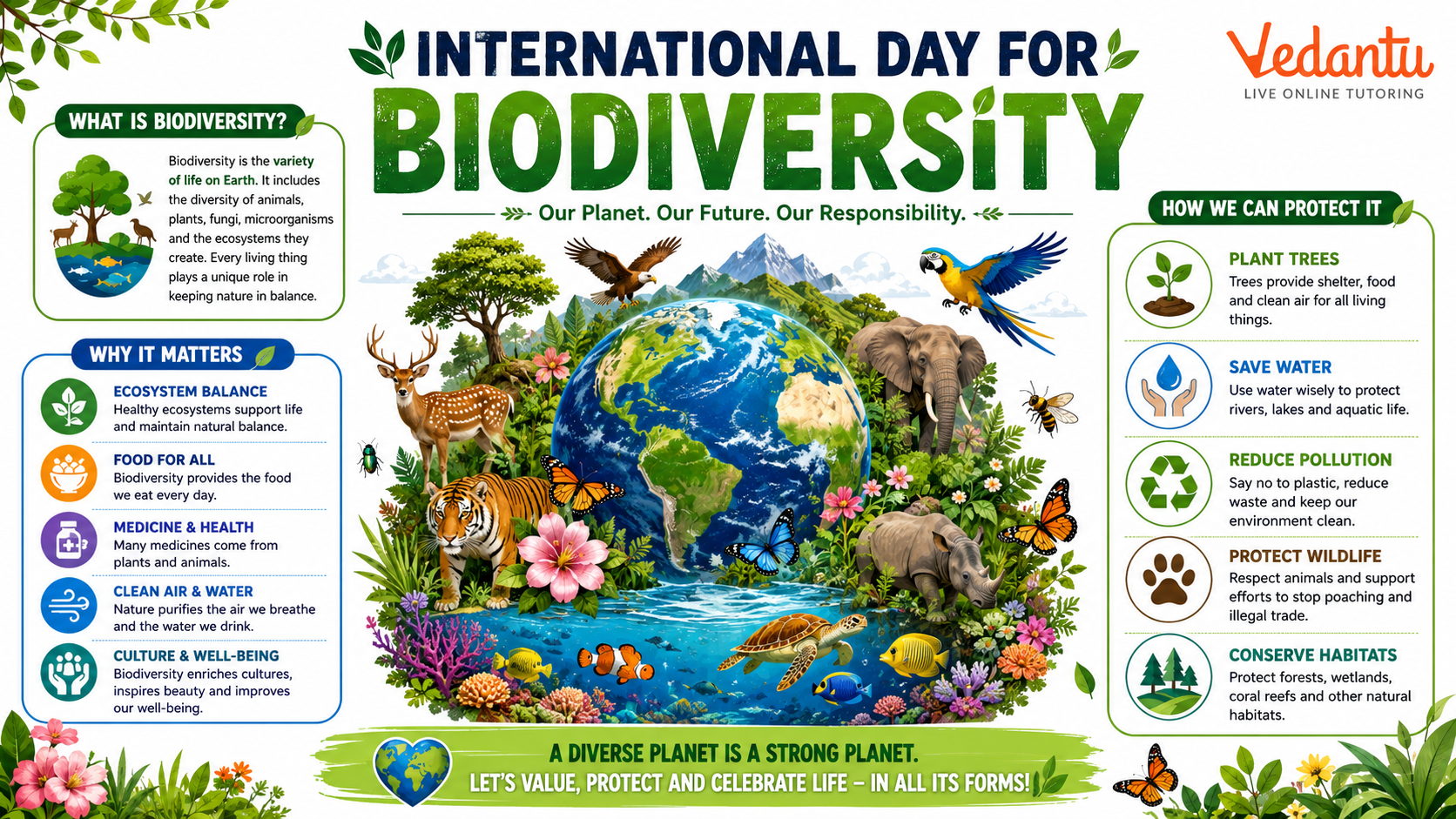
What is Biodiversity?
Biodiversity is the variety and variability of living organisms on Earth. It includes diversity within species, between species, and of ecosystems. Biodiversity ensures natural sustainability for all life forms and provides resources such as food, medicine, and raw materials.
Types of Biodiversity
- Genetic Diversity - Variation in genes within a species.
- Species Diversity - Variety of species within a habitat or region.
- Ecosystem Diversity - Variety of ecosystems such as forests, deserts, wetlands, and oceans.
History of International Day for Biodiversity
The United Nations proclaimed 22 May as the International Day for Biological Diversity to increase understanding and awareness of biodiversity issues. The date marks the adoption of the Convention on Biological Diversity in 1992. Initially, the day was observed on 29 December, but in 2000, it was shifted to 22 May to commemorate the adoption of the Convention.
Objectives of International Day for Biodiversity
- To spread awareness about biodiversity conservation.
- To promote sustainable use of natural resources.
- To highlight threats such as climate change, pollution, and habitat loss.
- To encourage global cooperation for environmental protection.
Key Facts About International Day for Biodiversity
| Aspect | Details | Year |
|---|---|---|
| Date Observed | 22 May | Every Year |
| Declared By | United Nations | 1993 |
| Related Convention | Convention on Biological Diversity | 1992 |
The table above summarizes important facts related to International Day for Biodiversity that are frequently asked in general knowledge and competitive examinations.
Importance of Biodiversity
Biodiversity is essential for maintaining ecological balance and supporting life on Earth. Healthy ecosystems provide services such as pollination, climate regulation, soil fertility, and water purification. Biodiversity also contributes to cultural values, recreation, and scientific research.
- Ensures food security and nutrition.
- Provides medicinal resources.
- Supports livelihoods and economies.
- Maintains environmental stability.
Major Threats to Biodiversity
Despite its importance, biodiversity is declining at an alarming rate due to human activities. Conservation efforts are necessary to protect ecosystems and species from extinction.
- Deforestation and habitat destruction.
- Climate change and global warming.
- Pollution of air, water, and soil.
- Overexploitation of natural resources.
- Invasive species.
How is International Day for Biodiversity Celebrated?
The day is celebrated worldwide through educational programs, seminars, workshops, tree plantation drives, and awareness campaigns. Schools and colleges organize competitions, debates, and exhibitions to educate students about biodiversity conservation.
- Organizing awareness rallies and campaigns.
- Conducting workshops and seminars.
- Promoting sustainable practices.
- Encouraging community participation in conservation efforts.
Relevance for Competitive Exams
International Day for Biodiversity is an important topic for general knowledge, UPSC, SSC, state PSC exams, and school examinations. Questions may be asked about the date, theme, related conventions, and objectives. Students should also understand the concept of biodiversity and its significance.
Conclusion
International Day for Biodiversity reminds us of our responsibility to protect the rich variety of life on Earth. Conserving biodiversity ensures sustainable development and a healthy planet for future generations. By understanding its importance and taking small conservation steps, individuals can contribute to preserving nature and maintaining ecological balance.
FAQs on International Day for Biological Diversity: History, Theme and Significance
1. What is International Day for Biodiversity?
The International Day for Biodiversity (IDB) is a global awareness day observed to promote the protection of biological diversity and sustainable use of natural resources.
• Celebrated annually on 22 May
• Proclaimed by the United Nations (UN)
• Highlights the importance of ecosystems, wildlife, and conservation
• Raises awareness about issues like climate change, habitat loss, and species extinction
2. Why is International Day for Biodiversity celebrated on 22 May?
The date 22 May marks the adoption of the Convention on Biological Diversity (CBD) in 1992.
• Adopted at the Rio Earth Summit
• Focuses on conservation of biodiversity
• Promotes sustainable development
• Ensures fair sharing of genetic resources benefits
3. What is biodiversity?
Biodiversity refers to the variety of life forms on Earth, including plants, animals, and microorganisms.
• Includes genetic diversity (variety within species)
• Includes species diversity (variety of species)
• Includes ecosystem diversity (variety of habitats like forests, oceans, wetlands)
• Essential for ecological balance and human survival
4. What is the theme of International Day for Biodiversity?
Each year, the United Nations announces a specific theme for International Day for Biodiversity to focus on key environmental challenges.
• Themes highlight topics like ecosystem restoration, sustainable living, and climate action
• Encourages global participation in biodiversity conservation
• Connects biodiversity with Sustainable Development Goals (SDGs)
5. Why is biodiversity important for humans?
Biodiversity is essential for human well-being and sustainable development.
• Provides food, medicine, and raw materials
• Maintains clean air and water
• Supports pollination and agriculture
• Helps fight climate change and natural disasters
6. What are the main threats to biodiversity?
Biodiversity faces serious threats due to human activities and environmental changes.
• Deforestation and habitat destruction
• Climate change and global warming
• Pollution of land, water, and air
• Overexploitation of wildlife and natural resources
• Invasive species
7. What is the Convention on Biological Diversity (CBD)?
The Convention on Biological Diversity (CBD) is an international treaty aimed at conserving biodiversity.
• Signed at the 1992 Earth Summit in Rio de Janeiro
• Has three main goals: conservation, sustainable use, and fair benefit sharing
• Supported by many countries worldwide
• Promotes global cooperation in environmental protection
8. How can students help in biodiversity conservation?
Students can actively contribute to biodiversity conservation through simple daily actions.
• Plant trees and protect local wildlife
• Reduce plastic use and recycle waste
• Participate in environmental awareness campaigns
• Support sustainable and eco-friendly practices
9. What is the difference between biodiversity conservation and sustainable development?
Biodiversity conservation focuses on protecting species and ecosystems, while sustainable development ensures meeting present needs without harming future generations.
• Conservation protects natural habitats and wildlife
• Sustainable development balances economic growth and environment
• Both support long-term ecological stability
10. How is International Day for Biodiversity celebrated worldwide?
International Day for Biodiversity is celebrated through global awareness and conservation activities.
• Educational seminars and workshops
• Tree plantation drives and eco-campaigns
• Social media awareness programs
• Government and NGO initiatives promoting environmental protection
