






Amazing Liver Functions and How to Keep Your Liver Healthy
The liver is one of the most vital organs in the human body. It plays a central role in digestion, metabolism, detoxification, and storage of nutrients. Located in the upper right side of the abdomen, the liver is the largest internal organ and the only organ that can regenerate itself. Understanding important facts about the liver is essential for students preparing for competitive exams like NEET, as well as for general awareness about human health and body functions.
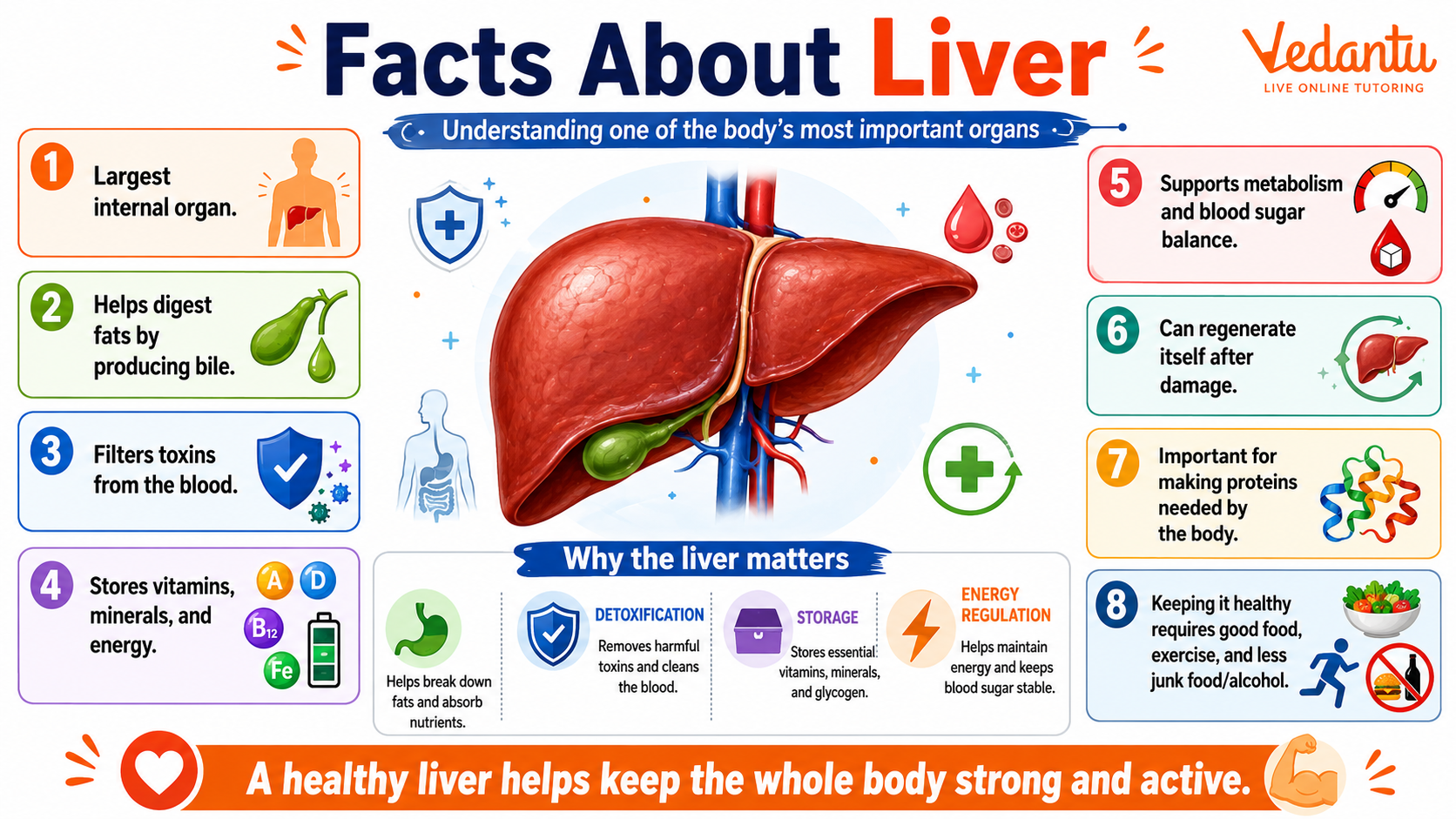
Basic Facts About Liver
- The liver is the largest gland in the human body.
- It weighs about 1.2 to 1.5 kilograms in adults.
- It is located in the upper right part of the abdominal cavity, just below the diaphragm.
- The liver has two main lobes - right lobe and left lobe.
- It receives blood from two sources - hepatic artery and portal vein.
- The liver can regenerate damaged tissue naturally.
Structure of the Liver
The liver is a reddish-brown organ with a soft and spongy texture. It is divided into functional units called lobules. Each lobule contains liver cells known as hepatocytes, which perform most of the liver's metabolic functions. The liver is covered by a thin capsule called Glisson's capsule.
Main Structural Components
- Hepatocytes - Main functional cells responsible for metabolism and detoxification.
- Hepatic artery - Supplies oxygenated blood to the liver.
- Portal vein - Brings nutrient-rich blood from the digestive tract.
- Bile ducts - Transport bile produced by the liver.
Functions of the Liver
The liver performs more than 500 vital functions in the body. It acts as a chemical factory that processes nutrients, detoxifies harmful substances, and maintains metabolic balance.
Major Functions
- Production of bile for digestion of fats.
- Metabolism of carbohydrates, proteins, and fats.
- Storage of glycogen, vitamins A, D, E, K, and B12.
- Detoxification of drugs, alcohol, and harmful chemicals.
- Synthesis of plasma proteins such as albumin and clotting factors.
- Regulation of blood sugar levels.
Quick Facts Table About Liver
| Feature | Detail | Importance |
|---|---|---|
| Largest Gland | Yes | Controls metabolism |
| Average Weight | 1.2 to 1.5 kg | Indicates organ health |
| Regeneration | High ability | Recovers after injury |
These quick facts are important for NEET and other competitive exams as questions often test knowledge of organ size, function, and unique features like regeneration.
Interesting Facts About Liver
- The liver can regenerate up to 75 percent of its tissue if damaged.
- It filters about 1.4 liters of blood per minute.
- Bile produced by the liver helps in fat digestion and absorption of fat-soluble vitamins.
- The liver plays a key role in removing ammonia by converting it into urea.
- It helps in maintaining body temperature by regulating metabolism.
Common Liver Disorders
Understanding liver diseases is important for medical entrance exams. Damage to the liver can affect the entire body due to its central metabolic role.
- Hepatitis - Inflammation of the liver caused by viruses, alcohol, or toxins.
- Cirrhosis - Scarring of liver tissue due to long-term damage.
- Fatty Liver Disease - Excess fat accumulation in liver cells.
- Liver Cancer - Uncontrolled growth of abnormal liver cells.
Why Liver is Important for NEET Preparation
In NEET Biology, the liver is frequently discussed under the chapter of Human Physiology, especially in digestion and metabolism. Students should remember its structure, blood supply, bile production, and detoxification functions. Questions may include matching functions, identifying structures, and understanding metabolic pathways related to the liver.
Preparation Tips
- Revise liver functions along with digestive system diagrams.
- Memorize blood supply - hepatic artery and portal vein.
- Understand bile production and its role in fat digestion.
- Practice previous year NEET questions related to liver physiology.
Conclusion
The liver is a multifunctional organ essential for survival. From digestion and metabolism to detoxification and storage, it supports nearly every system in the body. Learning detailed facts about the liver not only strengthens conceptual understanding for NEET and other exams but also builds awareness about maintaining liver health. A strong grasp of liver structure and function is fundamental for mastering human physiology.
FAQs on Facts About the Liver Every Student Should Know
1. What is the liver and what does it do?
The liver is a vital organ that performs more than 500 essential functions to keep the body healthy.
- It helps in digestion by producing bile.
- It removes toxins and harmful substances from the blood (detoxification).
- It stores vitamins, minerals, and glycogen.
- It produces important proteins and enzymes for blood clotting and metabolism.
The liver is the largest internal organ and plays a key role in metabolism, filtration, and energy regulation.
2. Where is the liver located in the human body?
The liver is located in the upper right side of the abdomen, just below the diaphragm.
- It lies above the stomach and next to the gallbladder.
- It is protected by the lower ribs.
- It occupies a major portion of the right upper quadrant of the abdominal cavity.
This location helps the liver efficiently process nutrients absorbed from the digestive system.
3. Why is the liver called the largest internal organ?
The liver is called the largest internal organ because of its size and weight compared to other organs inside the body.
- It weighs about 1.2 to 1.5 kilograms in adults.
- It is larger than the brain, heart, and kidneys.
- It performs hundreds of biochemical functions essential for survival.
Its large size supports its complex roles in metabolism, digestion, and detoxification.
4. What are the main functions of the liver?
The main functions of the liver include digestion, detoxification, and nutrient storage.
- Produces bile juice to break down fats.
- Filters and removes toxins, drugs, and alcohol from the blood.
- Regulates blood sugar levels by storing glycogen.
- Produces clotting factors and essential proteins.
These vital liver functions maintain overall body balance and metabolic health.
5. Can the liver regenerate itself?
Yes, the liver has the unique ability to regenerate damaged tissue.
- It can regrow to its normal size even after partial surgical removal.
- Healthy liver cells multiply to replace damaged cells.
- Regeneration depends on avoiding continuous damage like alcohol abuse or infection.
This regenerative capacity makes the liver one of the most remarkable organs in the human body.
6. What are common liver diseases?
Common liver diseases affect its ability to function properly.
- Hepatitis (viral infection causing inflammation).
- Fatty liver disease (fat accumulation in liver cells).
- Cirrhosis (scarring of liver tissue).
- Liver cancer (malignant growth in liver cells).
Early diagnosis and healthy lifestyle choices help prevent serious liver complications.
7. What are the symptoms of liver problems?
Symptoms of liver problems often indicate impaired liver function.
- Jaundice (yellowing of skin and eyes).
- Abdominal pain or swelling.
- Dark urine and pale stools.
- Fatigue and nausea.
Recognizing early signs of liver disease helps in timely medical treatment and prevention of severe damage.
8. How does the liver help in digestion?
The liver helps in digestion by producing bile, a digestive fluid that breaks down fats.
- Bile is stored in the gallbladder.
- It emulsifies fats for easier absorption in the small intestine.
- It aids in the absorption of fat-soluble vitamins (A, D, E, K).
This digestive role makes the liver essential for proper nutrient absorption and metabolism.
9. How can we keep the liver healthy?
Maintaining a healthy lifestyle is the best way to protect the liver.
- Eat a balanced diet rich in fruits and vegetables.
- Avoid excessive alcohol consumption.
- Get vaccinated against Hepatitis A and B.
- Exercise regularly and maintain a healthy weight.
These preventive measures reduce the risk of liver disease and support optimal liver function.
10. Why is the liver important for blood purification?
The liver is crucial for blood purification because it filters harmful substances from the bloodstream.
- It removes toxins, drugs, and metabolic waste.
- It converts ammonia into less harmful urea.
- It processes chemicals before they circulate in the body.
This detoxification process ensures clean blood circulation and protects vital organs from damage.
