







Best Reading Activities for Year 2 Students with Examples and Classroom Ideas
Reading helps one to know about the places unvisited, the things unknown, the languages unheard, the people unseen, and the world beyond. Hence, it is preferable to cultivate the habit of reading among kids from an early age so that they can become incisive readers effortlessly. Various interesting reading activities, like guided reading sessions, using voice modulation while narrating stories, etc., make the task easier to instil the essence of reading into the young minds of kids in year 2. So, here’s a list of five top reading activities year 2 kids are likely to be fond of.
Read and Listen
Read out stories, poems, or any piece of text to your child every day to normalise reading as a daily activity. To encourage reading activities among year 2 kids, it is preferable to read out stories or poems that have dialogue. This type of reading material will provide you with more scope of voice modulation that amuses young kids. Once your kids are comfortable with you reading out various stories or poems every day, give them their turn to read. It is important to listen to them when they read out a text, for several reasons.
For example, if you choose to read out a dialogue between two speakers, read out the dialogues of speaker 1 and let your child read out the dialogues of speaker 2. When you listen to your child reading out the text, try to infer how he pronounces the syllables, whether he modulates his voice and follows the punctuations and the other minute details.
Make Your Own Small Reading Club at Home
The best way to encourage your child for reading is to read with them. Make your very own reading club, with your children. When your kids will watch you enjoy reading as a leisure activity, they are more likely to be inclined to take interest in books. Instead of instructing them to read their books, make it a trend where you also sit with them and read a book. You may also invite their friends to your reading club so that they can look forward to reading as a fun activity.
To make your reading club full of interaction, make them discuss the stories or poems that they read. At the end of each session at your very own reading club, make sure that the kids get an opportunity to discuss what they read. This way they can get an insight of what the others have read and they may become interested in the other books.
Exploring Libraries and Book Shops
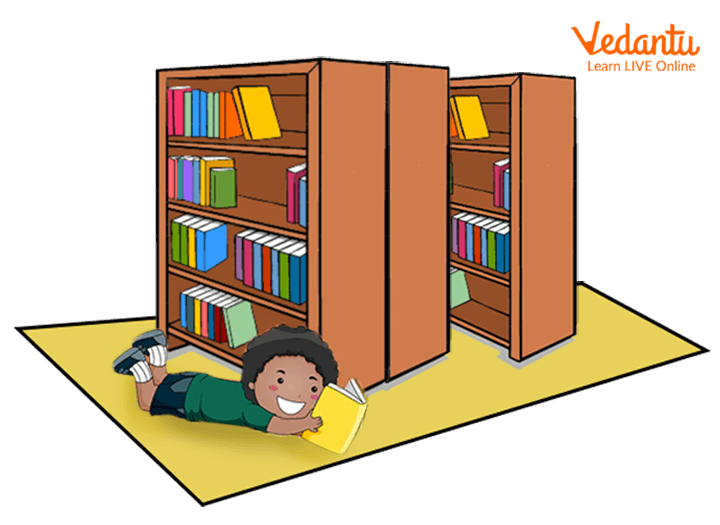
Image of a Library
Before introducing any reading activities in year 2, let your kids cherish and enjoy the company of books. Year 2 kids are way too young to understand the significance of subjects or genres of books, so take the first step to let them explore books. You may take your kids to a local library and tell them how it works there. Walk them through the aisles of bookshelves at a library or a bookshop and explain how books are categorised there. Let them read a few pages of a book at the library or a bookshop. This will let them develop a better insight into books so that they can choose their own books.
Guided Reading Sessions
As kids have a very short attention span, it is important to keep them happily engaged while reading any text. The guided reading sessions are just what you need to induce interest in reading among your kids. During these sessions, kids are provided a piece of text for reading along with a set of questions. The teacher who conducts a guided reading session asks these questions to the kids so as to encourage them to read with more concentration and find the required information in the text.
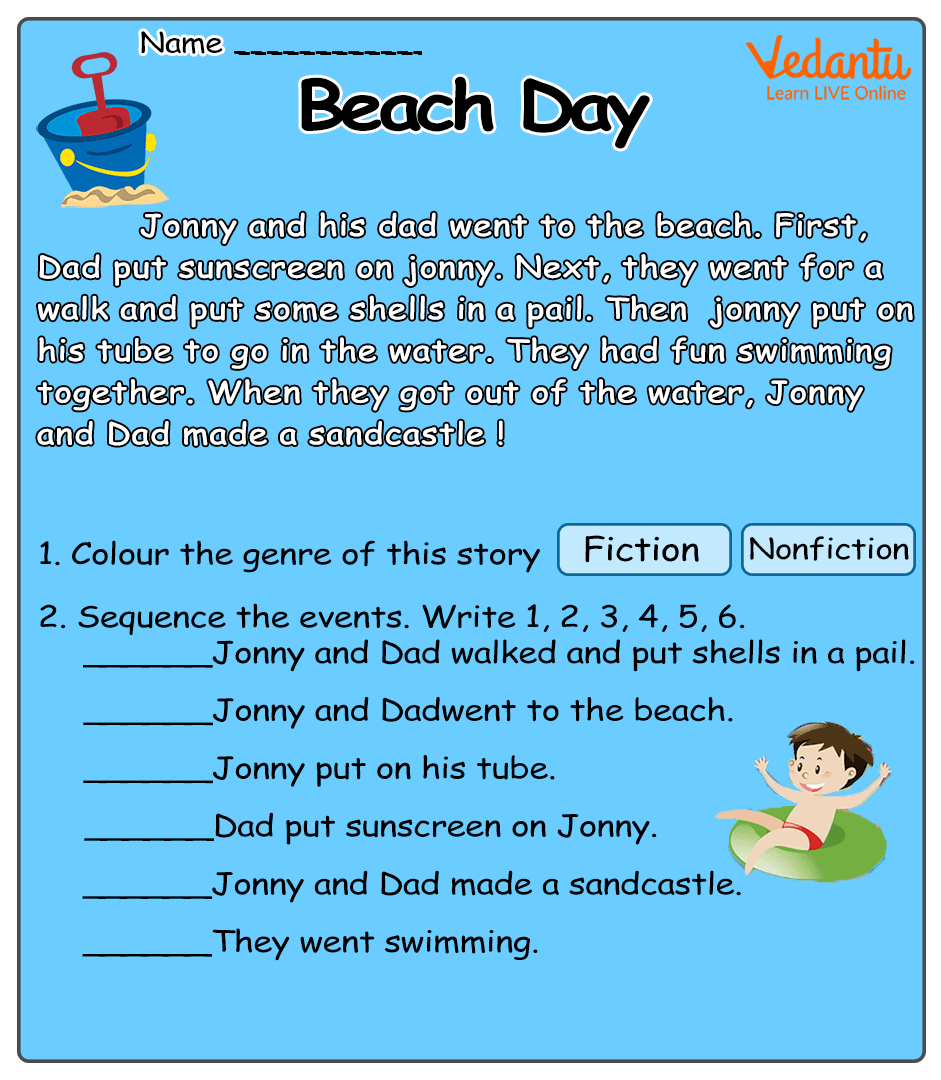
Image of a Paragraph along with fill-in the blanks for Guided Reading Sessions
For year 2 kids, the questions commonly asked in a guided reading session may require them to find the time of the day mentioned in the story, names of the characters, places, or seasons, given in the story, etc. Teachers may also ask questions that will require kids to make deductions, predictions, and inferences from the story. For example, they may ask kids to read the concluding part of the story and predict what might have happened next. Also, questions may require kids to read between the lines to judge a particular event or character in the story, thereby sketching their own inferences. Overall, guided reading sessions can be highly effective for kids to develop their reading and thinking skills.
Use Actions While Reading
To ensure that reading does not get monotonous, it is important to implement fun activities from time to time. While you read out a story or a poem to your kids, try to use a few actions to depict objects or expressions. Ask your kids to use their hands and body to imitate a kettle or the actions of a teddy bear from the nursery rhymes. This will help them identify the things they read about and explore their imagination even better. Moreover, they will be engaged in reading activities more than ever with such fun actions.
Conclusion
The reading activities discussed above are quite apt for the kids in year 2. However, the reading activities for kids of other age groups may differ from the above. For example, for the younger kids, the books that you choose must be full of colourful images or paper cut-out shapes to delight them. On the other hand, reading activities for the older kids may involve an eventful reading session or staging stories and plays with a make-believe set-up. Therefore, implement the reading activities for year 2 kids as well as for kids belonging to other grades and let kids enjoy reading.
FAQs on Reading Activities Year 2 for Fluency and Comprehension
1. What are reading activities for Year 2?
Reading activities for Year 2 are structured tasks that help children improve reading fluency, comprehension, and vocabulary skills.
Common Year 2 reading activities include:
- Guided reading with a teacher
- Phonics-based word reading practice
- Reading comprehension worksheets
- Story sequencing exercises
- Reading aloud to build fluency
These activities support early literacy development and build confidence in independent reading.
2. How can I improve my child’s reading skills in Year 2?
You can improve your child’s Year 2 reading skills by practising reading daily and focusing on phonics, fluency, and comprehension.
Effective strategies include:
- Reading together for 10–15 minutes each day
- Asking simple comprehension questions like “Who?” and “Why?”
- Practising tricky or high-frequency words
- Encouraging your child to retell the story
Regular practice and discussion help strengthen both decoding and understanding skills.
3. What books are suitable for Year 2 reading level?
Books suitable for Year 2 typically include short chapters, simple sentences, and familiar vocabulary appropriate for ages 6–7.
Look for books with:
- Clear story structure (beginning, middle, end)
- Repetition of common words
- Simple punctuation and dialogue
- Illustrations that support understanding
Popular choices include early chapter books, phonics readers, and simple fairy tales.
4. What reading comprehension skills should a Year 2 child have?
A Year 2 child should be able to read simple texts fluently and answer basic comprehension questions about them.
Key skills include:
- Identifying the main character and setting
- Retelling the story in the correct order
- Answering “who”, “what”, “where”, and “why” questions
- Making simple predictions
These skills show understanding beyond just reading the words.
5. How do you teach reading comprehension in Year 2?
Reading comprehension in Year 2 is taught by combining shared reading, questioning, and discussion of texts.
Teachers often use:
- Guided reading sessions in small groups
- Open-ended questions about characters and events
- Story maps and sequencing activities
- Vocabulary explanation before and after reading
This approach helps children understand meaning, not just decode words.
6. What are fun reading activities for Year 2 students?
Fun Year 2 reading activities include interactive and creative tasks that make reading enjoyable.
Examples include:
- Acting out scenes from a story
- Creating a new ending for a book
- Reading bingo games
- Word hunts for adjectives or verbs
Making reading playful increases motivation and builds a positive reading habit.
7. How often should a Year 2 child read at home?
A Year 2 child should read at home for at least 10–15 minutes every day to build fluency and confidence.
Daily reading helps to:
- Improve reading fluency
- Strengthen vocabulary
- Develop comprehension skills
- Build independent reading habits
Short, consistent sessions are more effective than occasional long ones.
8. What is guided reading in Year 2?
Guided reading in Year 2 is a small-group reading session where a teacher supports children in reading and understanding a text.
During guided reading:
- Children read a level-appropriate book
- The teacher listens and corrects decoding errors
- Students answer comprehension questions
- New vocabulary is explained
It focuses on both decoding and understanding meaning.
9. How can I help my Year 2 child with tricky words?
You can help your Year 2 child with tricky words by practising high-frequency words regularly and using repetition.
Helpful methods include:
- Flashcards for sight words
- Writing tricky words in sentences
- Spotting the words in books
- Playing spelling and matching games
Frequent exposure helps children recognise these words automatically.
10. Why are reading activities important in Year 2?
Reading activities in Year 2 are important because they build the foundation for future learning in all subjects.
They help children to:
- Develop strong literacy skills
- Improve vocabulary and sentence understanding
- Gain confidence in independent reading
- Prepare for more complex texts in later years
Strong reading skills at this stage support long-term academic success.
