Class 4 Hindi Chapter 3 Important Questions and Answers on Neem
These Class 4 Hindi Chapter 3 important questions and answers include 18 solved questions from Neem. Students can practise MCQs, very short answers, short answers and long answers.
The Class 4 Hindi Chapter 3 important questions, MCQs, and very short, short, and long answers help students learn about neem and the benefits it provides. This section covers the poet, the neem tree’s qualities and language exercises, helping students understand the poem, identify different leaves and answer questions in Hindi.
Class 4 Hindi Chapter 3 Neem MCQs
प्रश्न 1. 'नीम' कविता के कवि कौन हैं?
(क) निरंकार देव 'सेवक'
(ख) हरीश निगम
(ग) सुभद्रा कुमारी चौहान
(घ) त्रिलोक सिंह ठकुरेला
उत्तर: (ख) हरीश निगम
प्रश्न 2. कविता में नीम किन पक्षियों से अपना स्नेह जताता है?
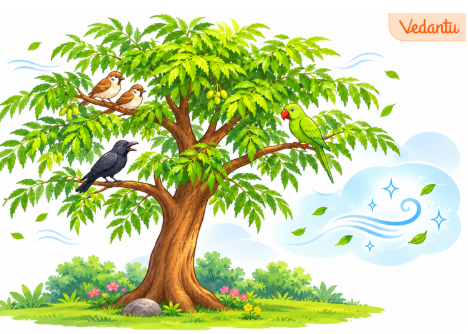
(क) मोर, कबूतर और मैना
(ख) चिड़िया, कौआ और तोता
(ग) हंस, बत्तख और कोयल
(घ) गौरैया, मोर और उल्लू
उत्तर: (ख) चिड़िया, कौआ और तोता
प्रश्न 3. कविता के अनुसार, नीम प्रदूषित वायु को क्या बनाता है?
(क) गर्म
(ख) ठंडी
(ग) शुद्ध
(घ) सुगंधित
उत्तर: (ग) शुद्ध
प्रश्न 4. 'कड़वे तन में मन को मीठा' पंक्ति से हमें क्या सीख मिलती है?
(क) हमें केवल मीठी चीज़ें खानी चाहिए।
(ख) हमें दूसरों के साथ प्रेम और भलाई से रहना चाहिए।
(ग) हमें कड़वी चीज़ों से दूर रहना चाहिए।
(घ) हमें हमेशा पेड़ों के नीचे बैठना चाहिए।
उत्तर: (ख) हमें दूसरों के साथ प्रेम और भलाई से रहना चाहिए।
प्रश्न 5. 'लड़की पुस्तक पढ़ती है' और 'लड़का पुस्तक पढ़ता है' वाक्यों में क्रिया का रूप क्यों बदल गया है?
(क) वचन के कारण
(ख) लिंग के कारण
(ग) समय के कारण
(घ) स्थान के कारण
उत्तर: (ख) लिंग के कारण
प्रश्न 6. 'भाँति-भाँति की पत्तियाँ' पाठ के अनुसार, किस पेड़ की पत्तियाँ मनुष्य के हृदय के आकार की होती हैं?
(क) आम
(ख) नारियल
(ग) पीपल
(घ) केला
उत्तर: (ग) पीपल
Class 4 Hindi Chapter 3 Neem Very Short Answer Questions
प्रश्न 7. 'नेह' शब्द का क्या अर्थ है?
उत्तर: 'नेह' का अर्थ है प्यार या स्नेह।
प्रश्न 8. नीम का वृक्ष हवा चलने पर क्या करता है?
उत्तर: नीम का वृक्ष हवा चलने पर झूम-झूमकर सबका मन बहलाता है।
प्रश्न 9. नीम को औषधीय वृक्ष क्यों कहा जाता है?
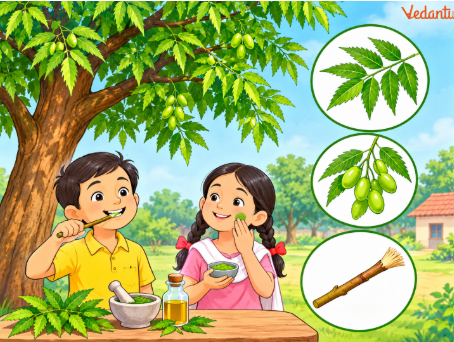
उत्तर: नीम की पत्तियों, टहनियों और निबों में औषधीय गुण पाए जाते हैं। इसलिए इसे औषधीय वृक्ष कहते हैं।
प्रश्न 10. ऐसे दो शब्द लिखिए जिनके आरंभ में 'प्र' आता है।
उत्तर:
प्रकाश
प्रयास
Class 4 Hindi Chapter 3 Neem Short Answer Questions
प्रश्न 11. नीम का वृक्ष पक्षियों से अपना नेह किस प्रकार जताता है?
उत्तर: नीम का वृक्ष पक्षियों को अपनी शाखाओं पर बैठने और आराम करने की जगह देता है। चिड़िया, कौआ और तोता उसकी डालियों पर बैठते हैं। इस प्रकार नीम पक्षियों से अपना नेह जताता है।
प्रश्न 12. कविता में नीम के वृक्ष को डॉक्टर जैसा क्यों बताया गया है?
उत्तर: नीम डॉक्टर नहीं है, फिर भी उसके कई भागों में औषधीय गुण पाए जाते हैं। उसकी पत्तियाँ, टहनियाँ और निबौरियाँ अलग-अलग काम आती हैं। इसलिए कवि ने कहा है कि नीम डॉक्टर न होकर भी अनेक रोगों को भगाता है।
प्रश्न 13. कविता में 'लहराता', 'बलखाता', 'हँसता' और 'गाता' शब्दों का प्रयोग क्यों किया गया है?
उत्तर: कवि ने इन शब्दों से नीम के वृक्ष को खुश दिखाया है। हवा चलने पर उसकी डालियाँ और पत्तियाँ हिलती हैं। ऐसा लगता है मानो नीम खुशी से झूम रहा हो, हँस रहा हो और गीत गा रहा हो।
प्रश्न 14. नीचे दिए गए शब्दों को स्त्रीलिंग और पुल्लिंग में अलग-अलग लिखिए — लड़का, लड़की, माता, पिता, इमली, टमाटर।
उत्तर:
प्रश्न 15. 'भाँति-भाँति की पत्तियाँ' पाठ के अनुसार, किन्हीं चार पौधों की पत्तियों की विशेषताएँ लिखिए।
उत्तर:
पीपल: इसकी पत्तियाँ हृदय के आकार की होती हैं।
पपीता: इसकी पत्तियाँ तारे के आकार की होती हैं।
सेमल: इसकी पत्तियाँ हाथ के पंजे जैसी होती हैं।
नागफनी: इसकी पत्तियाँ नुकीली और काँटेदार होती हैं।
Class 4 Hindi Chapter 3 Neem Long Answer Questions
प्रश्न 16. 'नीम' कविता में नीम के वृक्ष के किन-किन गुणों का वर्णन किया गया है?
उत्तर: 'नीम' कविता में कवि ने नीम के कई अच्छे गुण बताए हैं।
पक्षियों से प्रेम: नीम चिड़िया, कौए और तोते से अपना स्नेह जताता है। पक्षी उसकी शाखाओं पर बैठते हैं।
औषधीय गुण: नीम डॉक्टर नहीं है, फिर भी उसके कई भागों में औषधीय गुण पाए जाते हैं।
वायु को शुद्ध करना: नीम का वृक्ष प्रदूषित वायु को शुद्ध करने में सहायता करता है।
मन बहलाना: हवा चलने पर नीम की डालियाँ झूमती हैं और सबका मन बहलाती हैं।
दूसरों की भलाई: नीम किसी से कुछ नहीं लेता, फिर भी सबको बहुत कुछ देता है।
नीम का वृक्ष हमें दूसरों से प्रेम करने और उनकी भलाई करने की सीख देता है।
प्रश्न 17. 'कड़वे तन में मन को मीठा, रखना हमें सिखाता नीम।' इन पंक्तियों का क्या अर्थ है? इनसे हमें क्या सीख मिलती है?
उत्तर: इन पंक्तियों में कवि ने नीम के गुणों के बारे में बताया है। नीम की पत्तियाँ स्वाद में कड़वी होती हैं, लेकिन वे सबके काम आती हैं।
नीम के कई भागों में औषधीय गुण पाए जाते हैं।
वह पक्षियों को अपनी शाखाओं पर बैठने की जगह देता है।
वह वायु को शुद्ध करने में सहायता करता है।
वह बिना कुछ माँगे दूसरों को बहुत कुछ देता है।
सीख: हमें भी नीम की तरह दूसरों की सहायता करनी चाहिए। हमें किसी को उसके बाहरी रूप से नहीं, बल्कि उसके अच्छे गुणों से पहचानना चाहिए।
प्रश्न 18. आप अपने घर में गमले में पौधा कैसे लगाएँगे? पाठ के आधार पर लिखिए।
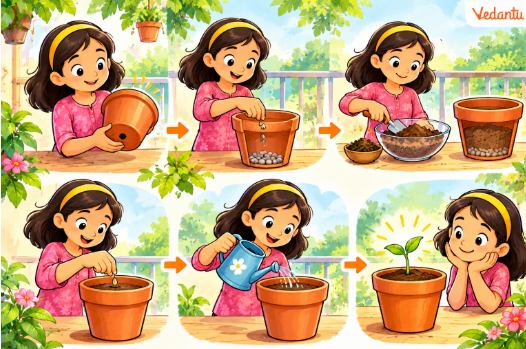
उत्तर: मैं अपने घर में गमले में पौधा लगाने के लिए ये काम करूँगा।
सबसे पहले एक गमला लूँगा। बड़ों की सहायता से उसके नीचे पानी निकलने के लिए एक छोटा छेद करूँगा।
छेद के ऊपर टूटे हुए घड़े के छोटे टुकड़े या कंकड़-पत्थर रखूँगा।
गमले में भुरभुरी मिट्टी भरूँगा। उसमें थोड़ी खाद भी मिलाऊँगा।
मिट्टी में अपने मनपसंद पौधे का बीज बोऊँगा।
बीज बोने के बाद थोड़ा पानी छिड़कूँगा।
मैं प्रतिदिन देखूँगा कि बीज कब अंकुरित होता है और पौधा कैसे बढ़ता है।
इस तरह मैं पौधा लगाऊँगा, उसकी देखभाल करूँगा और उसे बढ़ते हुए देखकर खुश होऊँगा।
Important Topics to Prepare for Class 4 Hindi Chapter 3: Neem
Students preparing for the Class 4 Hindi Chapter 3 important questions and answers should understand the poem's meaning, the useful qualities of the neem tree and the message shared by the poet. They should also practise the grammar exercises and activities given in the NCERT Veena textbook.
Students should also practise reading the poem aloud and explaining its meaning in their own words. The textbook includes activities that encourage children to observe nearby trees, identify leaves and learn how plants grow.
Download Class 4 Hindi Chapter 3 Important Questions PDF from Vedantu
Vedantu's Class 4 Hindi Chapter 3 important questions PDF covers the poem Neem from the NCERT Veena textbook. It includes 18 solved questions on the tree's qualities, Hindi grammar, different types of leaves and the plant-growing activity.
Students looking for Class 4 Hindi Chapter 3 important questions PDF download can use the solved questions to revise the poem and practise written answers.
The PDF contains MCQs, very short answers, short answers and long answers.
Students can use it for:
Poem Revision: Recall the qualities of the neem tree and the poem's main message.
MCQ Practice: Check facts about the poet, birds and different leaf shapes.
Vocabulary Practice: Revise words such as नेह, शुद्ध, प्रदूषित and औषधीय.
Hindi Grammar: Practise स्त्रीलिंग, पुल्लिंग, verb forms and words beginning with 'प्र'.
Written Answers: Explain the neem tree's qualities and the meaning of important lines.
Leaf Activities: Identify leaves and compare their shapes.
Plant-Growing Practice: Review the steps for planting a seed and observing a young plant.
Self-Assessment: Answer the questions before checking the solutions.
The Class 4 Hindi Chapter 3 question answer PDF brings together different question types for revision at home.
Students can use the Class 4 Hindi Chapter 3 important questions PDF download resource throughout the 2026–27 academic year.
Additional Study Material for Class 4 Hindi (Veena) Chapter 3 Neem
Students can use the following resources alongside the Class 4 Hindi Chapter 3 important questions and answers to understand the poem and complete its textbook exercises.
Class 4 Hindi Veena Chapter-Wise Important Questions and Answers
The NCERT Class 4 Hindi Veena textbook contains 13 numbered chapters. Students can practise questions from the other chapters after completing Neem.
Important Study Materials for Class 4 Hindi
FAQs on Important Questions and Answers for Class 4 Hindi (Veena) Chapter 3 Neem | 2026–27
1. How can students identify the neem tree by looking at its leaves?
Students can identify neem leaves by observing their size, colour, and edges. The मैं नीम हूँ activity asks children to describe these features. They can compare neem leaves with other leaves around their homes or schools and write down what they notice.
2. What is the difference between the leaves of the hand-elephant-ear plant and the tamarind tree?
The भाँति-भाँति की पत्तियाँ section explains that the hand-elephant-ear plant, called हाथीकान, has very large leaves that may grow up to six feet long. Tamarind leaves are very small. This comparison helps students understand that plants have leaves of different sizes.
3. Why does the Neem chapter ask students to collect leaves and paste them on paper?
The activity encourages students to observe leaf shapes and features. They can collect fallen leaves, paste them on thick paper and write two sentences about each one. It helps them recognise different plants through direct observation.
4. What should students write in the conversation between the neem tree and a child?
In this activity, students imagine that the neem tree can speak. They can write a simple conversation in which the child asks the tree about sitting in its shade or enjoying a swing. The activity helps them practise writing dialogues in Hindi.
5. How can students practise Class 4th Hindi Chapter 3 question answer exercises without memorising every answer?
Students should read the poem aloud, understand the meaning of each line and answer questions using their own words. They can also practise leaf-identification exercises, riddles and short sentences. Understanding the poem helps them write answers without repeating every line from memory.
6. How can Vedantu's Class 4 Hindi Chapter 3 important questions with answers help students write better answers for Neem?
Vedantu's Class 4 Hindi Chapter 3 important questions with answers help students practise writing clear Hindi answers on the neem tree, its useful qualities and the poem's message. The solved questions show how to explain important lines, answer grammar questions and organise longer responses. Students can also use the Class 4 Hindi Chapter 3 question answer PDF and Vedantu's NCERT Solutions to check their understanding and revise the chapter.