




What Is Aeroponics Its Process Working Principle and Advantages
Aeroponics simply means, "growing in the air". In an aeroponic system, there is no medium since the plant's roots are suspended freely in an open root-zone environment. The growth chamber of an aeroponics system receives the ideal amounts of water, nutrients and air. The practice of growing plants in the absence of soil, in the presence of air or a mist, is known as aeroponics.
What is Aeroponics?
Aeroponic comes from the Latin words "aero" (air) and "ponic" (labour) (work). This is an alternate technique for soil-free cultivation in conditions that regulate development.
Aeroponics is the practice of growing plants in an atmosphere of mist or air without the need for soil or by spraying the roots with hydroponic solutions that are floating in the atmosphere. It doesn't make use of soil or aggregate media. A nutrient-dense fluid is sprayed on the plant roots at predetermined intervals while the plant roots are suspended in a dark container in an aeroponic system. With this technique, nutrients are delivered extremely precisely, and since roots receive enough oxygen, growth may occur more quickly. This system may have clogging problems since relatively small holes are used for spraying.
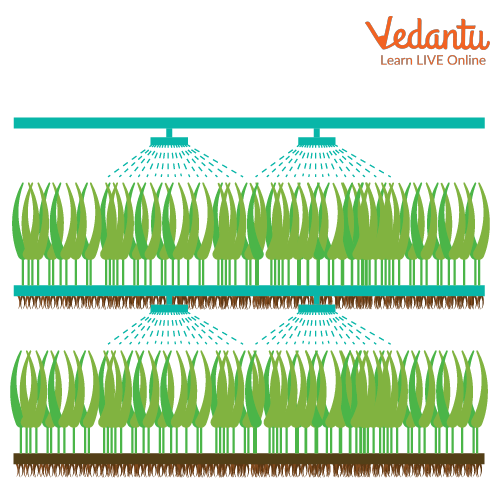
Aeroponics’ Diagram
Aeroponic Farming
Aeroponics is a method of growing plants that do not require soil. Roots are suspended in the air and irrigated with a nutrient-dense mist instead. This is in contrast to hydroponic systems, in which plant roots are submerged in a nutrient-rich solution on a regular basis. The plant you want to grow is suspended in an atmosphere that is typically fully or partially closed in an aeroponics system. In order to manage the amount of light, air and nutrient-rich water spray delivered to the plant, it is best to carry out this procedure in a closed, controlled environment.
Since they receive more oxygen to carry out their food-producing activity and are less vulnerable to pests and diseases, plants typically flourish in misty and airy environments. By spraying the plant's lower stem and dangling roots with a nutrient-rich water solution that helps them absorb the nutrients they need to generate nutrient-rich food to be consumed later, the necessary nutrients are delivered.
The plant's lower stem area is covered with biodegradable foams, which is then connected to or inserted into the aeroponics chamber apertures. The nutrient-rich liquid is dispersed in aeroponics chambers, where the time of the spraying is automated. For this system to work well, it is crucial to maintain a proper temperature and make sure that the necessary amount of nutrient-rich mist is available.
Aeroponics System
In this aeroponics system, there are primarily two live components:
Roots: The architecture of the plant that supports it neatly divides the roots underneath.
Canopy: The canopy refers to the leaves and crown that are frequently higher than the plant's structural supports.
In order to meet this requirement, aeroponics relies on hydroponics. This is because there is a requirement to have a backup system for supplying the necessary nutrients for the plants in the event that the aeroponics system fails. A high-pressure (80 psi) diaphragm pump is used in high-pressure aeroponics to supply nutrients to the roots through 20-50 mm mist heads.
Advantages of Aeroponics
Productive and Sustainable: Compared to soil-based farming, this sustainable method of food production uses 80-90% less water. If you aim to go fully commercial in this field, you can grow more food, healthier types and also more profitably because you can use height and air as a growing place.
Air Exposure Promotes Healthy and Rapid Plant Growth: As aeroponics is used to grow plants in the air with tiny drops of water, it is ideally suited to promote rapid plant growth in virtually any species. As a result, compared to soil-based farming, more plants can be grown in less time.
It Can Be Cultivated without Land: If you have a place in your tiny garden or on the roof, you may use it right now to grow your food, which fully eliminates the need for you to have a huge amount of land under cultivation. To experience the beauty of aeroponics and to meet your daily food needs, you can even build small aeroponics units in your living room or balcony.
Photosynthesis is Promoted via Aeroponics: This feature makes it environmentally friendly too. By removing a considerable amount of carbon dioxide from the environment and managing its concentration inside the system, aeroponics has an impact on how rapidly plants produce oxygen in their leaves.
Disadvantages of Aeroponics
Along with the associated costs, proper expertise and training are necessary to get going. If one is going to start using aeroponics, they need to be thoroughly trained in how to keep the system clean. The caretaker of this system must always upgrade their abilities because it is a scientific system supported by technology that is still developing.
It entails difficulties in sustaining the tangible elements. Numerous components make up this system, some of which, if improperly maintained, could cause a system failure.
Maintaining the proper supply of light and supply of air for the exposed part of the plant, in the closed or indoor methodology of aeroponics farming can occasionally be challenging, especially when vertical farming in the air is the way to produce more. This is where artificial lighting becomes important.
Aeroponic Plants
Any type of plant may now be grown with aeroponics. However, this method is best suited for green leaves, herbs, marijuana, strawberries, tomatoes and cucumbers.
Although root and tuber crops are less common in this system, you can still cultivate them if you have access to the most advanced infrastructure. However, doing so can be expensive.
Aeroponic Vertical Farming
It is a farming technique that involves growing crops in layers that are piled vertically. It is carried out in a controlled environment utilising soilless growing methods such as aquaponics, hydroponics and aeroponics. Vertical farming may be used to meet the expanding food demands of the world because there is a growing population and not enough usable farmland to go around.
Hydroponic Farming Methods: Techniques
Without the use of soil, plants can be grown using hydroponics. Here, magnesium, nitrogen, potassium, calcium etc. are submerged in the roots of the plants. These remedies assist roots, increasing the likelihood of a bigger production and decreasing reliance on water. According to studies, the production was 11 times higher than on conventional farms, while using 13 times less water. Therefore, the most popular vertical farming technique is hydroponics.
Aquaponics
Aquaponics is a little more sophisticated technology than hydroponics that combines the production of plants with that of aquatic organisms in a closed-loop system that mimics nature.
Aeroponics and Hydroponics
Although the concepts of aeroponics and hydroponics are similar, the two systems' mechanics are very dissimilar. Both systems are equally efficient and sustainable. Both systems demand different types and quantities of resources.
Hydroponic systems need water. Their water usage is naturally higher than that of aeroponic systems. A hydroponic system's water usage, however, might be recycled and utilised again. System maintenance is the second crucial component. Both hydroponic and aeroponic systems require hands-on training and experience for installation, upkeep, cleaning and sanitising. However, a hydroponic system is simpler than an aeroponic one.
Contrary to hydroponic systems, which can be created at home using PVC pipes and easily accessible basic supplies, aeroponic systems are more challenging to build. A good system is necessary for it to function fully and successfully. For precisely this reason, aeroponics is less economically viable.
The rapidly expanding hydroponics agricultural sector in India tremendously benefits urban farming. Many Indian cities use aeroponics. The properties of hydroponic and aeroponic systems are compared in light of this.
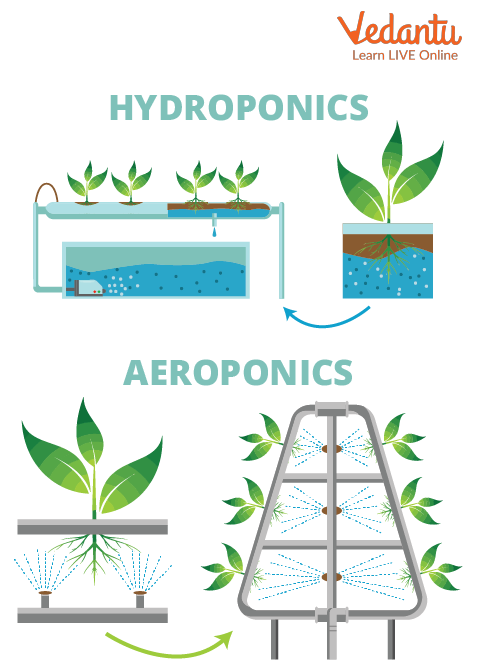
Hydroponics and Aeroponics Concept
Aeroponic Tower
Agronomy is Europe's first vertical garden that employs aeroponic towers to grow food naturally, while conserving 95 per cent of the water used in normal organic farming. These aeroponic towers also produce vegetables, fruits and herbs with 35 to 60 per cent more nutrients than soil-grown competitors.
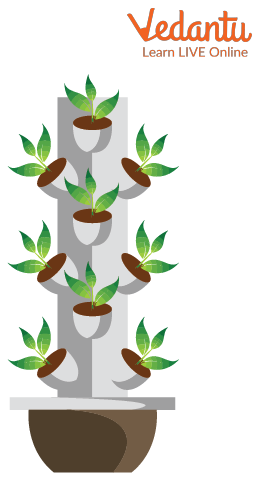
Aeroponic Tower
Conclusion
An optional tool for soil-less cultivation in climate-controlled settings like greenhouses is the aeroponic culture technique. The root system is enclosed in a dim space using this technique, which also includes the use of a nutritional solution misting system.


FAQs on Aeroponics in Biology and Modern Agriculture
1. What is aeroponics?
Aeroponics is a soilless plant cultivation method in which plant roots are suspended in air and regularly misted with a nutrient-rich solution. Unlike traditional soil farming or hydroponics, aeroponics allows roots to hang freely in a closed chamber. This method promotes efficient nutrient absorption and rapid plant growth because roots receive high oxygen exposure along with dissolved minerals.
2. How does an aeroponic system work?
An aeroponic system works by delivering a fine mist of nutrient solution directly to exposed plant roots at regular intervals. The process involves:
- Plants held in a support structure with roots hanging in air
- A reservoir containing water and dissolved mineral nutrients
- A pump that sprays a fine mist onto the roots
- Timed cycles to maintain moisture and oxygen balance
3. What are the main components of an aeroponic system?
The main components of an aeroponic setup include a reservoir, pump, misting nozzles, root chamber, and support structure. Key parts are:
- Nutrient reservoir – stores water and dissolved minerals
- High-pressure pump – pushes solution to sprayers
- Misting nozzles – create fine droplets
- Root chamber – enclosed space for suspended roots
- Support frame – holds plants upright
4. What are the advantages of aeroponics?
The main advantages of aeroponics are faster plant growth, efficient water use, and higher oxygen availability to roots. Benefits include:
- Up to 90% less water use compared to soil farming
- Rapid growth due to increased oxygen exposure
- Better nutrient absorption efficiency
- Reduced soil-borne diseases
- Space-efficient vertical farming potential
5. What is the difference between aeroponics and hydroponics?
The key difference between aeroponics and hydroponics is that aeroponics suspends roots in air with mist, while hydroponics immerses roots in nutrient solution. In hydroponics, roots grow in water or inert media, whereas in aeroponics they hang freely and receive sprayed nutrients. Aeroponics generally provides greater oxygen exposure, which can enhance root respiration and growth.
6. Why do plants grow faster in aeroponics?
Plants grow faster in aeroponic systems because their roots receive maximum oxygen along with direct nutrient delivery. High oxygen levels enhance cellular respiration in root cells, increasing energy (ATP) production. Efficient nutrient absorption and reduced energy spent searching for water allow plants to allocate more resources to shoot and leaf growth.
7. What types of plants can be grown using aeroponics?
A wide variety of plants, especially leafy vegetables and herbs, can be grown using aeroponic cultivation. Common examples include:
- Lettuce and spinach
- Basil and mint
- Tomatoes and peppers
- Strawberries
- Seed potatoes
8. Is aeroponics better than soil farming?
Aeroponics can be more efficient than soil-based agriculture in controlled environments, but it depends on context and resources. Advantages include reduced water use, minimal land requirement, and lower risk of soil-borne pathogens. However, it requires electricity, technical maintenance, and initial setup costs, making it more suitable for urban farming and research settings.
9. What are the disadvantages of aeroponics?
The main disadvantages of aeroponic systems are high setup cost and technical dependence. Limitations include:
- Dependence on electricity and pumps
- Risk of rapid plant stress if misting fails
- Higher initial investment
- Need for precise monitoring of nutrients and pH
10. How is aeroponics used in scientific research and space farming?
Aeroponics is used in plant biology research and space agriculture because it allows precise control over nutrients and root observation. In laboratories, scientists study root development and nutrient uptake efficiently. Space agencies use aeroponic systems in microgravity experiments since they require less water and function without soil, making them suitable for sustainable food production in space missions.



