




Comprehension Questions and Activities Based on the Fossil Mystery Story
Read the passage and answer the questions below.
Leo and his older sister, Maya, were spending the summer at their grandmother’s cottage by the sea. The cottage was nestled near a shoreline famous for its jagged cliffs and sprawling, rocky beaches. Every morning, they would explore the coast, hoping to find something extraordinary. Their grandmother, a retired geology teacher, had filled their heads with tales of ancient sea creatures and hidden treasures locked in stone.
One afternoon, after a particularly high tide, the siblings ventured further down the beach than ever before. The receding water had exposed a new layer of dark, shale rock. As Leo scrambled over a large, flat stone, he noticed an unusual spiral pattern embedded in its surface. "Maya, come look at this!" he yelled, his voice filled with excitement.
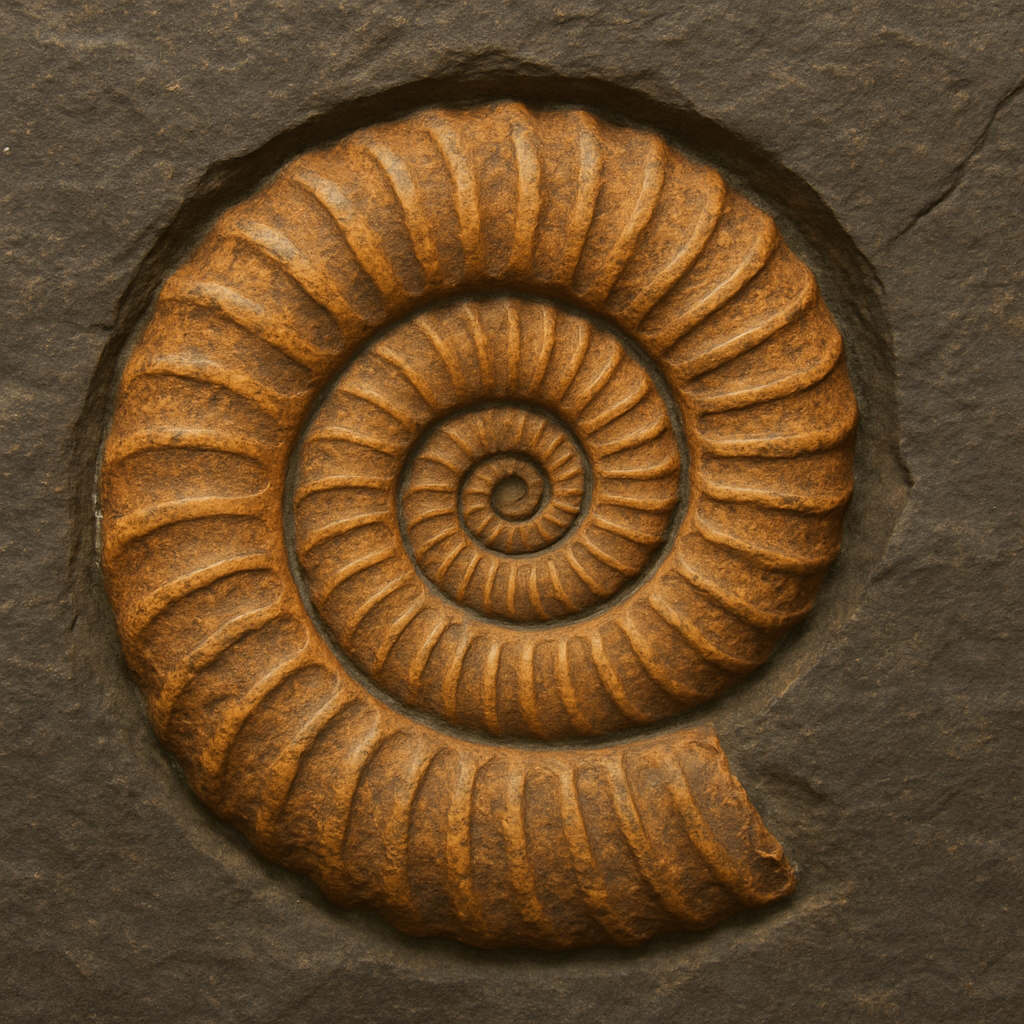
Maya rushed over. The pattern was perfect, like a coiled snake or a giant snail shell. It was unlike any shell they had ever seen. Carefully, they brushed away the sand and small pebbles. The shape was intricate and beautifully preserved. They knew instantly it was a fossil. Overjoyed, they decided to show it to their grandmother.
Back at the cottage, their grandmother put on her glasses and examined the rock with a magnifying glass. A wide smile spread across her face. "My dear explorers," she announced, "you've found an ammonite! This creature lived in the ocean millions of years ago, long before the dinosaurs became extinct. It's a magnificent specimen." She explained that ammonites were marine animals, and this fossil was a clue to what the world was like in a prehistoric era. Leo and Maya listened, completely captivated, feeling like true paleontologists.
A. Multiple Choice Questions (MCQs): Choose the correct option.
1. Where were Leo and Maya spending their summer?
(a) At a mountain cabin
(b) At their grandmother's cottage by the sea
(c) At a summer camp in the forest
(d) At home in the city
2. What was their grandmother's profession before she retired?
(a) A paleontologist
(b) An artist
(c) A geology teacher
(d) A marine biologist
3. What did Leo find embedded in the rock?
(a) A dinosaur bone
(b) A modern snail shell
(c) A piece of old pottery
(d) A fossil with a spiral pattern
B. Fill in the Blanks using words from the passage.
1. The receding water had exposed a new layer of dark, ___________ rock.
2. The shape was ___________ and beautifully preserved.
3. An ammonite is a ___________ specimen from millions of years ago.
4. The siblings felt like true ___________ after their discovery.
C. True or False.
1. Leo and Maya found the fossil on a sandy, tropical beach.
___________
2. The fossil they found was identified as an ammonite.
___________
3. Their grandmother was not interested in their discovery.
___________
4. Ammonites lived at the same time as early humans.
___________
D. Match the Columns.
E. Short Answer Questions.
1. Why were the children exploring the coast every morning?
__________________________________________________________________
2. What made the day of their discovery special?
__________________________________________________________________
3. How did their grandmother identify the fossil? What did she use?
__________________________________________________________________
F. Rearrange the following events in the correct order as they happened in the story.
1. Leo and Maya showed the fossil to their grandmother.
2. A high tide receded, exposing a new layer of rock.
3. The grandmother identified the fossil as an ammonite.
4. Leo noticed a spiral pattern on a flat stone.
5. Leo and Maya explored the coast near their grandmother's cottage.
Correct Sequence:
__________________________________________________________________
G. Complete the Sentence.
1. The fossil was a clue to what the world was like in a _____________________________.
2. The grandmother’s cottage was nestled near a shoreline famous for its _____________________________.
3. Leo's voice was filled with excitement when he _____________________________.
Answer Key
A. Multiple Choice Questions (MCQs)
1. (b) At their grandmother's cottage by the sea
2. (c) A geology teacher
3. (d) A fossil with a spiral pattern
B. Fill in the Blanks
1. shale
2. intricate
3. magnificent
4. paleontologists
C. True or False
1. False
2. True
3. False
4. False
D. Match the Columns
1 - (c) Very unusual or remarkable
2 - (d) Moving back or further away
3 - (a) Having complex and fine detail
4 - (b) A scientist who studies fossils
E. Short Answer Questions
1. They were exploring the coast because their grandmother had told them stories of ancient sea creatures and hidden treasures, and they hoped to find something extraordinary.
2. The day was special because a high tide had receded, revealing a new area of rock where they had never explored before, which led to their discovery.
3. Their grandmother identified the fossil by examining it closely with a magnifying glass.
F. Rearrange the following events
Correct Sequence: 5, 2, 4, 1, 3
G. Complete the Sentence
1. ...prehistoric era.
2. ...jagged cliffs and sprawling, rocky beaches.
3. ...yelled for Maya to come look at what he found.
Comprehension Questions and Activities Based on the Fossil Mystery Story
With this Class 5 English worksheet on Reading Comprehension, learners explore children’s stories like “Fossil Mystery.” They improve reading for meaning, look for clues, and answer “how” and “why” questions. The topic connects storytelling with real science, making learning about fossils exciting. Students build vocabulary, sharpen inference skills, and have fun with text structure practice — all important for reading comprehension worksheets used in Class 5 English.
Build Confidence with Engaging Fossil Mystery Activities
This worksheet sparks students’ curiosity about fossils while boosting reading comprehension and problem-solving abilities. In Class 5 English, tackling the “Fossil Mystery” topic helps learners develop close reading and logical thinking, which are popular skills for children’s story comprehension passages. Parents see their children grow more confident with questions and summaries, giving them a strong foundation for future English studies.
FAQs on Fossil Mystery: Children’s Reading Comprehension Worksheet for Grade 5
1. What is a Class 5 reading comprehension children's stories fossil mystery worksheet?
A Class 5 reading comprehension children's stories fossil mystery worksheet is a printable English worksheet designed for Grade 5 students. It contains a short, child-friendly fossil mystery story followed by multiple-choice and short-answer questions to improve comprehension, vocabulary, sequencing, and inference skills. The worksheet is ideal for practice, homework, and revision.
2. What is a reading comprehension worksheet?
A reading comprehension worksheet is an educational tool featuring a passage or story followed by questions. It helps students in Grade 5 practice understanding, interpretation, and analysis by answering MCQs, sequencing events, and vocabulary-related tasks based on the story provided.
3. How to solve reading comprehension for kids?
To solve reading comprehension for kids, follow these steps:
- Read the passage carefully, noting key details and vocabulary.
- Examine each question and look for answers within the text.
- Use the story context for unfamiliar words.
- Answer MCQs by elimination and write short answers using evidence from the passage.
- Review your answers to ensure they are complete and correct.
4. What are examples of Grade 5 comprehension questions?
Examples of Grade 5 comprehension questions include:
- Multiple Choice Questions (MCQs) based on story details
- Short answer questions about the main idea or conclusion
- Sequencing events from the passage
- Vocabulary match or fill in the blanks
- Inference questions about character actions
5. Why is comprehension important for 5th graders?
Comprehension is important for 5th graders because it
- Builds critical thinking and problem-solving skills
- Improves vocabulary development and reading fluency
- Enables students to understand and analyse texts independently
- Prepares them for higher-level studies across subjects
6. How can I use this worksheet at home?
You can use this reading comprehension worksheet at home by printing out the PDF, reading the story with your child, and having them complete the questions independently. It’s perfect for revision, practice during holidays, or to reinforce classroom learning in a relaxed setting.
7. Does this include an answer key?
Yes, the Class 5 reading comprehension children's stories: Fossil Mystery worksheet includes a clear answer key. Parents and students can use it for easy self-assessment and to cross-check answers for better learning outcomes.
8. Is this worksheet printable?
Yes, this worksheet is available as a free printable PDF that can be downloaded and printed at home. The large fonts and age-appropriate layout help Grade 5 students work independently and comfortably.
9. What age group is it best for?
This fossil mystery reading comprehension worksheet is designed for Grade 5 students, typically ages 10–11. It matches their reading skills, syllabus requirements, and is ideal for classroom or home practice.
10. What skills are built by this activity?
The fossil mystery reading comprehension worksheet helps build:
- Reading and inference skills
- Vocabulary development
- Sequencing and ordering events
- Critical thinking
- Understanding of science concepts like fossils in an engaging way
11. Can I use this worksheet digitally on a tablet?
Yes, you can open the PDF worksheet on a tablet for digital reading and answering. Many students use stylus tools or writing apps to complete the worksheet without printing, which is convenient for online or remote learning.
12. What are key facts about fossils for kids?
Key facts about fossils for kids include:
- Fossils are remains or traces of ancient plants and animals.
- They are usually found in rocks.
- Scientists study fossils to learn about prehistoric life and Earth's history.
- Fossils help us understand extinct species and past environments.
