






How to Read Clocks and Tell Time for Grade 2
Section A: What Time Is It?
Read the description of the clock hands and write the correct time in the blank space.
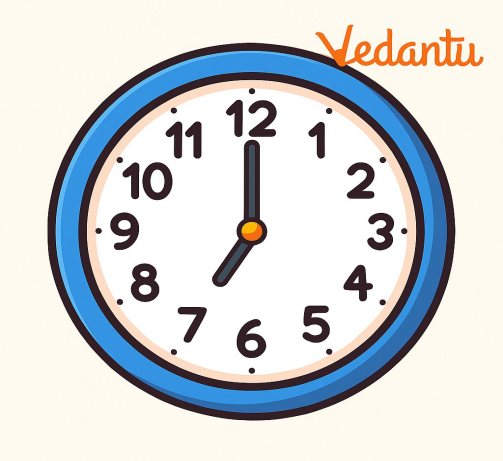
1. The short hand (hour hand) is pointing directly at the 7. The long hand (minute hand) is pointing directly at the 12. What time is it?
Answer: ______🕖____
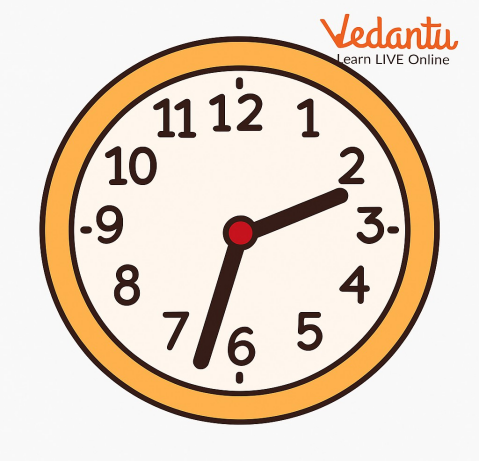
2. The short hand is halfway between the 2 and the 3. The long hand is pointing at the 6. What time is it?
Answer: _________
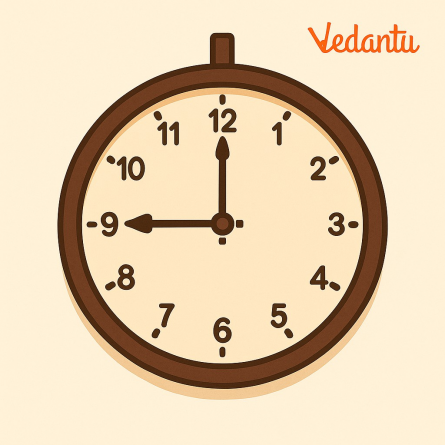
3. The short hand is pointing directly at the 9. The long hand is pointing directly at the 12. What time is it?
Answer: ________
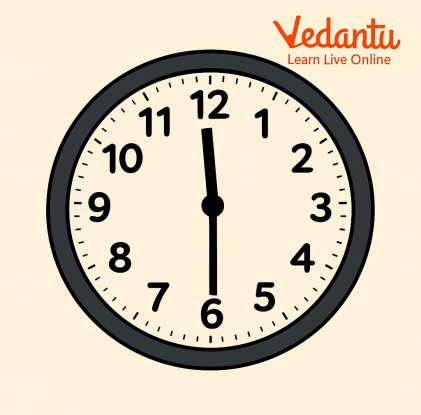
4. The short hand is halfway between the 11 and the 12. The long hand is pointing at the 6. What time is it?
Answer: _________
Section B: Tick the Correct Option
5. When the time is "quarter past 4", where is the minute hand pointing?
( ) At the 4
( ) At the 3
( ) At the 6
6. Which time is the same as "quarter to 10"?
( ) 10:15
( ) 10:45
( ) 9:45
7. How many minutes are there in half an hour?
( ) 15 minutes
( ) 30 minutes
( ) 60 minutes
Section C: Match the Columns
Match the time in words (Column A) with the digital time (Column B).
Your Answers:
1.
2.
3.
4.
5.
Section D: True or False?
Read the statements below and write 'True' or 'False'.
8. At 3:00, both the hour and minute hands point to the 3.
Answer:
9. The time 7:20 means it is twenty minutes past seven.
Answer:
10. There are 25 hours in one day.
Answer:
Section E: AM or PM?
Read each activity. Would it happen in the A.M. (morning) or P.M. (afternoon/evening)?
11. Riya eats her breakfast before going to school.
Answer:
12. Dad comes home from the office in the evening.
Answer:
13. We see the moon and stars in the sky.
Answer:
Section F: Short Answer Questions
14. A cartoon show starts at 4:30. It lasts for one hour. What time will the show end?
Answer:
15. The school bell rings at 8:00 A.M. Ali arrives at school at 7:50 A.M. Is he early or late? By how many minutes?
Answer:
Answer Key
Section A: What Time Is It?
1. 7:00
2. 2:30
3. 9:00
4. 11:30
Section B: Tick the Correct Option
5. At the 3
6. 9:45
7. 30 minutes
Section C: Match the Columns
1. C
2. D
3. A
4. B
5. E
Section D: True or False?
8. False
9. True
10. False
Section E: AM or PM?
11. A.M.
12. P.M.
13. P.M.
Section F: Short Answer Questions
14. 5:30
15. He is early by 10 minutes.
How This Worksheet Helps You Learn?
This Class 2 Maths Telling Time worksheet is designed to help young learners understand the basics of reading both analog and digital clocks. With clear questions and engaging clock images, this printable worksheet allows students to practice telling time to the hour, half hour, and quarter hour. Whether at school or home, these time worksheets for Class 2 offer targeted clock practice and support confidence in time-reading skills.
As a free, downloadable PDF practice sheet, children can work independently or with guidance. Activities include matching clocks, drawing hands, and writing times, ensuring strong coverage of NCERT-aligned syllabus goals. By using these telling time worksheets regularly, students grow fluent in time measurement and daily routines while strengthening their understanding of hours and minutes.
Usage Tips for Parents and Teachers
- Begin each session by reading and solving one example from the worksheet together.
- Encourage your child to point to the hour and minute hands on a real clock as they answer each question.
- Mix in oral questions and use the matching activities to check for understanding and make practice interactive.
- Set a timer for each activity to further link clock reading with real-life time awareness.
Related Links for Class 2 Maths Telling Time Worksheets
Click on any topic to download printable worksheets with different practice sets and answer keys. These worksheets help your child practice the lessons the right way.
What You Learned
On this page, you explored the essentials of telling time for Class 2 Maths. Through printable worksheets and PDF practice sheets, you reviewed reading both analog and digital clocks, understanding hour and minute hands, and matching written times. The resources and related worksheet links support continued learning of time measurement and daily time-telling skills, preparing children confidently for more challenging clock and calendar concepts.
FAQs on Telling Time Worksheets for Class 2 Maths
1. How to tell time for grade 2?
Telling time for Grade 2 involves learning to read both analog and digital clocks by understanding their basic parts and functions. The key is to practice regularly with worksheets and real-life examples.
- Identify the Hands: Learn to differentiate between the short hour hand and the long minute hand on an analog clock.
- Read the Hour: The number the hour hand points to (or has just passed) indicates the hour.
- Read the Minutes: The number the minute hand points to is multiplied by 5 to find the minutes (e.g., pointing to 3 means 15 minutes).
- Practice Intervals: Start with telling time to the hour (e.g., 3:00), then move to the half hour (e.g., 3:30), and finally the quarter hour (e.g., 3:15).
2. How to explain the time chapter for class 2?
To explain the time chapter effectively to a Class 2 student, use simple language and visual aids to make the concept tangible. A step-by-step approach works best for building confidence.
- Use a Real Clock: Show them a real analog clock and let them move the hands to understand how they work together.
- Relate to Daily Routine: Connect times to daily activities, like “We eat breakfast at 8:00 AM” or “School ends at 3:00 PM.”
- Use Worksheets: Provide a time worksheet for Class 2 with activities like matching times, reading clocks, and drawing hands.
- Start Simple: Begin with telling time to the hour, then introduce half past and quarter past once they are comfortable.
3. What tells us the time in class 2?
In Class 2, we learn that a clock or a watch tells us the time, helping us know when to do different activities throughout the day. Clocks have specific parts that work together to show the correct time.
- The Clock Face: This shows the numbers from 1 to 12, which represent the hours.
- The Hour Hand: This is the shorter hand on the clock, and it points to the current hour.
- The Minute Hand: This is the longer hand, and it moves faster to show the minutes.
4. What are the key time-telling skills taught in the Class 2 Maths syllabus?
The Class 2 Maths syllabus focuses on building a strong foundation in reading and understanding time. These skills are essential for everyday life and more advanced math concepts.
- Reading an analog clock to the hour, half hour, and quarter hour.
- Identifying and understanding the function of the hour hand and minute hand.
- Drawing clock hands on a blank clock face to represent a given time.
- Matching times shown on analog clocks with their digital clock formats.
- Understanding the concept of AM and PM to differentiate between morning and evening.
5. How do these telling time worksheets for Class 2 help in learning?
These telling time worksheets are designed to reinforce what is taught in school and help Class 2 students master time-reading through targeted practice. They offer several benefits for effective learning.
- Reinforces Concepts: Repeated practice with reading clocks, writing times, and drawing hands helps solidify memory.
- Builds Confidence: Solving problems independently on a worksheet boosts a child’s confidence in their math skills.
- Visual Learning: Activities like matching clocks and drawing hands improve visual recognition of time.
- Provides Structure: The worksheets offer focused exercises on specific skills like time to the hour or quarter past.
6. What is the difference between the hour hand and the minute hand on a clock?
The primary difference between the two hands on an analog clock is their size, speed, and what they measure. Understanding this is a fundamental part of learning how to tell time.
- The Hour Hand: It is the shorter and thicker hand. It moves slowly around the clock, taking 12 hours to complete one full circle. It points to the hour.
- The Minute Hand: It is the longer and thinner hand. It moves much faster, completing a full circle in 60 minutes (or one hour). It points to the minutes.
7. What do 'quarter past' and 'half past' mean in telling time?
The terms 'quarter past' and 'half past' are common phrases used to describe specific times on an analog clock, making it easier to communicate time in words. They refer to the position of the long minute hand.
- Quarter Past: This means 15 minutes have passed since the hour. On a clock, the minute hand points to the number 3. For example, 7:15 is read as 'quarter past seven'.
- Half Past: This means 30 minutes have passed since the hour. On a clock, the minute hand points to the number 6. For example, 7:30 is read as 'half past seven'.
8. Are these Class 2 Maths telling time worksheets available as a printable PDF with answers?
Yes, all our Class 2 Maths telling time worksheets are available as a free, printable PDF file, making them easy to use for practice at home or in the classroom. Each worksheet also includes a detailed answer key to help parents and students check the solutions and learn from any mistakes.
9. How do you explain AM and PM to a Class 2 student?
Explaining AM and PM to a Class 2 student is best done by connecting these terms to their daily schedule and the position of the sun. This helps them understand the 12-hour cycle.
- AM (ante meridiem): This means 'before midday'. It covers the time from midnight to noon. Activities like waking up, eating breakfast, and going to school happen in the AM.
- PM (post meridiem): This means 'after midday'. It covers the time from noon to midnight. Activities like eating lunch, playing in the evening, having dinner, and sleeping at night happen in the PM.
10. Can I use these worksheets to help my child practise drawing hands on a clock?
Absolutely. These worksheets are an excellent resource for practising how to draw hands on a clock, which is a key skill in the Class 2 Maths syllabus. The visual drill activities specifically target this skill.
- The worksheets provide exercises with blank clock faces and a given time.
- Students are required to draw the short hour hand and the long minute hand in the correct positions.
- This activity reinforces their understanding of how time is represented visually on an analog clock.
