









Everything You Need to Know About Food Adulteration
Food adulteration is the practice of lowering the quality of food by adding inferior, harmful, unnecessary, or non-permitted substances to it. These added materials are called adulterants. In simple terms, when a food item is mixed with impure, cheaper, unsafe, or misleading substances so that its natural quality is reduced, it is called food adulteration.
This is a major public health issue because adulterated food may look normal from the outside but can seriously affect health.
Food is essential for life. It provides energy for growth, repair, metabolism, and maintenance of body functions. Since food is a basic necessity, its purity directly affects health. However, in everyday life, consumers may encounter many signs of adulteration, such as:
pebbles in grains and pulses
coloured spices
artificially ripened fruits
diluted milk
stained vegetables
low-quality oils or sweets
These practices may appear small, but they can reduce food value and sometimes lead to severe toxicity.
In biology and health education, food adulteration is studied because it is a preventable risk factor for disease. It shows how food quality is closely linked to nutrition, public health, and safe consumption.
Meaning of Adulterants
Adulterants are the unwanted or harmful substances added to food items. These may be natural-looking impurities or synthetic chemicals. They are added mainly to increase profit, improve appearance, increase weight, or extend shelf appeal.
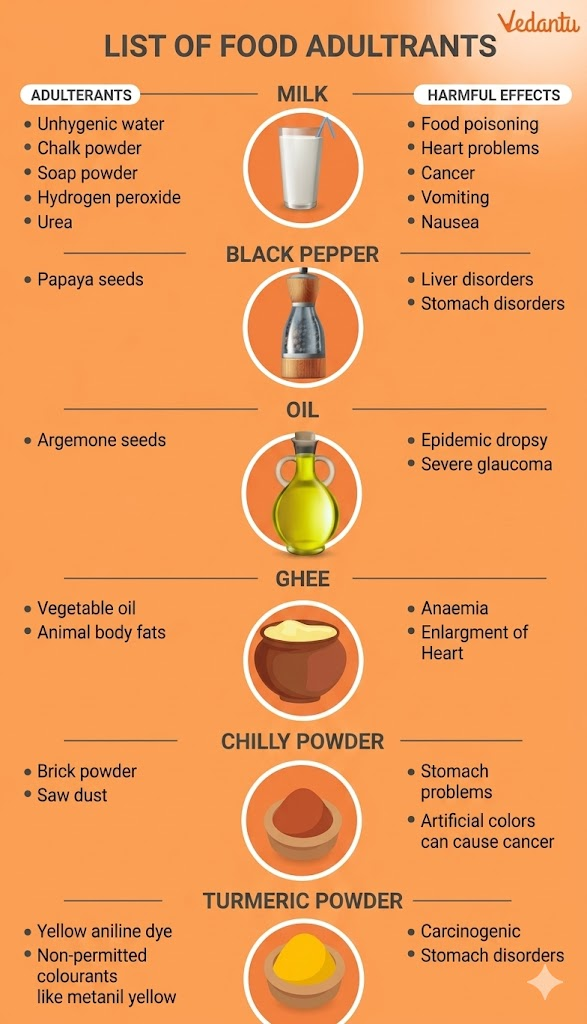
Examples of adulterants include:
water in milk
starch in dairy items
chalk powder in sugar
dyes in pulses and spices
pebbles and sand in grains
cheaper oils in edible oils
chemical ripening agents in fruits
So, adulterants are the actual substances responsible for making food impure.
Why Food Adulteration is Done?
To understand the topic properly, students must also know why adulteration happens in the first place. Food adulteration is usually not accidental. In most cases, it is done intentionally.
According to common food-market practices, adulteration is often carried out to increase the quantity of food products, improve their appearance, mimic a better-quality product, or earn more profit with lower investment.
For example:
milk is diluted with water to increase volume
starch is added to milk to make it appear thicker
fruits are artificially ripened to sell them quickly
spices are coloured to look more attractive
These actions are commercially motivated and may mislead the consumer.
Causes of Food Adulteration
The causes of food adulteration are both economic and social. Some causes are directly related to business practices, while others are linked to food demand and lack of awareness.
1. To Increase Profit
This is the most common cause. By mixing cheaper substances with genuine food, sellers can increase profit margins.
2. To Increase Quantity
Adding low-cost or impure materials helps increase the volume or weight of the product, which makes it appear more in quantity.
3. High Food Demand
As the population grows, demand for food rises. This encourages some suppliers to use unfair methods to increase supply artificially.
4. Business Strategy
In many cases, adulteration is used as a dishonest business strategy to compete in the market while reducing costs.
5. Imitation of Better Products
Inferior products may be made to look like higher-quality products by adding dyes, chemicals, or look-alike materials.
6. Lack of Knowledge
Consumers who do not know how to identify pure food may unknowingly buy adulterated products.
7. Poor Food Safety Practices
Weak monitoring and careless handling in food supply chains also contribute to adulteration.
Types of Food Adulteration
The phrase types of food adulteration can be understood in practical ways based on how food is altered. Though adulteration may not always be classified identically in every textbook, it is useful to explain it in functional categories for students.
1. Intentional Adulteration
This is deliberate mixing of inferior or harmful substances with food for profit. Examples include:
water in milk
chalk powder in sugar
dyes in spices
stones in grains
2. Incidental Adulteration
This occurs due to negligence during storage, handling, transport, or processing. It may include contamination by dust, pests, chemicals, or packaging materials.
3. Chemical Adulteration
This includes the use of industrial dyes, synthetic ripening agents, preservatives, or toxic chemicals.
4. Physical Adulteration
This means adding visible foreign matter such as sand, stones, straw, sawdust, or pebbles.
5. Biological Adulteration
This may include contamination by microorganisms, fungus, or spoiled food materials mixed with fresh products.
6. Substitution Adulteration
In this type, an expensive food is partly or fully replaced with a cheaper similar-looking substance.
Methods of Food Adulteration
Food adulteration can happen through many methods. These are the actual ways in which food is made impure.
adding chemicals for faster ripening of fruits
mixing spoiled fruits or vegetables with fresh ones
adding dyes to improve appearance
mixing clay, sand, pebbles, or stones with grains and pulses
mixing inferior substances with superior food to increase weight
substituting costly products with cheaper alternatives
adding non-permitted colours and flavours
diluting or thickening food to mislead consumers
These methods are dangerous because the food may still look attractive even when it is unsafe.
Adulteration of Food Examples
The topic becomes easier when we understand real adulteration of food examples.
Dairy Products
1. Milk and Curd
Adulterants: water and starch powder
Effect: stomach disorders
2. Ghee, Butter and Cheese
Adulterants: mashed potatoes, vanaspati, starch
Effect: gastrointestinal disturbances and stomach problems
Grains and Pulses
1. Grains
Adulterants: dust, pebbles, stones, straw, damaged grains
Effect: toxicity, liver disorders
2. Pulses
Adulterants: dyes, chemicals, lead chromate
Effect: stomach disorders and chemical toxicity
Beverages and Sweeteners
1. Coffee Powder
Adulterants: chicory, tamarind seed powder
Effect: diarrhoea
2. Tea
Adulterants: artificial colouring agents
Effect: liver disorders
3. Sugar
Adulterants: chalk powder, washing soda, urea
Effect: stomach problems, kidney failure
Spices
1. Pepper
Adulterants: papaya seeds, blackberries
Effect: allergies, stomach irritation, skin irritation
2. Turmeric Powder
Adulterants: pesticide residues, chalk dust, sawdust, industrial dyes, metanil yellow, arsenic, lead
Effect: cancer risk, stomach disorders
3. Chilli and Coriander Powder
Adulterants: brick powder, rhodamine dye, red lead, dung powder, synthetic colours
Effect: metal toxicity, cancer, lead poisoning, tumour, blood pressure changes
4. Cumin Seeds
Adulterants: coloured grass seeds, sawdust, charcoal dust
Effect: stomach disorders
Oils and Seeds
1. Mustard Seeds
Adulterants: argemone seeds
Effect: abdominal contractions, sluggishness, increased excretion
2. Edible Oils
Adulterants: mineral oil, karanja oil, castor oil, artificial colours
Effect: gallbladder cancer, allergies, paralysis, cardiac arrest, increased LDL cholesterol
Processed Foods
1. Jam, Juice and Candies
Adulterants: non-permitted artificial dyes
Effect: carcinogenic effects, cancer risk
2. Tomato Sauce
Adulterants: pumpkin pulp, non-edible colours and flavours
Effect: gastritis, inflammation of organs
3. Ice Cream
Adulterants: pepper oil, ethyl acetate, butyraldehyde, washing powder, nitrate, unsuitable gums
Effect: serious diseases affecting lungs, kidneys, and heart
Natural Sweeteners
1. Jaggery
Adulterants: washing soda, chalk powder
Effect: vomiting and stomach disorders
2. Honey
Adulterants: molasses, sugar syrup, dextrose, corn syrup
Effect: stomach disorders
Fruits and Vegetables
1. Fruits and Vegetables
Adulterants: dyes, malachite green, calcium carbide, copper sulphate, oxytocin, saccharin wax
Effect: vomiting, stomach disorders, cancer risk
Food Adulteration Chart for Quick Study
Harmful Effects of Food Adulteration
Food adulteration is dangerous because it affects both nutrition and health.
1. Reduced Nutritional Value
Adulterants dilute or replace real nutrients, making the food less useful for the body.
2. Stomach Disorders
Many adulterants cause indigestion, pain, diarrhoea, or vomiting.
3. Toxicity
Chemical adulterants may build up in the body and damage organs.
4. Liver and Kidney Disorders
Many toxic substances affect detoxification organs like the liver and kidneys.
5. Cancer Risk
Several non-permitted dyes and industrial chemicals are carcinogenic.
6. Nervous and Cardiac Problems
Some adulterants can even lead to paralysis, blood pressure changes, or heart-related problems.
7. Nutritional Deficiency Diseases
Long-term use of adulterated food can reduce essential nutrient intake and contribute to deficiency conditions.
So, food adulteration is not merely about poor-quality food. It is a serious health hazard.
Food Adulteration Act
The phrase food adulteration act refers to laws and regulations made to control the adulteration of food and protect public health. In India, the historical legal framework most commonly associated with this topic is the Prevention of Food Adulteration Act, which was created to prevent the sale and distribution of adulterated food.
The aim of such laws is to:
define adulterated food legally
regulate food quality
punish offenders
protect consumers
ensure safer food practices
Prevention of Food Adulteration Act
The prevention of food adulteration act was framed to control the adulteration of food items and to ensure that food meant for public consumption remains safe and pure. The main objective of this law is consumer protection.
prevent food contamination and adulteration
regulate manufacture and sale of food
maintain standards of food quality
check misleading or unsafe food practices
protect people from toxic and harmful food
How Can Food Adulteration be Prevented?
Preventing food adulteration requires both government action and consumer awareness.
Safety Tips to Avoid Adulteration
1. Avoid Very Dark-Coloured and Over-Processed Foods
Such foods may contain artificial colours or non-permitted chemicals.
2. Wash Fruits and Vegetables Thoroughly
Washing under running water helps remove surface chemicals and dust.
3. Clean and Store Grains Properly
Proper storage reduces contamination and spoilage.
4. Check Packaging and Seal
Always examine whether the packet is sealed properly before buying.
5. Buy Labelled Products
Choose products with valid labels, ingredients, manufacturing date, expiry date, and proper food licensing details.
6. Prefer Certified Food Products
Products carrying valid regulatory approval are generally safer.
7. Stay Informed
Awareness is one of the strongest protections against adulteration. Consumers who know common adulterants are less likely to be misled.
So, prevention depends not only on laws but also on careful buying habits.
Consumer Awareness and Food Safety
Food safety improves when people know what to check before buying food. Public awareness campaigns are important because many people do not realise that even common food items may be adulterated.
Important points of awareness include:
know basic food quality signs
avoid suspiciously cheap products
prefer trusted brands or vendors
check labels and seals
wash food items properly
report doubtful products when needed
Health organisations also create awareness about food quality and safe nutrition because adulteration directly affects human health and disease prevention.


FAQs on Food Adulteration: Types, Causes, Examples, Effects, Prevention and Food Adulteration Act
1. What is food adulteration?
Food adulteration is the process of making food impure by adding inferior, harmful, or unwanted substances, or by removing valuable ingredients. It lowers food quality and can make food unsafe to eat.
2. What are the three types of adulteration?
The three main types of adulteration are:
Intentional adulteration – adding cheap or harmful substances on purpose
Incidental adulteration – contamination that happens during storage, handling, or transport
Metallic adulteration – contamination by metals such as lead, arsenic, or other toxic elements
3. How to check detergent in milk?
To check detergent in milk, take a small amount of milk and mix it with an equal amount of water. Shake it well.
If it forms thick foam or lather, detergent may be present
Pure milk usually forms only a thin layer of foam
4. What are the main causes of adulteration?
The main causes of adulteration are:
To increase profit
To increase quantity
High food demand
High cost of genuine food
Lack of consumer awareness
Use of poor business practices
5. What are the 4 types of food contamination?
The four main types of food contamination are:
Biological contamination – caused by bacteria, viruses, parasites, or fungi
Chemical contamination – caused by cleaners, pesticides, or toxic chemicals
Physical contamination – caused by foreign objects like glass, hair, or metal
Allergenic contamination – caused by unwanted mixing of allergens like milk, nuts, or soy
6. What is an example of adulterated food?
A common example of adulterated food is milk mixed with water. Other examples include:
brick powder in chilli powder
artificial colours on fruits
papaya seeds mixed with black pepper
7. What are the 7 food additives?
Seven commonly discussed food additives or preservatives are:
Trans fats
Sodium nitrite
Monosodium glutamate (MSG)
Artificial food colouring
High fructose corn syrup
Aspartame
BHA and BHT
8. What are the 5 food classifications?
The five main food classifications are:
Vegetables
Fruits
Grains
Protein foods
Dairy
9. What are two common adulterants in milk?
Two common adulterants in milk are:
Water
Starch
Other common adulterants may include urea and detergent.
10. What are the 5 platform tests for milk?
The 5 platform tests for milk are:
Organoleptic evaluation
Clot on boiling test
Alcohol test
Sediment test
Resazurin test
These tests help check milk quality and stability.
11. How to control adulteration?
Food adulteration can be controlled by:
buying from trusted and certified sellers
checking FSSAI labels
reading manufacturing and expiry dates
storing food properly
washing fruits and vegetables well
using simple home detection tests
following food safety laws and regulations
12. What is the 2 2 2 food rule?
The 2-2-2 food rule means:
2 hours – refrigerate cooked food within 2 hours
2 days – eat refrigerated leftovers within 2 days
2 months – freeze leftovers for up to 2 months
This rule helps prevent food spoilage and food poisoning.
