








Structure of Anther and Pollen Sac Development: Complete NEET Guide
The anther is the pollen-producing part of the stamen in a flower. In flowering plants, it is usually present at the tip of a long, slender stalk called the filament. Together, the filament and anther form the stamen, which is the male reproductive part of the flower. The main role of the anther is to produce, contain, and release pollen grains that are needed for pollination and fertilisation.
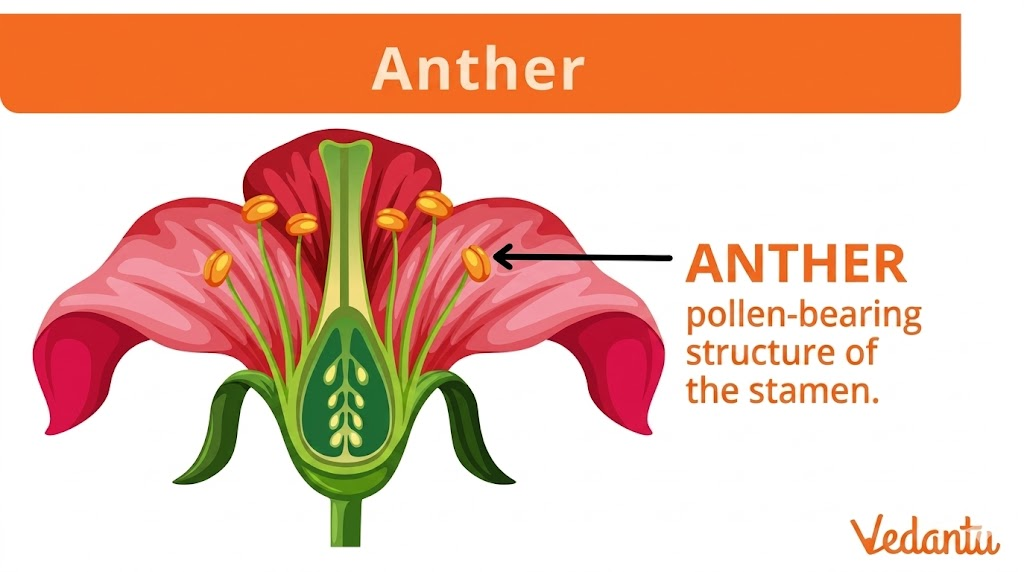
Position of the Anther in a Flower
The anther is generally borne at the tip of the filament. The filament is the thin stalk-like part of the stamen that holds the anther in a suitable position for pollen dispersal. This elevated position helps pollen to be transferred efficiently by wind, insects, water, or other pollinating agents.
In a typical flower, the stamens are arranged around the female reproductive part, the pistil. The anthers may be clearly visible as pollen-laden structures, especially in flowers such as lily, hibiscus, and crocus.
Structure of Anther
The structure of anther is one of the most important parts of this topic. A typical anther is bilobed, which means it has two lobes. Each lobe contains two pollen sacs, also called microsporangia. So, a typical anther usually has four microsporangia in total. These microsporangia are the actual sites where pollen develops.
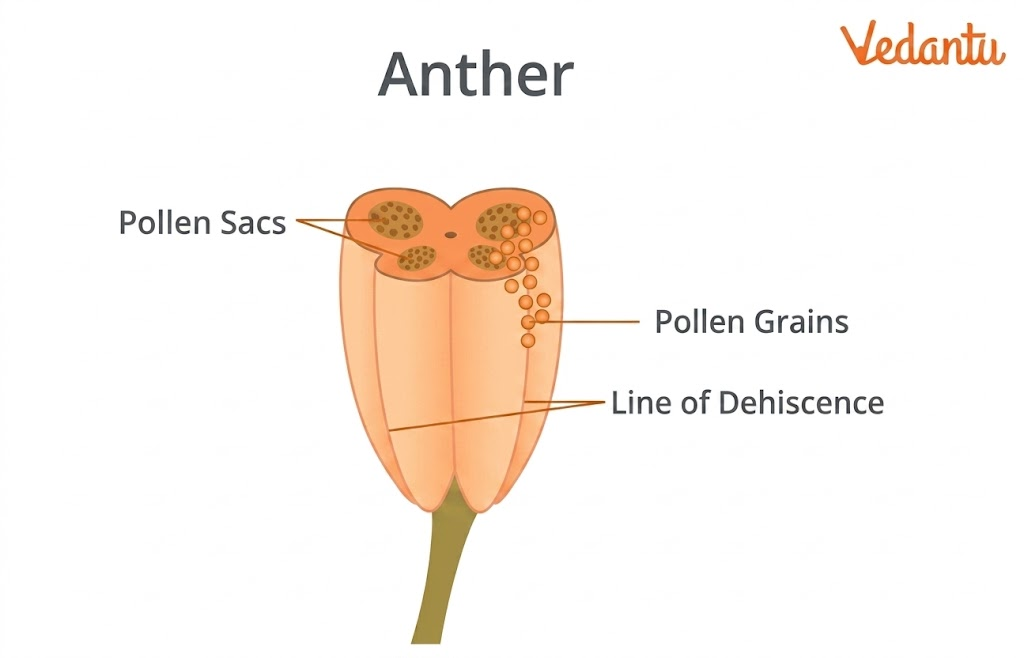
Main Features of the Structure of Anther
anther is located at the tip of the filament
it is generally bilobed
each lobe bears two pollen sacs
each pollen sac is a microsporangium
pollen develops inside these microsporangia
As the anther matures, the wall between adjacent pollen sacs in each lobe may break down. As a result, the mature anther may effectively appear to have one pollen-containing chamber in each lobe at the time of pollen release.
The anther contains pollen sacs or microsporangia, which produce and contain pollen grains. These pollen sacs are extremely important because they are the sites of microsporogenesis and pollen development.
TS of Anther
The TS of anther means the transverse section of an anther. This section is very important in botany because it shows the internal organisation of the anther clearly.
In a typical TS of anther, you can usually observe:
two anther lobes
four microsporangia or pollen sacs
outer wall layers
pollen mother cells or developing pollen in younger stages
mature pollen grains in advanced stages
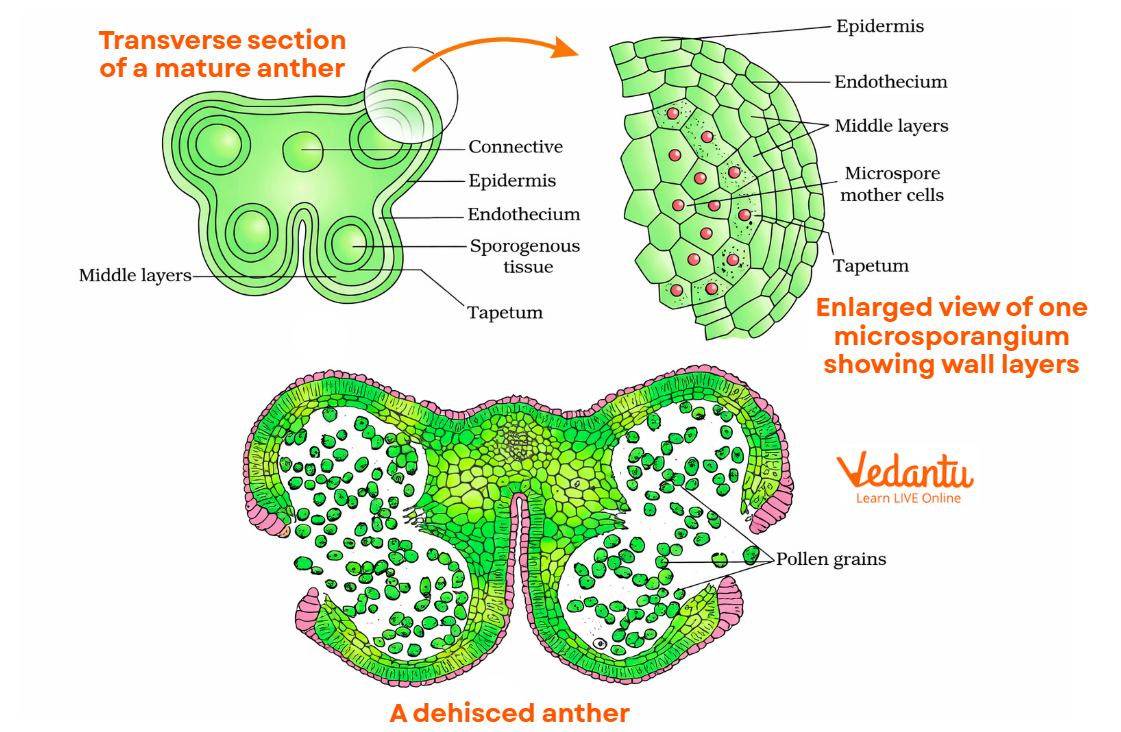
Since the anther is generally dithecous and bilobed, the transverse section usually shows a four-chambered appearance in the young stage. These four chambers correspond to the four microsporangia.
Parts Seen in the TS of Anther
When studying the TS of anther, it is useful to understand the different regions seen in it.
1. Anther Lobes
The two lobes form the major structural divisions of the anther.
2. Pollen Sacs or Microsporangia
These are the chambers where pollen is formed. There are usually four in a typical young anther.
3. Anther Wall
The wall encloses the pollen sacs and protects the developing microspores.
4. Sporogenous Tissue
In younger stages, the microsporangia contain sporogenous cells or pollen mother cells that undergo meiosis to form microspores.
5. Pollen Grains
In mature anthers, the sacs contain pollen grains ready for dispersal.
This is why the TS of anther is such a useful visual representation of male reproductive development in flowering plants.
Function of Anther
The function of anther is directly related to plant reproduction. The primary function of anther is to produce and release pollen grains.
1. Formation of Pollen
The anther is the site where microspores are formed and develop into pollen grains.
2. Protection of Developing Pollen
Before maturation, the anther encloses and protects pollen inside pollen sacs.
3. Release of Pollen
At maturity, the anther opens and sheds pollen for pollination.
4. Support of Sexual Reproduction
Since pollen carries the male reproductive cells, the anther plays a direct role in fertilisation and seed formation.
Role of Anther in Pollination
Pollination is the transfer of pollen from anther to stigma. Since pollen is formed in the anther, the anther is the starting point of pollination in flowering plants.
The anther helps pollination by:
holding mature pollen grains
placing them in an exposed position through the filament
releasing them when they are ready
making them available to pollinating agents such as wind or insects
Without pollen release from the anther, pollination cannot take place.
Pollen Formation in the Anther
Inside the microsporangia of the anther, special cells undergo meiosis to form haploid microspores. These microspores later develop into pollen grains.
Important Points About Pollen Formation
microsporangia are the sites of pollen development
pollen begins as microspores
these are formed by meiotic division
mature pollen grains are released by the anther
In angiosperms, pollen is produced by the anthers of the stamens. Each pollen grain is not itself the male gamete, but it gives rise to the structures involved in male gamete delivery during fertilisation.
Anther Dehiscence
Dehiscence means the opening of the anther to release pollen. In most flowering plants, anthers dehisce by a rupture or slit along one side of each pollen sac. However, in some plants, pollen may be released through small pores at the tip of the anther.
Why Dehiscence is Important?
ensures timely pollen release
supports pollination
helps reproductive success of the flower
Types of Pollen Release
Most angiosperms release pollen by longitudinal splitting of the anther wall. Some groups, such as members of the heath family, release pollen through pores at the anther tip.
This means that anthers do not always open in exactly the same way. Their dehiscence pattern may vary based on plant group.
Difference Between Anther and Filament
Students often confuse the anther and filament, so this distinction is useful.
Importance of Anther in Flowering Plants
The anther is essential for reproduction in flowering plants because it is the place where pollen forms and matures. Since pollen transfer is necessary for fertilisation, the anther is one of the most important male reproductive structures in a flower.
Why the Anther is Important?
it forms pollen grains
it protects developing pollen
it releases pollen during pollination
it contributes directly to fertilisation and seed formation
its structure and dehiscence pattern are taxonomically useful
Final Verdict from the Expert
The anther is a highly specialised reproductive structure in flowering plants. It forms the terminal part of the stamen and is responsible for producing and releasing pollen grains. If you study this topic with the diagram and remember that anther contains microsporangia that produce pollen, it becomes much easier to connect it with pollination, fertilisation, and seed formation.
FAQs on Anther: Structure, Function, TS Diagram and Pollen Sacs
1. What is another name for anther?
Another name for anther is microsporangium. A typical anther contains four microsporangia, so it is also called a tetrasporangiate structure.
2. What is the anther part of a plant?
The anther is the top part of the stamen, which is the male reproductive part of a flower. Its main job is to produce and hold pollen grains.
3. What is anther and filament?
Anther and filament are the two parts of a stamen.
Anther is the pollen-producing part
Filament is the slender stalk that supports the anther
4. What is the second name of anther?
The second name of anther is microsporangium. It is called this because it contains pollen sacs where microspores are formed.
5. Why is anther called dithecous?
Anther is called dithecous because it has two lobes, and each lobe has two thecae or pollen sacs. So, a typical anther has two thecae and appears bilobed.
6. What are the 4 layers of the anther?
The 4 layers of the anther are:
Epidermis
Endothecium
Middle layers
Tapetum
These layers protect and support the developing pollen grains.
7. Is anther known as microsporangium?
Yes, the anther is commonly referred to as a microsporangium because it contains pollen sacs where microspores or pollen grains are produced.
