



Stepwise NCERT Answers and Important Diagrams for Class 4 Shapes Around Us
NCERT Textbook Page 1
Try to make a model of the buildings shown here using blocks.
Question 1.
What parts of the building have you shown in your model
(for example, roof, pillars, base, etc.)?
Question 2.
Why did you select these parts?
Question 3.
What shapes will model these parts well?______________
Question 4.
How is your model similar to the picture of the real building? __________________
Question 5.
How is it different from the real building? ______________
Solution:
Students should do it by themselves.
NCERT Textbook Pages 3-4
Craft
Question 1.
Make a sphere-like shape with paper strips.
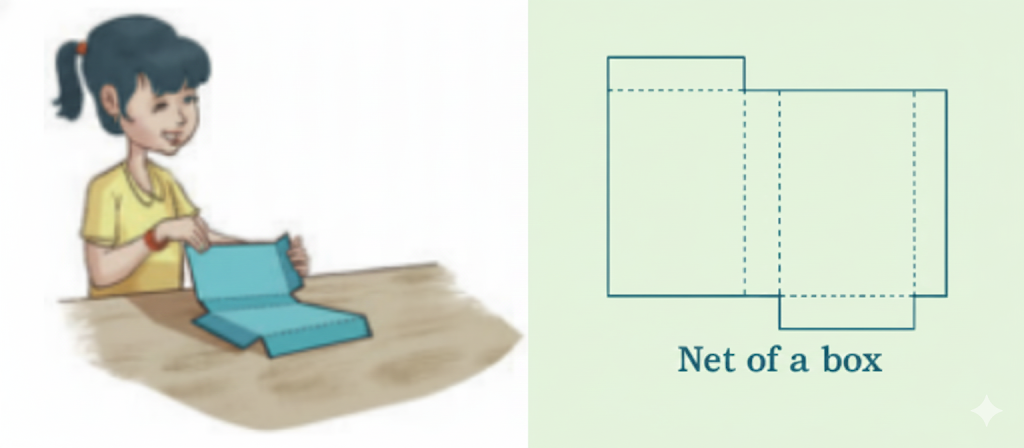
Diksha has folded open and flattened a box to see what an open box looks like. This is called the net of the box. If you fold along the dotted lines, you will get the box back.
Solution:
Students should do it by themselves.
Question 2.
Use the nets given at the end of the book to make the models shown below.
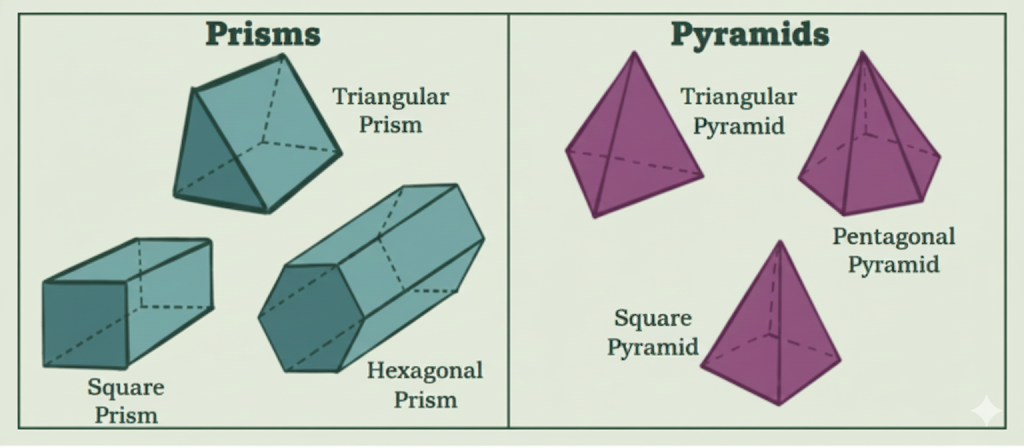
Is a cube also a prism?
What is the difference between a prism and a pyramid? Discuss.
What shape of face is common to all the prisms?
Solution:
All prisms have faces that are rectangular, so the face that is common to every prism is a rectangle.
What other shapes do these prisms have?
Solution: The prisms also have other faces in the shapes of triangles, hexagons, and squares.
How many such faces each?
Solution: A triangular prism has two triangular faces, a hexagonal prism has two hexagonal faces, and a square prism has two square faces that are identical and lie opposite each other.
What shape of face common to all the pyramids?
Solution: Every pyramid has triangular faces, so the face that is common to all pyramids is a triangle.
All the triangular faces meet at point.
Solution: All the triangular faces come together at a single point.
Identify any other shape in each of the pyramids.
Solution: A triangular pyramid is made up only of triangular faces, a pentagonal pyramid has one pentagonal face, and a square pyramid has one square face.
Is a cube also a prism?
Solution: A cube is a special kind of square prism that has six square faces.
What is the difference between a prism and a pyramid? Discuss.
Solution: A prism has two matching bases, whereas a pyramid has only one base. In addition, the side faces of a prism are rectangles or parallelograms, while the side faces of a pyramid are all triangles.
Question 3.
Now try to make the above shapes using straws and plasticine/thread and fill in the table.
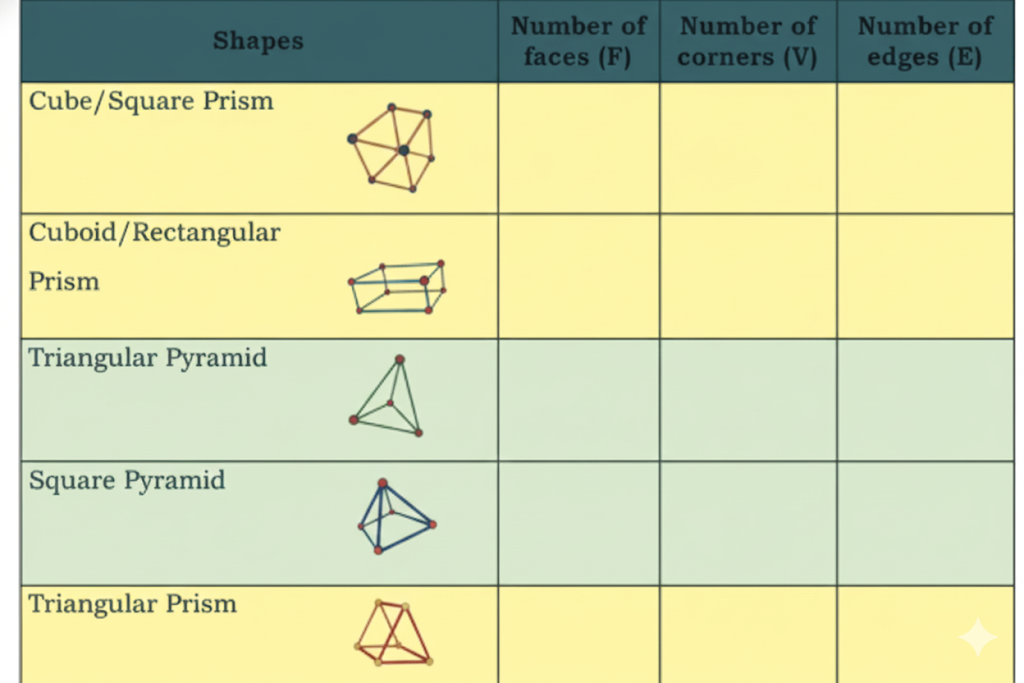
Identify any relationship that you may find between the number of faces (F), edges (E), and corners (V). Calculate F+V–E in each case. What do you notice?
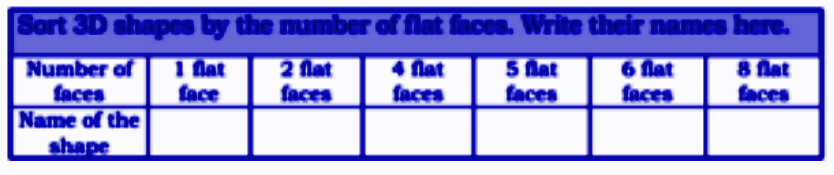
Can you construct a 3D shape with 3 flat faces?
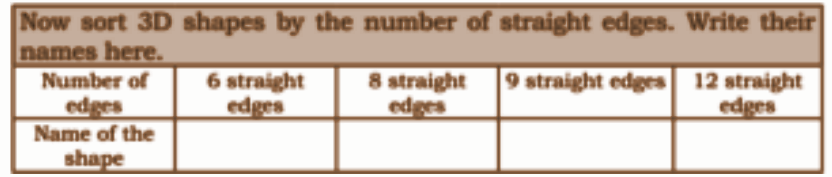
Solution:
Thus, we find that the number of faces (F) plus the number of corners (V) minus the number of edges (E) equals 2.

No! We cannot construct a 3D shape with 3 flat faces.

NCERT Textbook Page 5
Let Us Observe
Question 1.
Take a die. Look at the face that has number 1. The face numbered 6 is opposite to the face numbered 1.
What is the face opposite to the
(a) face numbered 2?
(b) face numbered 3?
(c) face numbered 4?
Solution:
Here is a clear and simple rephrased version:
(a) A standard die is made in such a way that the numbers on opposite sides always total 7.
So, since (7 - 2 = 5), the face opposite to 2 is 5.
(b) Since (7 - 3 = 4), the face opposite to 3 is 4.
(c) Similarly, because (7 - 4 = 3), the face opposite to 4 is 3.
Question 2.
(a) Which faces have common edges with the face numbered 1?
(b) Which face has no common edge with face numbered 1?
Solution:
(a) Every face of a dice shares edges with all the other faces except the one directly opposite it. Therefore, the faces numbered 2, 3, 4, and 5 all share edges with the face numbered 1.
(b) The face opposite to 1 is 6, so the face numbered 6 does not share any edge with the face numbered 1.
Question 3.
Look at three different views of the same cube.
(a) What colour is the face that is opposite to the red face?
(b) What colour is the face that is opposite to the yellow face?
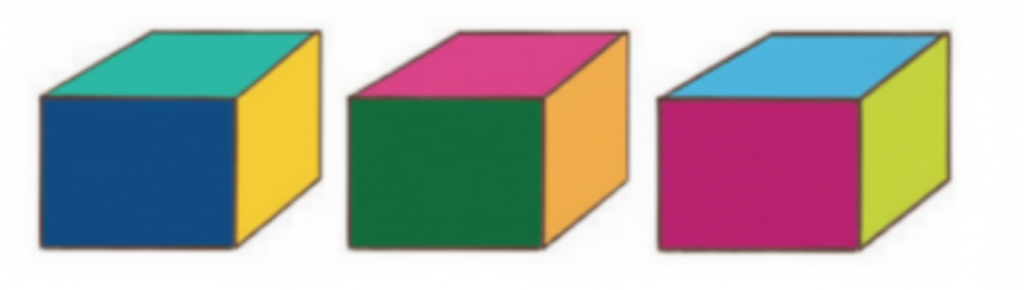
Solution:
(a) The purple face lies opposite the red face.
(b) The orange face lies opposite the yellow face.
Follow these instructions for the shapes along the border.
1. Colour all shapes with a rectangular face in red.
2. Draw a smiley on shapes with a triangular face.
3. Draw a star on shapes with a curved face.
4. Colour all shapes with no corner in blue.
5. Circle the shapes that have the same opposite faces.
Solution:
Students should do it by themselves.
NCERT Textbook Page 6-7
Sorting 3D Shapes
Write the names of 3D shapes in the correct places.
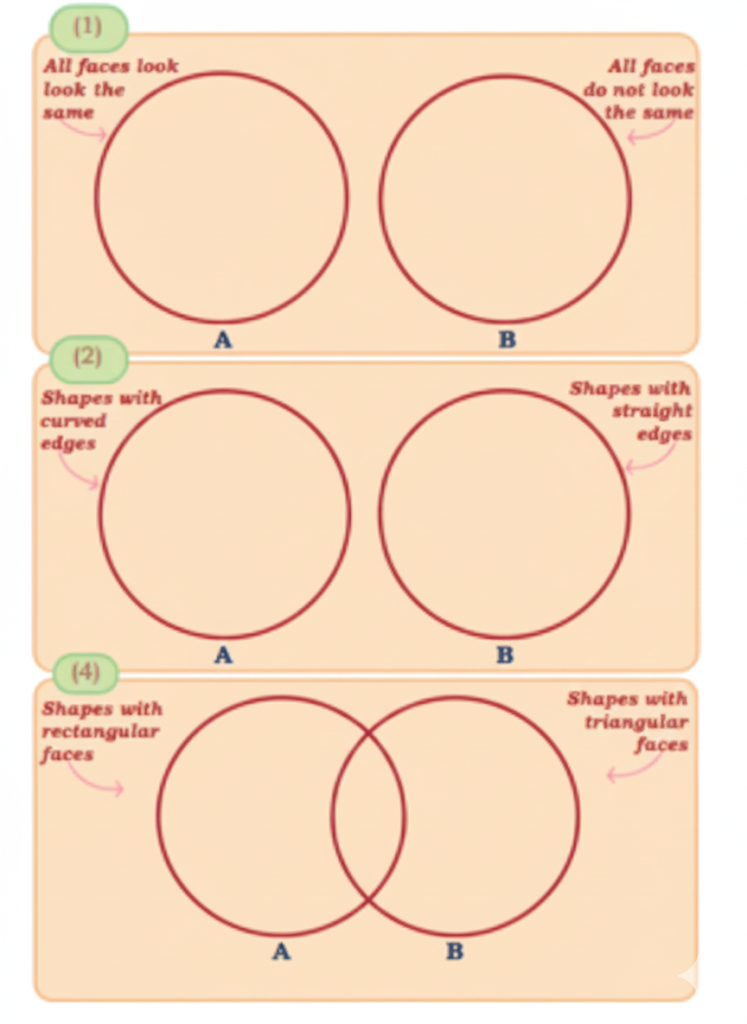
In which circle did you write triangular prism and rectangular pyramid?
Solution: Here is a clear rephrased version:
In the area shared by both circles A and B.
Let us sort shapes in another way.
Using circles like those on the previous page, can you sort shapes into the categories “Shapes with curved faces” and “Shapes with flat faces”?
Solution:
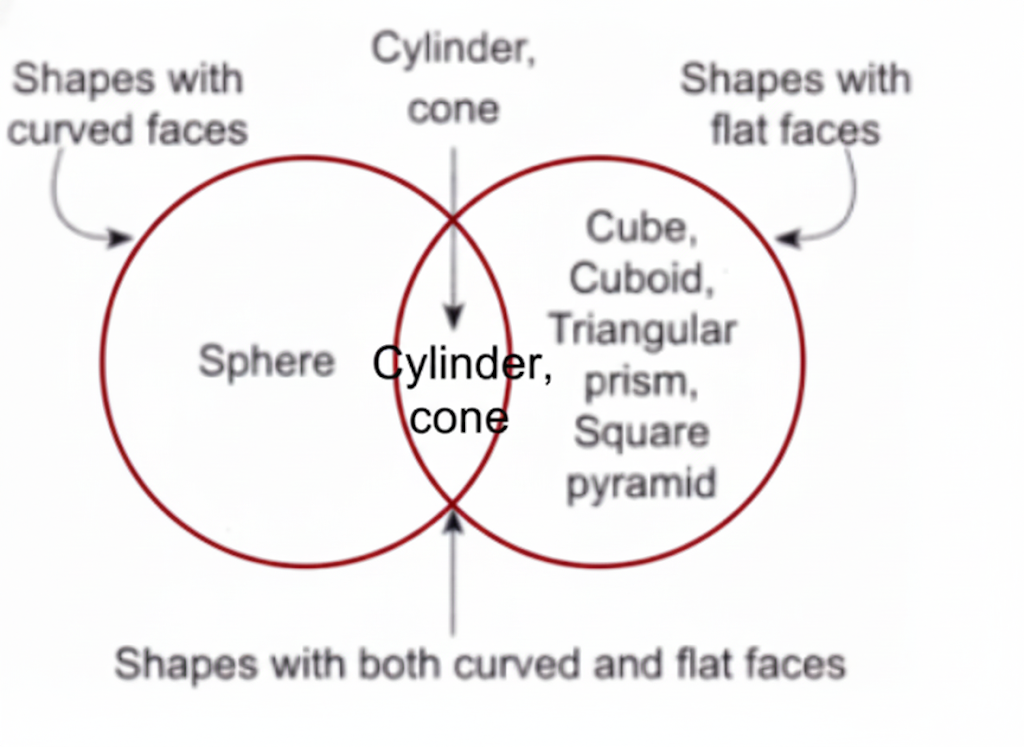
NCERT Textbook Page 7
Cube Towers
How many cubes are in each of these cube towers?
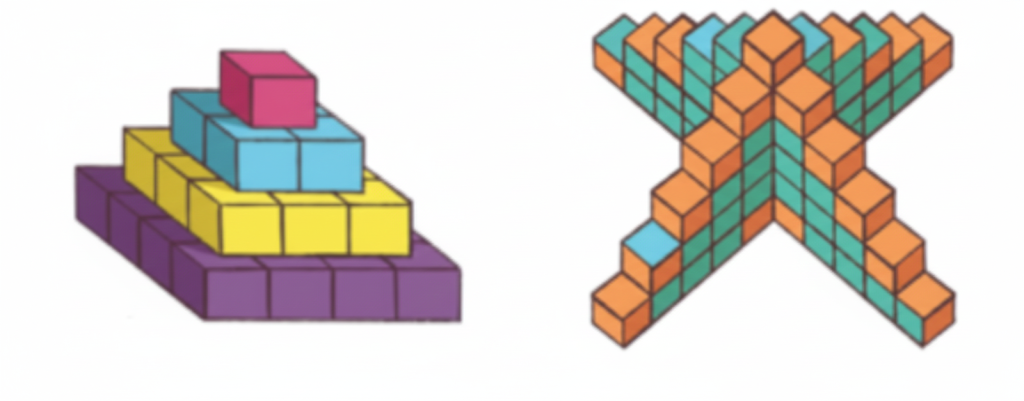
Solution:
The first tower contains 30 cubes.
The second tower contains 66 cubes.
NCERT Textbook Pages 8-9
Drawing Cubes on a Triangular Dot Paper
Can you complete the following cubes?
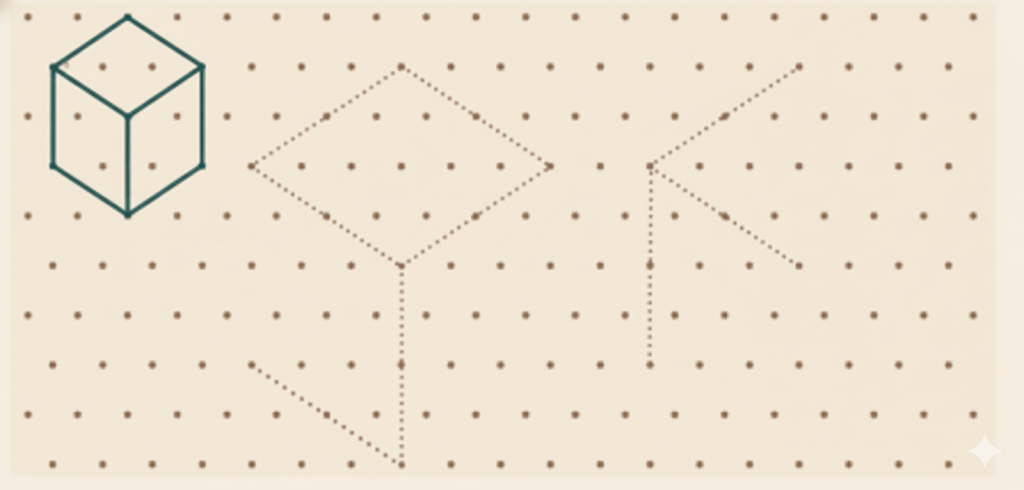
Solution:
Yes, it can be finished in the way shown above.
Question 1.
Match the pictures to the descriptions and name the shapes.
(a) I have 5 faces and 5 corners. I have 8 edges, 1 of my faces is a square and 4 of my faces are triangles ______________
(b) I have 1 flat face, 1 curved face and 1 edge ______________
(c) I have 1 curved face. I have no edges or corners ______________
(d) I have 2 flat faces, 1 curved face and 2 edges. I have no corners ______________
(e) I have 5 faces, 6 comers and 9 edges, 2 of my faces are triangles ______________
(f) I have 6 faces, 12 edges and 8 corners ______________
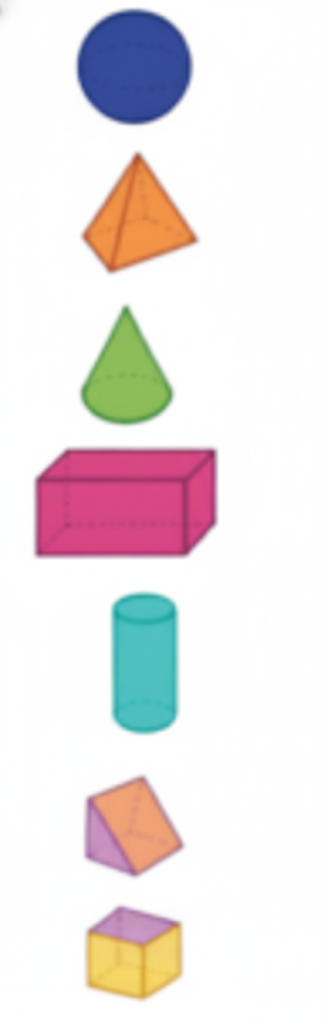
Solution:
(a) I have 5 faces and 5 corners. I have 8 edges, 1 of my faces is a square and 4 of my faces are triangles Square pyramid
(b) I have 1 flat face, 1 curved face and 1 edge Cone
(c) I have 1 curved face. I have no edges or corners Sphere
(d) I have 2 flat faces, 1 curved face and 2 edges. I have no corners Cylinder
(e) I have 5 faces, 6 comers and 9 edges, 2 of my faces are triangles Triangular prism
(f) I have 6 faces, 12 edges and 8 corners Cube/Cuboid
Question 2.
Each one is different. How? Discuss.

Solution:
A sphere has one curved surface and no flat surfaces.
A cone has one flat surface and one curved surface.
A triangular pyramid has four triangular faces.
A cube has six square faces.
A cuboid has six rectangular faces.
Therefore, each of the given solids is different based on the shape of its faces.
Question 3.
Match the following nets to the appropriate solids given below-
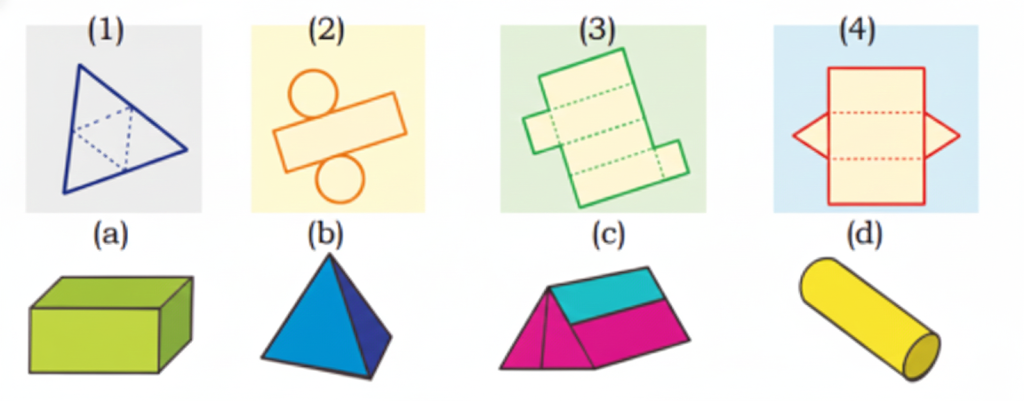
Solution:
(1)-(6),
(2)-(d),
(3)-(a),
(4)-(c).
Question 4.
Which of the nets can be folded to make a solid of the kind given below.
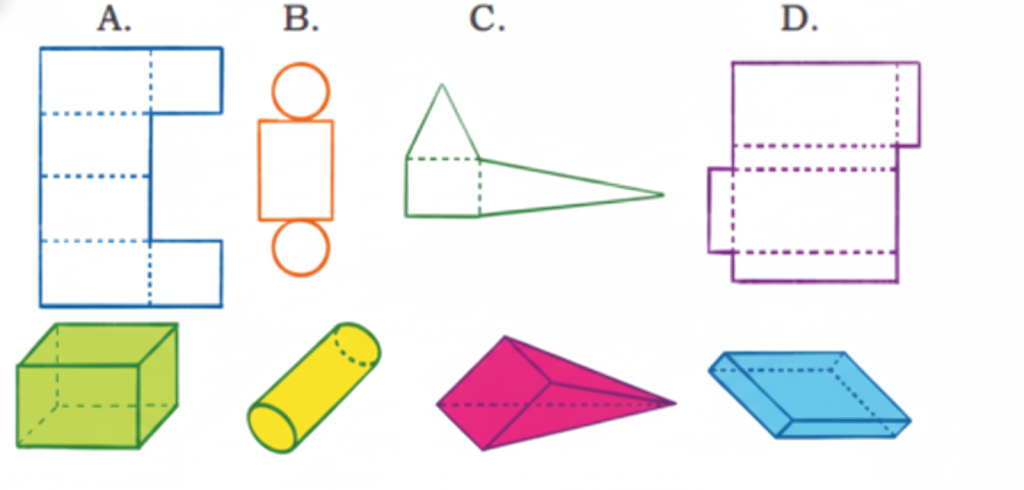
Solution:
Out of the given nets, only B and D can be folded to form the type of solid shown below them.
Question 5.
Nitesh cuts up a net on the folds. Here are its pieces.
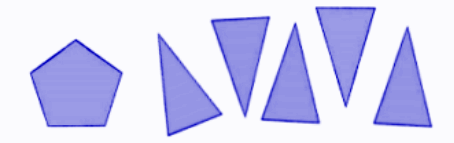
Which solid has the above pieces in its net?
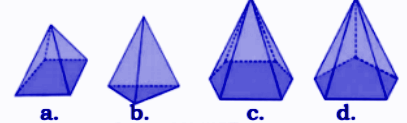
Solution:
Nitesh cuts out 5 triangles and 1 pentagon. These can form the net of a pentagonal pyramid, which has a pentagonal base and five triangular faces meeting at a single point. Hence, the correct solid is d.
NCERT Textbook Pages 10-11
When Lines Meet
How many angles are there in this boat drawing?
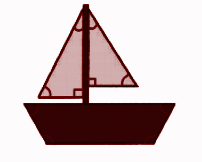
Solution:
10 angles.
Let Us Do
Question 1.
Mark the angles on the following pictures.
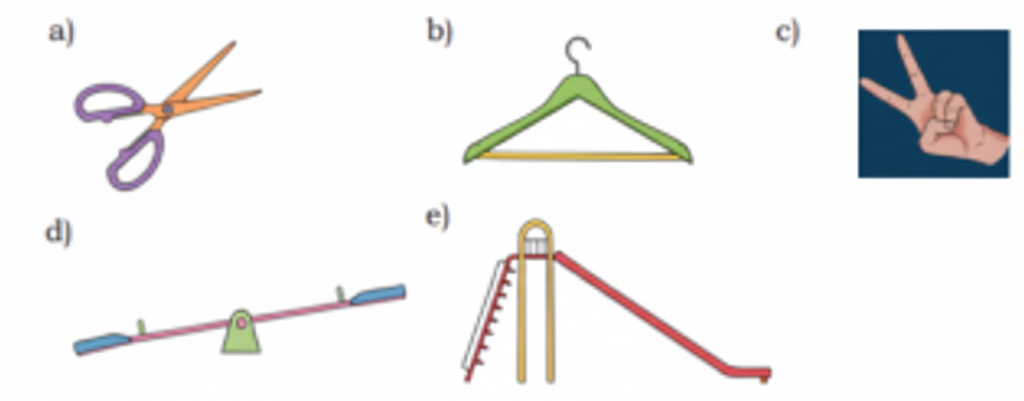
Solution:
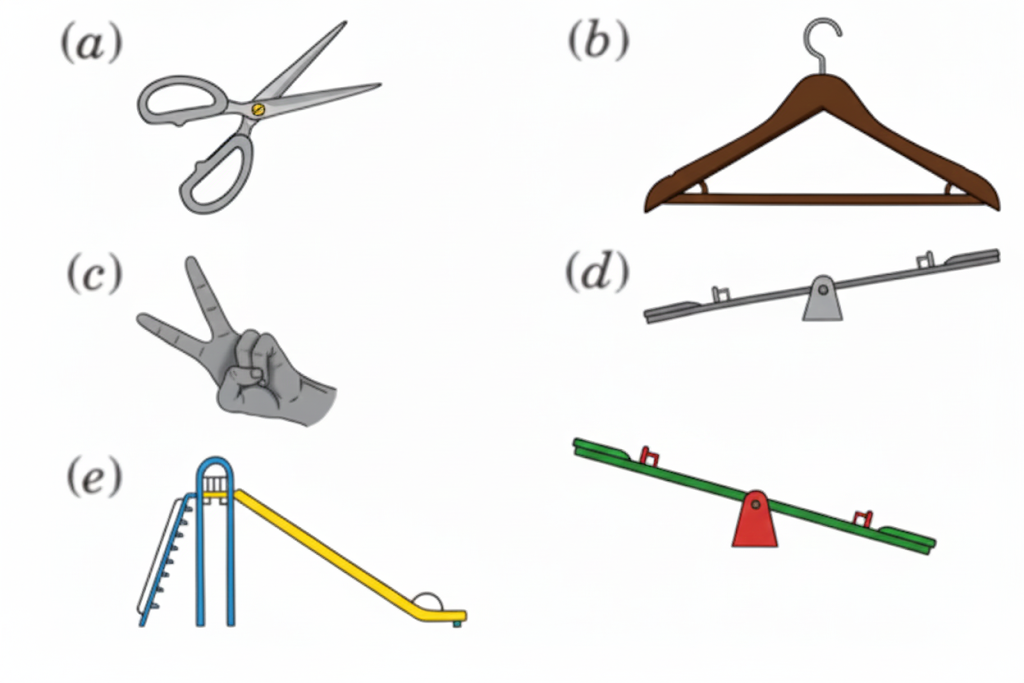
Question 2.
Where do you see angles in the classroom? Give a few examples.
Solution: Students should do it by themselves.
Right Angles
Identify the angles that you think are right angles and circle them in the dot grid given below. Check using your right angles checker.
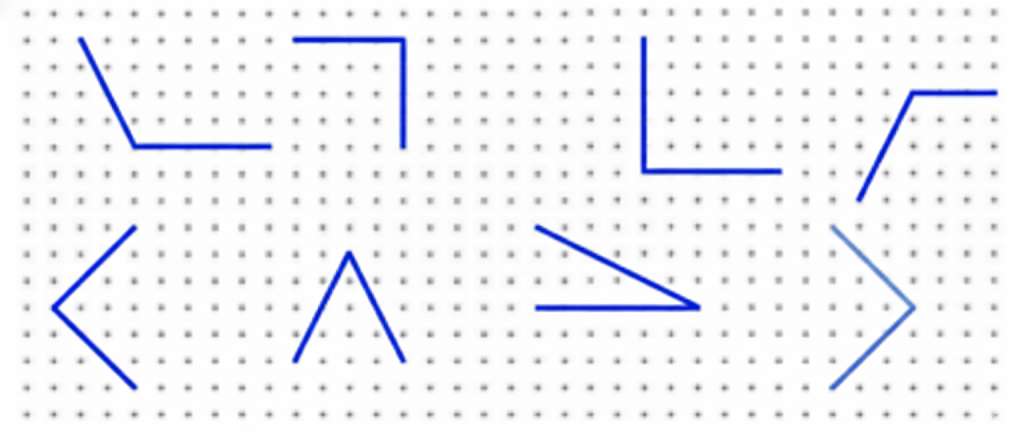
Solution:
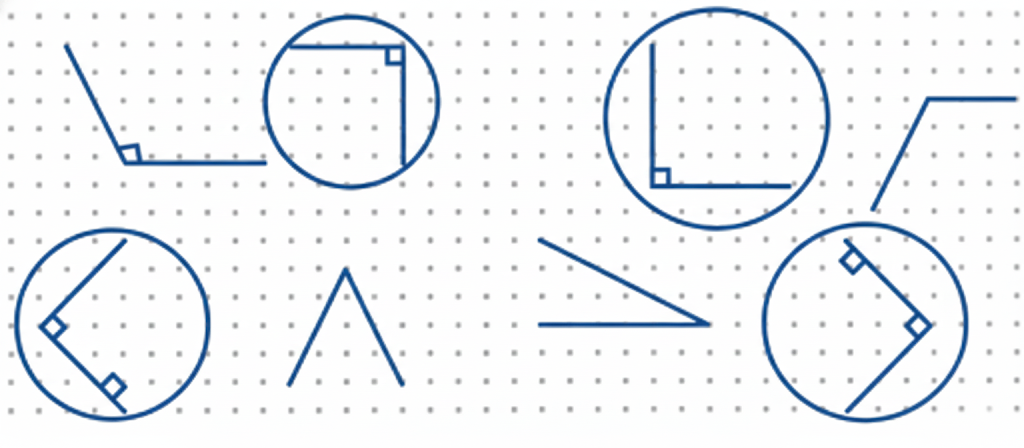
Check for right angles in a book, window, and any other object. Write the names of objects where you find right angles.
Solution:
Students should do it by themselves.
NCERT Textbook Page 12
Let Us Do
Question 1.
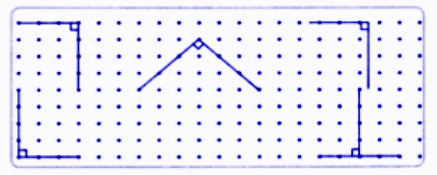
Draw some right angles on the dot grid.
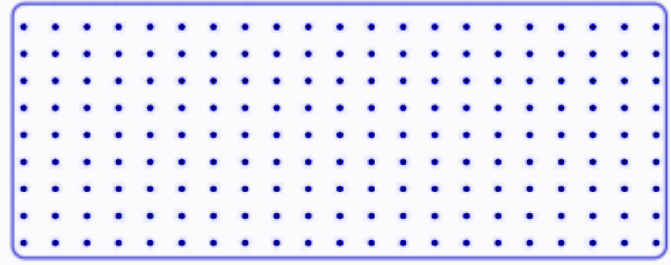
Solution:
Acute and Obtuse Angles
Name some objects from your classroom which have an acute angle.
Solution:
Students should do it by themselves.
Name some objects from your classroom which have an obtuse angle.
Solution:
Students should do it by themselves.
Identify all angles in the following letters.


Solution:
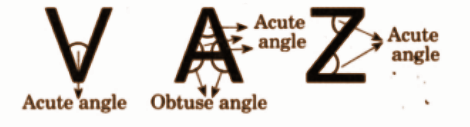
NCERT Textbook Page 13
Let Us Do
Question 1.
(i) Draw some acute angles on the top grid. Draw a line to make an acute angle using each given line in the bottom grid.
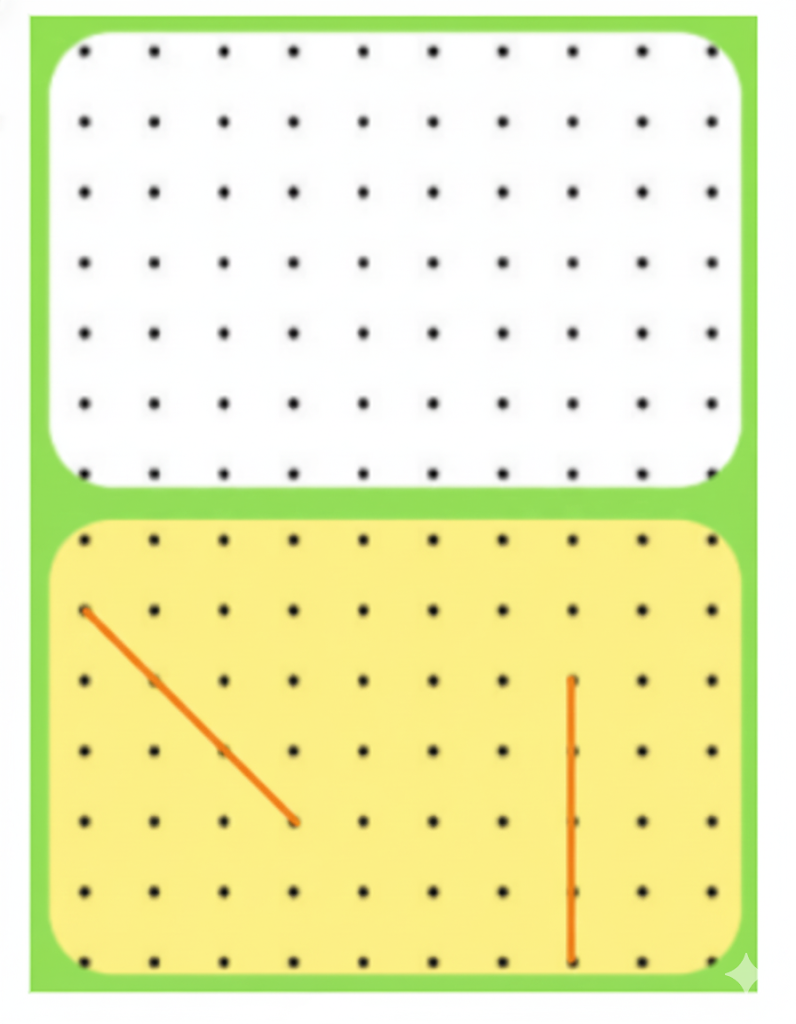
Solution:
Below are some drawings that show acute angles.
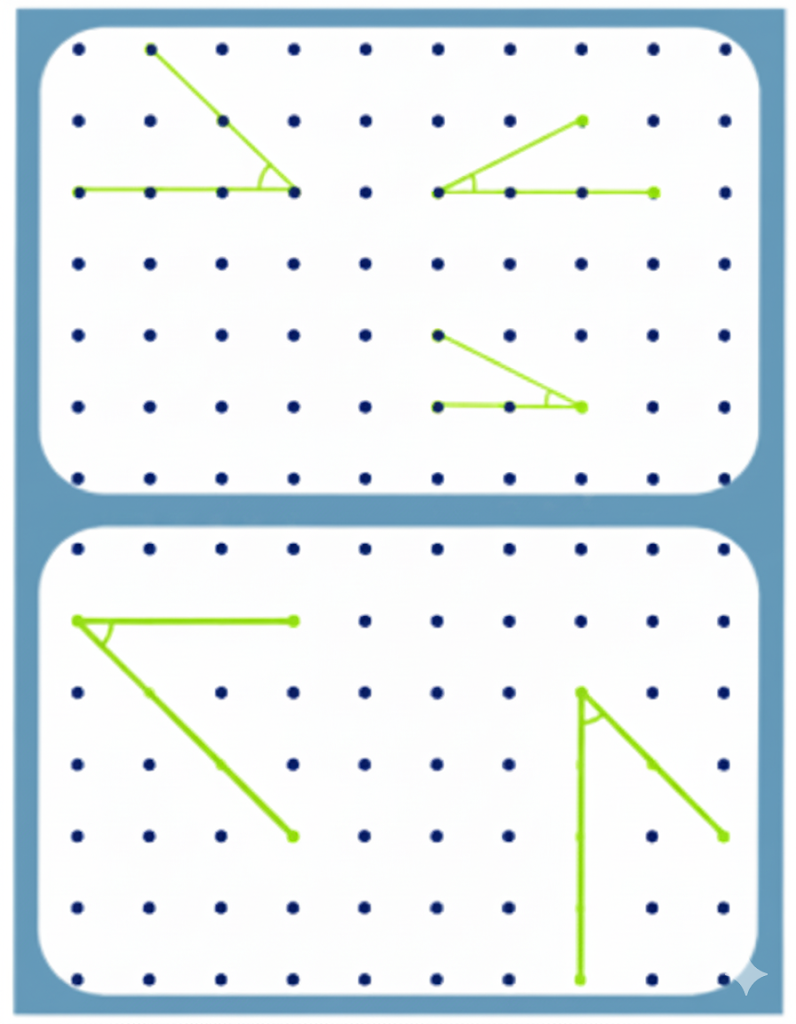
(ii) Draw some obtuse angles on the top grid. Draw a line to make an obtuse angle using each given line in the bottom grid.
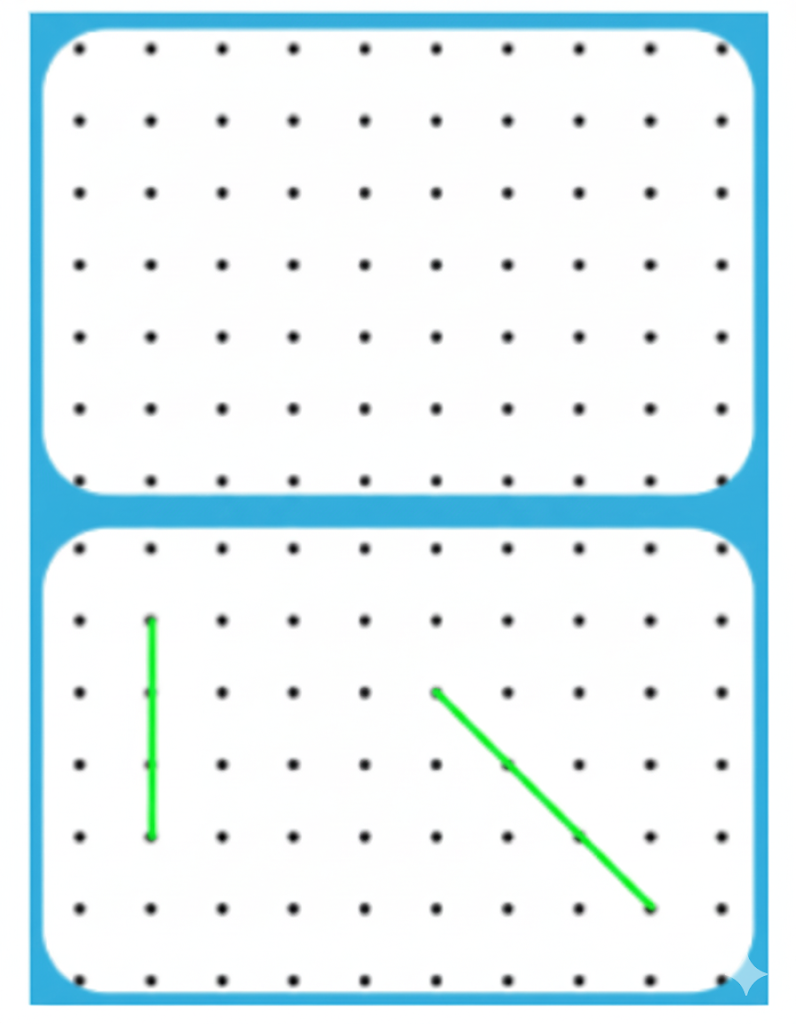
Solution:
Here are some illustrations of acute angles.
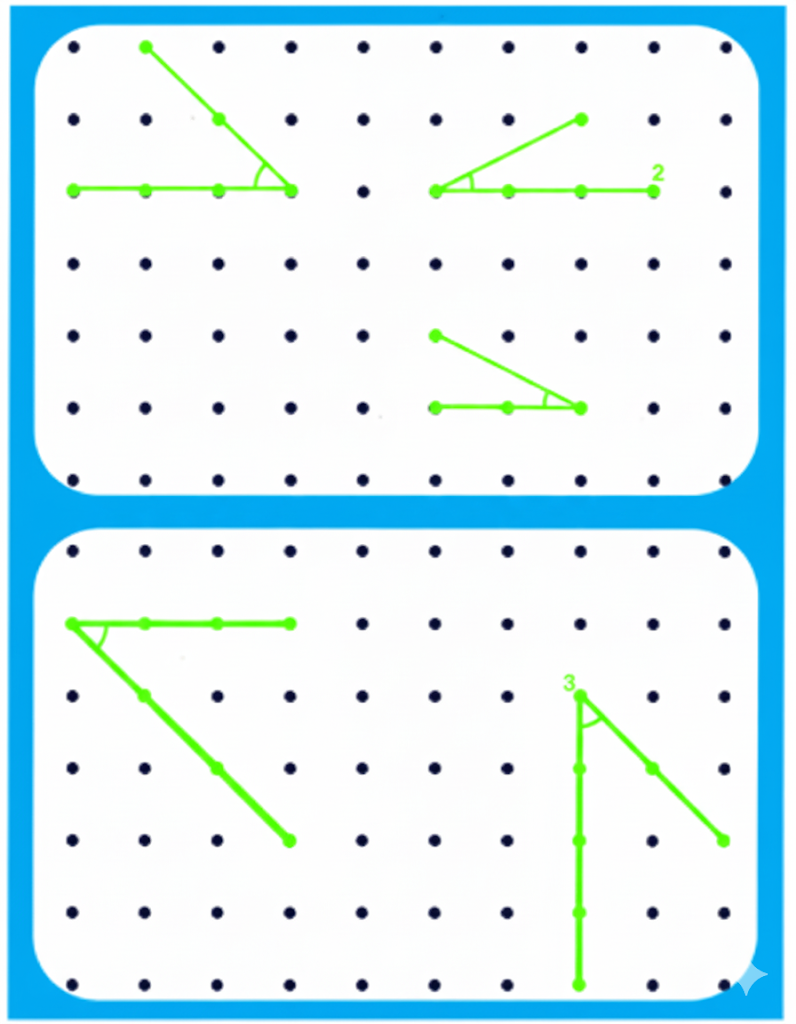
(ii) Draw some obtuse angles on the top grid. Draw a line to make an obtuse angle using each given line in the bottom grid.
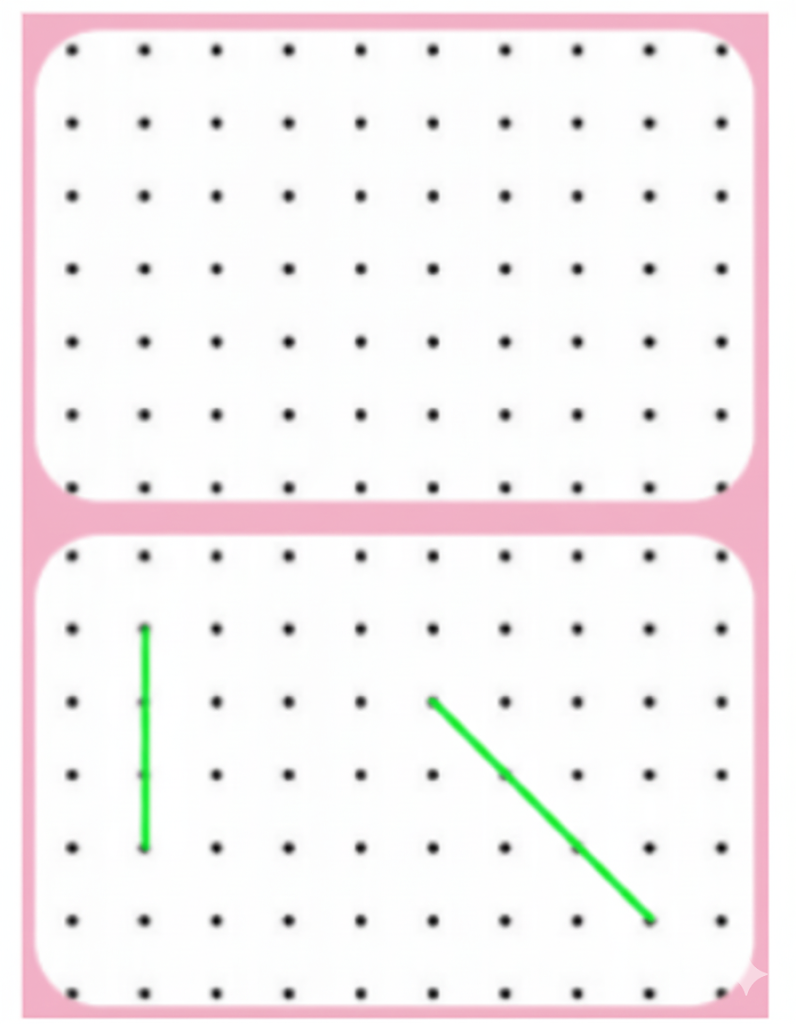
Solution:
Here are some drawings that show obtuse angles.
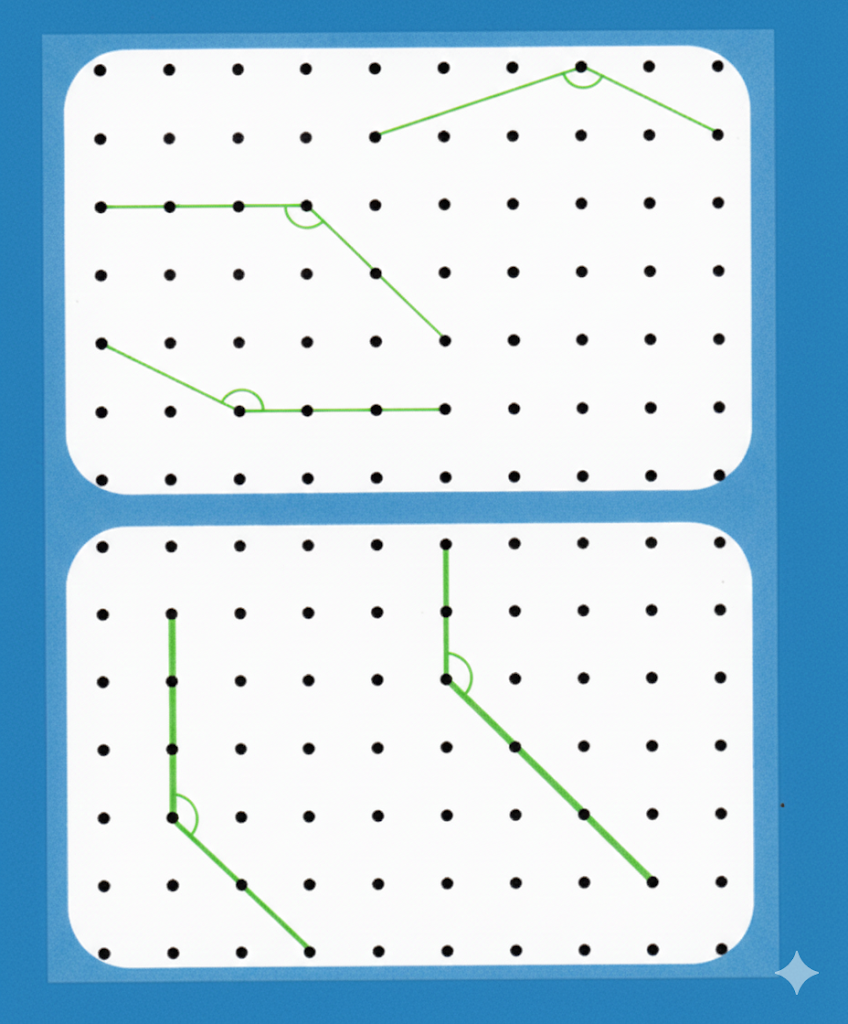
Question 2.
In the figures given below, mark the acute angles in red, right angles in green, obtuse angles in blue.
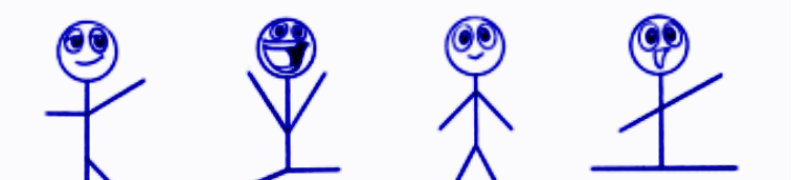
Solution:
Students should do it by themselves.
NCERT Textbook Pages 14-16
Shapes with Straws
What kinds of angles does a triangle have?
Solution:
A triangle can have an acute angle, an obtuse angle, or a right angle.
Make a rectangular shape with straws and clay.
What kinds of angles do you see in the rectangle?
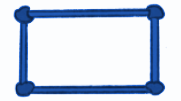
Solution:
A rectangle has four right angles.
Does the shape of the rectangle change if we gently push one of its sides?
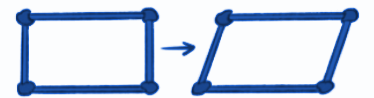
Solution:
Yes
Use the dot grid given below to draw several three and four-sided shapes. Circle the shapes that have one or more right angles.
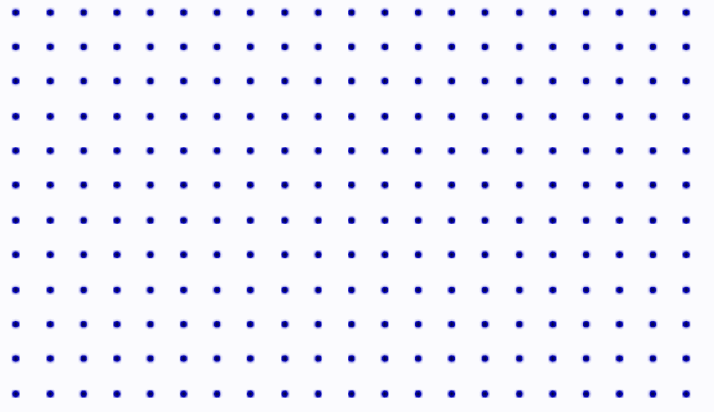
Solution:
Students should do it by themselves.
Here are some 4-sided shapes. In what ways are the rectangle and square different from these shapes?
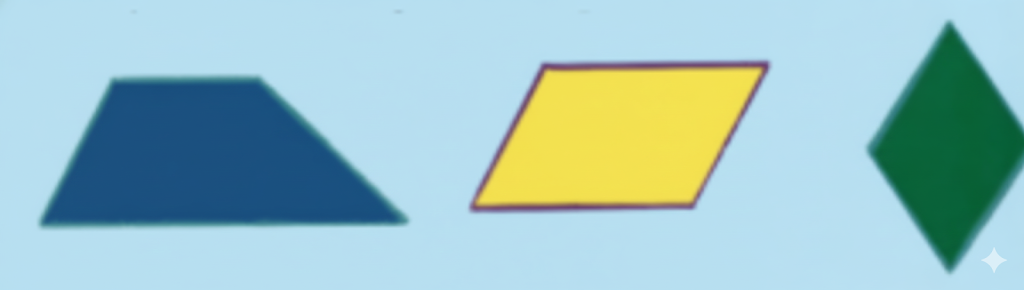
Solution:
Rectangles and squares have all right-angled (square) corners, but the given shapes do not have square corners.
Try to make this 5-sided shape with all sides equal (Pentagon)
Are these right angles?
Solution:
No.
Does the shape of the pentagon change if we gently push one of its sides?
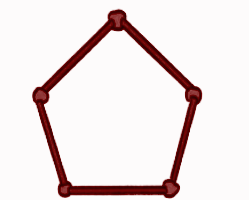
Solution:
Yes
How does this changes the angles?
Solution:
Students should do it by themselves.
Can you make a circle using straws?
Look at the picture. The lengths of the straws in this picture are ______________
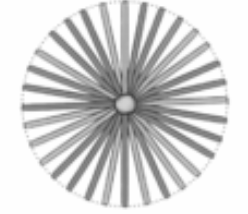
Solution:
Equal
What will happen if we take straws of unequal lengths?
Solution:
A circle cannot be formed.
Let Us Make
Can you use a scale to draw a circular shape? Let us see. Mark a point A.
Draw many points that are at an equal distance from point A.
Connect the dots freehand. What do you get? …………….
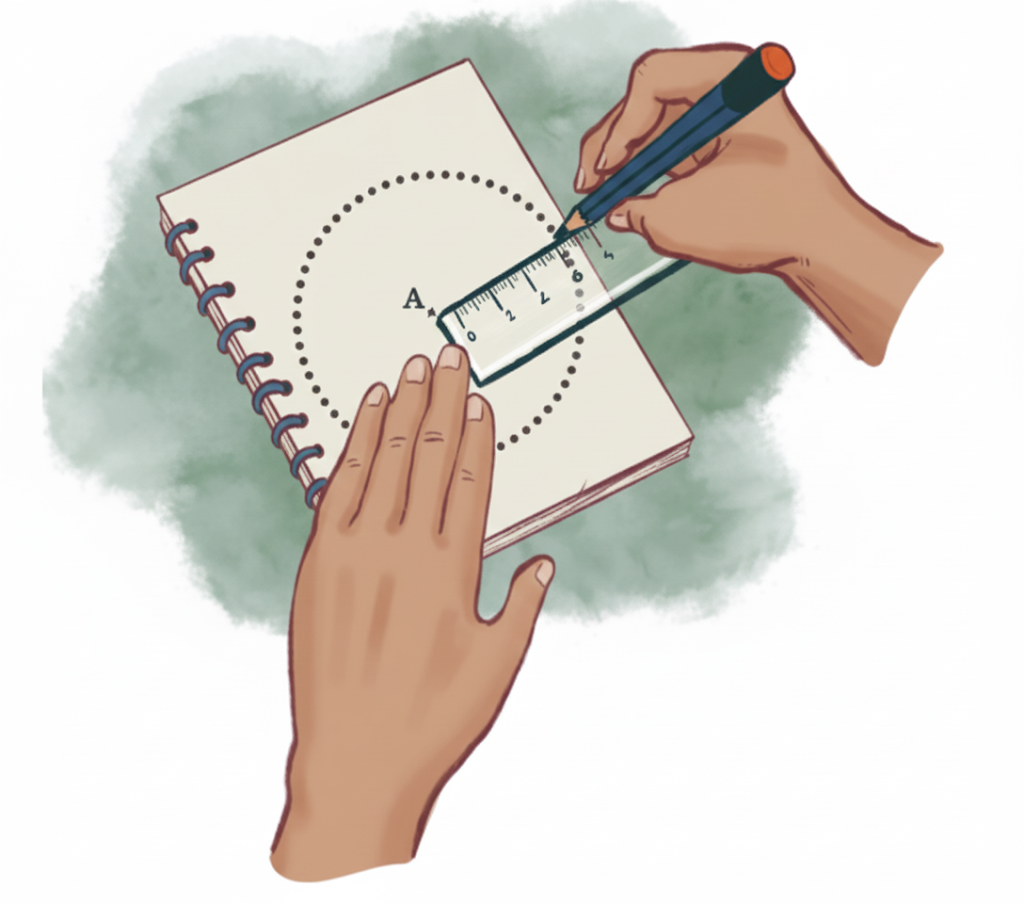
The point A is the centre and the line from the centre to the border of the circle is the radius.
Solution:
Students should do it by themselves.
NCERT Textbook Page 17
Amazing Circles
a) Take a piece of circular paper.
b) Fold your paper in half and crease it well.
c) Open the fold and measure the length of the crease using a thread.
d) Fold your paper in half in a different way and crease it well.
e) Open the fold and measure the length of the crease again.
f) Fold it again in half in a different way and crease it well.
g) Open the fold, measure the length of the crease.
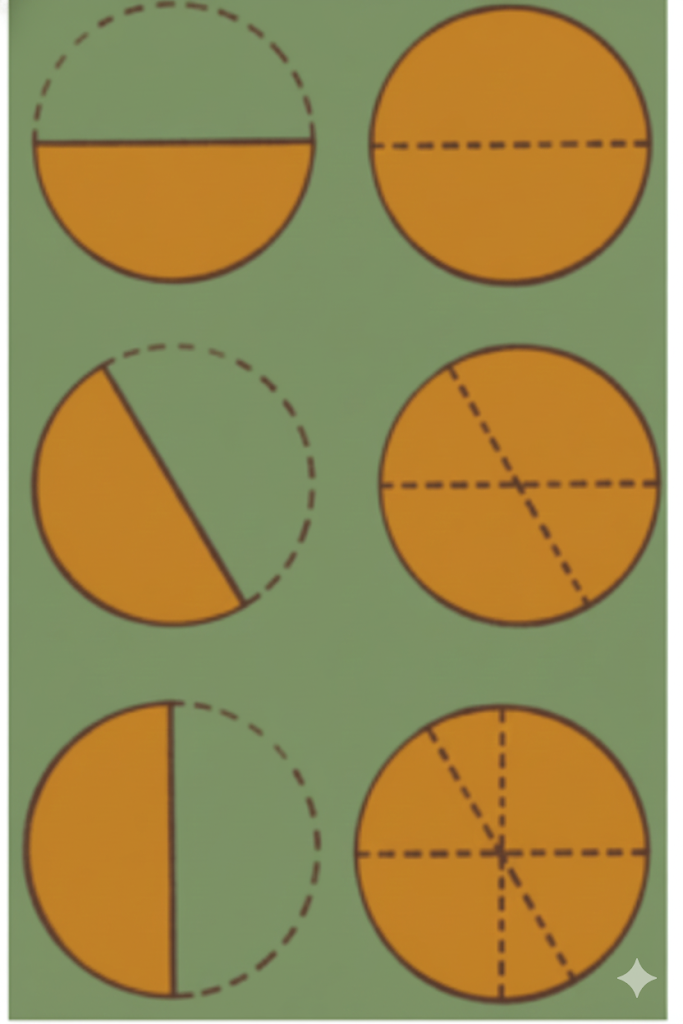
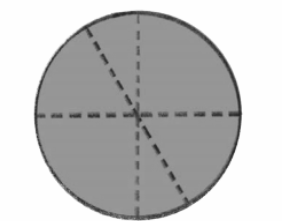
1. The length of all the creases are ___________. (Equal/Unequal)
Solution:
Equal
2. These creases are called ___________ of the circle.
Solution:
diameters
3. Discuss where the centre is. Do you notice that all the diameters pass through the centre?
Solution:
The centre is the point where all the creases meet. Yes, every diameter passes through the centre.
4. Measure the length of the creases from the center to the border of the circle. This is called the ___________ of the circle.
Solution:
radius
5. Discuss if there is any relationship between the radius and the diameter of a circle.
Solution:
The radius is equal to half the diameter of a circle.
Look Pages 18-19
Let Us Do
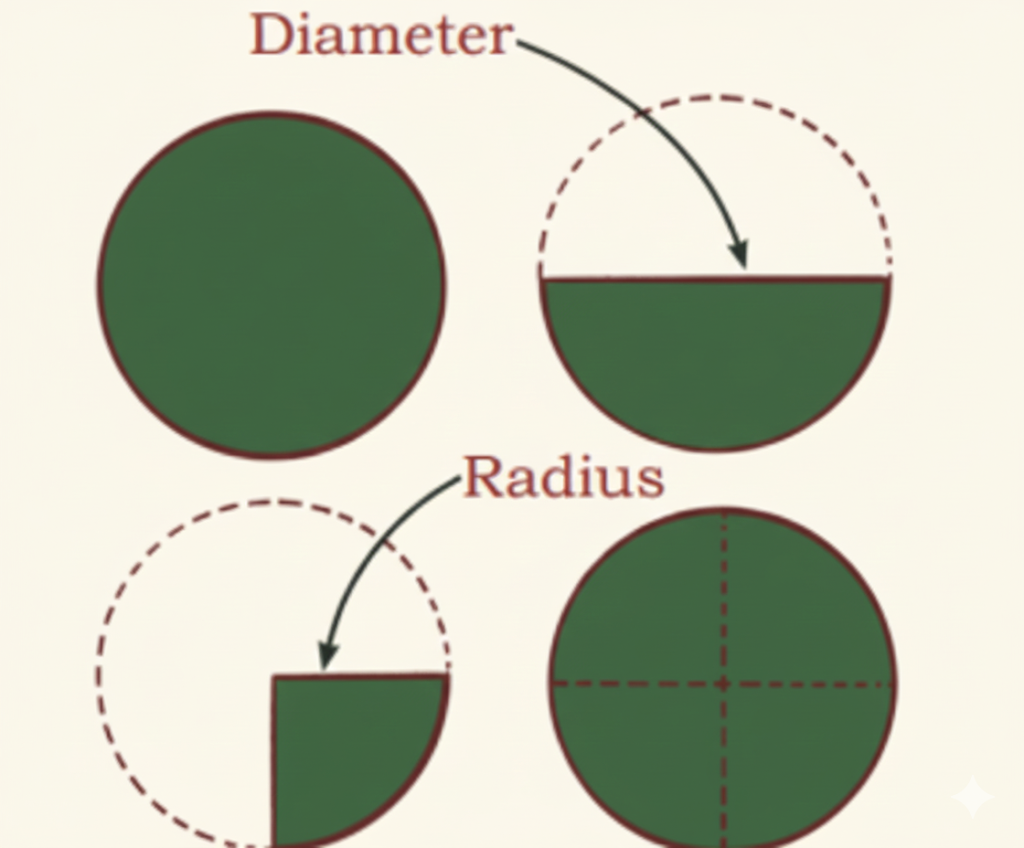
Fold the circular paper in half.
Fold this half again in half.
The length of the diameter is ___________ (half/double) of the length of radius.
Solution:
The diameter is twice the length of the radius.
Look at the wheels
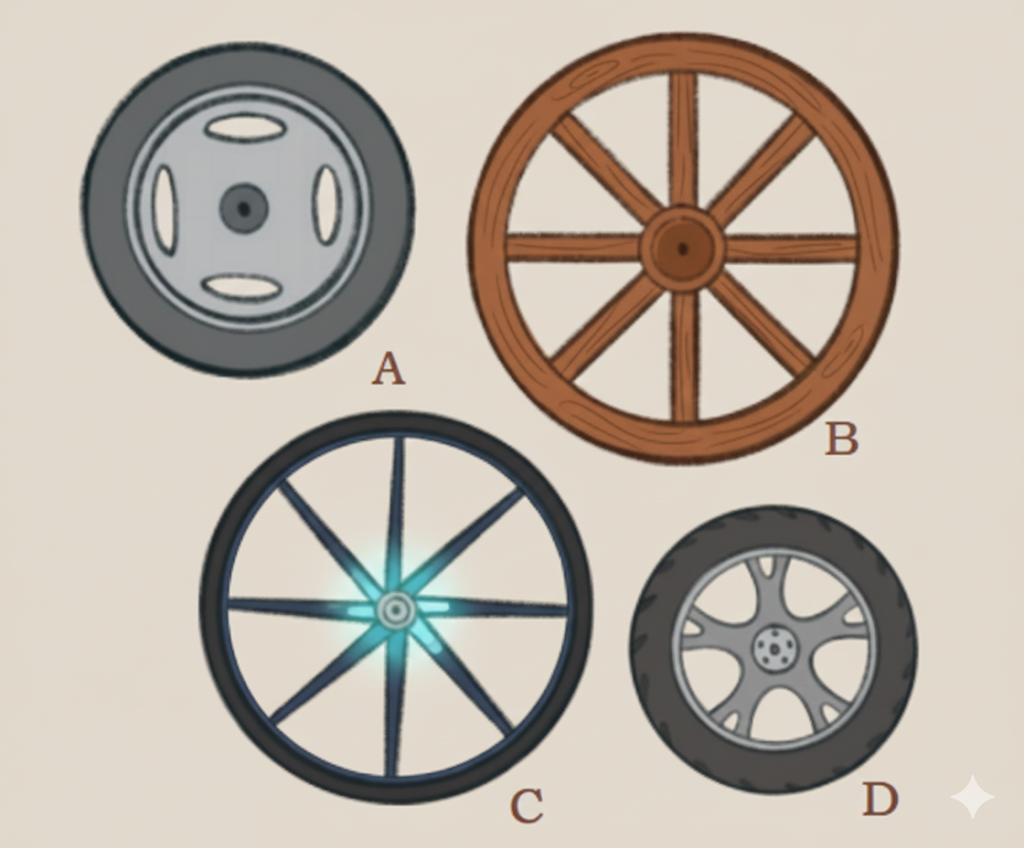
Solution:
All the wheels look like a circle
Name the wheel with the
1. longest radius ………………….
2. shortest radius ………………….
3. longest diameter ………………….
4. shortest diameter ………………….
Solution:
1. longest radius wheel B
2. shortest radius wheel D
3. longest diameter wheel B
4. shortest diameter wheel D
NCERT Textbook Pages 19-20
Puzzling Shapes
Question 1.
Identify the hidden shapes and write their names.
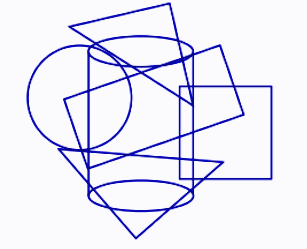
Solution:
The shapes that are hidden include a triangle, a square, a rectangle, a circle, and a cylinder.
Question 2.
Draw 2 lines to divide the triangle into 1 square and 2 triangles.
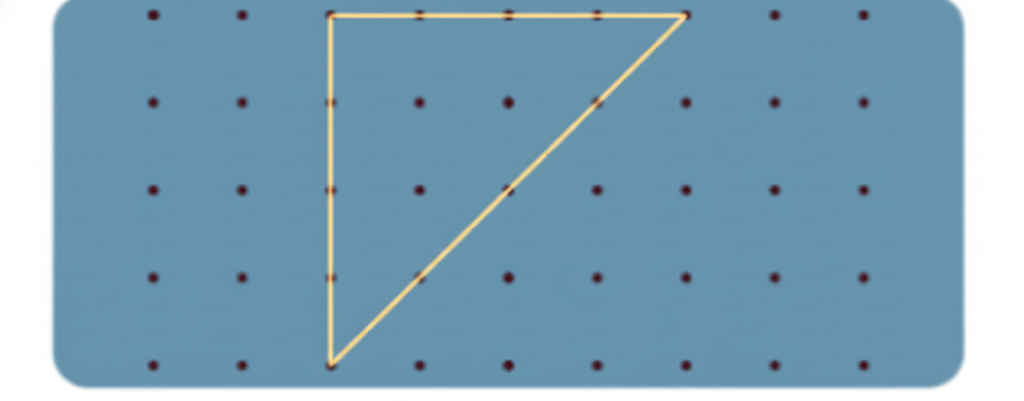
Solution:
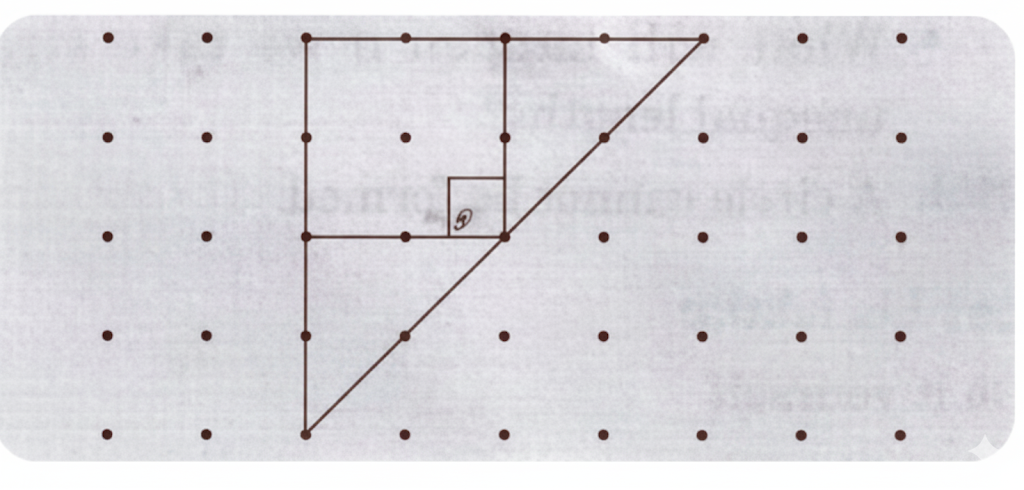
Question 3.
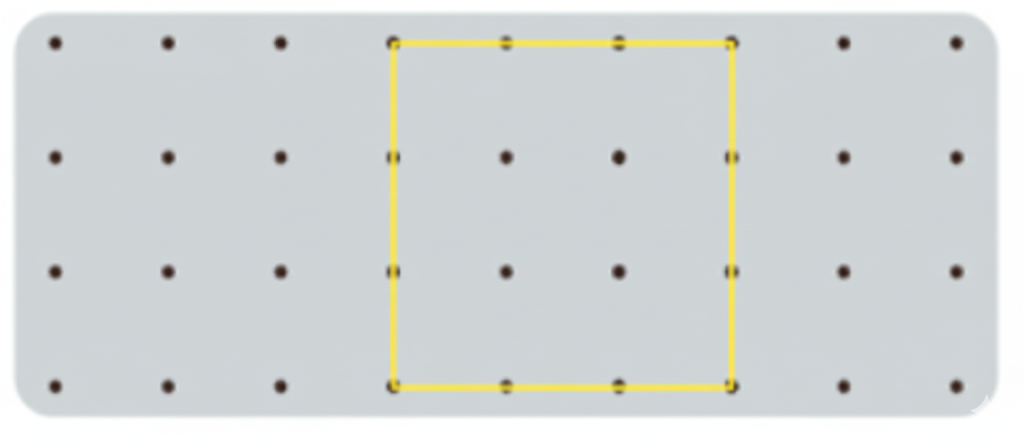
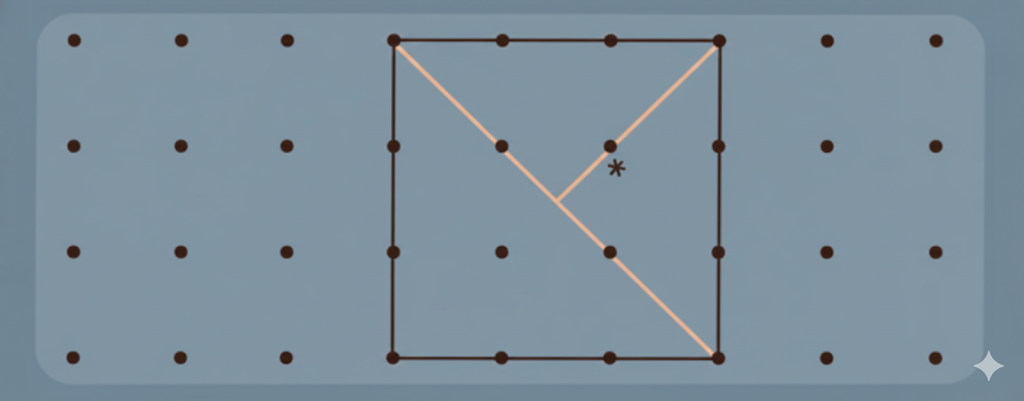
Draw 2 lines to divide the square into 3 triangles.
Solution:
Question 4.
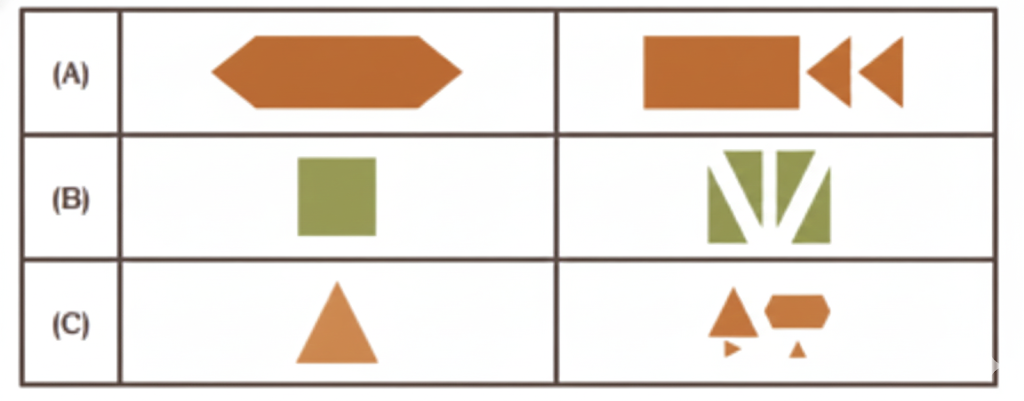
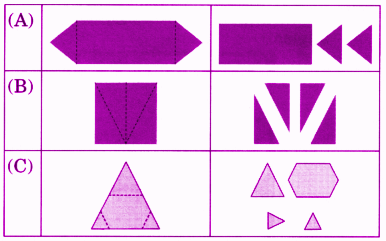
Draw lines to show the cuts needed on the shapes in the left column to get the smaller shapes on the right.
Solution:
NCERT Textbook Page 21
Let Us Try
1. Squiggly spiders
Squiggly, the spider, likes to make webs in different shapes. One day she begins to make triangular webs.
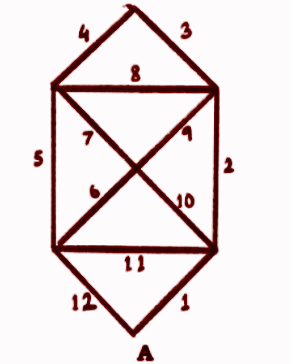
How many triangles are in her web?
Solution:
There are 10 triangles in Squiggly’s web.
Every morning, she walks around to make sure the walls of her web are sturdy.
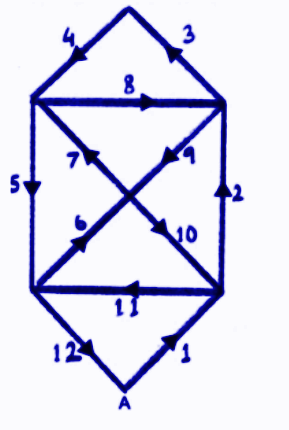
Can she begin at point A and reach back to the same point without walking on any wall more than once?
Trace and show Squiggly’s path.
Solution: Yes, Squiggly can start at point A and return to the same point without walking along any wall more than once by following the path shown.
Her brother, Wiggly made a web using rectangles. How many rectangles can you see in his web?
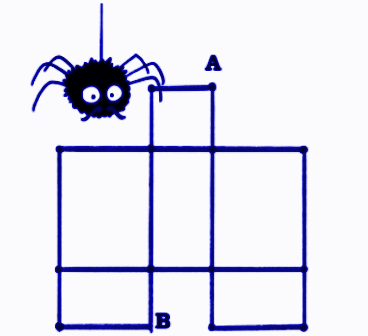
Solution:
12 rectangles.
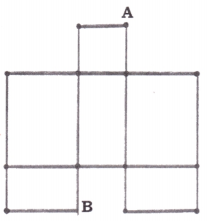
He likes to take a walk at the end of each day and check if the walls of his web are strong. Can he begin at point A and leave from point B without walking on any wall more than once?
Trace and show Wigggly’s path.
Solution: No, Wiggly cannot start at A and end at B while passing through all the walls without walking on any wall more than once.
Question 2.
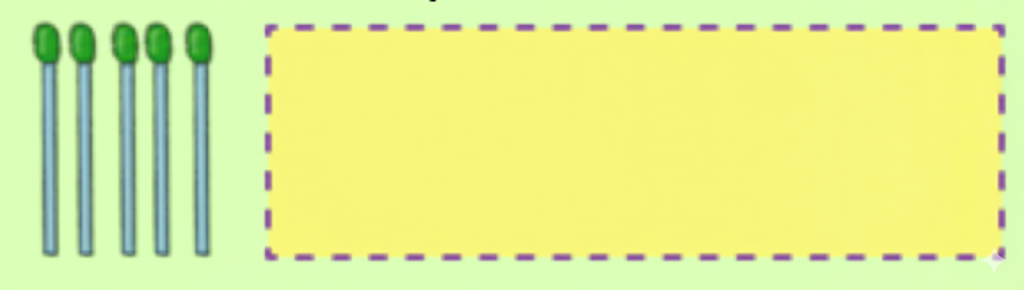
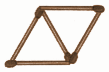
Use 5 matchsticks to draw 2 triangles.
Solution:
Question 3.
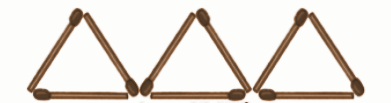
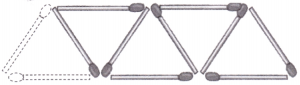
Move any two of these matchsticks to form 4 triangles.
Solution:
Question 4.
Remove 4 of these matchsticks to leave only _________
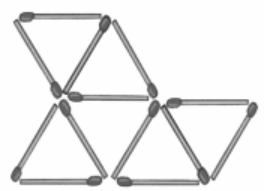
Solution:
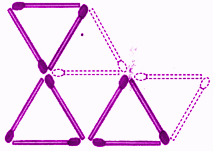
Question 5.
Model challenge.
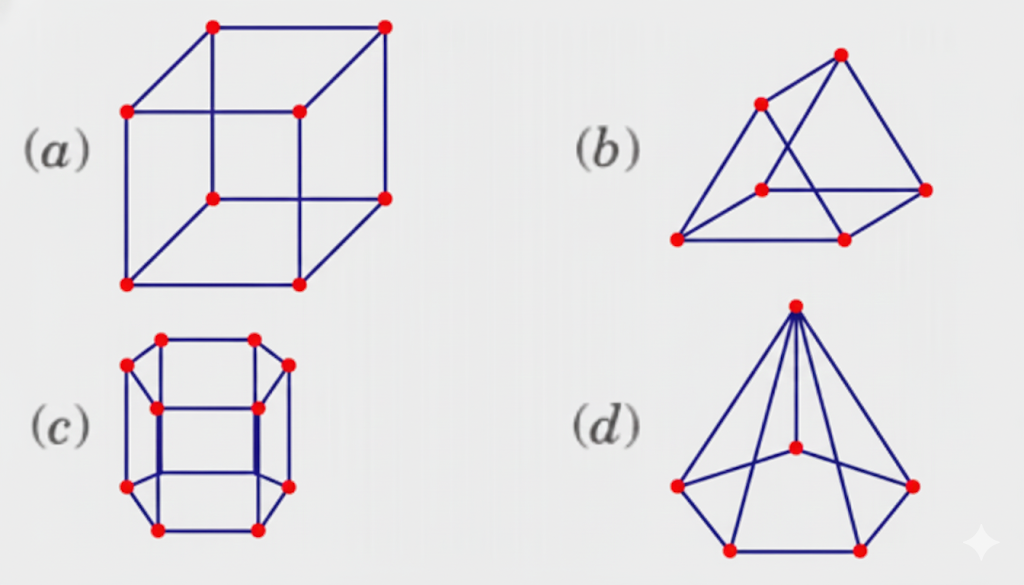
Can you make a model of solid shapes which has _________
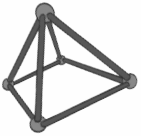
(а) 12 straws and 8 clay balls?
(b) 9 straws and 6 clay balls?
(c) 15 straws and 10 clay balls?
(d) 10 straws and 6 clay balls?
Solution:
Question 6.
Classify these shapes based on the number of angles.
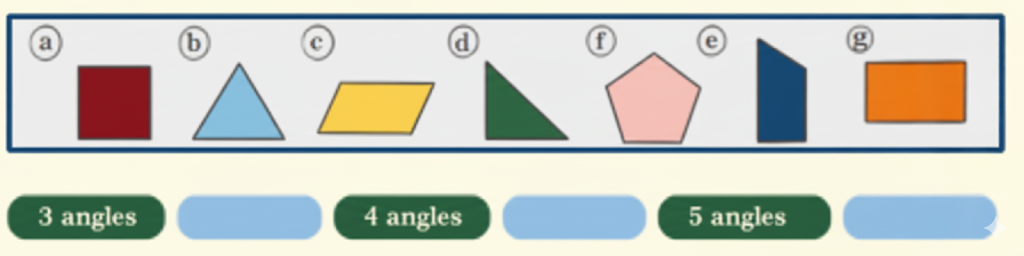
Solution:
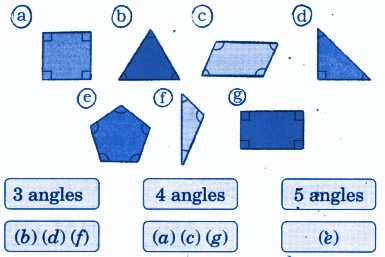
What relation do you notice between the number of sides and the number of angles?
Solution:
In the figure, the number of sides is the same as the number of angles.
Question 7.
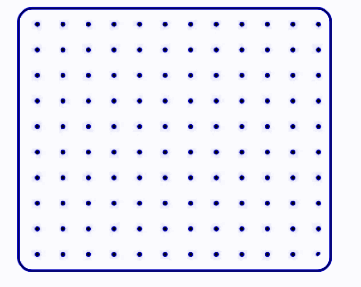
Draw a 2D shape which has less than 5 angles.
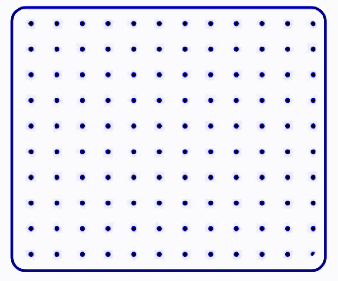
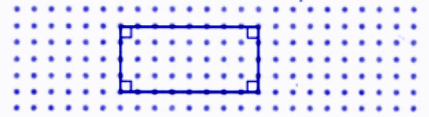
Solution:
Below is a two-dimensional shape that has exactly four angles.
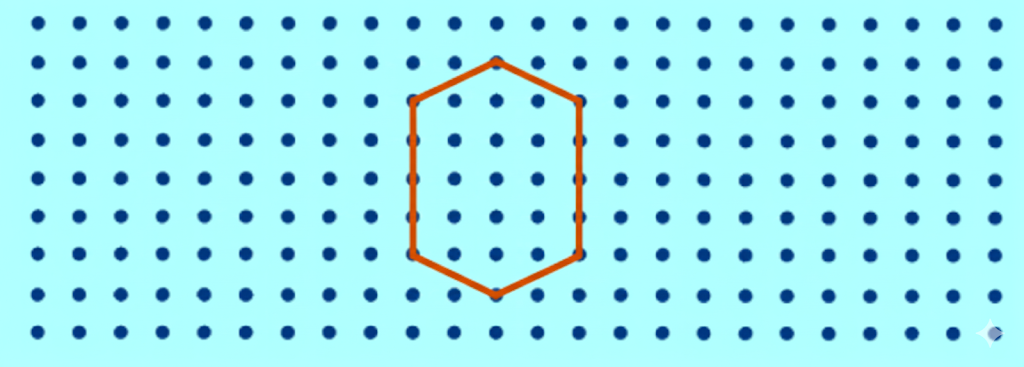
Draw a 2D shape with more than 5 angles.
Solution:
Below is a 2D shape having 6 angles.
Question 8.
Mark the right angles and write the number of right angles in each figure.

Which of the above shapes have only right angles?
Solution:

The first and the last shapes
Question 9.
Identify the shape that has:
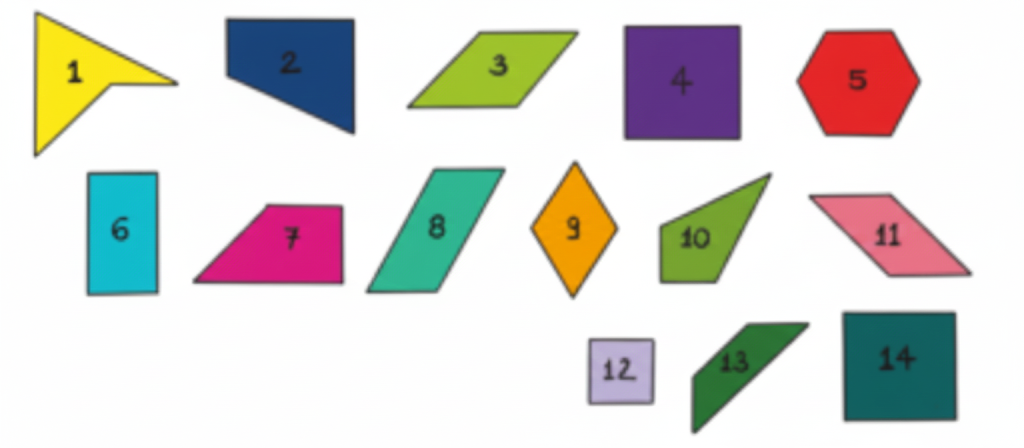
Identify the shape that has:
2 right angles, 1 acute, and 1 obtuse angle ______________.
1 right, 2 obtuse, and 1 acute angle ___________.
2 obtuse, and 2 acute angles _____________.
4 right angles ____________.
Solution:
2 right angles, 1 acute, and 1 obtuse angle 2, 7
1 right, 2 obtuse, and 1 acute angle 10
2 obtuse, and 2 acute angles 3, 5, 8, 9,11, 13
4 right angles 4, 6, 12, 14
NCERT Solutions Class 4 Maths Chapter 1 Shapes Around Us (2026-27)
With these NCERT Solutions for Class 4 Maths Chapter 1, children learn to observe **shapes around us** in daily life. Short, clear explanations help students connect objects, patterns and figures, building a strong base for upper classes.
The chapter Shapes Around Us Class 4 builds visual thinking through activities, matching, and drawing. When students practice regularly, they quickly recognise **2D and 3D shapes**, improving both textbook performance and mental math skills.
Use these NCERT Solutions Class 4 Maths 2026-27 as a step-by-step guide. Revise key questions, note important **shape properties**, and try similar questions from your surroundings to gain confidence and score higher in school exams.
FAQs on NCERT Solutions For Class 4 Maths Chapter 1 Shapes Around Us - 2026-27 Free PDF Download (Sign-in Required)
1. What is included in NCERT Solutions for Class 4 Maths Chapter 1 Shapes Around Us?
NCERT Solutions for Class 4 Maths Chapter 1 Shapes Around Us offer detailed, step-by-step answers to all exercise questions. This resource helps you:
- Understand definitions and diagrams covered in the chapter
- Prepare with stepwise solutions for each question
- Revise important concepts for CBSE 2026–27 exams
- Download a free PDF for offline study
- Boost marks with exam-aligned presentation and explanations
2. How can I use NCERT Solutions for Class 4 Maths Chapter 1 to score full marks?
To score full marks using these solutions, follow a stepwise answer format as per CBSE marking schemes:
- Write each step clearly for all calculations or explanations
- Include definitions or diagrams wherever required
- Label all diagrams neatly and use correct terms
- Stick to keywords and keep your answers structured
- Refer to exercise-wise solutions during revision
3. Are diagrams and definitions mandatory in Class 4 Maths Chapter 1 answers?
Yes, including diagrams and definitions is highly recommended for this chapter:
- Draw neat and correctly labeled diagrams for shape-related questions
- Write clear definitions for mathematical terms covered in the chapter
- Using both helps you get full marks as per the CBSE 2026–27 marking scheme
4. Where can I download the free PDF of NCERT Solutions for Class 4 Maths Chapter 1?
You can download the free PDF of NCERT Solutions for Class 4 Maths Chapter 1 from trusted educational platforms like Vedantu. The PDF includes:
- All stepwise answers for every question
- Diagrams and formats as per CBSE guidelines
- Accessible content for offline revision
5. How do I structure long answers for Class 4 Maths Chapter 1 – Shapes Around Us?
Effective long answers should:
- Start with a clear introduction or definition
- Include steps and explanations in order
- Add diagrams if the question asks or if helpful
- Conclude with the final answer or summary
- Use keywords from the chapter
6. Which types of questions from Shapes Around Us are important for Class 4 school exams?
The most important questions from this chapter for exams are:
- Shape identification and classification
- Drawing and labelling basic shapes (circle, square, triangle, rectangle)
- Definitions and properties of 2D and 3D shapes
- Fill-in-the-blank and match-the-following on shapes
- Application-based questions involving real-life shapes
7. How do I present diagrams or maps for full marks in Class 4 Maths?
Presenting diagrams or shape maps correctly boosts your marks:
- Draw lines neatly using a ruler where needed
- Label each part clearly and accurately
- Place the diagram below or alongside your written answer
- Use proper mathematical terms (like sides, corners, edges)
8. What is the latest CBSE marking scheme for Class 4 Maths Chapter 1?
The latest CBSE marking scheme for Class 4 Maths Chapter 1 awards:
- Step marks for each correct procedure shown
- Specific marks for neat diagrams and correct labelling
- Full marks if you use keywords and complete all parts of the answer
- Partial marks are given for correct steps even if the final answer is incorrect
9. Are NCERT Solutions enough for Class 4 Maths exams?
NCERT Solutions for Class 4 Maths are usually enough to score well in exams because they:
- Follow the CBSE syllabus and textbook structure
- Cover all intext and back exercise questions
- Provide stepwise solutions to help you learn answering techniques
- For extra practice, you can refer to sample papers or important questions as well
10. How can I revise Class 4 Maths Chapter 1 Shapes Around Us quickly before my test?
For quick revision before your test:
- Review ready-made flash notes and important definitions
- Practice diagram drawing and labelling
- Revise key exercise solutions from the chapter PDF
- Attempt 2-3 sample questions of each type (objective, short, long)
