








How to Do Backward Counting Step by Step with Examples
Backward counting is the process of counting by eliminating one at a time. For example, to find the number of balls, we reverse count while pulling them out of the jar. Thus, backward counting is a simple and straightforward way for kids to master their number skills. Learning to count backwards makes it easier to do mental math.
Use the backward counting worksheet in this post to introduce your kids to this fun method of finding numbers. Check out our article for some easy and fun practice worksheets that will help them get the hang of it in no time.
Backward Counting Example
Let’s see the example of backward counting.

Backward Counting
In the image below, we can reverse count the buttons by touching each button formally.
Counting down from 5 to 1 with figures
5, 4, 3, 2, 1
Counting down from five to one with expressions
Five, Four, Three, Two, One.
Counting back – We can count down or back by saying figures in rear order while touching each object formally.
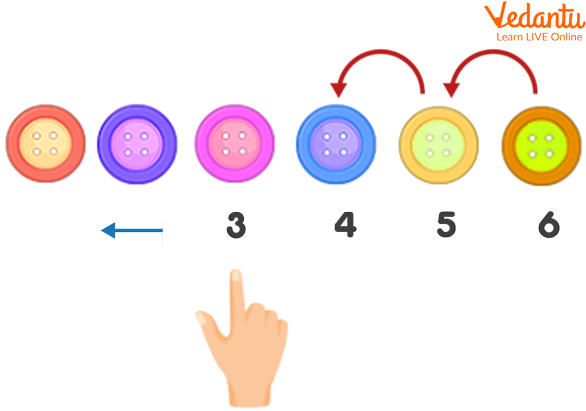
Backward Counting
Backward counting is numbering objects by removing one every moment.
Then, we reverse count while taking out the buttons from the jar to find the total number of the buttons, as shown in the below image.
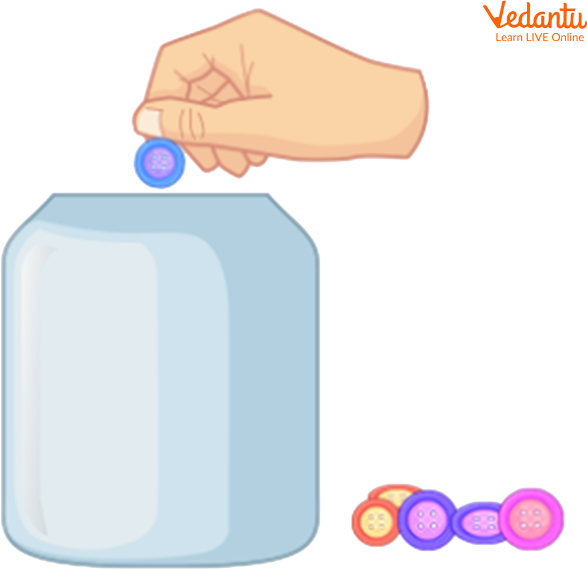
Backward Counting Using Removing Objects From A Jar
Backward Counting 100 to 1
Now, let’s see the backward counting 100 to 1. Here, the numbers are represented in words also to learn both numerically and also counting in English.
Backward Counting from 50 to 1 Worksheet
Now, let’s see the backward counting 50 to 1. With the help of the given image of backward counting from 50 to 1, it will be easier for the kid to memorise it as it is shown in a much more interactive way.
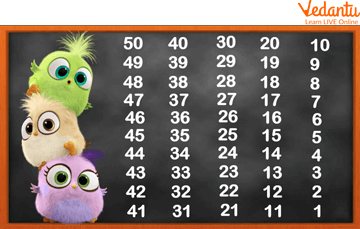
Backward Counting of Numbers From 50 to 1
Worksheets
As you have learnt backward counting, now let’s check and memorise it by filling the below worksheet. Here, in this backward counting worksheet, you need to write the missing numbers between 50 to 1.
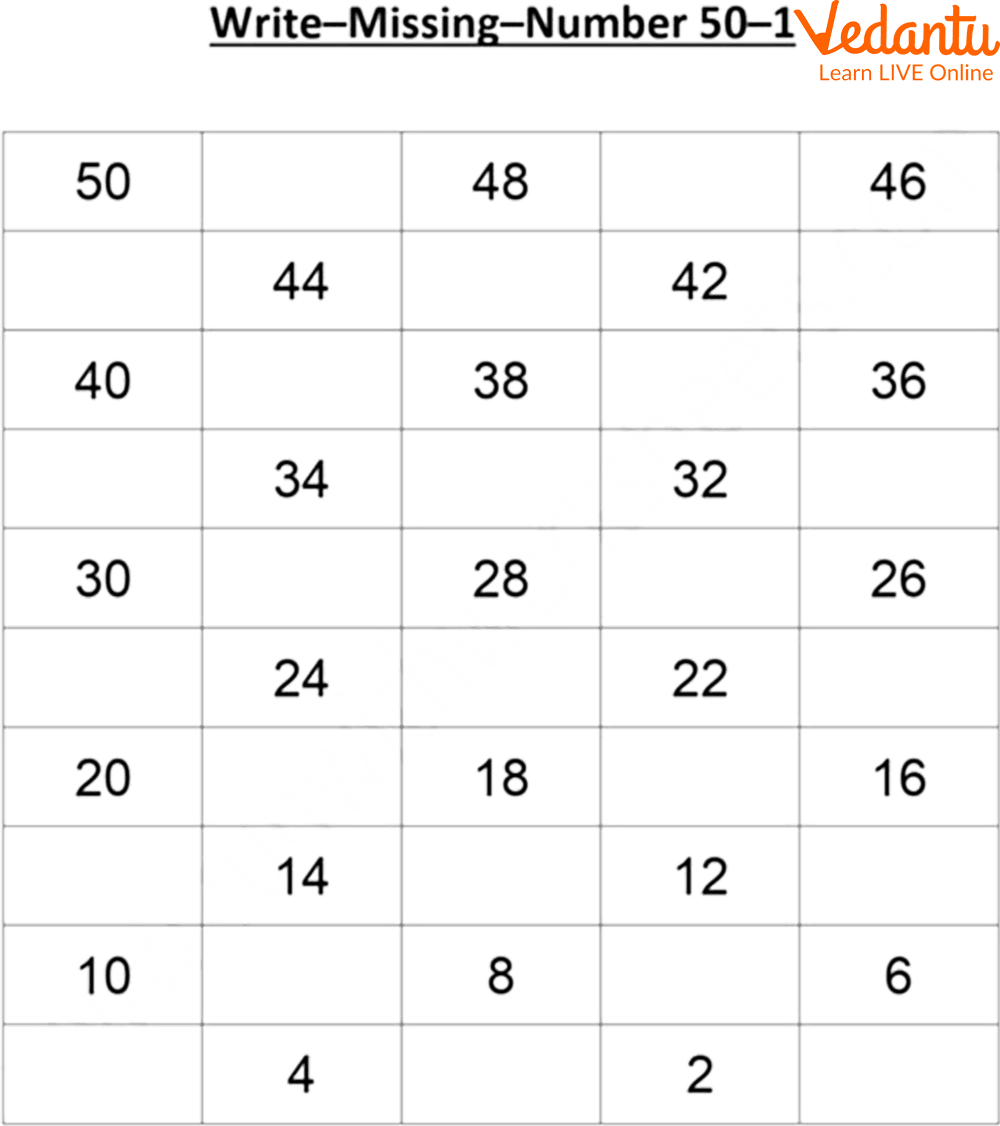
Backward Counting Worksheet
Backward Counting Worksheet for Practise
Worksheet - 1
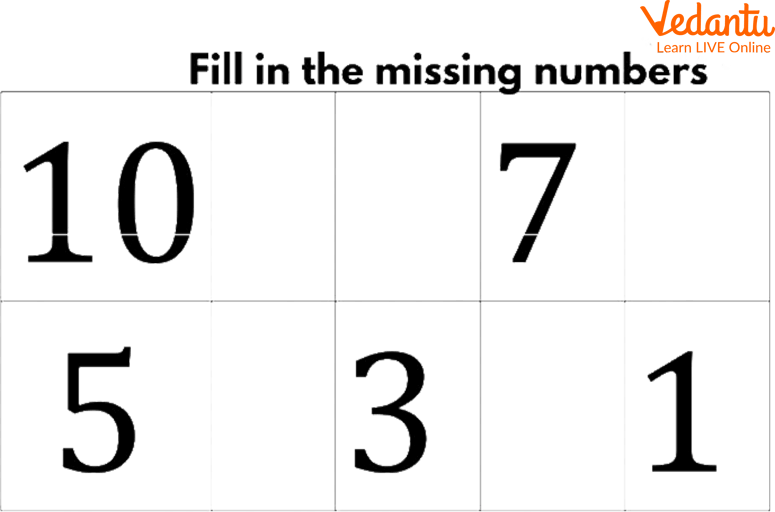
Backward Counting Worksheet 1
Worksheet - 2
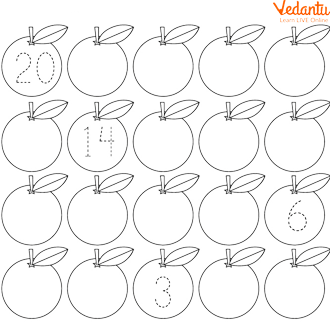
Backward Counting Worksheet 2
Summary
Learning to count backwards can be a valuable skill for kids of all ages. It can help with things like learning to tell time and understanding place value in Maths. Plus, it's just a fun way to challenge yourself! Backward counting can be a difficult skill for kids to master, but it's an important one. Using the fun and interactive way of learning backward counting from this article and the practice worksheets provided, you can learn how to backward count like a pro. With patience and perseverance, you can conquer backward counting in no time.
FAQs on Backward Counting in Maths with Simple Explanation
1. What is backward counting in Maths?
Backward counting is the process of counting numbers in reverse order by subtracting 1 each time from a starting number. It means moving from a larger number to a smaller number step by step.
- Example: 10, 9, 8, 7, 6...
- Each step decreases the number by 1.
- It helps children understand number order and subtraction basics.
2. How do you count backward from 20?
To count backward from 20, subtract 1 repeatedly starting at 20. Follow these steps:
- Start at 20.
- Subtract 1 each time.
- Sequence: 20, 19, 18, 17, 16, 15...
3. Why is backward counting important for students?
Backward counting is important because it builds a strong foundation for subtraction and number sequencing. It helps students:
- Understand decreasing numbers.
- Improve mental maths skills.
- Prepare for subtraction and skip counting.
- Develop logical number patterns.
4. What is an example of backward counting from 15 to 1?
An example of backward counting from 15 to 1 is subtracting 1 at each step until you reach 1. The sequence is:
- 15, 14, 13, 12, 11, 10, 9, 8, 7, 6, 5, 4, 3, 2, 1
5. What is skip backward counting?
Skip backward counting means counting backwards by subtracting a number greater than 1, such as 2, 5, or 10. For example:
- Backward by 2 from 10: 10, 8, 6, 4, 2
- Backward by 5 from 25: 25, 20, 15, 10, 5
6. How is backward counting related to subtraction?
Backward counting is directly related to subtraction because each step involves subtracting a number, usually 1. For example:
- Counting back from 9: 9, 8, 7
- This is the same as: 9 − 1 = 8, then 8 − 1 = 7
7. How do you teach backward counting to beginners?
To teach backward counting to beginners, start with small numbers and use visual aids. Effective steps include:
- Use number lines to show movement to the left.
- Practice counting back from 10 to 1.
- Use objects like blocks and remove one at a time.
- Sing counting-back songs for engagement.
8. What is backward counting on a number line?
Backward counting on a number line means moving left and subtracting 1 for each step. On a number line:
- Moving right increases numbers.
- Moving left decreases numbers.
- Example: From 6, move left → 5, 4, 3.
9. What are common mistakes in backward counting?
Common mistakes in backward counting include skipping numbers or reversing the order incorrectly. Students may:
- Miss a number (e.g., 10, 8, 7).
- Start from the wrong number.
- Switch back to forward counting.
10. Can you give a real-life example of backward counting?
A common real-life example of backward counting is a countdown before a rocket launch or race start. For example:
- 5, 4, 3, 2, 1 — Start!
