






When Is World Senior Citizens Day 2026 and Why Is It Celebrated?
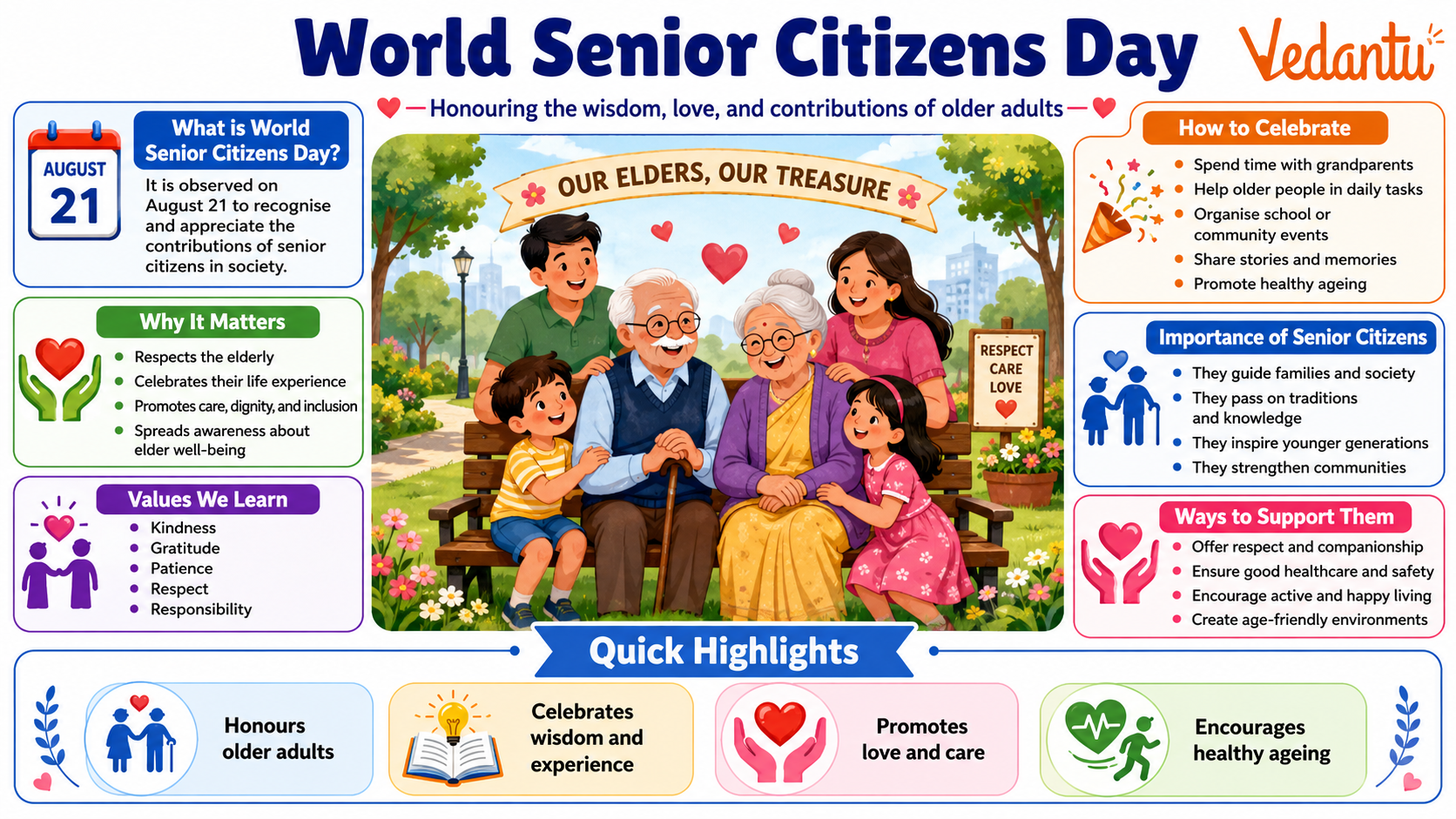
World Senior Citizens Day 2026 is observed on August 21 to honour older adults and recognise their contributions, wisdom, and life experiences. The day also raises awareness about dignity in old age, care, inclusion, healthy ageing, and the rights and well-being of senior citizens.
For students, families, and communities, this observance is a reminder that respect for elders is not only a social value but also a shared responsibility. People often look for the world senior citizens day date, meaning, significance, and observance ideas, especially for school speeches, posters, and community activities.
What is World Senior Citizens Day?
World Senior Citizens Day, also widely referred to in searches as International Senior Citizens Day, is an awareness observance focused on valuing older adults and highlighting issues that affect them. Its broad purpose is to encourage respect, gratitude, and support for senior citizens in families, neighbourhoods, and society at large.
The day is associated with themes such as social inclusion, healthcare access, emotional well-being, financial security, accessibility, and elder rights. As populations age in many parts of the world, the observance remains relevant as a learning opportunity for younger generations.
World Senior Citizens Day 2026 Date
| Key Fact | Details |
|---|---|
| Observance | World Senior Citizens Day |
| Date | August 21, 2026 |
| Focus | Respect for elders, dignity, care, inclusion, and healthy ageing |
| Audience | Families, schools, communities, and the general public |
If you are searching “when is world senior citizens day 2026,” the observance falls on 21 August 2026. It is marked every year on the same date and is used to spread awareness about the needs and contributions of older adults.
History of World Senior Citizens Day
In educational and awareness content, the history of this observance is commonly understood through its purpose: recognising older adults and drawing attention to their welfare, dignity, and care. The observance is used as a platform to appreciate the role of senior citizens while encouraging societies to create supportive and inclusive environments.
In public use, the day is often linked with appreciation for elders, intergenerational respect, and awareness about ageing-related challenges. When discussing its history, it is best to focus on its documented awareness role rather than make unverified claims about founders, declarations, or event-specific origins.
World Senior Citizens Day Theme 2026
The official World Senior Citizens Day theme for 2026 is awaited. If an official theme is announced by a reliable authority, it should be updated before publication or event use.
Until then, awareness activities can responsibly focus on the core ideas already associated with the observance: respect for elders, healthy ageing, social inclusion, dignity, emotional support, and better care for senior citizens.
Why World Senior Citizens Day Is Important
The world senior citizens day significance lies in both recognition and responsibility. Older adults carry lived experience, cultural memory, skills, and wisdom that enrich families and communities, yet many also face challenges that deserve public attention.
This observance matters for several reasons.
- It encourages respect for elders and gratitude for their contributions.
- It highlights the importance of dignity in old age.
- It draws attention to healthcare, emotional well-being, and social inclusion.
- It promotes stronger intergenerational understanding between young people and older adults.
- It reminds communities that supportive environments are essential as societies age.
Key Issues Affecting Senior Citizens
The day also brings focus to common concerns affecting many older adults.
- Healthcare access: regular care, mobility support, and age-sensitive services are important.
- Loneliness and isolation: social connection remains a major part of emotional well-being.
- Accessibility: public spaces, transport, and homes should be easier to use safely.
- Financial security: many seniors need stable support and protection.
- Safety and rights: dignity, fairness, and protection from neglect are essential.
- Inclusion: older adults should remain active participants in family and community life.
How to Celebrate International Senior Citizens Day
Observing this day does not require large events. Meaningful participation can happen at home, in schools, or in local communities through respectful and thoughtful activities that make senior citizens feel seen, valued, and included.
Simple observance ideas include the following.
- Spend time with grandparents or elderly neighbours and listen to their life stories.
- Create thank-you cards expressing gratitude and respect.
- Organise school assemblies on healthy ageing and elder dignity.
- Hold community awareness drives on inclusion and elder care.
- Plan storytelling sessions where seniors share experiences and values.
- Support local outreach events such as appreciation gatherings or awareness campaigns.
- Use posters and speeches to promote respect for elders in public spaces and classrooms.
Student Activities for World Senior Citizens Day
For schools and students, this observance can be turned into a practical learning exercise about empathy, citizenship, and social responsibility. Activities work best when they are simple, inclusive, and focused on appreciation rather than performance.
Useful school-friendly ideas are listed below.
- Write a short speech on the importance of senior citizens in society.
- Make a poster based on respect, gratitude, and elder care.
- Interview an elder family member about life lessons and values.
- Prepare a gratitude wall with handwritten messages for elders.
- Organise a class discussion on healthy ageing and inclusion.
- Present a skit or reading that shows kindness, patience, and respect toward older adults.
Students who enjoy awareness topics can also explore related observances on the Vedantu blog, such as World Population Day, International Yoga Day, and World Health Day for broader social and well-being themes.
Poster Lines and Slogan Ideas
Poster content for this day should be respectful, clear, and easy to remember. Short lines work well for school boards, classroom displays, and awareness banners.
Here are a few suitable lines for educational use.
- Respect the elderly, value their wisdom.
- Honour age, celebrate experience.
- Caring for seniors is caring for society.
- Every elder deserves dignity, love, and support.
- Wisdom grows with age.
Short Quotes for Senior Citizens Day
Short, respectful quote lines are often used in speeches, greeting cards, notice boards, and classroom activities. For this observance, the safest and most useful approach is to use general appreciation lines rather than attach unverified attributions.
Quote-style lines for school and awareness use:
- Elders carry the wisdom of generations.
- Respect for older adults strengthens society.
- Age brings experience, insight, and perspective.
- Gratitude to elders is gratitude to history.
- A caring society values every stage of life.
- Listening to elders is a way of learning from life itself.
Conclusion: World Senior Citizens Day is a meaningful annual observance that reminds us to value older adults with respect, gratitude, and care. Observed on August 21, it highlights both the contributions of senior citizens and the importance of dignity, inclusion, and support in later life. Whether through a school activity, a family visit, or a simple thank-you message, even small actions can make this day more thoughtful and memorable for the elders around us.
FAQs on World Senior Citizens Day 2026: Meaning, Significance and Celebration Ideas
1. When is World Senior Citizens Day 2026?
World Senior Citizens Day 2026 is observed on August 21, 2026, which falls on a Friday. The occasion is marked annually on August 21 to recognise the contributions, wisdom and experiences of older adults while promoting their dignity, care and inclusion.
2. What is World Senior Citizens Day?
World Senior Citizens Day is an annual awareness observance dedicated to appreciating older adults and highlighting issues affecting their well-being. It encourages families, schools and communities to support elder rights, healthy ageing, social inclusion, accessible healthcare and dignity in later life.
3. Why is World Senior Citizens Day celebrated?
World Senior Citizens Day is celebrated to honour senior citizens and increase awareness of their needs, rights and contributions.
- It promotes respect and gratitude for older adults.
- It draws attention to healthcare, financial security and accessibility.
- It encourages protection from neglect, isolation and discrimination.
- It strengthens intergenerational understanding between young people and elders.
4. What is the theme of World Senior Citizens Day 2026?
As of July 2026, a universally recognised official theme for World Senior Citizens Day 2026 has not been announced. Until a theme is confirmed by a reliable authority, programmes can focus on established ideas such as respect for elders, healthy ageing, dignity, emotional well-being, social inclusion and senior citizen care.
5. What is the history of World Senior Citizens Day?
The August 21 observance is associated with National Senior Citizens Day established in the United States in 1988. President Ronald Reagan issued Proclamation 5847 designating August 21 as a day to recognise older adults and raise awareness of matters affecting them. The name World Senior Citizens Day later became widely used in public awareness and educational contexts.
6. Is World Senior Citizens Day the same as the International Day of Older Persons?
No, they are separate observances held on different dates. World Senior Citizens Day is commonly observed on August 21, while the United Nations International Day of Older Persons is observed on October 1. Both occasions promote the dignity, rights, participation and well-being of older people.
7. How can World Senior Citizens Day be celebrated?
World Senior Citizens Day can be celebrated through thoughtful activities that help older adults feel respected, supported and included.
- Spend time with grandparents or elderly neighbours.
- Listen to and record their life stories and experiences.
- Make appreciation cards or gratitude messages.
- Organise awareness programmes on elder care and healthy ageing.
- Help senior citizens use technology or access local services.
8. What activities can students do on World Senior Citizens Day?
Students can observe World Senior Citizens Day through simple activities that develop empathy, gratitude and social responsibility.
- Write a short speech on the importance of senior citizens.
- Create a poster about respect, dignity and elder care.
- Interview an elder about important life lessons.
- Prepare a classroom gratitude wall for older adults.
- Present a skit demonstrating kindness and patience toward elders.
9. What are the main issues faced by senior citizens?
Senior citizens may face health, financial, emotional and accessibility-related challenges that require family and community support.
- Healthcare: Access to regular, affordable and age-sensitive care.
- Loneliness: Reduced social contact and emotional support.
- Accessibility: Difficulty using transport, buildings or digital services.
- Financial security: The need for stable income and protection from fraud.
- Safety and rights: Protection from abuse, neglect and discrimination.
10. What are some short slogans for World Senior Citizens Day?
World Senior Citizens Day slogans should communicate respect, gratitude, dignity and care in memorable words.
- Respect the elderly, value their wisdom.
- Honour age, celebrate experience.
- Caring for seniors is caring for society.
- Every elder deserves dignity, love and support.
- Wisdom grows with age.
