

What Is Thanksgiving? Meaning, Importance and Celebrations
Thanksgiving is a holiday celebrated to express gratitude for the harvest, family, friendship and the good things in life. It is observed mainly in the United States and Canada, where people traditionally gather for a shared meal, appreciate their blessings and spend time with loved ones.
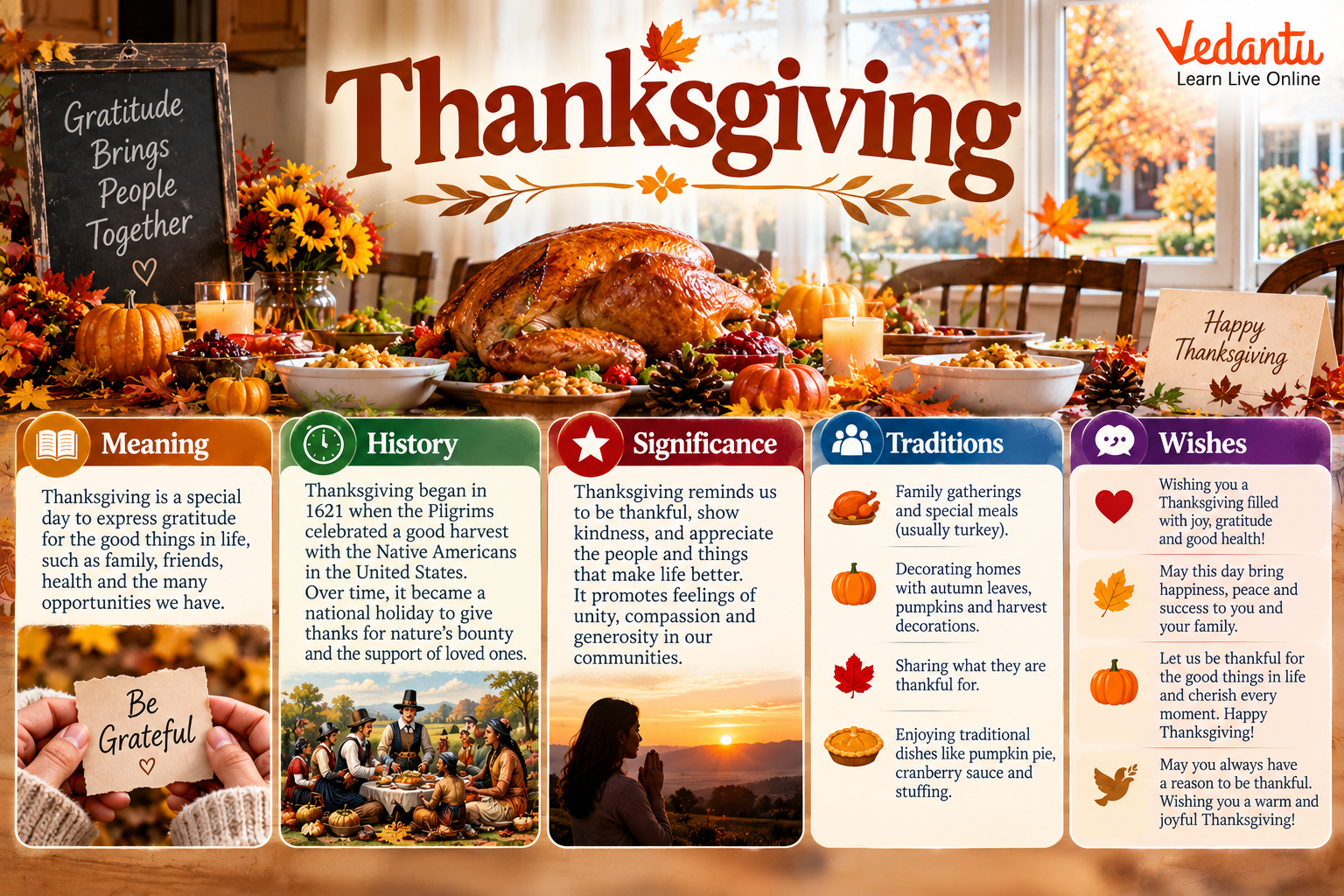
Thanksgiving 2026 falls on Thursday, 26 November in the United States, while Canada celebrated it on Monday, 12 October. The festival has a long history connected with harvest gatherings, national observances and changing cultural traditions. On this page, learn the Thanksgiving meaning, its history, why it is celebrated, popular traditions and thoughtful Thanksgiving wishes.
Thanksgiving Meaning and Definition
Thanksgiving means expressing gratitude or giving thanks for something good received or experienced.
In everyday language, thanksgiving can refer to showing appreciation for help, kindness, food, health, family or other blessings.
As a holiday, Thanksgiving is associated with recognising the good things of the past year and spending time with family and friends.
Thanksgiving Meaning in Simple Words
Thanksgiving means being thankful for what we have and appreciating the people who support us.
For example, students can show gratitude by thanking their teachers for guidance, their parents for care and their friends for friendship.
The holiday encourages appreciation, generosity and kindness.
Thanksgiving Meaning in Hindi (थैंक्सगिविंग का अर्थ)
Thanksgiving meaning in Hindi is “धन्यवाद देना”, “आभार व्यक्त करना” या “कृतज्ञता प्रकट करना”।
थैंक्सगिविंग एक ऐसा अवसर है जब लोग अपने परिवार, मित्रों और जीवन में मिली अच्छी चीज़ों के लिए आभार व्यक्त करते हैं।
यह त्योहार मुख्य रूप से अमेरिका और कनाडा में मनाया जाता है। इस दिन परिवार के सदस्य एक साथ भोजन करते हैं, एक-दूसरे को शुभकामनाएँ देते हैं और जीवन में मिले सहयोग तथा खुशियों के लिए धन्यवाद करते हैं।
Thanksgiving in Hindi: Easy Explanation
In simple terms, Thanksgiving teaches us to appreciate what we have and remember the people who help us.
When Is Thanksgiving Celebrated?
Thanksgiving does not have one fixed date worldwide. The United States and Canada observe it on different dates.
The Thanksgiving date changes from year to year because it is based on a particular weekday rather than one fixed calendar date.
When Is Thanksgiving 2026?
Thanksgiving 2026 is on Thursday, 26 November in the United States. Canada observed Thanksgiving earlier, on Monday, 12 October.
The American date is particularly well known because it is associated with a federal holiday, traditional family dinners, parades and football games.
History of Thanksgiving: How Did the Holiday Begin?
The history of Thanksgiving includes Indigenous traditions of gratitude, European harvest celebrations, colonial observances and the gradual development of a national holiday in the United States.
The 1621 harvest gathering at Plymouth is widely connected with the traditional story of American Thanksgiving. However, the modern holiday was not established in its present form at that event.
Thanksgiving developed through many separate observances and later became a regular national tradition.
Thanksgiving History Timeline
These events show how Thanksgiving changed from various religious and harvest observances into a national holiday associated with family and gratitude.
The First Thanksgiving: Myths and Historical Facts
The gathering commonly called the First Thanksgiving took place in 1621 in Plymouth, Massachusetts, involving English colonists and members of the Wampanoag people.
The colonists had recently survived a difficult period and were celebrating a harvest. The Wampanoag were an established Indigenous community with their own history, knowledge and traditions.
Historical accounts indicate that the gathering included different kinds of food and activities from those associated with modern Thanksgiving.
Myths and Facts About the First Thanksgiving
Learning the historical context helps students understand how popular traditions can change over time.
Why Is Thanksgiving Celebrated?
Thanksgiving is celebrated to express gratitude for the harvest, life's blessings, family relationships and community support.
The festival has both historical and modern meanings.
Importance and Significance of Thanksgiving
1. Gratitude
Thanksgiving encourages people to recognise and appreciate the good things in their lives.
2. Family and Togetherness
Families and friends often gather to share meals, reconnect and spend meaningful time together.
3. Harvest and Food
The holiday retains connections with harvest traditions and appreciation for food and agricultural work.
4. Generosity
Many people volunteer, donate food or assist those who need support.
5. Cultural Understanding
Learning about Thanksgiving helps students explore American and Canadian traditions while understanding the different perspectives connected with the holiday.
Thanksgiving in the United States and Canada: What's the Difference?
Both countries celebrate gratitude and family togetherness, but their holiday histories and dates differ.
History of Canadian Thanksgiving
Canadian Thanksgiving has its own historical development.
One early colonial reference is a 1578 ceremony associated with explorer Martin Frobisher's expedition, held to give thanks for safe travel.
Canada introduced a national Thanksgiving observance in 1879, although the date varied over time.
Since 1957, Canadian Thanksgiving has been observed on the second Monday in October.
It is important to recognise that Indigenous peoples in Canada also had traditions of gratitude and harvest celebrations long before European expeditions.
How Is Thanksgiving Celebrated?
Thanksgiving celebrations vary by family and community, but several customs are widely recognised.
Family Gatherings
Many people travel to visit relatives and friends. Families often prepare a special meal and spend time together.
Thanksgiving Dinner
A shared meal is one of the main traditions. Some families begin by expressing what they feel thankful for.
Community Service
Food banks, charities and local organisations may organise meal distributions, donations or volunteering opportunities.
Parades
Public parades bring families and communities together through music, performances and festive displays.
Sports and Entertainment
Watching American football has become a popular Thanksgiving activity in the United States.
Traditional Thanksgiving Foods and Their Significance
Thanksgiving food reflects the holiday's connection with harvest traditions and family gatherings.
Modern Thanksgiving meals can also include dishes reflecting a family's cultural background and dietary preferences.
Thanksgiving and Native American Perspectives
Thanksgiving history has different meanings for different Indigenous communities.
The 1621 Plymouth gathering is often presented as a story of friendship and cooperation. However, the wider history of European colonisation also includes displacement, conflict, violence and the loss of Indigenous lands.
Many Native Americans recognise Thanksgiving in their own ways. Some celebrate family gatherings, while others use the day for remembrance and reflection.
What Is the National Day of Mourning?
The National Day of Mourning is an annual observance organised by United American Indians of New England in Plymouth, Massachusetts, on US Thanksgiving.
It began in 1970 and focuses on remembering Indigenous ancestors, acknowledging the effects of colonisation and recognising the continued presence and resilience of Native peoples.
Including this perspective provides a fuller understanding of Thanksgiving history.
Thanksgiving Traditions: Parades, Football and Turkey Pardoning
Modern Thanksgiving includes several customs that developed long after the early colonial period.
Macy's Thanksgiving Day Parade
The Macy's Thanksgiving Day Parade began in New York City in 1924. It is famous for large balloons, floats, marching bands and performances.
Thanksgiving Football
American football games have been associated with Thanksgiving since the late 19th century. Watching games together is now a familiar tradition for many families.
Presidential Turkey Pardon
The modern annual White House turkey-pardoning ceremony became an established tradition under President George H. W. Bush in 1989.
During the ceremony, a turkey is symbolically spared from becoming part of a Thanksgiving meal.
The Wishbone Tradition
Some families follow a custom in which two people pull opposite ends of a dried turkey wishbone while making wishes.
This is a traditional game rather than a religious requirement.
What Is the Importance of Thanksgiving for Students?
Thanksgiving provides an opportunity for students to understand appreciation, generosity, community service and cultural history.
Educational Values of Thanksgiving
Thanksgiving Activities for Students
Students can create gratitude journals, write thank-you notes, prepare educational posters or take part in discussions about the holiday's history.
They can also make a classroom gratitude tree where each leaf contains something they appreciate.
These activities help students understand the meaning of Thanksgiving beyond food and celebrations.
Happy Thanksgiving Wishes and Greetings
Sharing Thanksgiving wishes is a simple way to express appreciation for friends, family members, teachers and colleagues.
Happy Thanksgiving Wishes for Family
Happy Thanksgiving! May your home be filled with love, happiness and wonderful memories.
Wishing our family a joyful Thanksgiving filled with gratitude, togetherness and peace.
May we always appreciate the love and support that bring us together. Happy Thanksgiving!
Thanksgiving Wishes for Friends
Thank you for being such a wonderful friend. Wishing you a happy and meaningful Thanksgiving.
Happy Thanksgiving! May your day be filled with laughter, good food and cherished memories.
Grateful for the friendship and kindness we share. Have a wonderful Thanksgiving!
Short Thanksgiving Greetings
Happy Thanksgiving! Stay grateful and spread kindness.
Wishing you peace, happiness and togetherness this Thanksgiving.
May your day be filled with gratitude and joy.
Sending warm Thanksgiving wishes to you and your loved ones.
Be thankful for the little moments that make life special.
How to Wish Someone a Happy Thanksgiving
You can wish someone Happy Thanksgiving by sending a short message that expresses gratitude, appreciation or warm wishes.
For example:
"Happy Thanksgiving! Thank you for your kindness and support. Wishing you and your family a beautiful day filled with happiness and peace."
A meaningful Thanksgiving message does not need to be long. Personal words of appreciation can make it more special.
Conclusion
Thanksgiving is a holiday that celebrates gratitude, family, sharing and the blessings of life. In the United States, it takes place on the fourth Thursday of November, while Canada observes it on the second Monday of October.
The history of Thanksgiving includes early harvest traditions, the 1621 Plymouth gathering, national holiday proclamations and changing cultural perspectives.
Understanding the meaning of Thanksgiving encourages students to practise gratitude, appreciate others, and learn about history with respect and curiosity.
FAQs on Thanksgiving: Meaning, History, Significance, Traditions and Wishes
1. When is Thanksgiving celebrated?
Thanksgiving is celebrated on the fourth Thursday of November in the United States and the second Monday of October in Canada. The date changes each year.
2. What is Thanksgiving?
Thanksgiving is a holiday celebrated to express gratitude for the harvest, family, friendship and other blessings. It is mainly observed in the United States and Canada through family meals, community gatherings and other traditions.
3. Why is Thanksgiving celebrated?
Thanksgiving is celebrated to express gratitude and appreciate the good things in life. The holiday has historical connections with harvest celebrations and later developed into a national tradition of family togetherness.
4. Why Thanksgiving is celebrated in the USA?
Thanksgiving is celebrated in the USA because of its historical development from harvest and religious observances into a national holiday. Today, Americans use the occasion to express gratitude, gather with family and help their communities.
5. How to wish Thanksgiving?
You can say: "Happy Thanksgiving! Wishing you and your family love, happiness, gratitude and wonderful memories together." A personalised thank-you message can make the greeting more meaningful.
6. When is Thanksgiving 2026?
Thanksgiving 2026 falls on Thursday, 26 November in the United States. Canada celebrated Thanksgiving on Monday, 12 October 2026.
7. What is the Thanksgiving meaning in Hindi?
Thanksgiving means आभार व्यक्त करना, धन्यवाद देना or कृतज्ञता प्रकट करना. It refers to expressing appreciation for blessings, kindness, family and other good things in life.
8. What is the history of Thanksgiving?
Thanksgiving history includes the 1621 Plymouth harvest gathering, George Washington's 1789 proclamation, Abraham Lincoln's 1863 observance and the 1941 legislation fixing the US holiday on the fourth Thursday of November.
9. Who started Thanksgiving?
No single person started every Thanksgiving tradition. Indigenous gratitude practices existed long before European colonisation. The modern US holiday developed through colonial observances, presidential proclamations and congressional legislation.
10. Why does Canada celebrate Thanksgiving in October?
Canada observes Thanksgiving on the second Monday of October, following a date established in 1957. Canadian Thanksgiving has its own historical traditions connected with gratitude and harvest celebrations.
11. What are the most popular Thanksgiving traditions?
Common traditions include family dinners, sharing thanks, eating turkey and pumpkin pie, watching parades or football, and volunteering or donating food.
12. What is the National Day of Mourning on Thanksgiving?
The National Day of Mourning is an observance held in Plymouth, Massachusetts, on US Thanksgiving. Organised since 1970, it honours Indigenous ancestors and raises awareness of the effects of colonisation on Native American communities.