






Why National Mango Day Is Celebrated and Its Importance for Students
National Mango Day is celebrated every year on July 22 to honor one of the most popular and delicious fruits in the world - the mango. Known as the "King of Fruits," mango holds cultural, agricultural, and economic importance, especially in countries like India, where it is widely grown and consumed. This day highlights the significance of mango cultivation, its nutritional benefits, and its contribution to farmers and the food industry. National Mango Day is also an opportunity to spread awareness about the different varieties of mangoes and their role in healthy diets.
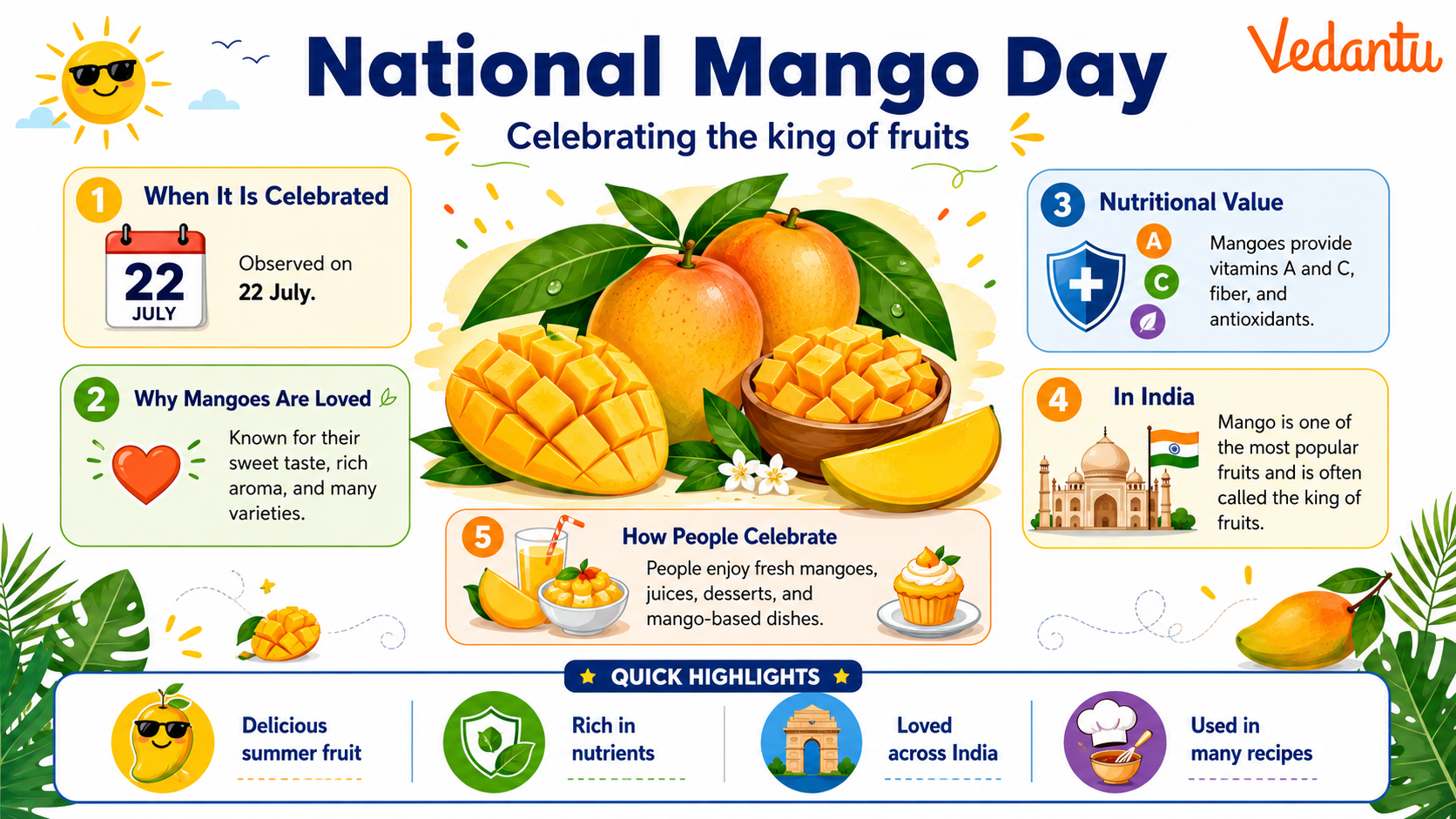
Overview of National Mango Day
National Mango Day is mainly observed in the United States but is widely acknowledged in mango-producing countries. The celebration recognises the rich taste, versatility, and health benefits of mangoes. The fruit is enjoyed in multiple forms such as juices, smoothies, pickles, desserts, and traditional dishes.
Key Facts About National Mango Day
| Particular | Details | Significance |
|---|---|---|
| Date | July 22 | Celebrates mango and its importance |
| Popular Title | King of Fruits | Symbol of richness and flavor |
| Major Producers | India, China, Thailand | Leading mango cultivation countries |
The table above provides essential information about National Mango Day, including its date, importance, and major mango-producing nations. India remains the largest producer of mangoes in the world.
History and Origin
Although the exact origin of National Mango Day is unclear, mangoes have been cultivated for more than 4,000 years. The fruit originated in South Asia and gradually spread to other tropical and subtropical regions. Historical records show that mangoes were grown in India and Myanmar before being introduced to Africa, Brazil, and the Caribbean by traders and explorers.
Over time, mango became an important fruit in global agriculture. National Mango Day was established to recognise this rich history and promote the fruit worldwide.
Nutritional Value of Mango
Mango is not only tasty but also highly nutritious. It contains essential vitamins, minerals, and antioxidants that contribute to overall health.
- Rich in Vitamin C, which boosts immunity
- Contains Vitamin A that supports eye health
- Provides dietary fiber for better digestion
- Includes antioxidants that help fight free radicals
- Supplies essential minerals like potassium and magnesium
Due to these health benefits, mango is considered a valuable addition to a balanced diet.
Popular Varieties of Mango
There are more than 1,000 varieties of mangoes grown worldwide. Each variety differs in taste, color, texture, and aroma.
- Alphonso - Known for its sweetness and rich flavour
- Dasheri - Popular in North India
- Langra - Famous for its unique taste
- Kesar - Known as the Queen of Mangoes
- Tommy Atkins - Widely exported variety
Importance in Economy and Culture
Mango cultivation supports millions of farmers across tropical countries. It plays a major role in agricultural exports and food industries. In India, the mango is also the national fruit and holds cultural and religious importance. It is used in festivals, traditional decorations, and rituals.
The mango leaf is considered sacred in many ceremonies and is used in festive decorations.
How National Mango Day is Celebrated
National Mango Day is celebrated in various ways to promote mango consumption and awareness.
- Organising mango festivals and exhibitions
- Offering mango-based dishes in restaurants
- Sharing mango recipes and facts on social media
- Supporting local mango farmers by purchasing fresh produce
Interesting Facts About Mango
- Mango belongs to the Anacardiaceae family
- India produces nearly half of the world’s mango supply
- Mango trees can live and bear fruit for over 100 years
- The fruit comes in different colours, including green, yellow, and red
- Mango is the national fruit of India, Pakistan, and the Philippines
Conclusion
National Mango Day is a special occasion dedicated to celebrating the delicious and nutritious mango. Observed on July 22, it recognises the fruit’s cultural heritage, economic value, and health benefits. From its ancient origins in South Asia to its global popularity today, mango continues to be loved by people of all ages. Understanding its importance helps students and general readers appreciate not only the fruit but also its contribution to agriculture and culture worldwide.
FAQs on National Mango Day 2026 Celebration: Meaning, History and Fun Facts
1. What is National Mango Day?
National Mango Day is a special day celebrated to honor the mango, known as the “King of Fruits”.
• It highlights the cultural and nutritional importance of mangoes.
• It promotes awareness about different mango varieties.
• It celebrates mango-based dishes like juices, pickles, and desserts.
• The day is popular among students, food lovers, and farmers.
Keywords: National Mango Day, King of Fruits, mango celebration, tropical fruit festival.
2. When is National Mango Day celebrated?
National Mango Day is celebrated every year on July 22.
• The date recognizes the global popularity of mangoes.
• It falls during the peak mango season in many countries.
• Schools and communities organize mango-themed events.
Keywords: July 22, mango season, mango festival, important days in July.
3. Why is the mango called the King of Fruits?
The mango is called the King of Fruits because of its rich taste, nutritional value, and cultural importance.
• It has a sweet and unique flavor loved worldwide.
• It is rich in vitamins A, C, and E.
• It holds historical and religious significance in India and South Asia.
• It comes in hundreds of varieties.
Keywords: King of Fruits, health benefits of mango, cultural importance of mango.
4. What are some popular varieties of mango?
There are hundreds of mango varieties grown around the world, each with unique taste and texture.
• Alphonso – Famous for sweetness and rich flavor.
• Dasheri – Popular in North India.
• Langra – Known for its green skin.
• Kesar – Bright orange pulp and aroma.
• Tommy Atkins – Common in international markets.
Keywords: types of mangoes, Alphonso mango, Indian mango varieties, famous mango types.
5. What are the health benefits of eating mangoes?
Mangoes provide several health benefits due to their rich nutritional content.
• Boost immunity with Vitamin C.
• Improve eyesight with Vitamin A.
• Aid digestion due to natural enzymes.
• Provide antioxidants that support heart health.
Keywords: mango nutrition, health benefits of mango, vitamins in mango, antioxidant fruits.
6. How is National Mango Day celebrated?
National Mango Day is celebrated through food events, educational activities, and mango-themed festivals.
• Organizing mango festivals and exhibitions.
• Preparing mango desserts like shakes and ice creams.
• Sharing mango recipes on social media.
• Conducting school quizzes and GK activities.
Keywords: mango festival, mango recipes, food celebration, summer fruit events.
7. Which country is the largest producer of mangoes?
India is the largest producer of mangoes in the world.
• India produces over 40% of global mango supply.
• Major producing states include Uttar Pradesh, Andhra Pradesh, and Maharashtra.
• Mango is India’s national fruit.
Keywords: largest mango producer, mango production in India, national fruit of India.
8. What is the historical significance of mangoes?
Mangoes have deep historical and cultural roots in South Asia.
• Mentioned in ancient Indian scriptures.
• Loved by Mughal emperors like Akbar, who planted mango orchards.
• Symbol of prosperity and happiness in art and literature.
Keywords: mango history, Mughal emperor Akbar, cultural significance of mango.
9. Why is National Mango Day important for students?
National Mango Day helps students learn about agriculture, nutrition, and cultural heritage.
• Enhances General Knowledge (GK) for exams.
• Promotes awareness about healthy eating.
• Encourages participation in school activities.
• Builds understanding of tropical fruits and farming.
Keywords: GK questions on mango, importance of mango day, educational celebrations.
10. What are some interesting facts about mangoes?
Mangoes are fascinating fruits with unique global importance.
• Mango trees can live for over 100 years.
• There are more than 1,000 varieties worldwide.
• Mango is the national fruit of India, Pakistan, and the Philippines.
• It is one of the most widely consumed tropical fruits.
Keywords: interesting mango facts, tropical fruits, national fruit, mango varieties worldwide.
