






When Is Hariyali Teej 2026? Date and Day
Hariyali Teej 2026 will be observed on Wednesday, 15 July 2026. This popular Hindu festival is celebrated during the monsoon season, mainly in North India, and is especially associated with women, devotion, greenery, fasting, mehndi, swings, and traditional songs.
Hariyali Teej is culturally important because it marks the union of Lord Shiva and Goddess Parvati in religious belief and popular tradition. Many readers also search for hariyali teej kab hai, vrat details, wishes, and celebration ideas, so this guide explains the date, meaning, significance, rituals, regional customs, and simple ways to observe the festival respectfully.
Hariyali Teej 2026 Kab Hai?
| Festival | Date in 2026 | Day | Calendar Basis |
|---|---|---|---|
| Hariyali Teej | 15 July 2026 | Wednesday | Observed according to the Hindu lunar calendar during the Sawan monsoon period |
For people searching “when is Hariyali Teej in 2026” or “2026 mein Hariyali Teej kab hai,” the direct answer is 15 July 2026. As a movable festival based on the Hindu calendar, its date changes each year in the Gregorian calendar.
What Is Hariyali Teej?
Hariyali Teej is a Hindu festival celebrated during the monsoon season, mainly by women, to honor Goddess Parvati and Lord Shiva. It is associated with devotion, marital happiness, greenery, fasting, mehndi, swings, and traditional celebrations in many parts of North India.
The word “Hariyali” refers to greenery, which connects the festival closely with the rainy season. In popular custom, the festival also reflects joy, renewal, seasonal beauty, and community celebration.
History and Cultural Origin
In religious belief and traditional festival narratives, Hariyali Teej marks the union of Lord Shiva and Goddess Parvati. This connection gives the festival its devotional meaning and explains why it is linked with prayers for marital happiness and spiritual dedication.
Its cultural expression, however, goes beyond worship alone. Over time, the festival became strongly associated with the monsoon season, green surroundings, songs, decorated swings, festive clothing, and social gatherings in several North Indian regions.
Why Hariyali Teej Is Celebrated
Hariyali Teej is celebrated for both religious and cultural reasons. In religious belief, it honors the divine bond of Shiva and Parvati. In popular custom, it is also a celebration of the rainy season, fertility of nature, greenery, beauty, and festive togetherness.
The festival is especially meaningful for women in many communities, where fasting, prayer, adornment, and traditional music form part of the observance. At the same time, its broader message includes joy, seasonal change, and appreciation for nature during Sawan.
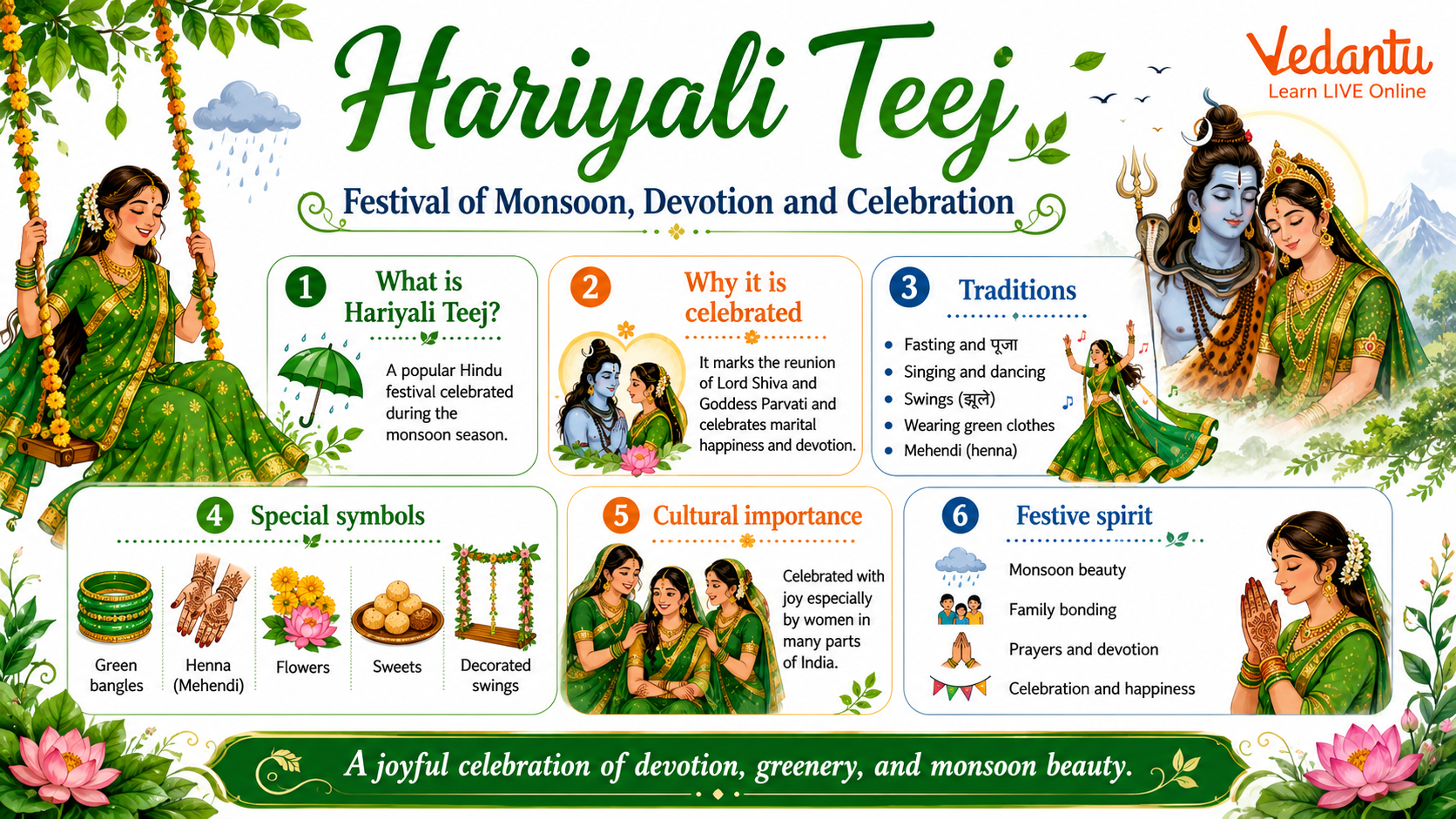
Common Rituals and Vrat Observance
Customs differ by family and region, but these are widely associated with Hariyali Teej:
- Observing a vrat or fast as part of devotional practice
- Offering prayers to Goddess Parvati and Lord Shiva
- Wearing traditional festive clothes, often in green shades linked with the season
- Applying mehndi on hands as a popular festive custom
- Singing traditional Teej songs in groups
- Enjoying decorated swings, especially in monsoon gatherings
- Sharing greetings, sweets, and festive time with family and friends
Because Hariyali Teej vrat 2026 may be observed differently across households, readers should understand these as general practices rather than one universal rulebook. Ritual details are shaped by local custom, family tradition, and community belief.
Hariyali Teej in Different States
The festival is especially observed in these states, with variations in celebration style:
- Rajasthan: Known for vibrant festive customs, songs, swings, and traditional dress
- Uttar Pradesh: Observed with prayer, fasting, and family-centered celebration
- Bihar: Celebrated with devotion, vrat observance, and seasonal rituals
- Madhya Pradesh: Marked by monsoon festivities and traditional observances
- Haryana: Associated with swings, songs, and festive dressing in many communities
These examples reflect common regional patterns mentioned in cultural discussions of Hariyali Teej. They should not be treated as identical or universal across every district or family.
Hariyali Teej and Hartalika Teej: Basic Difference
Hariyali Teej and Hartalika Teej are related but not the same observance. Hariyali Teej is connected with the Sawan monsoon period, greenery, swings, festive adornment, and the celebration of Shiva-Parvati devotion, while Hartalika Teej is a separate Teej festival observed later and searched independently by many readers.
If you want to explore another related festival, you can also read about Krishna Janmashtami celebration or browse more festival explainers on the Vedantu blog.
Mehndi Ideas for Hariyali Teej
Search interest around hariyali teej mehndi design is very strong because mehndi is one of the best-known festive customs linked with the day. A simple Hariyali Teej mehndi design usually focuses on floral shapes, leafy patterns, paisleys, and clean wrist borders that suit the monsoon theme.
Easy design ideas students and beginners can try for inspiration:
- Small floral circle in the center of the palm
- Leaf-and-vine side patterns for a light festive look
- Simple paisley chain across the back of the hand
- Finger-tip detailing with minimal lines
- Matching bracelet-style border near the wrist
Wishes, Greetings, and Status Lines
Here are simple and respectful greeting ideas for happy Hariyali Teej 2026 wishes:
- English: Wishing you a joyful and blessed Hariyali Teej filled with happiness, devotion, and monsoon beauty.
- Hindi: आपको हरियाली तीज की हार्दिक शुभकामनाएं। यह पर्व आपके जीवन में सुख, शांति और खुशियां लाए।
- Marathi: हरितालिका नव्हे, हरियाली तीजच्या मनःपूर्वक शुभेच्छा. तुमच्या जीवनात आनंद आणि समृद्धी नांदो.
- Punjabi: ਹਰਿਆਲੀ ਤੀਜ ਦੀਆਂ ਦਿਲੋਂ ਵਧਾਈਆਂ। ਰੱਬ ਤੁਹਾਡੇ ਜੀਵਨ ਵਿੱਚ ਖੁਸ਼ੀ ਤੇ ਚੜ੍ਹਦੀ ਕਲਾ ਬਣਾਈ ਰੱਖੇ।
- Gujarati: હરિયાળી તીજની હાર્દિક શુભેચ્છાઓ. આ પર્વ તમારા જીવનમાં આનંદ અને શાંતિ લાવે.
Short status lines can also be used for cards or social sharing, such as “Happy Hariyali Teej,” “Celebrating Sawan, greenery, and devotion,” or “Wishing peace, joy, and festive happiness on Hariyali Teej.” Keep greetings warm, respectful, and suitable for all readers.
Student Activities for Hariyali Teej
Students can take part in simple educational activities linked to the festival:
- Make a poster showing the link between monsoon greenery and cultural festivals.
- Write a short paragraph on the meaning of Hariyali Teej and its cultural significance.
- Create greeting cards using Hindi or English wishes.
- Sketch simple mehndi or festival-themed art patterns.
- Collect state-wise information on how monsoon festivals differ across India.
- Discuss how seasonal festivals reflect nature, community, and tradition.
- Read related cultural articles such as Tamil New Year, Vishu, or Raksha Bandhan to compare Indian celebrations.
Key Points to Remember
A quick recap of the most important facts:
- Hariyali Teej 2026 date: 15 July 2026
- It is celebrated mainly in North India during the monsoon season.
- The festival is linked in religious belief with Lord Shiva and Goddess Parvati.
- Its common symbols include greenery, swings, songs, fasting, and mehndi.
- Regional customs vary across Rajasthan, Uttar Pradesh, Bihar, Madhya Pradesh, and Haryana.
Conclusion: Hariyali Teej is more than a seasonal festival; it brings together devotion, monsoon beauty, and shared cultural traditions. In 2026, it will be observed on 15 July, making it easy for families, students, and general readers to plan greetings, learning activities, and respectful participation. Whether you are looking for the date, significance, mehndi ideas, or wishes, understanding the festival through both belief and custom helps you appreciate its lasting place in Indian cultural life.
FAQs on Hariyali Teej 2026 Festival Guide for Students
1. When is Hariyali Teej in 2026?
Hariyali Teej 2026 will be observed on Wednesday, 15 July 2026. The festival falls during the Sawan monsoon period according to the Hindu lunar calendar. Since it is a movable festival, its Gregorian calendar date changes every year.
2. What is Hariyali Teej?
Hariyali Teej is a Hindu monsoon festival associated with devotion to Goddess Parvati and Lord Shiva. Celebrated mainly in North India, it features fasting, prayers, mehndi, green clothes, decorated swings, traditional songs and family gatherings.
3. Why is Hariyali Teej celebrated?
Hariyali Teej is celebrated to honour the divine union of Goddess Parvati and Lord Shiva in Hindu belief. It also welcomes the monsoon season and celebrates greenery, renewal and community togetherness.
- Devotees pray for marital happiness and family well-being.
- The festival recognises the beauty and fertility of nature during Sawan.
- Songs, swings and gatherings preserve regional cultural traditions.
4. What is the significance of Hariyali Teej?
Hariyali Teej symbolises devotion, marital harmony, seasonal renewal and the arrival of monsoon greenery. Its religious significance comes from the story of Goddess Parvati's devotion to Lord Shiva, while its cultural importance is reflected in fasting, festive dress, folk songs, swings and community celebrations.
5. How is Hariyali Teej vrat observed?
Hariyali Teej vrat is observed through fasting and prayers dedicated to Goddess Parvati and Lord Shiva. Common practices include:
- Bathing and wearing clean or traditional festive clothes.
- Worshipping Lord Shiva and Goddess Parvati.
- Listening to or reading the Hariyali Teej vrat katha.
- Applying mehndi and singing traditional Teej songs.
- Completing the fast according to family or regional customs.
Vrat rules can vary, so devotees generally follow their household traditions and consider their health needs.
6. What are the main rituals of Hariyali Teej?
The main Hariyali Teej rituals include fasting, Shiva-Parvati worship, mehndi and monsoon celebrations. Frequently observed customs are:
- Offering prayers, flowers and traditional offerings.
- Wearing green clothes, jewellery and bangles.
- Applying floral, leafy or paisley mehndi designs.
- Singing folk songs and enjoying decorated swings.
- Exchanging sweets, gifts and Hariyali Teej wishes.
The exact rituals differ across families, communities and regions.
7. What is the difference between Hariyali Teej and Hartalika Teej?
Hariyali Teej and Hartalika Teej are separate Teej festivals observed at different times. Hariyali Teej occurs during the Sawan monsoon period and prominently features greenery, swings, songs and festive adornment. Hartalika Teej is observed later, generally during Bhadrapada, and places particular emphasis on fasting and the worship of Goddess Parvati and Lord Shiva.
8. Which states celebrate Hariyali Teej?
Hariyali Teej is celebrated mainly across North and Central India. It is especially associated with:
- Rajasthan: Processions, folk songs, swings and colourful traditional dress.
- Uttar Pradesh and Bihar: Fasting, prayers and family observances.
- Haryana: Festive gatherings, songs and decorated swings.
- Madhya Pradesh: Devotional and monsoon-related celebrations.
Practices may vary between districts, communities and households.
9. Why are green clothes, mehndi and swings important on Hariyali Teej?
Green clothes, mehndi and swings represent the joy and natural beauty of the monsoon season. Green symbolises fresh vegetation and renewal, while leafy and floral mehndi patterns complement the festival's seasonal theme. Decorated swings are connected with traditional Sawan gatherings, folk songs and community celebrations.
10. What are some suitable Hariyali Teej 2026 wishes?
Hariyali Teej wishes should express happiness, devotion, peace and prosperity. Suitable greetings include:
- English: Wishing you a joyful and blessed Hariyali Teej filled with happiness and monsoon beauty.
- Hindi: आपको हरियाली तीज की हार्दिक शुभकामनाएं। यह पर्व आपके जीवन में सुख, शांति और समृद्धि लाए।
- Short status: Celebrating greenery, devotion and joy—Happy Hariyali Teej 2026!
