






What Are the Main Types of Glass and Their Uses?
Glass is an important material used in daily life, industries, laboratories, and modern technology. It is a hard, brittle, and transparent substance made mainly by heating silica with other materials. The composition of glass determines its physical and chemical properties, such as strength, transparency, heat resistance, and chemical stability. Understanding the different types of glass composition and their uses is essential for students, competitive exam aspirants, and anyone interested in material science and industrial applications.
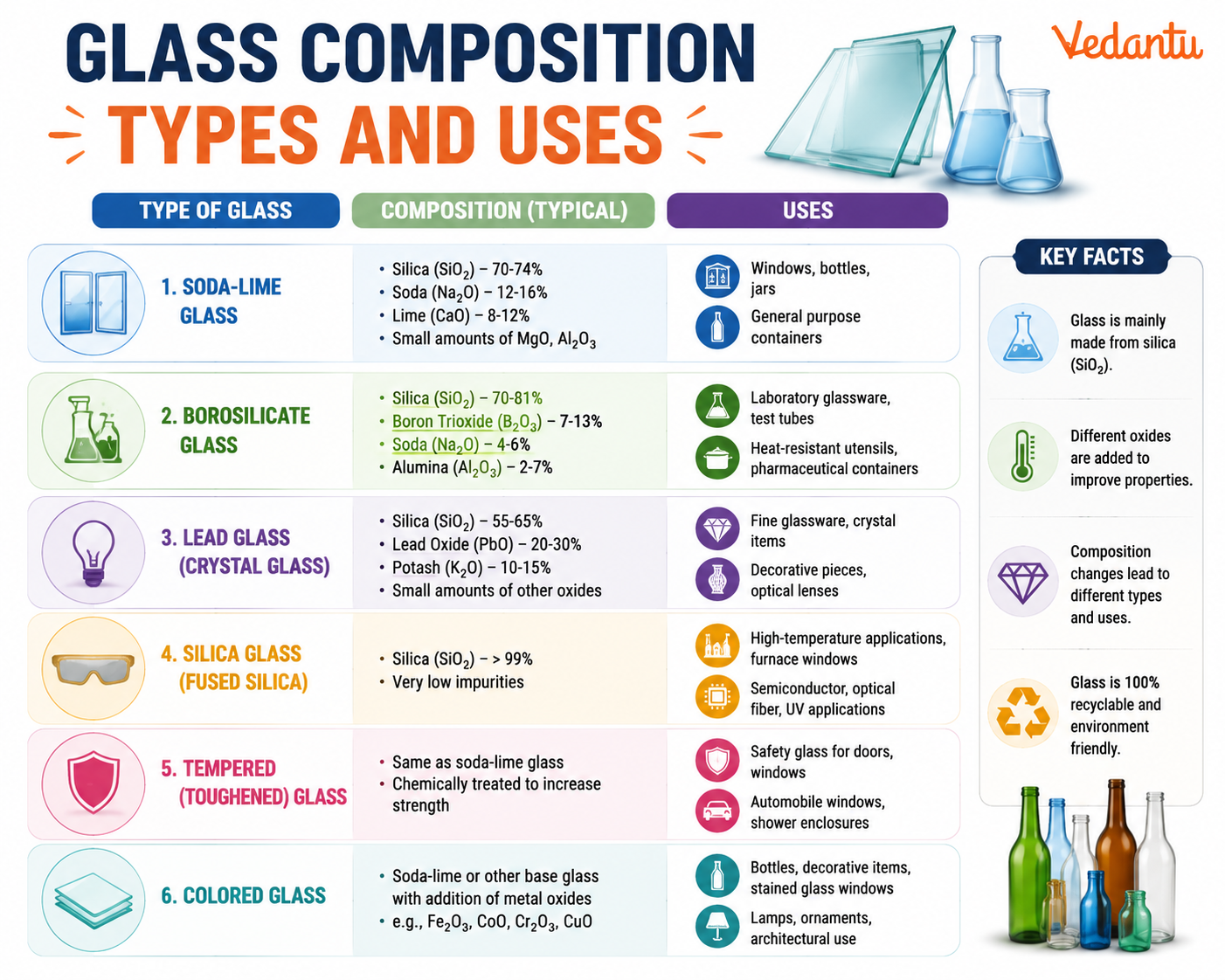
What is Glass?
Glass is an amorphous solid material that does not have a definite crystalline structure. It is usually formed by melting silica sand along with other additives like soda ash and limestone, and then cooling the mixture rapidly. The additives change the melting point, durability, and other properties of the final product.
Main Components of Glass
- Silica - The primary component that forms the basic structure of glass.
- Soda (Sodium carbonate) - Lowers the melting point of silica.
- Lime (Calcium oxide) - Improves durability and chemical resistance.
- Other oxides - Such as boron oxide, lead oxide, and alumina to modify properties.
Types of Glass Based on Composition
1. Soda Lime Glass
Soda lime glass is the most common type of glass. It is made from silica, soda ash, and lime. It is inexpensive and easy to manufacture.
- Contains about 70 to 75 percent silica.
- Moderate chemical resistance.
- Low resistance to sudden temperature change.
Uses: Window panes, bottles, jars, and everyday glassware.
2. Borosilicate Glass
Borosilicate glass contains silica and boron oxide. The presence of boron increases thermal resistance and chemical durability.
- High resistance to thermal shock.
- Excellent chemical stability.
- Low coefficient of thermal expansion.
Uses: Laboratory apparatus, cookware, pharmaceutical containers, and chemical industry equipment.
3. Lead Glass
Lead glass, also known as flint glass, contains lead oxide instead of calcium oxide. It has high density and brilliance.
- High refractive index.
- Soft and easy to cut.
- Good radiation shielding properties.
Uses: Decorative items, optical lenses, X ray shielding screens, and crystal ware.
4. Aluminosilicate Glass
Aluminosilicate glass contains aluminum oxide along with silica. It is stronger and more heat resistant than soda lime glass.
- High mechanical strength.
- Excellent thermal resistance.
- Scratch resistant.
Uses: Smartphone screens, high temperature lamps, and aerospace applications.
5. Fused Silica Glass
Fused silica glass is made almost entirely of pure silica without significant additives. It has very high melting point and excellent optical properties.
- Very high thermal resistance.
- Low thermal expansion.
- High transparency to ultraviolet light.
Uses: Optical fibers, high precision lenses, and semiconductor industry equipment.
Comparison of Glass Types Based on Composition and Uses
| Type of Glass | Main Components | Common Uses |
|---|---|---|
| Soda Lime Glass | Silica, Soda, Lime | Windows, Bottles |
| Borosilicate Glass | Silica, Boron Oxide | Lab Equipment, Cookware |
| Lead Glass | Silica, Lead Oxide | Decoratives, Optical Lenses |
| Aluminosilicate Glass | Silica, Aluminum Oxide | Mobile Screens, Aerospace |
| Fused Silica Glass | Pure Silica | Optical Fibers, UV Lenses |
The above table highlights how changing the composition of glass results in different physical and chemical properties. Each type is designed for specific industrial, scientific, or domestic applications.
Importance of Studying Glass Composition
- Helps understand material properties and industrial applications.
- Important for chemistry and material science examinations.
- Useful in medical, engineering, and laboratory fields.
- Frequently asked in competitive exams like NEET and other entrance tests.
Conclusion
Glass composition plays a crucial role in determining its strength, durability, transparency, and resistance to heat and chemicals. From everyday soda lime glass used in windows to highly specialized fused silica used in advanced technology, each type has unique properties suited for specific purposes. A clear understanding of glass composition types and uses helps students build a strong foundation in chemistry and material science, which is valuable for academic studies and competitive examinations.
FAQs on Glass Composition: Types and Practical Applications
1. What is glass composition?
Glass composition refers to the chemical makeup of glass, mainly formed by melting silica with other compounds to achieve specific properties.
- The primary component is Silica (SiO₂).
- Additives like Soda (Na₂CO₃) lower melting point.
- Lime (CaO) increases durability.
- Other oxides improve strength, color, or heat resistance.
Understanding glass composition helps explain different types of glass and their uses in construction, laboratory work, packaging, and optics.
2. What are the main types of glass based on composition?
The main types of glass are classified based on their chemical composition and properties.
- Soda-lime glass – Most common, used in windows and bottles.
- Borosilicate glass – Heat-resistant, used in laboratory glassware.
- Lead glass (Crystal glass) – High clarity, used in decorative items.
- Aluminosilicate glass – Strong and heat-resistant, used in screens and aerospace.
These glass types differ in durability, transparency, and thermal resistance.
3. What is soda-lime glass and where is it used?
Soda-lime glass is the most widely used type of glass made from silica, soda, and lime.
- Composition: Silica + Sodium oxide + Calcium oxide.
- Low production cost.
- Moderate strength and clarity.
- Used in window panes, bottles, jars, and everyday glassware.
It is popular due to its affordability and ease of manufacturing.
4. What is borosilicate glass and why is it heat-resistant?
Borosilicate glass is a heat-resistant glass containing boron oxide that reduces thermal expansion.
- Contains Boron trioxide (B₂O₃).
- Low thermal expansion coefficient.
- Resistant to thermal shock and chemicals.
- Used in laboratory equipment, cookware, and scientific instruments.
It is ideal for applications involving high temperatures and rapid heating or cooling.
5. What is lead glass (crystal glass)?
Lead glass, also called crystal glass, contains lead oxide to enhance brilliance and clarity.
- High refractive index for sparkle.
- Softer and easier to cut or engrave.
- Used in decorative items, chandeliers, and optical lenses.
The presence of lead gives it a distinctive shine and weight compared to ordinary glass.
6. What are the uses of different types of glass?
Different types of glass are used based on their strength, transparency, and heat resistance.
- Soda-lime glass – Windows, bottles.
- Borosilicate glass – Lab glassware, cookware.
- Lead glass – Decorative pieces.
- Aluminosilicate glass – Mobile screens, aircraft panels.
Each type serves specific industrial, commercial, and household purposes.
7. How does glass composition affect its properties?
Glass composition directly determines its strength, transparency, melting point, and durability.
- More silica increases hardness.
- Adding soda lowers melting temperature.
- Boron improves heat resistance.
- Lead increases brilliance and density.
Thus, changing chemical components alters physical and chemical properties.
8. What is aluminosilicate glass?
Aluminosilicate glass is a strong and temperature-resistant glass containing aluminum oxide.
- High mechanical strength.
- Excellent thermal stability.
- Scratch-resistant surface.
- Used in smartphone screens, space shuttles, and high-performance lighting.
It is preferred for advanced technology and industrial applications.
9. Why is silica important in glass manufacturing?
Silica is the primary raw material in glass manufacturing because it forms the basic structural network of glass.
- Provides transparency.
- Ensures hardness and chemical stability.
- Found naturally as sand (SiO₂).
Without silica, glass formation would not be possible, making it the most essential component.
10. What are the advantages of different glass types?
Different glass types offer unique advantages depending on their composition and intended use.
- Soda-lime glass – Cost-effective and widely available.
- Borosilicate glass – Heat and chemical resistant.
- Lead glass – High clarity and decorative appeal.
- Aluminosilicate glass – Strong and durable.
Choosing the right glass type ensures safety, efficiency, and long-lasting performance.
