







What Is Home Care and Precautions Definition Guidelines and Examples
The time has drastically changed after the advent of the COVID19 Pandemic. It is necessary that parents should take good care of their kids at home. They will have to remain inside the house most of the time during the infectious waves. Find out the exclusive parenting tips to follow to maintain safety and provide home care.
What is Homecare?
The personal care provided to the kids by the parents is called home care. It is a way to look after the kids when they are not well. The definition of home care has changed due to the advent of the COVID-19 pandemic.
What is Precaution?
Any measure taken by anticipating a threat or danger to someone for preventing it is called a precaution. For instance, storing tools away from the reach of children is a precaution.
Parenting Tips for Homecare
Home is where we all are safe. Children should learn what is safe and what is not at home. Parents should be well aware of what things in the house can harm the kids when not noticed. Here is the list of parenting tips we should follow to avoid accidents and provide proper home care.
Child safety promotion
Children should be made aware of the potential hazards at a very young age. They should learn one can get hurt by hurling down the stairs. They should be taught how to get down from a bed or a higher level.
Parents are suggested to keep an eye on the toddlers and kids. It is not possible to do it all the time but be alert all the time. Explore your home to ensure that things with sharp edges are away. Identify and anticipate where kids can trip and fall and secure them.
Equipment and furniture
Tables, chairs, cabinets, stands, beds, etc. are the common furniture in a modern house. Make sure the sharp edges are covered to protect kids from bumping on them. Keep an eye on the kids when they are using chairs or at a level higher than the ground. Make sure the safety measures are followed to avoid accidents.
Electrical safety
There are low plug points at home. Kids have small fingers and often insert them in the plug points out of curiosity. They also watch their parents and try to imitate using electricity. Make sure the plug points are covered. Parents should also keep electrical appliances away from the kids.
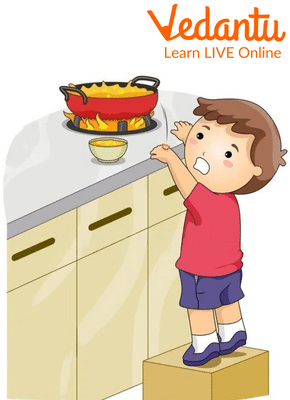
A Kid Spilling Hot Food
Preventing falls
One of the prime reasons children get hurt at home is falling from a higher level or tripping. Kids are not aware of their surroundings the way an adult does. Hence, they trip and fall more often.
Toddlers specifically cannot judge the depths and heights and eventually end up hurting themselves. Parents are suggested to keep the windows guarded and balconies railed. Make sure there is a detachable partition to stop kids from using stairs without anyone’s supervision.
Glassware safety
Every house uses glassware. It is a potential threat when not maintained or kept properly at home. Kids are fascinated to play with glassware and want to imitate their parents. Keep glassware away from the kids.
Chemical safety
A house needs different types of chemical formulas to use such as dishwashers, soap, shampoo, disinfectant, dyes, etc. All these chemicals should be stored away from the children.
Water safety
Children, especially toddlers, should be kept away from bathtubs and big buckets. They should also remain away from toilets to maintain water safety.

Parents and Children Bonding
Special Tips for Parents
Teach kids to wash hands and wear masks during the pandemic situation. Explain what will happen if they do not follow these protocols. Follow the parenting tips mentioned above to keep the children safe at home.
FAQs on Home Care and Precautions for Safe and Healthy Recovery
1. What is home care and why is it important?
Home care is the support and medical or non-medical assistance provided to a person in their own home to maintain health, safety, and comfort. It is important because it promotes independence, reduces hospital visits, and improves overall quality of life.
- Includes help with daily activities like bathing and dressing
- May involve medication management and monitoring
- Supports elderly, disabled, or recovering patients
2. What are the basic precautions to take during home care?
The basic precautions in home care include maintaining hygiene, preventing infections, and ensuring a safe environment. These steps reduce the risk of accidents and illness.
- Wash hands regularly using proper hand hygiene
- Disinfect frequently touched surfaces
- Store medicines safely and correctly
- Remove tripping hazards to prevent falls
3. How can infections be prevented in home care settings?
Infections can be prevented in home care by practicing strict hygiene and proper sanitation measures. The key is consistent infection control practices.
- Wash hands before and after patient contact
- Use gloves when handling bodily fluids
- Clean and disinfect medical equipment
- Dispose of waste safely
4. What safety measures should be followed for elderly home care?
Elderly home care requires fall prevention, medication monitoring, and regular supervision. Safety measures focus on reducing the risk of injury.
- Install grab bars in bathrooms
- Ensure proper lighting in all rooms
- Use non-slip mats
- Organize medications with clear labels
5. How should medications be managed in home care?
Medications in home care should be managed through proper storage, correct dosage, and timely administration. Effective medication management prevents errors and health complications.
- Follow the prescribed schedule strictly
- Use a pill organizer if necessary
- Keep medicines away from children
- Check expiration dates regularly
6. What precautions should be taken for bedridden patients at home?
Bedridden patients require regular repositioning and skin care to prevent complications. The main concern is avoiding pressure ulcers and infections.
- Change position every 2–3 hours
- Keep skin clean and dry
- Use supportive cushions or special mattresses
- Monitor for redness or sores
7. How can caregivers ensure personal hygiene during home care?
Caregivers can ensure personal hygiene by maintaining cleanliness for both themselves and the patient. Good personal hygiene reduces infection risks.
- Bathe the patient regularly
- Trim nails and maintain oral care
- Wear clean clothes and gloves when needed
- Wash hands before and after care tasks
8. What emergency precautions should be prepared for in home care?
Emergency preparedness in home care means having a clear plan and necessary supplies ready at all times. Quick response reduces serious complications.
- Keep emergency contact numbers accessible
- Maintain a basic first aid kit
- Know the patient’s medical history
- Recognize warning signs like breathing difficulty
9. How can falls be prevented at home during patient care?
Falls can be prevented by removing hazards and providing proper support devices. Fall prevention is a major part of home safety precautions.
- Keep floors dry and clutter-free
- Install handrails on stairs
- Encourage the use of walking aids if prescribed
- Ensure adequate lighting at night
10. Why is regular monitoring important in home care?
Regular monitoring in home care is important because it helps detect health changes early and prevents complications. Continuous health monitoring improves patient safety.
- Check vital signs if required
- Observe changes in behavior or appetite
- Track medication effects
- Report unusual symptoms to a healthcare provider
