








What Are the Other Devices of a Computer and How Do They Work
In addition to the main components like CPU, keyboard, mouse, and monitor, a computer system also includes several other important devices that enhance its functionality. These devices help in storing data, producing output, communicating with other systems, and improving user interaction. Understanding Other Devices Of Computer in computer science is essential because they extend the capabilities of a computer beyond basic input and output. From printers and scanners to speakers and projectors, these devices play a vital role in education, business, entertainment, and daily computing tasks.
Definition and Meaning
Other Devices Of Computer refer to additional hardware components connected to a computer system to perform specific tasks apart from core processing. These devices support input, output, storage, and communication functions.
- Peripheral Devices - External devices connected to a computer.
- Input Devices - Devices used to enter data into the system.
- Output Devices - Devices used to display or present information.
- Storage Devices - Devices used to store data and information.
How It Works - Working Principle
Other devices of a computer work by connecting to the main system unit through wired or wireless connections. They communicate with the CPU to send or receive data depending on their function.
- The user gives input through an input device such as a keyboard or mouse.
- The CPU processes the data according to instructions.
- The processed information is sent to output devices like a monitor or projector.
- Storage devices save the processed data for future use.
Each device performs a specific role but works together with the CPU and memory to complete tasks efficiently.
Types and Classification
Other Devices Of Computer can be classified into different categories based on their function.
Types of Other Devices Of Computer
| Type | Examples | Function |
|---|---|---|
| Input Devices | Keyboard, Mouse, Scanner | Enter data into the computer |
| Output Devices | Monitor, Printer, Projector | Display or produce results |
| Storage Devices | Hard Disk, Pen Drive, CD | Store data permanently |
These devices help the computer perform various tasks beyond processing.
Components and Structure
Below are some commonly used devices in a computer system.
1. Components of Computer
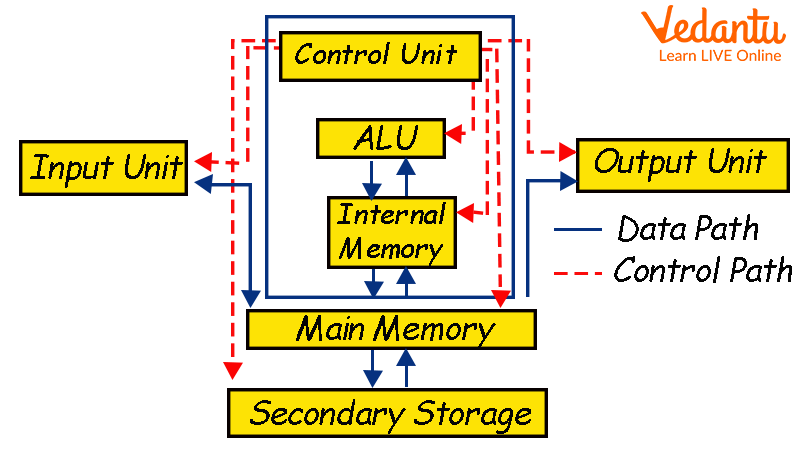
A computer system mainly consists of input devices, CPU, memory, storage, and output devices working together.
2. Keyboard
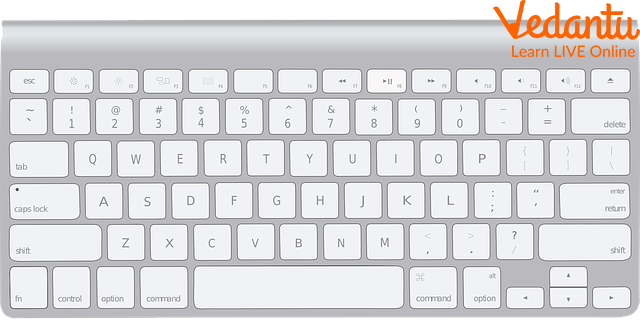
- An input device used to type text and commands.
- Contains alphabet, number, and function keys.
3. Mouse
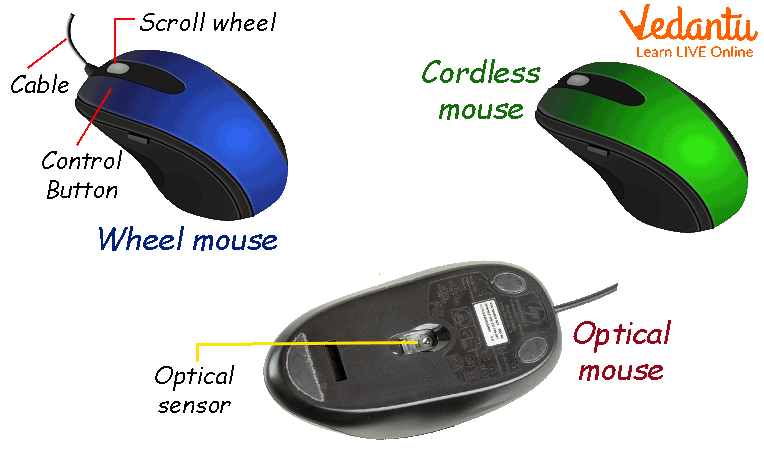
- A pointing device used to move the cursor.
- Helps in selecting and opening files.
4. Monitor
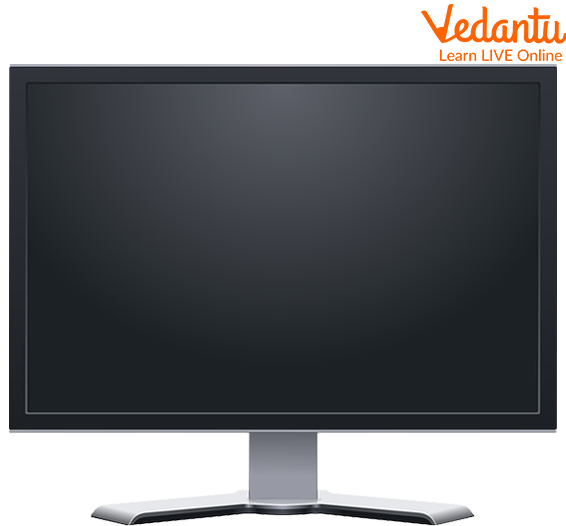
- An output device that displays information visually.
- Available in LCD and LED types.
5. Projector
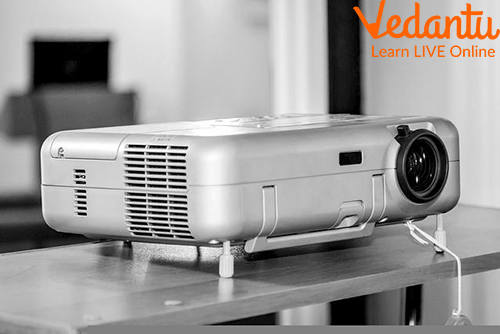
- An output device that projects images onto a large screen.
- Commonly used in classrooms and meetings.
Features and Characteristics
- Enhance the functionality of a computer system.
- Provide input, output, and storage support.
- Can be internal or external devices.
- Connect via USB, HDMI, Bluetooth, or other ports.
Advantages
- Improve user interaction with the computer.
- Increase productivity and efficiency.
- Support multimedia and presentation tasks.
- Allow permanent data storage.
Disadvantages / Limitations
- Require additional cost.
- May need maintenance or replacement.
- Compatibility issues may arise.
Applications and Use Cases
- Education - Projectors and monitors for teaching.
- Business - Printers and scanners for documentation.
- Home Use - Speakers and webcams for entertainment and communication.
- Banking and Offices - Storage devices for data management.
Quick Facts About Other Devices Of Computer
| Category | Description |
|---|---|
| Type | Peripheral Devices |
| Main Purpose | Input, Output, Storage |
| Connection | USB, HDMI, Wireless |
| Used In | Education, Business, Home, Industry |
These devices enhance the overall performance and usability of a computer system.
Interesting Facts About Other Devices Of Computer
- The first computer mouse was made of wood.
- Modern keyboards have more than 100 keys.
- LED monitors consume less power than older CRT monitors.
- Projectors can display images larger than 100 inches.
- External storage devices can store terabytes of data.
- Wireless devices reduce cable clutter.
Conclusion
Understanding Other Devices Of Computer is important in computer science because these devices extend the functionality of a system beyond basic processing. They help users input data, view results, store information, and present content effectively. From keyboards and mice to monitors and projectors, each device plays a specific role in making computing efficient and user friendly. Learning about their features, types, and applications helps students build a strong foundation in computer fundamentals.
FAQs on Other Devices of Computer and Their Functions
1. What are other devices of a computer?
Other devices of a computer refer to additional hardware components and peripheral devices that support input, output, storage, and communication functions beyond the basic CPU, monitor, keyboard, and mouse.
- Include input, output, storage, and communication devices
- Enhance system performance and usability
- Commonly used in home, office, and enterprise computer systems
2. What are the different types of other computer devices?
Other computer devices are classified based on their function such as input devices, output devices, storage devices, and communication devices.
- Input devices: Scanner, webcam, microphone
- Output devices: Printer, speakers, projector
- Storage devices: External HDD, USB flash drive
- Communication devices: Modem, network interface card (NIC)
3. What are some examples of input devices other than keyboard and mouse?
Examples of additional input devices include hardware used to send data and instructions to the computer system.
- Scanner for digitizing documents and images
- Microphone for audio input
- Webcam for video input
- Barcode reader for reading coded data
- Touchscreen for direct interaction
4. What are common output devices in a computer system?
Common output devices present processed data from the computer to the user in visual, audio, or printed form.
- Printer for hard copy output
- Speakers and headphones for audio output
- Projector for large screen display
- Plotter for engineering drawings
5. What are storage devices and why are they important?
Storage devices are hardware components used to store data, programs, and operating systems either temporarily or permanently.
- Primary storage: RAM, cache memory
- Secondary storage: SSD, HDD
- External storage: USB drive, memory card
- Essential for data backup and retrieval
6. What is the role of communication devices in computer networks?
Communication devices enable computers to connect and exchange data over a network such as the internet or LAN.
- Modem converts digital data to analog signals
- Router directs network traffic
- Network Interface Card (NIC) connects a computer to a network
- Used in networking, cloud computing, and web development
7. What is the difference between input and output devices?
The main difference is that input devices send data to the computer, while output devices receive processed data from the computer.
- Input example: Scanner, microphone
- Output example: Printer, monitor
- Both are essential for human computer interaction
8. What are the advantages of using additional computer devices?
Additional computer devices improve functionality, productivity, and overall system performance.
- Enable multimedia processing using webcams and speakers
- Provide data backup using external storage
- Support online communication via networking devices
- Enhance user experience in programming, design, and gaming
9. Are other computer devices important for exams and interviews?
Yes, understanding other computer devices is important for school exams, competitive exams, and technical interviews in Computer Science.
- Frequently asked in basic computer knowledge sections
- Helps in understanding hardware and system architecture
- Important for IT support and networking job roles
10. How do other computer devices work with the CPU and operating system?
Other computer devices interact with the CPU through device drivers and are managed by the operating system to perform specific tasks.
- Device drivers enable hardware software communication
- Operating system controls input and output operations
- Data flows from input devices to CPU and then to output devices
