




Practice Class 2 Pronoun Questions with Answers & Free PDF for 2026-27
In this chapter, we are going to learn about pronouns. A word replaced for a noun is known as a pronoun.
Pronouns
Significance of Pronouns:
Sentence without using Pronouns:
The girl Roshni is good. The gentle Roshni. Roshni is a polite person. Roshni values her instructors and parents. Roshni is trustworthy and sincere. Roshni is also smart.
The same sentence has been revised to use the pronoun:
The girl Roshni is good. She is gentle. She is a polite person. She values her instructors and parents. She is trustworthy and sincere. She is also smart.
The usage of the term Roshni twice in Paragraph-A made it sound strange. Roshni is represented by "she" and "her" in Paragraph B. She and she are thus pronouns.
Using Pronouns
Gender:
Both male and female pronouns are used: "I," "we," "you," "me," and "us."
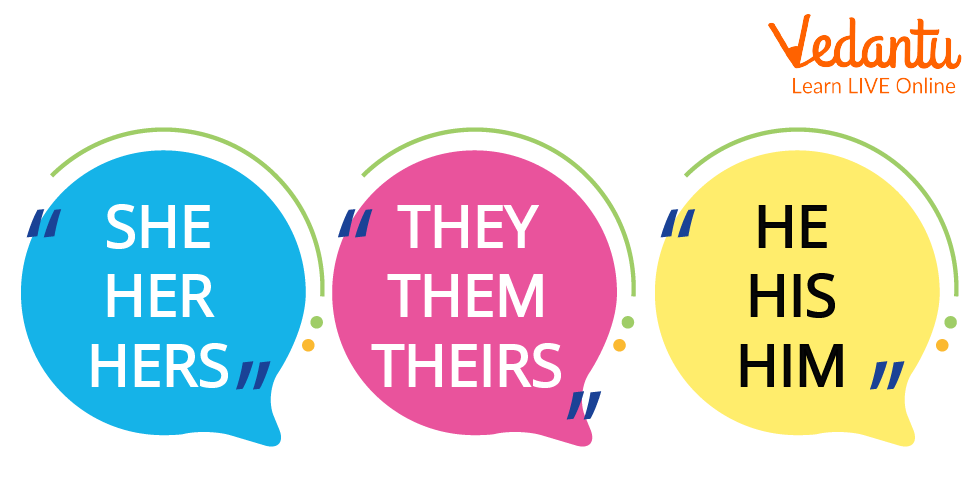
‘He’, ‘him’, and ‘his’ is used for male beings only.
‘She’, ‘her’, and ‘hers’ are used for female folks solely.
It can refer to a person, a place, or an object.
They and Them can refer to more than one person, animal, location, or object.
Example:
She's a sweet girl.
He enjoys ice cream.
It is ineffective.
Numbers:
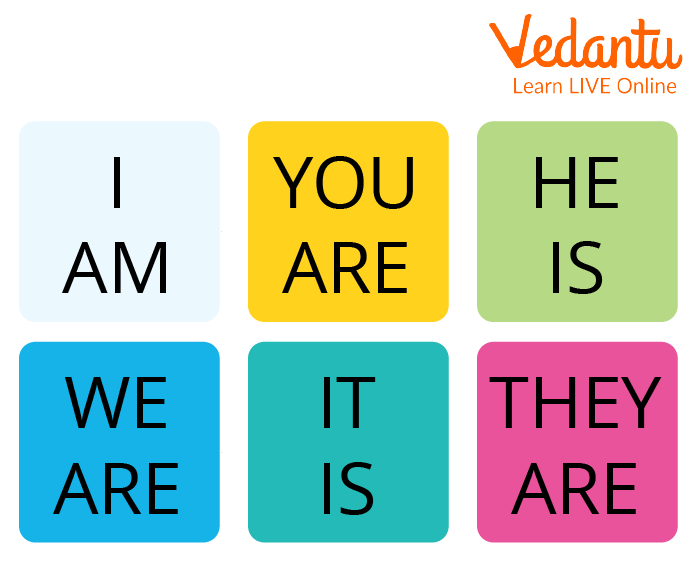
I, you, he, she, it, me, him, and she are singular nouns.
Plural: "we," "you," "they," "us," and "them"
Examples:
I enjoy playing cricket.
You might perform well on this exam.
Different Pronouns
Subject/Object:
Subjects include I, you, he, she, it, us, you, and them.
Object: I, you, He, She, It, Us, You, and Them
Examples:
I enjoy tea. ('I' is the subject pronoun because it is the sentence's subject.)
Ria assisted me. ('Me' is the object pronoun because it is impacted by the sentence's subject in some way.)
Pronouns Examples:
My name is Ansh.
I'm a male.
I read in Class II.
Swati and I are close friends.
Our group enjoys games.
We attend the same school.
Is your name Mayank?
This is not my work so you are responsible for this.
Bold words are pronouns here.
Uses of Pronouns
Difficult Words
Summary
In this article, we have learned the pronouns. Pronouns are brief words that can serve as nouns, the term "pronoun" usually replaces a noun or noun phrase. The pronouns are the fundamental components of the phrase. In order for us to speak with one another, pronouns are necessary. However, pronoun communication is really important. Next time, think twice before assuming that someone is referring to someone by their pronouns because we use pronouns to identify or refer to them.
Practice Questions:
A. Change the underlined font phrase to a more appropriate pronoun.
My son's life was saved by the police.
His ideas don't satisfy you and me either.
Please revoke my sister's access to the toy.
In May, Ankur adores visiting Uttrakhand.
Your brother and my uncle get along great.
My friends and I served as the dance competition's special guests.
Anmol is currently a teacher at a CBSE-affiliated institution.
All my books have been bit by rats.
Sunaina's personality is unimpressive.
A blue bag contains the knife.
B. Use the appropriate pronoun to fill in the gaps.
_____refuses to admit his error.
Pushpa and Savita get along well,_____always support one another.
His dad just got a new cat. ___ is all black.
My teacher declared, "___would reprimand all the students right away."
Children! You must honour ____parents.
The group's current leader is Sanskriti. We shall follow___.
Please give the book back. ___ is my brother's book.
I thus ask that you leave ___ alone for three days.
Saloni and I never engage in after-school play since ___ always do our assignments.
My family members get up early so that_____ can practice yoga.
Answers:
A.
His life was saved by the police.
His ideas don't satisfy us either.
Please revoke her access to the toy.
In May, he adores visiting Uttrakhand.
They get along great.
We served as the dance competition's special guests.
She is currently a teacher at a CBSE-affiliated institution.
All my books have been bit by them.
Her personality is unimpressive.
The blue bag contains a knife.
B.
He refuses to admit his error.
Pushpa and Savita get along well, they always support one another.
His dad just got a new cat. It is all black.
My teacher declared, "I would reprimand all the students immediately."
Children! You must honour your parents.
The group's current leader is Sanskriti. We shall follow her.
Please give the book back. It is my brother's book.
I thus ask that you leave me alone for three days.
Saloni and I never engage in after-school play since we always do our assignments.
My family members get up early so that we can practice yoga.
Importance of Pronoun Definition for Cass 2
Pronouns are words that we use to refer to or identify someone. You can use them more in writing because they help make sentences smoother and clearer. They make the sentences much easier to read. Pronouns are also helpful in expressing ideas about yourselves without having to use your names. For us to speak with one another, pronouns are necessary. However, pronoun communication is essential.
10 Examples of Pronoun Sentences
They do not accept the offer.
It is a black dress.
Rahul, you must eat healthy food.
Ram and Saloni are going to school together. They live near each other's house.
We live in a joint family.
Ravi won the race. She will get a prize.
Please return the ball. It is my ball.
I am a good boy.
This is my house.
She is a good girl.
Some Interesting Facts Related to Pronouns
1. A personal pronoun can be used in place of a noun; therefore, its number, gender, and person must all correspond to the noun.
Example -
Meera loves his Mother. (Incorrect)
Meera loves her Mother. (Correct)
2. When two or more singular nouns appearing in a sentence are joined by the conjunction "and," the pronoun referring to them is always plural.
Example -
Manan and Ram have lost his keys. (Incorrect)
Manan and Ram have lost their keys. (Correct)
Important Topics of the Chapter
The chapter will majorly cover the following topics:
Pronoun definition for Class 2
Comparison of sentences with or without using pronouns
Introduction to personal pronouns
Use of I, You, We, He, She, It, and They
What does the Pronouns Worksheet for Class 2 with Answers PDF Consist of?
Through this pronoun worksheet for Class 2, your child can effectively learn the meaning and usage of personal pronouns like I, you, they, etc.
You can also find different pronoun exercises for Class 2. You can easily download these worksheets in pdf form and solve related problems.
The pdf also consists of a list of different types of pronouns. Also, there are several examples of pronoun sentences for Class 2.
Let your kid identify the noun in each sentence and swap it out for the appropriate pronoun.
To make it easier for your kids to recognise the pronouns used for various persons, the worksheet includes pertinent images of people pointing at various objects or other people.
You can also let your child create sentences using pronouns to explain the picture.
Team Vedantu has worked diligently to prepare suitable pronouns worksheets for Class 2 CBSE so that the students can do the proper practice. This pronouns worksheet for Class 2 with answers pdf consists of the questions based on various levels of understanding. Through these exercises, the basic concept of pronouns will be crystal clear to students.
FAQs on CBSE Class 2 English Grammar Pronoun Worksheet PDF with Practice (2026-27) (Sign-in Required)
1. What is a pronoun, and why is it an important topic for Class 2 exams?
A pronoun is a word used in place of a noun to avoid repeating the same noun. For example, instead of saying "Rohan is a good boy. Rohan loves to play," we say "Rohan is a good boy. He loves to play." This is an important question for the 2026-27 session because it tests your ability to make sentences clearer, a key skill in the CBSE Class 2 English syllabus.
2. What are the most important personal pronouns a Class 2 student must know for exams?
For your Class 2 English exams, it is essential to know how to correctly use the following personal pronouns:
I, We, Me, Us: Used for the person speaking.
You: Used for the person being spoken to.
He, Him: Used for a single boy or man.
She, Her: Used for a single girl or woman.
It: Used for a single animal or a non-living thing.
They, Them: Used for more than one person, animal, or thing.
3. What is the most frequently asked type of pronoun question in Class 2 tests?
The most common and important question format involves replacing an underlined noun with a suitable pronoun or filling in the blanks. This directly tests your practical understanding.
Example: Replace the underlined word with a correct pronoun.
Ria and Diya are friends.
Answer: They are friends.
Mastering this format is key to scoring well.
4. Why is it so important to use the correct pronoun in a sentence?
Using the correct pronoun is crucial because it ensures the sentence is clear and makes sense. If you use the wrong pronoun, the meaning becomes confusing. For instance, for 'the dog', using 'he' or 'she' would be incorrect; the right pronoun is 'it'. Examiners look for this accuracy, and getting it right is essential for earning full marks in grammar exercises.
5. How do you decide which pronoun to use for a noun like 'a boy', 'the girls', or 'my book'?
To choose the correct pronoun, you must look at the noun's number (singular/plural) and gender (masculine/feminine). Here's a simple guide for your exam:
For a single boy or man ('a boy'), use he.
For a single girl or woman ('a girl'), use she.
For a single animal or thing ('my book'), use it.
For more than one person, animal, or thing ('the girls'), use they.
This is a common area where marks are lost, so it's a very important concept to practise.
6. What is a common mistake to avoid when using pronouns for groups of people or things?
A common mistake, often seen in exams, is using a singular pronoun for a plural noun. For example, if a sentence says, "The children are playing," you must replace "The children" with the plural pronoun 'they'. Using 'he' or 'she' would be incorrect. Always check if the noun is one or many before selecting a pronoun. Avoiding this error is a key exam tip.
