



When is World Pulses Day 2026?
World Pulses Day is a global observance dedicated to recognising the importance of pulses as a vital food source for nutrition, sustainable agriculture, and environmental protection. Observed every year on 10 February, the day highlights how pulses contribute to food security, healthy diets, soil fertility, and climate resilience.
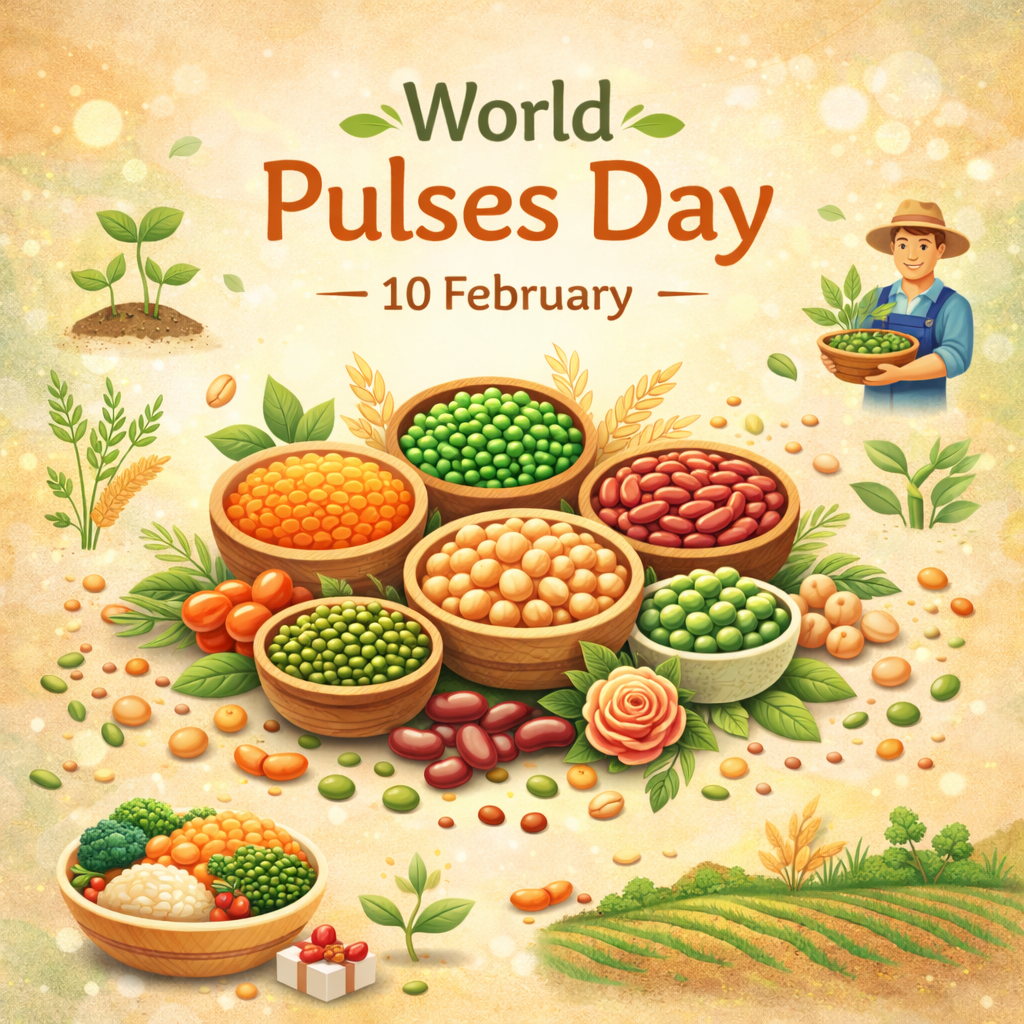
This international day is officially recognised by the United Nations and supported by the Food and Agriculture Organization (FAO) to promote awareness about pulses and their role in achieving the UN 2030 Agenda for Sustainable Development.
When is World Pulses Day Celebrated?
World Pulses Day is celebrated on 10 February every year.
The day has been observed annually since 2019, following its designation by the United Nations General Assembly (UNGA) in December 2018.
Why is World Pulses Day Celebrated?
World Pulses Day was established after the International Year of Pulses (2016) received global success. Recognising the long-term value of pulses, the UN declared 10 February as World Pulses Day to:
Promote nutrition and healthy diets
Encourage sustainable food systems
Support farmers and rural livelihoods
Reduce hunger and malnutrition
Improve soil health and biodiversity
In simple words, World Pulses Day celebrates pulses as food for people, soil, and the planet.
World Pulses Day Theme 2026
The theme of World Pulses Day 2026, observed on 10 February, is “Pulses of the World: From Modesty to Excellence”.
This theme highlights the remarkable journey of pulses—from humble, traditional crops to globally recognised superfoods that support nutrition, sustainability, and food security. It emphasises how simple, nutrient-dense seeds like lentils, chickpeas, beans, and peas have evolved into essential components of modern, sustainable diets across the world.
Key Focus Areas of the World Pulses Day 2026 Theme
From Humble Origins to Global Impact
The theme showcases how pulses, once considered basic staples, now play a central role in culinary innovation, healthy diets, and climate-smart agriculture.Global Collaboration
The main World Pulses Day 2026 global event is hosted in collaboration with the Kingdom of Spain at the Miguel Delibes Cultural Centre, Valladolid, highlighting international cooperation in building sustainable agrifood systems.Science Meets Food Culture
The 2026 celebration blends scientific discussions with culinary demonstrations, encouraging the integration of pulses into everyday meals in creative, nutritious, and sustainable ways.Supporting the UN 2030 Agenda
Pulses are recognised for improving soil fertility, biodiversity, and ecosystem health, while providing affordable nutrition—directly supporting the United Nations 2030 Sustainable Development Goals.
Overall, World Pulses Day 2026 encourages people, communities, and governments to increase the production and consumption of pulses to protect both human health and planetary health.
What are Pulses? (Pulses Meaning)
Pulses are the dry edible seeds of legume plants that are harvested for food. They are rich in protein, fibre, vitamins, and minerals and are an essential part of diets worldwide.
Pulses Meaning (Simple Definition)
Pulses are dry seeds of legumes used as food, such as lentils, beans, chickpeas, and peas.
Examples of Pulses
Some common pulses examples include:
Chickpeas (Chana)
Lentils (Masoor, Moong, Toor)
Dry beans (Kidney beans, Black beans)
Dry peas
Lupins
These foods are affordable, nutritious, and widely consumed across cultures.
Types of Pulses
The main types of pulses consumed globally include:
Lentils – Rich in iron and protein
Chickpeas – High in fibre and plant protein
Dry Beans – Kidney beans, black beans, navy beans
Dry Peas – Yellow and green peas
Lupins – Protein-rich and climate-resilient
Each pulse type supports both human health and sustainable farming.
Importance of Pulses in Nutrition
Pulses are considered nutrient-dense foods and offer several health benefits:
High in plant-based protein
Rich source of dietary fibre
Low in fat
Helps control blood sugar and cholesterol
Supports heart health and weight management
This makes pulses ideal for children, students, adults, and elderly people.
Environmental Benefits of Pulses
Pulses play a major role in sustainable agriculture:
Fix atmospheric nitrogen into the soil
Improve soil fertility and biodiversity
Require less water than many crops
Have a low carbon footprint
Support climate-resilient farming
Because of this, pulses are often called “climate-smart crops.”
Role of Pulses in Sustainable Development
World Pulses Day is closely linked with the United Nations’ 2030 Sustainable Development Goals (SDGs), especially:
Zero Hunger
Good Health and Well-being
Climate Action
Responsible Consumption
Poverty Reduction
Including pulses in diets helps feed more people sustainably.
World Pulses Day in India
India is:
One of the largest producers and consumers of pulses
A major contributor to global pulse cultivation
Home to diverse pulse varieties grown across states
World Pulses Day encourages Indian farmers to adopt crop rotation and intercropping with pulses to improve productivity and income.
Highlights of World Pulses Day
Recognised by the United Nations
Observed globally on 10 February
Supported by FAO
Promotes nutrition, sustainability, and food security
Educates people about pulses meaning, types, and benefits
World Pulses Day – Key Takeaway
World Pulses Day reminds us that small seeds can make a big difference. Pulses nourish people, protect the environment, and support sustainable agriculture. By increasing awareness and consumption of pulses, the world moves closer to a healthier and more sustainable future.
FAQs on World Pulses Day: Meaning, Theme, Importance & Types of Pulses
1. What is World Pulses Day?
World Pulses Day is an international observance celebrated on 10 February to promote the importance of pulses for nutrition, food security, and sustainable agriculture.
2. When is World Pulses Day celebrated?
World Pulses Day is celebrated every year on 10 February.
3. Why is World Pulses Day important?
It highlights the role of pulses in healthy diets, soil fertility, climate resilience, and sustainable food systems.
4. What are pulses?
Pulses are dry edible seeds of legumes, such as lentils, beans, chickpeas, and peas.
5. What are examples of pulses?
Common pulses examples include lentils, chickpeas, dry beans, dry peas, and lupins.
6. How do pulses help the environment?
Pulses improve soil fertility, reduce carbon emissions, and require less water, making them environmentally sustainable crops.



