



When is International Mother Language Day 2026?
nternational Mother Language Day 2026, observed on 21 February, highlights the importance of linguistic diversity, multilingual education, and the preservation of mother tongues across the world. Led by UNESCO and recognised by the United Nations, this global observance reminds societies that languages matter — for identity, inclusion, education, peace, and sustainable development.
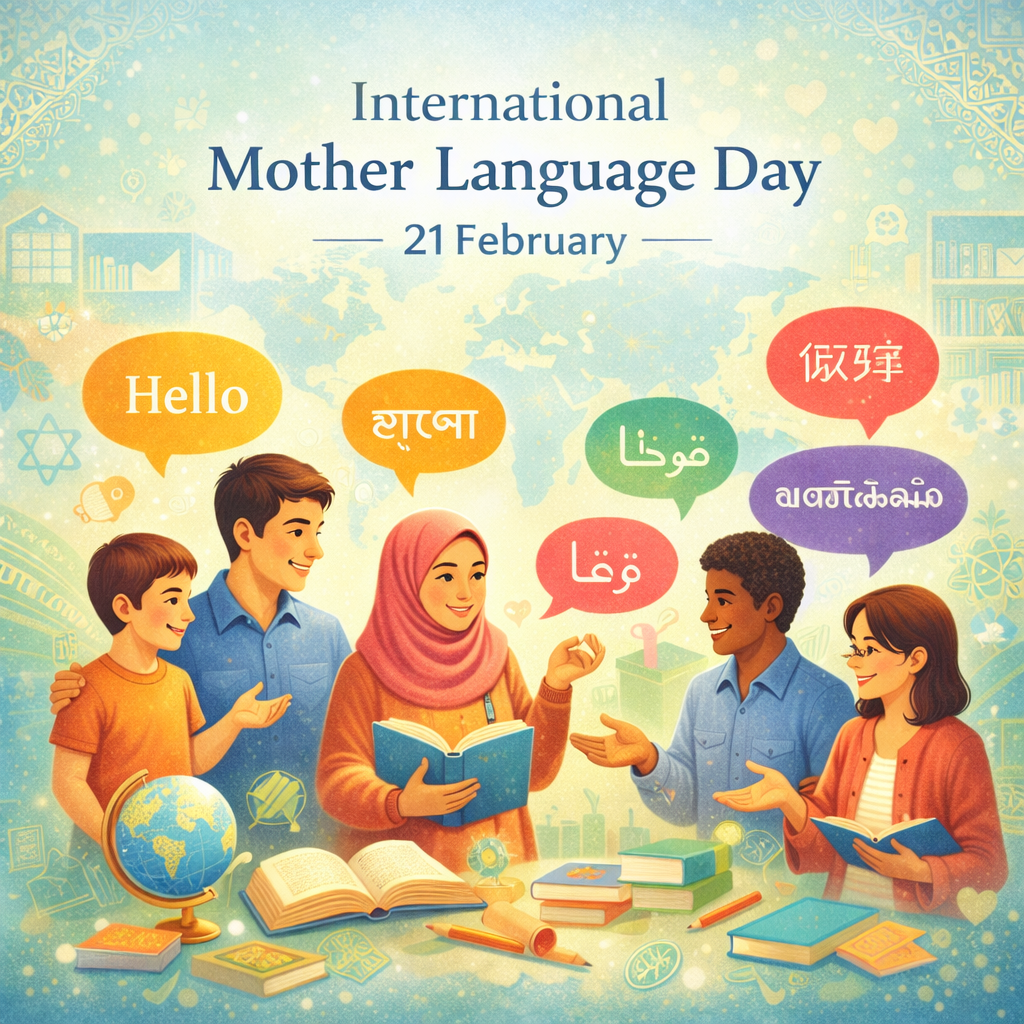
International Mother Language Day 2026 Theme
“Languages Matter: Silver Jubilee Celebration & Make Languages Count for Sustainable Development”
In 2026, UNESCO continues the Silver Jubilee celebrations of International Mother Language Day, marking over 25 years of global efforts to protect and promote linguistic diversity.
Key Focus Areas for International Mother Language Day 2026
Multilingual Education: Encouraging learning in mother tongues to improve understanding and academic outcomes
Sustainability & Inclusion: Using languages as tools for peace, dignity, and social justice
Indigenous Languages: Supporting the International Decade of Indigenous Languages (2022–2032)
Digital Empowerment: Leveraging technology to document, preserve, and revitalise endangered languages
Special 2026 Events — including academic and cultural programs hosted by institutions such as Romblon State University — emphasise the theme:
“No one left behind or outside by advancing good governance, environmental protection, cultural and linguistic diversity, and quality learning.”
Why is International Mother Language Day Celebrated on 21 February?
21 February International Mother Language Day commemorates the historic 1952 Language Movement in Bangladesh, where students sacrificed their lives demanding recognition of Bangla as a national language.
This rare moment in history — where people laid down their lives for their mother tongue — led Bangladesh to propose a global observance.
1999: UNESCO officially proclaimed International Mother Language Day
2000: First global celebration
2002: United Nations General Assembly formally recognised the day
History of International Mother Language Day
After the creation of Pakistan in 1947, Urdu was declared the sole national language, despite Bengali being spoken by the majority population in East Pakistan (now Bangladesh).
On 21 February 1952, peaceful protests by students in Dhaka were met with police firing, killing several demonstrators. Their sacrifice became a powerful symbol of linguistic rights and cultural identity.
To honour these martyrs and protect endangered languages worldwide, UNESCO declared 21 February as International Mother Language Day, celebrating linguistic freedom and diversity.
What is the Significance of International Mother Language Day?
International Mother Language Day promotes:
Linguistic and cultural diversity
Inclusive education systems
Respect for indigenous and minority languages
Social harmony and global citizenship
Key Global Reality:
UNESCO estimates over 8,300 languages worldwide
Nearly 40% of learners lack access to education in a language they understand
Every two weeks, one language disappears, taking cultural heritage with it
Role of Multilingual Education in 2026
Multilingual education lies at the heart of International Mother Language Day 2026.
Why Mother-Tongue Education Matters:
Improves comprehension and learning outcomes
Strengthens identity and confidence among students
Promotes inclusion of indigenous and migrant communities
Supports UN Sustainable Development Goals (SDGs)
Education in one’s mother language is no longer viewed as optional — it is essential for equity, dignity, and lifelong learning.
International Mother Language Day Poster & Visual Campaigns
An International Mother Language Day poster typically symbolises:
Unity through linguistic diversity
Multilingual scripts forming peace symbols
Youth participation and global inclusion
In 2026, official posters highlight Silver Jubilee celebrations, sustainability, and digital empowerment of languages.
International Mother Language Day 2026: Global Observance
The day is observed worldwide through:
Educational seminars and language festivals
Cultural performances and literary events
Digital campaigns promoting endangered languages
UNESCO-hosted global and virtual conferences
Countries like Bangladesh, India, Canada, the UK, the USA, and many others actively participate.
International Mother Language Day in India
India observes International Mother Language Day by:
Promoting multilingual education
Digitising content in 22 scheduled languages and hundreds of regional languages
Encouraging linguistic inclusivity through education policies
Projects such as Bharatavani reflect India’s commitment to preserving linguistic heritage.
Why International Mother Language Day Matters for Students
For students, this day highlights:
The value of learning in one’s own language
Respect for classmates from diverse linguistic backgrounds
Awareness of cultural identity and global citizenship
Language is not just communication — it is knowledge, memory, and belonging.
International Mother Language Day 2026 – Quick Facts
Date: 21 February 2026
Observed By: UNESCO & United Nations
Theme: Languages Matter – Silver Jubilee & Sustainable Development
Core Focus: Multilingual education, indigenous languages, inclusion
Conclusion
International Mother Language Day 2026 reaffirms that languages matter — not only for communication but for identity, education, peace, and sustainable development. As the world celebrates the Silver Jubilee of this observance, the focus remains clear:
no language, no culture, and no learner should be left behind.
FAQs on International Mother Language Day 2026: Theme, History, Significance & Global Observance
1. What is International Mother Language Day?
International Mother Language Day is a global observance celebrated on 21 February to promote linguistic diversity, multilingualism, and the protection of mother tongues.
2. Why is International Mother Language Day celebrated on 21 February?
It commemorates the 1952 Bangladesh Language Movement, where students sacrificed their lives defending the right to use their mother language.
3. What is the International Mother Language Day 2026 theme?
The 2026 theme focuses on Silver Jubilee celebrations, multilingual education, sustainability, indigenous languages, and digital empowerment.
4. Who started International Mother Language Day?
The initiative was proposed by Bangladesh and officially declared by UNESCO in 1999.
5. Why is mother-tongue education important?
Mother-tongue education improves learning outcomes, promotes inclusion, preserves culture, and supports sustainable development.



