



Which Rangoli Designs Are Best for Diwali 2026?
A rangoli design for Diwali can be as simple as a four-petal flower or as detailed as a large symmetrical pattern. For beginners, start with dots, circles or a diya. For a school activity, choose designs that can be completed with crayons or chalk before trying powder or flower petals. Diwali 2026 falls on 8 November. See the Diwali 2026 guide for the festival date.
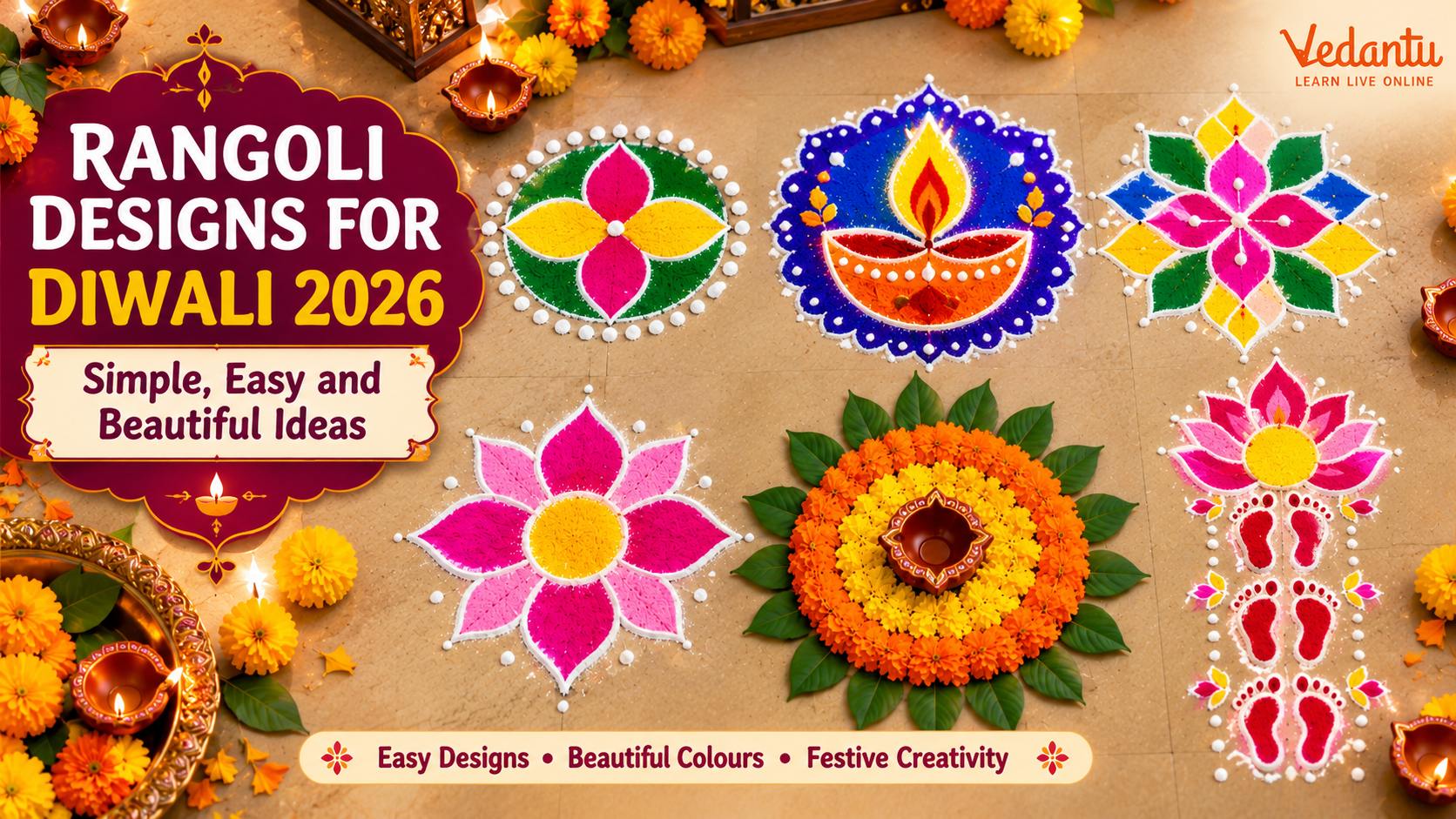
Easy Rangoli Designs for Diwali: Quick Comparison
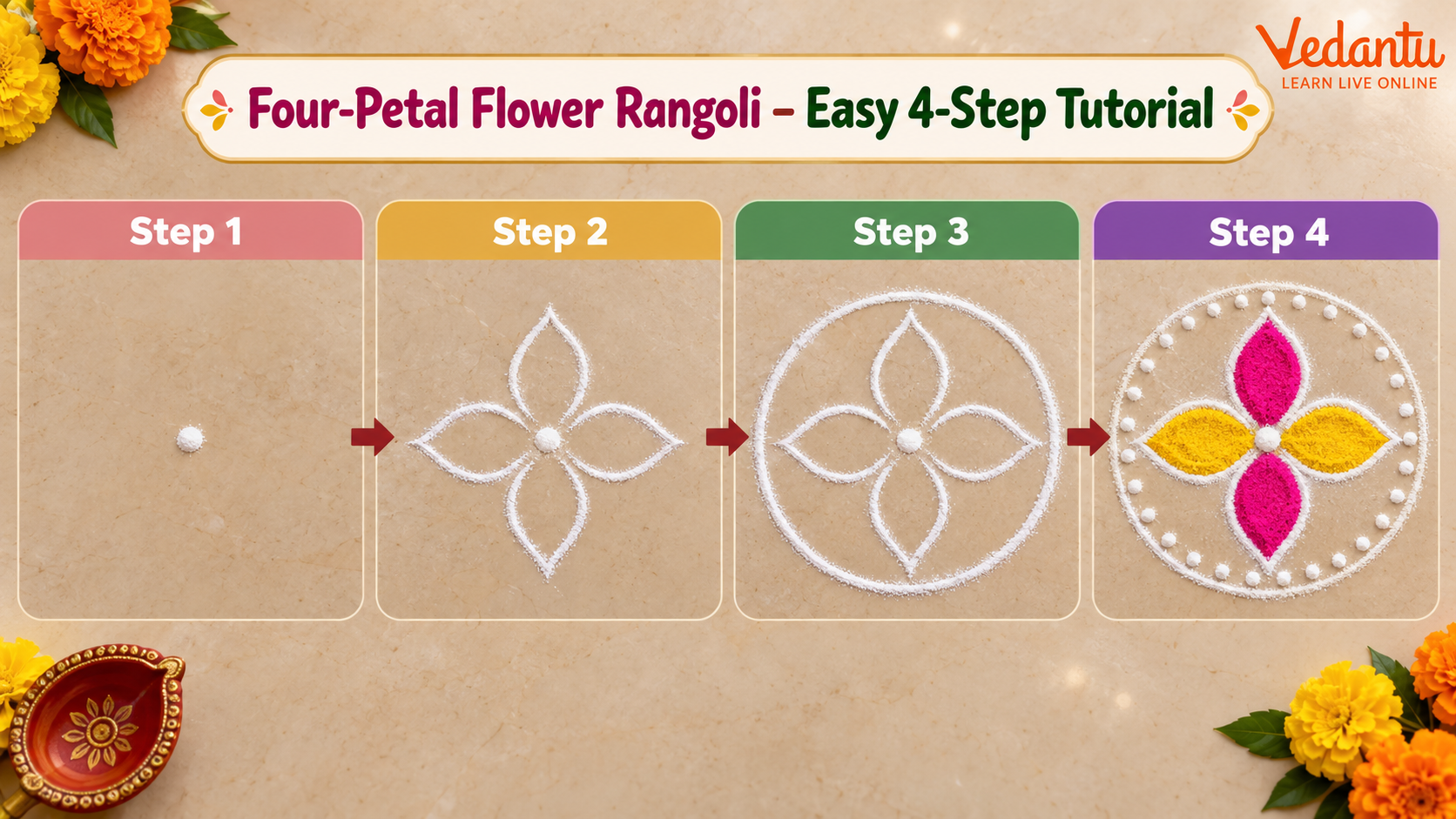
1. Four-Petal Flower Rangoli
Draw a small centre dot. Add four teardrop-shaped petals around it, making their sizes approximately equal. Draw one circle around the flower, then fill two alternating colours. Add dots along the border for a clean finish.
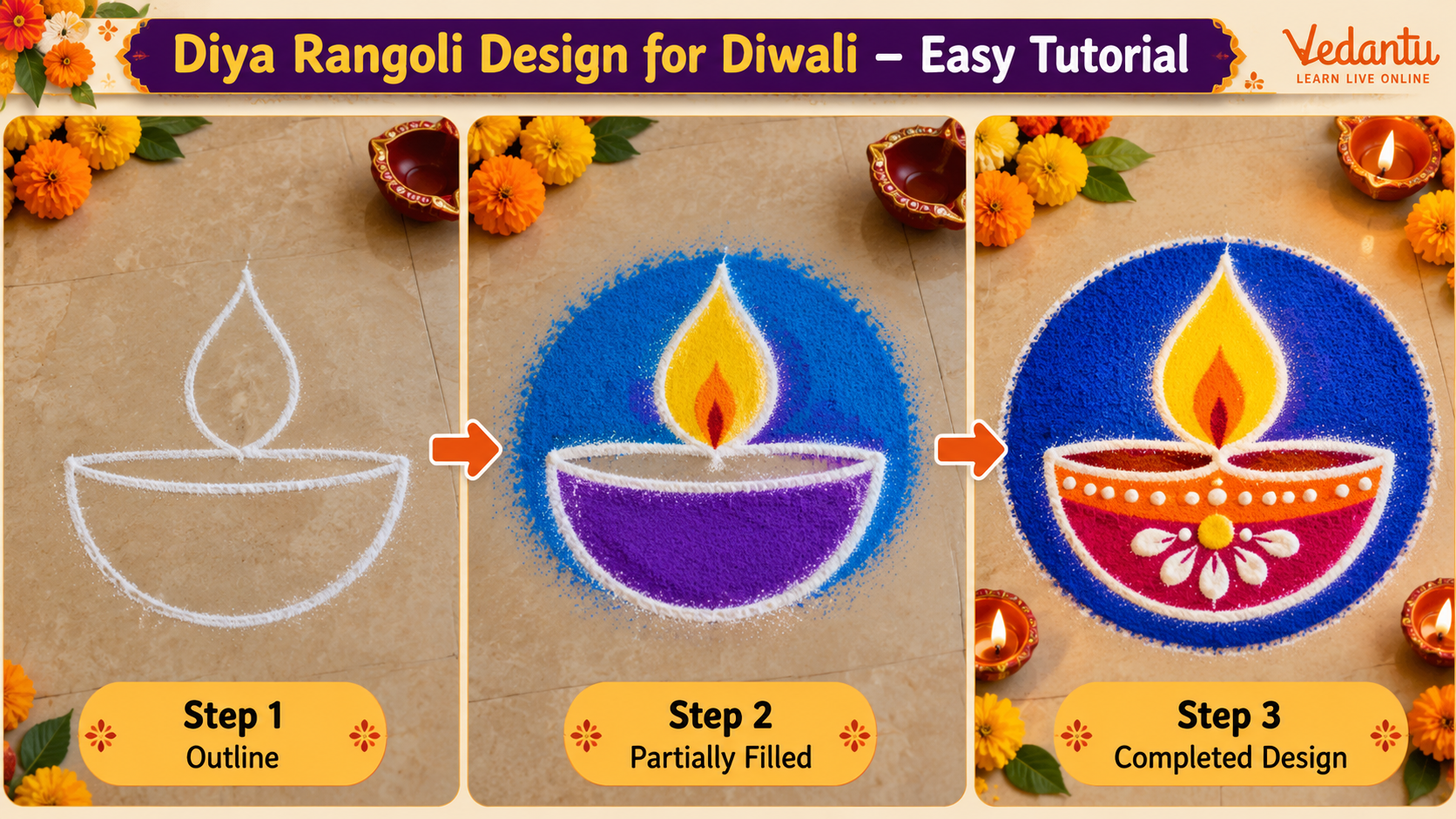
2. Diya Rangoli Design for Diwali
Sketch a semicircle for the lamp bowl. Add a small curved line above its rim and a teardrop flame. Fill the flame with yellow and orange and use blue or purple around the diya for contrast. Repeat two or three small diyas if the entrance is wide.
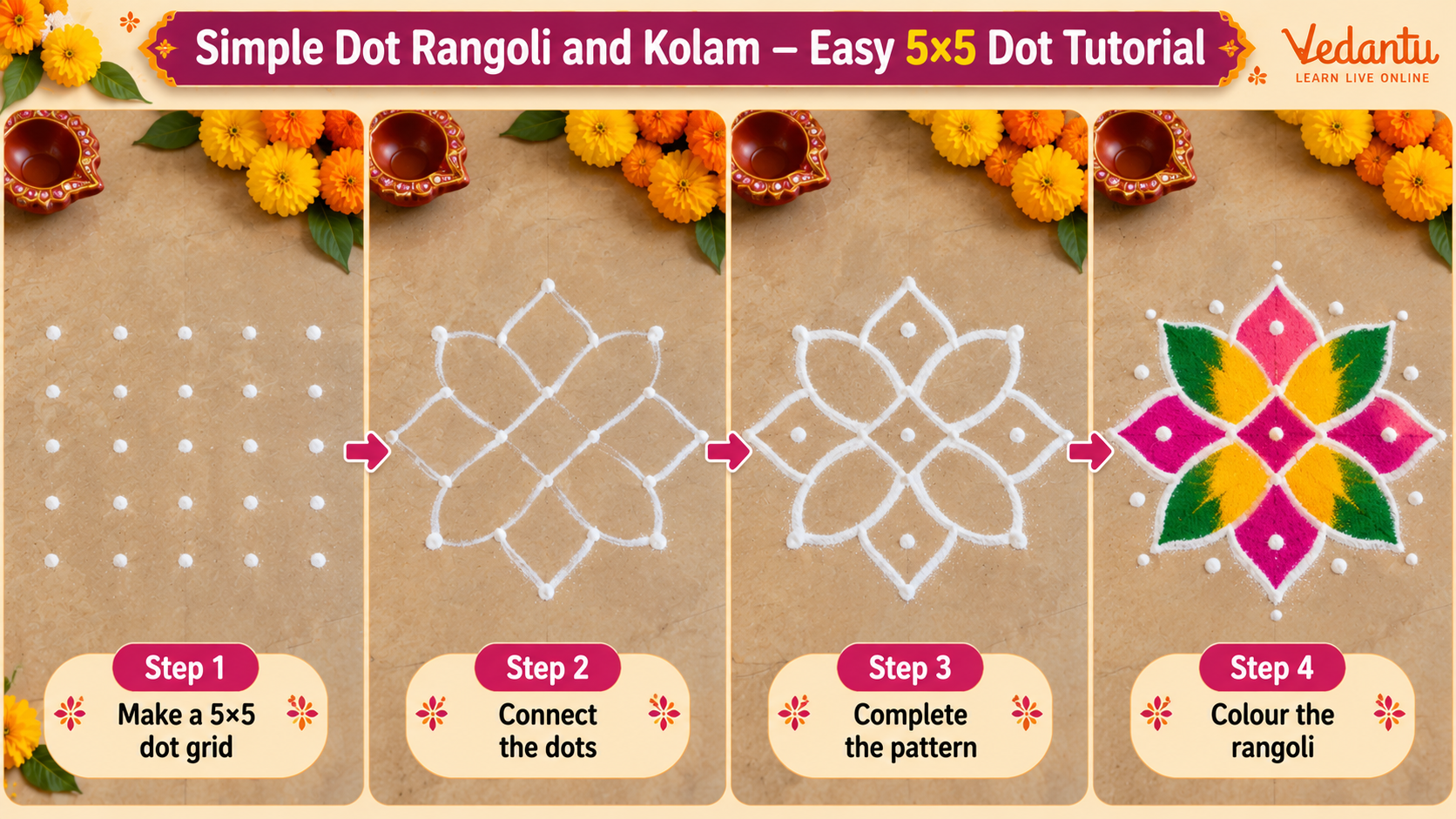
3. Simple Dot Rangoli and Kolam
Make a 5×5 dot grid using chalk. Connect nearby dots with gentle curves, lines or diamond shapes. Keep the spacing even and colour alternate sections. This is suitable for students who like patterns and geometry. Avoid claiming one design represents every regional kolam tradition.
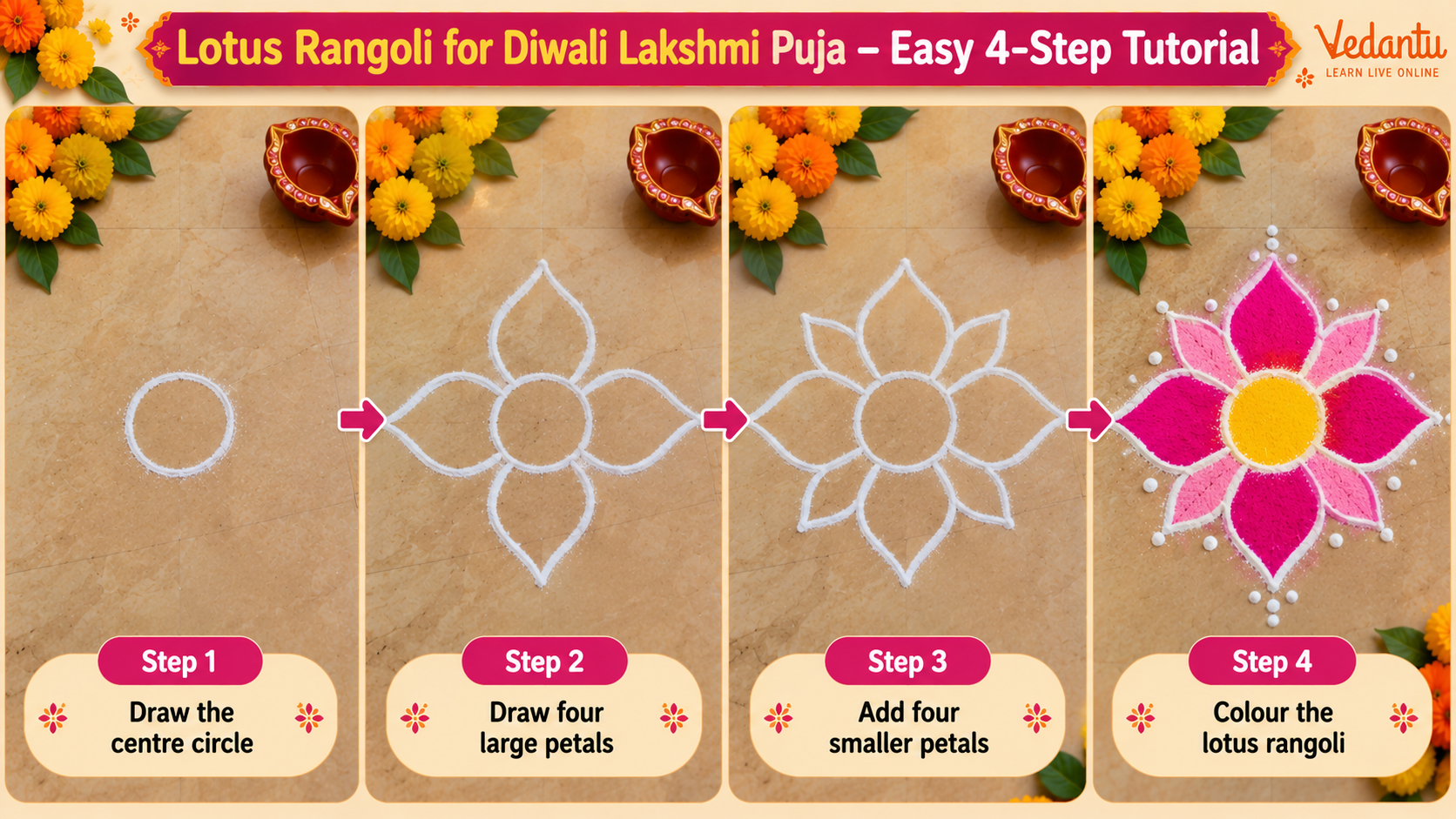
4. Lotus Rangoli for Diwali Lakshmi Puja
Start with a circle, then draw eight petals. Four petals can be larger and four smaller in between. Colour the petals pink and outline with white. The lotus is associated with Goddess Lakshmi in Hindu imagery. To learn about the puja, see Diwali Lakshmi Puja.
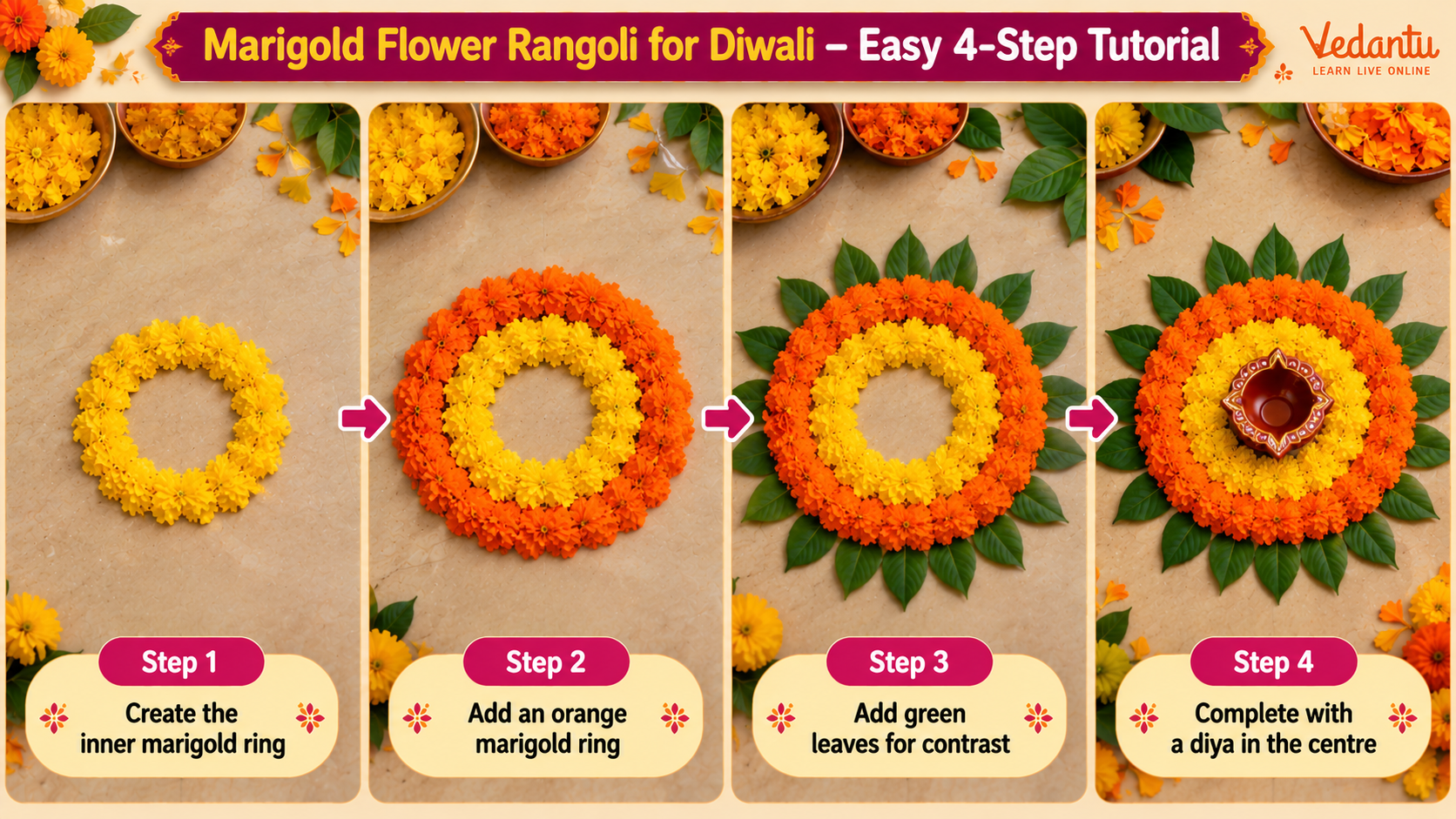
5. Attractive Rangoli Design with Marigold Flowers
Make concentric rings with yellow and orange flower petals, then add green leaves for contrast. Place an unlit or LED diya in the centre. A floral design is easier to clean up than scattered powder; compost suitable natural flowers when practical.
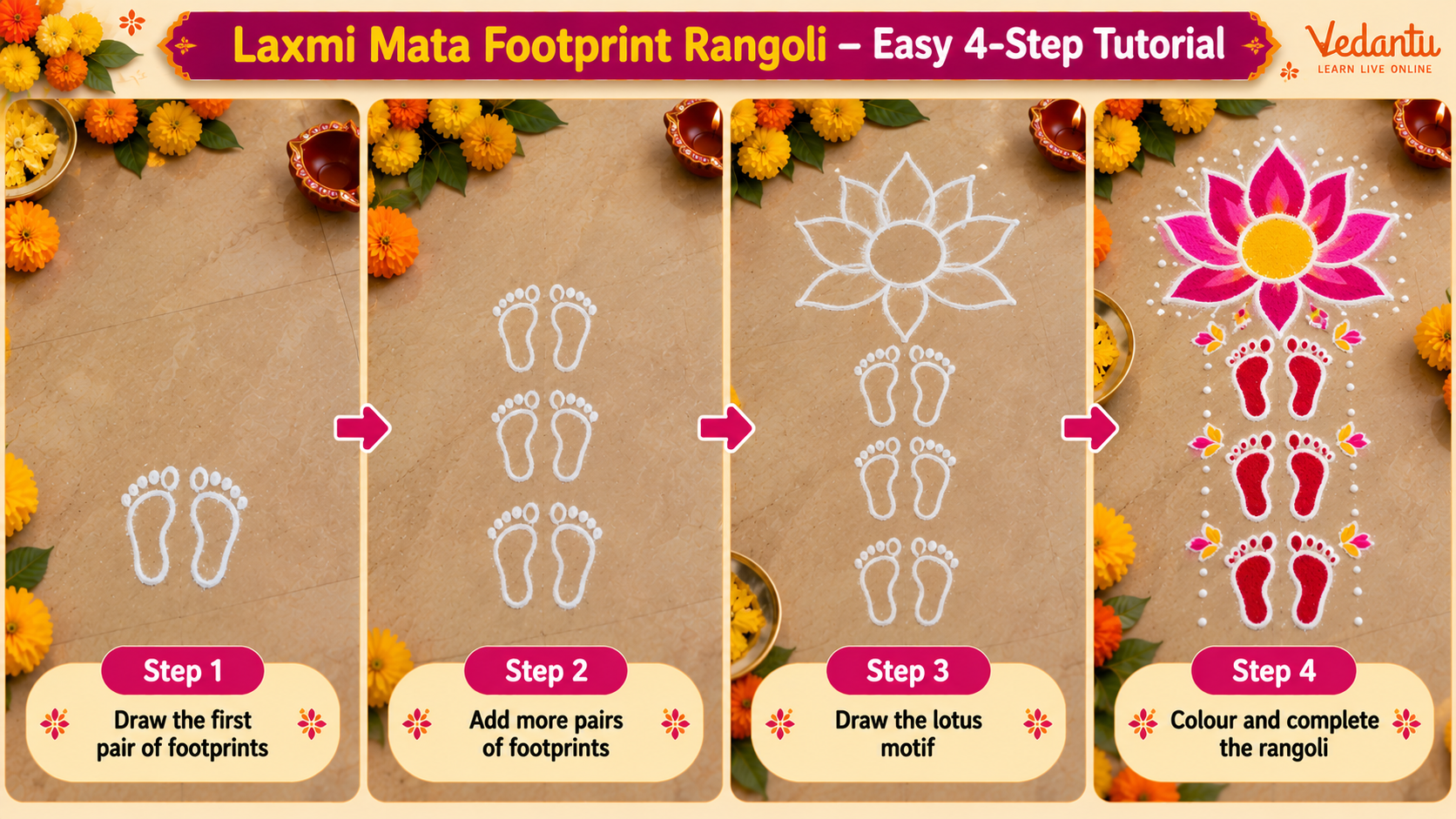
6. Laxmi Mata Footprint Rangoli
Use a stencil or carefully draw pairs of small footprints leading towards a lotus or kalash motif. Keep the symbols respectful and in a location where they will not be stepped on accidentally if that matters in your family's tradition.
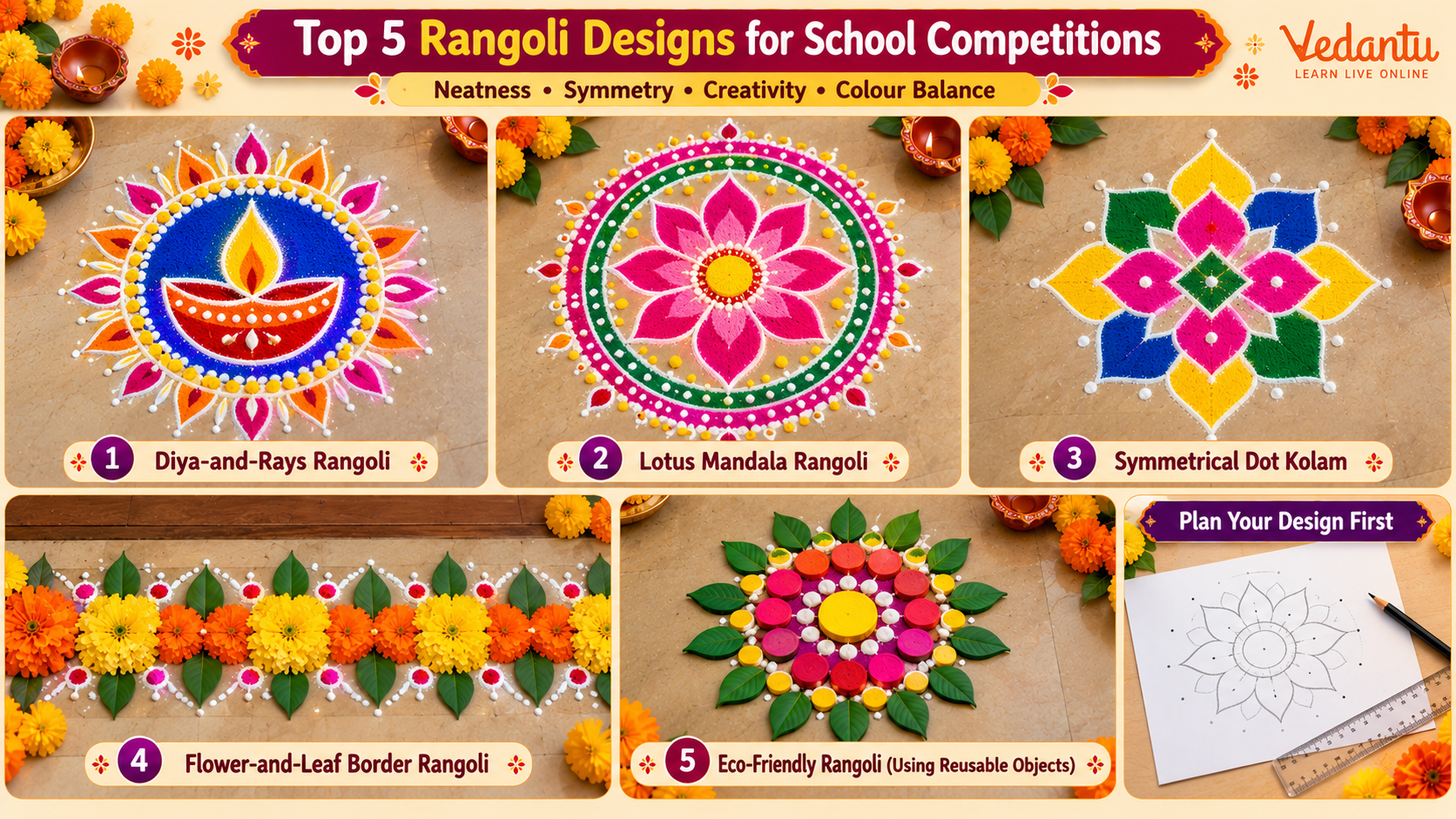
7. Top 5 Rangoli Designs for School Competitions
Choose a diya-and-rays pattern, lotus mandala, symmetrical dot kolam, flower-and-leaf border or an eco-friendly rangoli with reusable objects. School judges often consider neatness, colour balance, creativity and the ability to explain the design. Use a pencil draft first.
Simple Rangoli Tips for Beginners
Mark the centre, draw faint guidelines, use only two to four main colours and finish the outline last. A paper cone with a small opening may help control powder. Keep powders away from fans and walking paths. For classroom decoration, use an illustrated sheet rather than loose powder.
Rangoli vs Diwali Drawing: What Is the Difference?
Rangoli is typically made on a floor or flat surface using powder, petals, chalk or grains. A Diwali drawing is made on paper with pencils and colours. Use the existing rangoli page for floor patterns; the proposed drawing page should focus on paper tutorials to avoid overlap.
Eco-Friendly Rangoli Options
Try reusable stencils, flower petals, leaves or chalk that can be cleaned up safely. Avoid glitter and plastic confetti. Families looking for broader ideas can read ways to celebrate a green Diwali.
How to Choose the Right Rangoli for Your Entrance
Before selecting a design, consider how much space is available and how many people will pass through the entrance. A narrow doorway suits a vertical border or two small motifs placed to one side. A larger courtyard can accommodate a circular lotus design, a peacock motif or an arrangement of several diyas. Draw the approximate shape on paper first so the final decoration remains balanced.
For homes with small children, pets or people using mobility aids, choose a safe placement that does not block walkways. Avoid slippery materials, loose glitter and powder near steps. A rangoli should welcome guests, not make it harder to enter the house.
Easy Diya Rangoli: Step-by-Step Method
Start with a broad semicircle for the diya bowl and add a slightly curved line across its upper edge. Draw a tall flame in the centre, followed by a smaller teardrop shape inside it. Fill the bowl with orange or pink and the flame with yellow. Add four or six evenly spaced dots around the outer edge. If making a floor design, work from the centre outward to avoid leaning over completed sections.
Publish three original visual stages: outline, partially filled colour and completed rangoli. A clear overhead photograph helps a beginner follow the steps much better than a gallery image without instructions.
Small and Simple Rangoli with Dots
Dot rangoli is useful for students learning symmetry. Mark a three-by-three or five-by-five grid of dots. Join neighbouring dots with curved lines to form petals, diamonds or loops. Finish by adding one colour to each repeated shape. Keeping equal distances between dots makes the design look neat even if the overall rangoli is small.
A dotted design can also be drawn on paper before being recreated on the floor. This makes it suitable for classroom activities and allows students to practise without wasting materials.
Flower Rangoli for Diwali
Flower-petal rangoli uses the shapes and colours of petals instead of drawing every part with powder. Place a circle or small LED diya in the centre, then arrange concentric rings of petals. Alternate colours or petal sizes to create contrast. If flowers are scarce, use a smaller centrepiece and a simple outline rather than buying more materials than needed.
Keep petals away from open flames, and clean the area after the celebration. For schools, paper flowers can provide a reusable alternative to fresh petals.
Peacock and Lotus Designs: Which Is Easier?
A lotus design usually depends on repeated petals and is often easier for beginners to balance. A peacock design requires a recognisable neck, head, body and decorative tail. Students who want a peacock can begin with a simple curved neck and circular body, then add a fan-shaped tail of large petals rather than trying detailed feathers immediately.
For either motif, sketch proportions with chalk first. Use stronger colours for the main shape and softer shades for its border. If the design will appear in a blog, photograph it from above in consistent lighting so readers can compare the difficulty and finished appearance.
Rangoli Design Ideas by Age and Time Available
Children in Classes 1–2 can colour printed outlines or make a paper diya with dots. Classes 3–5 may enjoy small geometric rangoli and flower patterns. Older students can try gradients, symmetry grids or larger festival motifs. A five-minute design should use one or two shapes; a thirty-minute design can include borders and colour blending.
The page should label each image with estimated difficulty and materials rather than pretending every design is equally easy. This helps readers choose an achievable result and makes the visual gallery genuinely useful.
How to Photograph Rangoli for a Helpful Gallery
Use natural daylight when possible, clear distracting objects from the background and take the primary photograph directly from above. Include one close-up showing the details of borders or dots and one wider photo showing the design's scale. An original image should have descriptive alt text, such as “simple five-dot diya rangoli for Diwali,” rather than repeating the same generic alt text for every image.
Do not use competitors' watermarked images. Build a consistent image set that readers can follow and adapt, especially for search terms such as “top 5 rangoli designs for diwali” and “simple rangoli design for diwali.”
Conclusion
Beautiful rangoli depends more on clear shapes and careful colour placement than on complexity. Choose a design you can finish neatly, and include your own personal touch.
FAQs on Rangoli Designs for Diwali 2026: Simple, Easy and Beautiful Ideas
1. Which is the easiest Diwali rangoli design?
A four-petal flower or single diya outline.
2. What are simple rangoli designs for Diwali with dots?
Start with a 3×3 or 5×5 grid and connect dots with circles, diamonds or curved lines.
3. Which colours look good in a diya rangoli?
Yellow and orange for flames, balanced with contrasting blue, purple or pink.
4. Can rangoli be made without powder?
Yes. Use flower petals, chalk or reusable stencils.
5. What is a good Lakshmi Puja rangoli?
A lotus or small symbolic footprint design, depending on household traditions.
6. How can students make a rangoli neatly?
Use a centre guideline, sketch lightly, keep the design small and colour gradually.


