



National Deworming Day is a major public health initiative in India aimed at protecting children and adolescents from intestinal worm infections. Observed nationwide, this programme focuses on improving child health, nutrition, education, and overall development by providing safe deworming medicine to children aged 1–19 years.
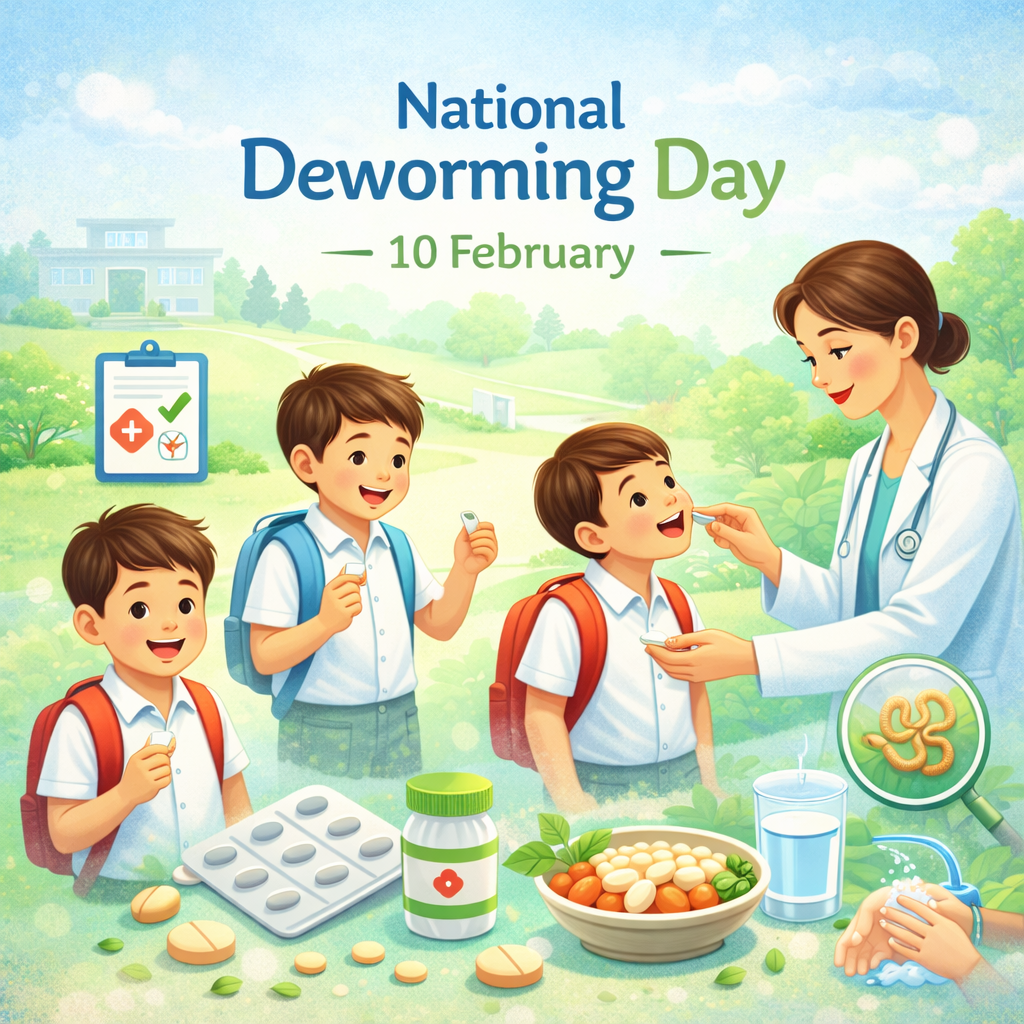
As one of the world’s largest school-based health programmes, National Deworming Day 2026 continues India’s commitment to building a healthier and stronger future generation.
What is National Deworming Day?
National Deworming Day (NDD) is a Government of India initiative, launched in 2015 by the Ministry of Health and Family Welfare. The programme aims to eliminate soil-transmitted helminths (intestinal worms) among children through periodic deworming.
The programme is implemented through:
Schools
Anganwadi centres
Community outreach programmes
Deworming Meaning (Simple Explanation)
Deworming means the process of eliminating intestinal worms from the human body using safe and prescribed medicines.
Worm infections are caused by parasites that enter the body due to:
Poor sanitation
Contaminated soil or water
Improper hygiene practices
These infections can lead to anemia, malnutrition, weakness, poor growth, and reduced learning ability in children.
National Deworming Day 2026 Date
National Deworming Day is observed twice every year in India:
10 February
10 August
Additionally, a Mop-Up Day is conducted a few days later to cover children who missed the initial dose due to illness or absence.
National Deworming Day 2026 Theme
The National Deworming Day 2026 theme focuses on strengthening child health through:
Prevention of worm infections
Improved nutrition
Better school participation
Long-term physical and mental development
(Note: National Deworming Day themes generally align with India’s mission of a “Worm-Free India” under the Krimi Mukt Bharat Abhiyan.)
Who Benefits From National Deworming Day?
The programme targets:
Children aged 1–19 years
School-going children
Out-of-school children
Children attending Anganwadi centres
Both boys and girls are equally covered under this initiative.
Medicine Given on National Deworming Day
Albendazole tablet is administered
Single oral dose
WHO-approved and safe
Given free of cost
Children who are sick or on medication are advised to take the dose later during the mop-up round.
Why is National Deworming Day Important?
1. Improves Child Health
Worm infections cause:
Anemia
Malnutrition
Poor immunity
Deworming helps children stay healthy and active.
2. Supports Education
Healthy children:
Attend school regularly
Concentrate better
Perform well academically
3. Prevents Long-Term Health Issues
Regular deworming reduces:
Growth delays
Cognitive development problems
4. Cost-Effective Public Health Programme
Deworming is one of the most economical and impactful health interventions globally.
Implementation of National Deworming Day in India
The programme is implemented through collaboration between:
Ministry of Health and Family Welfare
Ministry of Education
State Governments
ASHA workers
Anganwadi workers
Teachers
Monitoring is done at district, state, and national levels to ensure safety and effectiveness.
Preventive Measures Along With Deworming
To prevent reinfection, children are encouraged to:
Wash hands before meals and after using toilets
Drink clean and safe water
Eat properly cooked food
Wash fruits and vegetables thoroughly
Maintain personal hygiene
National Deworming Day and Students
For students, National Deworming Day is not just about medicine—it is about:
Learning healthy habits
Understanding hygiene and sanitation
Building awareness about preventive healthcare
Schools often conduct awareness sessions and health education activities alongside deworming.
Conclusion
National Deworming Day 2026 is a powerful step toward safeguarding India’s children from preventable diseases. By addressing worm infections early, the programme strengthens health, nutrition, education, and future productivity.
Understanding the deworming meaning, the importance of National Deworming Day, and the goal behind the National Deworming Day 2026 theme helps students, parents, and communities actively support this life-changing initiative.
A healthier child today builds a stronger nation tomorrow.
FAQs on National Deworming Day 2026: Meaning, Theme, Date & Importance
1. What is National Deworming Day?
National Deworming Day is a government initiative to eliminate intestinal worm infections in children aged 1–19 years.
2.When is National Deworming Day 2026 observed?
National Deworming Day 2026 is observed on 10 February and 10 August.
3. What is the deworming meaning?
Deworming means removing intestinal worms from the body using safe medicines like Albendazole.
4. What medicine is given on National Deworming Day?
A single dose of Albendazole tablet is given free of cost.
5. What is the National Deworming Day 2026 theme?
The National Deworming Day 2026 theme focuses on child health, nutrition, and prevention of worm-related diseases under the Worm-Free India mission.
6. Why is National Deworming Day important for students?
It helps improve health, school attendance, concentration, and overall growth of students.



