



Can Diwali Be Celebrated Without Crackers?
Yes. Diwali can be celebrated without crackers through lamps, rangoli, family games, crafts, prayers, food and time together. The festival's meaning is not dependent on fireworks. Diwali 2026 falls on 8 November, and there are many enjoyable ways to make the day memorable without loud noise or smoke.
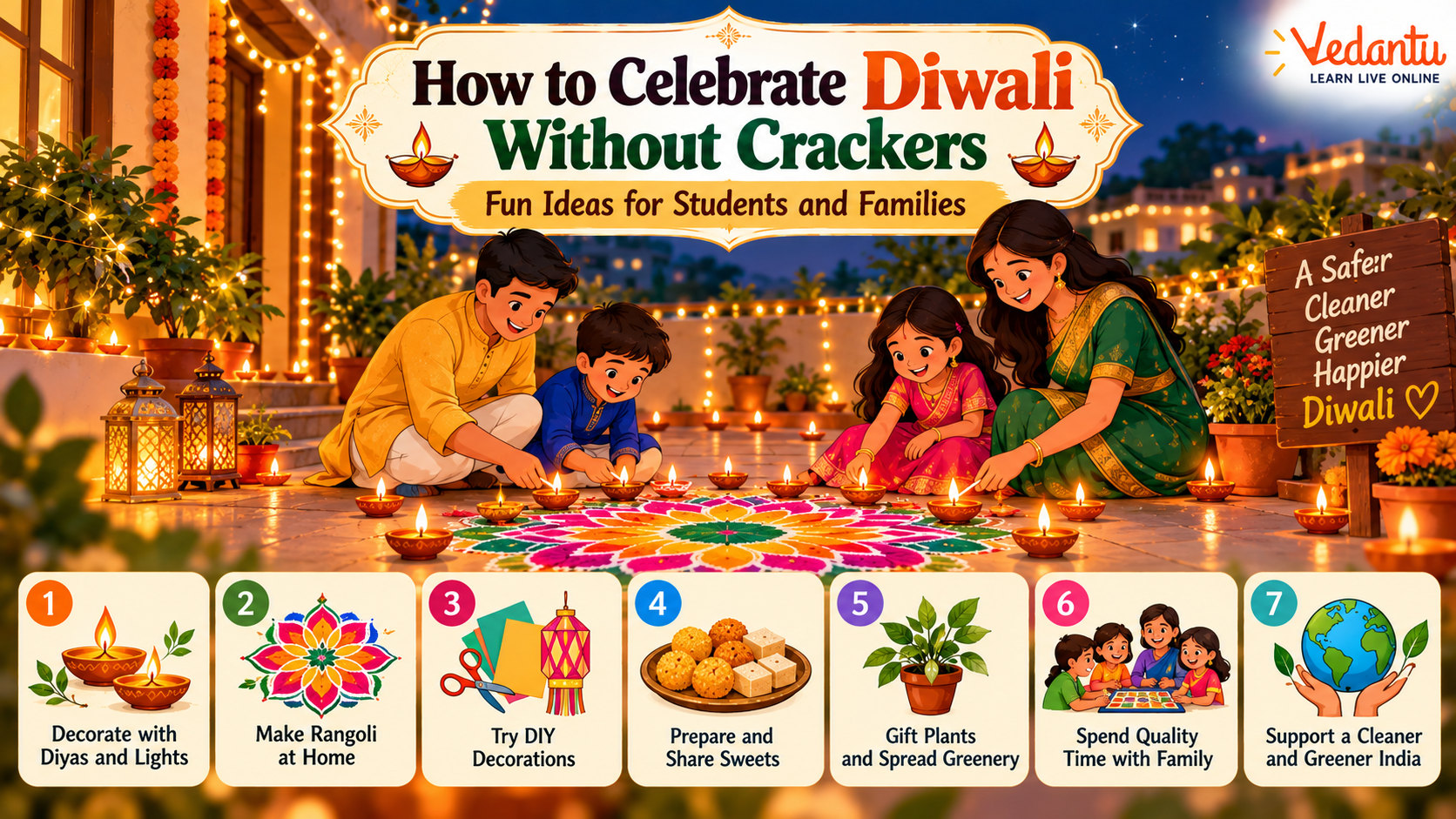
Families differ in their traditions and preferences. This guide focuses on practical no-cracker activities, while Green Diwali ideas covers broader sustainability choices.
15 Ways to Celebrate Diwali Without Firecrackers
Create a diya display: Arrange safe LED diyas or supervised traditional lamps near an entrance.
Design a rangoli: Choose a floral, lotus or geometric design.
Make paper lanterns: Use coloured sheets and LEDs rather than candles inside paper.
Host a family board-game evening: Rotate games so younger children can join.
Cook one festive dish together: Give children age-appropriate tasks.
Make greeting cards: Write personal messages to relatives, teachers or neighbours.
Decorate with flowers: Make a small toran or petal arrangement.
Organise a story circle: Discuss different Diwali traditions from across India.
Share sweets thoughtfully: Visit neighbours or relatives and be mindful of food restrictions.
Make a memory photo corner: Use reusable fabric or last year's decorations.
Prepare a family playlist: Keep the sound at a considerate level.
Create a diya-painting project: Decorate unlit clay diyas with non-toxic colours.
Play a festival quiz: Ask questions about Dhanteras, Lakshmi Puja and Bhai Dooj.
Help with a community clean-up: Join only safe, supervised activities.
Plan a quiet evening walk: Enjoy neighbourhood lights where roads and paths are safe.
Why Do Some Families Choose a Cracker-Free Diwali?
Reasons include reducing smoke, avoiding sudden loud noises, limiting litter and making celebrations more comfortable for small children, older adults, pets and people sensitive to air pollution. Preferences and local regulations differ, so families can choose safe activities that fit their circumstances.
Diwali Without Crackers for School Students
For Classes 1–3, use colouring sheets and paper diyas. For Classes 4–6, try poster-making and short speeches. For older students, organise discussions about air quality, noise and community responsibility. The activities should inform rather than shame participants.
30-Minute Cracker-Free Diwali Activity Plan
A flexible plan can be expanded into an entire evening with music, food and conversation.
Paper Crafts Without Fireworks
Try a folding lantern, greeting card or doorway decoration. Use round-tipped scissors for younger children, adult help with cutting and battery-powered lights with paper crafts. Read DIY Diwali paper crafts for steps.
Tips for a Safe Celebration
Keep LED lights and wires in good condition, avoid placing open flames near decorations, follow local safety guidance and keep escape routes clear. Children should not handle exposed electrical wiring or lighted candles unsupervised.
Crackers-Free Diwali Slogans
More lights, more laughter, less noise.
The best Diwali memories are made together.
Celebrate joy, not smoke.
A beautiful Diwali can be peaceful too.
Why Choose a Diwali Celebration without Crackers?
Families may prefer a cracker-free Diwali for many reasons: comfort, budget, air quality, noise or concern for animals and neighbours. This choice does not mean giving up festive excitement. The celebration can still include lights, games, food, music at reasonable volume and shared activities. The most helpful advice is to offer concrete alternatives rather than simply telling readers what not to do.
Some readers may live in places with temporary restrictions on the sale or use of fireworks. Such rules can change by city and year, so this article should not claim one nationwide legal position without checking current local notices.
A Family Game Night for Diwali
Prepare a few games that work for different ages. A Diwali-themed quiz can ask about festival names, traditions and dates. A treasure hunt might use clues leading to decorative diyas or cards. Families can also try charades, antakshari or board games, depending on what everyone enjoys. Set up a comfortable area with water and snacks, and keep activities short enough for younger children.
If guests include older adults, include seated games that do not require running or loud music. The goal is shared enjoyment, not a competition to create the most elaborate programme.
Create a Diya and Lantern Workshop
A supervised craft session can be more memorable than buying disposable decorations. Children can paint unlit clay diyas with suitable materials, cut coloured-paper lanterns or make decorative garlands. Use LED lights inside paper lanterns rather than flames. Set out washable table covers and a box for scraps to make cleanup easier.
Students can show their completed crafts in a small family exhibition. Add a name label and a sentence explaining the idea behind each design. This gives the activity educational value as well as festive appeal.
Organise a Festive Food and Story Evening
Choose one or two family recipes that younger members can help prepare safely. During the meal, invite relatives to share a memory of Diwali or explain a regional custom. A brief storytelling session about Lord Rama, Lakshmi Puja or other traditions can help children see that different households attach different meanings to the festival.
Do not encourage children to handle hot oil or sharp kitchen equipment alone. Assign age-appropriate tasks, such as arranging serving trays, making labels or preparing a greeting card for a guest.
Diwali Celebrations for Apartments and Shared Buildings
Shared residential spaces need particular consideration. Check building guidelines before placing decorations in corridors, balconies or entrances. Keep fire exits and walkways clear. Decorative lights should be secured safely and switched off when unattended. For communal activities, choose a designated area, agree on a finish time and avoid loud sound systems late in the evening.
Residents can coordinate a group rangoli, a festive photo corner or a short cultural programme. A joint event can create a sense of celebration while reducing duplicated expenditure and clutter.
Five Quiet Activities for Children
A drawing contest can use themes such as lamps, hope and family. A greeting-card station lets children write personal messages. A book corner can feature stories about regional Diwali traditions. A puzzle table can include matching festival names with their meanings. A simple shadow-and-light experiment using a safe torch can introduce how light travels and how shadows form.
These activities work particularly well in classrooms, libraries or households where noisy outdoor celebrations are unsuitable. Provide clear instructions and let children choose rather than requiring everyone to do the same activity.
How to Answer Questions about Fireworks Respectfully
People have different opinions and traditions. Instead of saying that one family celebrates correctly and another incorrectly, explain that there are many ways to enjoy Diwali. Discuss safety, local rules and the impact of noise and smoke using age-appropriate facts. Suggest a trial of one cracker-free celebration activity so families can see whether they enjoy it.
For a broader discussion of sustainability, waste and decorative materials, link to the green Diwali page. Keep this article focused on practical activities that replace crackers with enjoyable alternatives.
Conclusion
A cracker-free Diwali can be joyful, colourful and full of traditions. Choose a few activities that suit your family and enjoy the Festival of Lights together.
FAQs on How to Celebrate Diwali Without Crackers: Fun Ideas for Students and Families
1. How can I celebrate Diwali without crackers at home?
Decorate with lamps, make sweets, play family games and exchange wishes.
2. What are no-cracker Diwali activities for kids?
Lantern-making, colouring, board games, rangoli and greeting cards.
3. Can Diwali be fun without fireworks?
Yes. Games, decorations, food, music and shared traditions offer many activities.
4. What is the difference between green Diwali and cracker-free Diwali?
Cracker-free means avoiding fireworks; green Diwali addresses broader environmental choices.
5. Are LED diyas useful?
They can be a practical option where flames are unsuitable, including classrooms.
6. What should students write on a cracker-free Diwali poster?
“More lights, more laughter, less noise” is one short original message.


