




Process of Photosynthesis in Higher Plants Light and Dark Reactions
We all have learnt in our junior classes about photosynthesis. It is a method which helps plants to prepare their food by themselves. It is one of the most important processes and our food and life also depends on this. But do you know how photosynthesis occurs in higher plants? How is it different from normal photosynthesis?
In this article, we are going to understand the process of photosynthesis in higher plants, reaction of photosynthesis, steps of photosynthesis and full process of photosynthesis.
Definition of Photosynthesis
The process by which green plants, in the presence of light, combine water and carbon dioxide to form carbohydrates is termed as photosynthesis. It occurs in green parts of the plant, mostly the leaves, sometimes the green stems and floral buds. The leaves contain specialised cells called mesophyll cells which contain the chloroplast– the pigment containing organelle. These are the actual sites for photosynthesis.
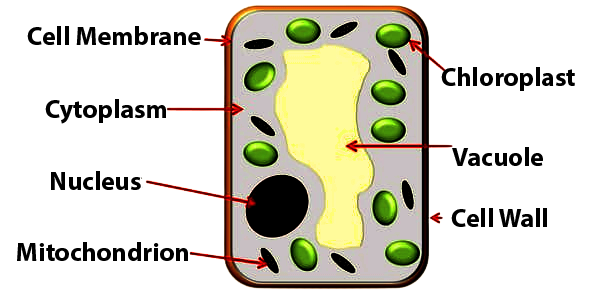
Structure of a Leave Cell
What is Photosynthesis in Biology?
In Biology, photosynthesis is defined as the process by which green plants, in the presence of light, combine water and carbon dioxide to form carbohydrates. Oxygen is released as a by-product of photosynthesis.
Steps of Photosynthesis
The steps of photosynthesis are explained below:
Step-1 Green plants possess the green pigment, chlorophyll which can capture, transform, translocate and store energy that is readily available for all forms of life on this planet.
Step-2 Photosynthesis is a process in which light energy is converted into chemical energy.
Step-3 Except green plants, no other organism can directly utilise solar energy to synthesise food, hence they are dependent on green plants for their survival.
Step-4 Green plants which can prepare organic food from simple inorganic elements are called autotrophic while all other organisms which cannot prepare their own food are called heterotrophic.
Step-5 During photosynthesis, oxygen liberated into the atmosphere makes the environment livable for all aerobic organisms.
Step-6 Simple carbohydrates produced in photosynthesis are transformed into lipids, proteins, nucleic acids, and other organic molecules.
Step-7 Plants and plant products are the major food sources of almost all organisms on the earth.
Step-8 Fossil fuels like coal, gas, and oil represent the photosynthetic products of the plants belonging to early geological periods.
Photosynthesis in Higher Plants
Photosynthesis is a method which helps plants to prepare their food by themselves. It is considered as one of the most essential processes on earth which is responsible for the existence of human beings and almost all other organisms.
In higher plants, the process of photosynthesis can be explained through two processes, which are light reactions and dark reactions. Now, let's understand what is a light reaction and what is a dark reaction.
Light Reaction
Photosynthesis begins with the light reactions. During this reaction, the energy from the sun is absorbed by the pigment chlorophyll within the thylakoid membranes of the chloroplast. The energy is then quickly transferred to two molecules, ATP and NADPH, which are utilised in the second stage of the chemical process. ATP and NADPH are generated by 2 electron transport chains. During the light reactions, water is used and O2 is formed. These reactions can only occur during daylight because the process needs sunlight to start.
Dark Reaction
Dark reaction is additionally referred to as carbon-fixing reaction. It's a light-independent process within which sugar molecules are formed from the CO2 and water molecules.
The dark reaction occurs within the stroma of the chloroplast, where they utilise the products of the light reaction.
Plants capture the CO2 from the atmosphere through stomata and proceed to the Calvin cycle.
In the Calvin cycle, the ATP and NADPH formed throughout the light reaction drive the reaction and convert six molecules of CO2 into one sugar molecule, i.e. glucose.
Reaction of Photosynthesis
Photosynthesis is the process by which green plants, in the presence of sunlight, combine water and CO2 to make carbohydrates. O2 is formed as a by-product of a chemical process.
Photosynthesis is represented by the following overall chemical equation:
6CO2 + 12H2O → C6H12O6 + 6H2O + 6O2
Interesting Facts
Plants perform photosynthesis in organelles called chloroplasts.
- Chlorophyll isn't a single pigment molecule, but rather is a family of connected molecules that share an analogous structure. These squares measure different pigment molecules that absorb/reflect completely different wavelengths of light.
Conclusion
Photosynthesis is the most vital process on earth without which the existence of human beings and most other living organisms is not possible. It's a process by which green plants, algae and chlorophyll containing microorganisms utilise the energy of sunlight to synthesise their own food (organic matter) from simple inorganic molecules.
The oxidation of organic compounds releases stored energy which is used by the living organisms to carry out essential metabolic processes. It's important to note that photosynthesis is the only natural process that liberates oxygen which is used by all living forms for the process of aerobic respiration.


FAQs on Photosynthesis in Higher Plants Complete Explanation
1. What is photosynthesis in higher plants?
Photosynthesis in higher plants is the process by which green plants use light energy to convert carbon dioxide and water into glucose and oxygen. It occurs mainly in the chloroplasts of leaf cells and is essential for food production and oxygen release. The overall chemical equation is:
6CO₂ + 6H₂O + light energy → C₆H₁₂O₆ + 6O₂
This process forms the basis of life on Earth by supplying energy to almost all living organisms.
2. Where does photosynthesis occur in higher plants?
Photosynthesis occurs in the chloroplasts of green tissues, mainly in the mesophyll cells of leaves. The chloroplast contains:
- Thylakoid membranes – site of the light reactions
- Grana – stacks of thylakoids
- Stroma – site of the Calvin cycle (dark reaction)
3. What are the two main stages of photosynthesis?
The two main stages of photosynthesis are the light reaction and the Calvin cycle (dark reaction).
- Light reaction: Occurs in the thylakoid membranes; produces ATP, NADPH, and releases oxygen by splitting water.
- Calvin cycle: Occurs in the stroma; uses ATP and NADPH to fix carbon dioxide into glucose.
4. What is the role of chlorophyll in photosynthesis?
Chlorophyll is the green pigment that absorbs light energy for photosynthesis. It is located in the thylakoid membranes and plays a key role in:
- Absorbing mainly blue and red wavelengths of light
- Converting light energy into chemical energy
- Initiating electron transport in Photosystem I and Photosystem II
5. What is the difference between light reaction and dark reaction?
The light reaction requires light to produce energy molecules, whereas the dark reaction uses that energy to fix carbon dioxide into glucose.
- Light reaction: Occurs in thylakoids; produces ATP, NADPH, and O₂.
- Dark reaction (Calvin cycle): Occurs in stroma; synthesizes glucose using ATP and NADPH.
6. What is photolysis of water in photosynthesis?
Photolysis of water is the light-driven splitting of water molecules into oxygen, protons, and electrons during the light reaction. It occurs in Photosystem II and results in:
- Release of oxygen (O₂)
- Formation of H⁺ ions
- Supply of electrons to the electron transport chain
7. How does the Calvin cycle fix carbon dioxide?
The Calvin cycle fixes carbon dioxide by converting it into organic molecules using ATP and NADPH. The key steps are:
- Carbon fixation: CO₂ combines with RuBP using the enzyme RuBisCO.
- Reduction: Formation of G3P (glyceraldehyde-3-phosphate).
- Regeneration: RuBP is regenerated to continue the cycle.
8. What are C3, C4, and CAM plants?
C3, C4, and CAM plants are types of plants classified based on their carbon fixation pathway during photosynthesis.
- C3 plants: First product is a 3-carbon compound (e.g., wheat, rice).
- C4 plants: First product is a 4-carbon compound; adapted to high temperature (e.g., maize, sugarcane).
- CAM plants: Fix CO₂ at night to reduce water loss (e.g., cactus, pineapple).
9. What factors affect the rate of photosynthesis in higher plants?
The rate of photosynthesis is mainly affected by light intensity, carbon dioxide concentration, and temperature. Key limiting factors include:
- Light intensity – Increases rate up to a saturation point.
- CO₂ concentration – Higher levels increase carbon fixation.
- Temperature – Influences enzyme activity.
- Water availability – Essential for photolysis and stomatal opening.
10. Why is photosynthesis important for life on Earth?
Photosynthesis is important because it produces food and oxygen that sustain most life forms on Earth. Its major roles include:
- Production of glucose as a primary energy source
- Release of oxygen for aerobic respiration
- Maintenance of the carbon cycle
- Formation of the base of all food chains



