






Are Shetland Sheepdogs Good Family Dogs? Temperament, Training, and Grooming Needs
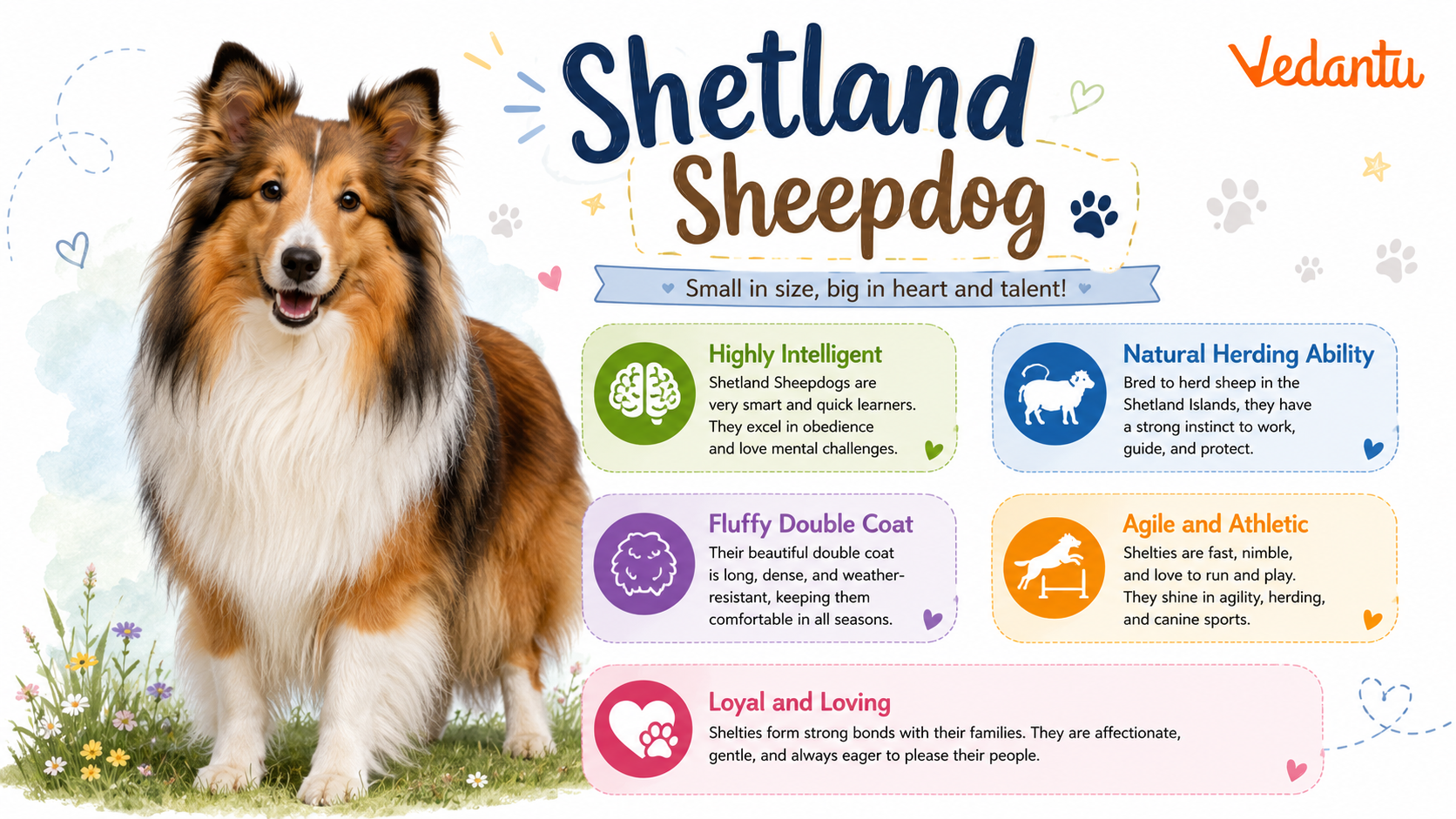
Quick Facts About Shetland Sheepdog
| Feature | Details |
|---|---|
| Common Name | Shetland Sheepdog (Sheltie) |
| Scientific Name | Canis lupus familiaris |
| Animal Group | Mammal |
| Origin | Shetland Islands, Scotland |
| Height | 33–41 cm |
| Weight | 6–12 kg |
| Lifespan | 12–15 years |
| Diet | Omnivorous (dog food, meat, grains, vegetables) |
| Temperament | Intelligent, alert, gentle |
Appearance and Physical Characteristics
- Body Shape: Small, well-balanced and athletic.
- Coat: Long, thick double coat with a soft undercoat.
- Colours: Sable (brown and white), black and white, blue merle.
- Face: Narrow muzzle with bright, almond-shaped eyes.
- Tail: Long and feathered, often carried low.
Shetland Sheepdog Habitat and Origin
The Shetland Sheepdog originally lived in the cold and windy Shetland Islands of Scotland. Farmers needed small but strong dogs to herd sheep and protect farms.
- Adapted to cool, harsh climates
- Worked on farms and open grasslands
- Today lives comfortably in homes worldwide
- Can adapt to apartments if exercised daily
Shetland Sheepdog Diet
Omnivorous – eats both plant and animal-based foods.
High-quality dog food rich in protein.
Fruits and vegetables like carrots and apples (in small amounts).
Needs portion control to prevent obesity.
Behaviour and Lifestyle
- Very intelligent and quick to learn commands.
- Highly alert and makes a good watchdog.
- Energetic and needs daily exercise.
- Loyal and forms strong bonds with family members.
- May bark to alert owners of strangers.
Life Cycle of a Shetland Sheepdog
- Birth: Puppies are born in litters of 4–6.
- Puppy Stage (0–1 year): Rapid growth, playful and learning basic training.
- Adult Stage (1–7 years): Fully grown, active and strong working or companion dog.
- Senior Stage (8+ years): Slower activity but still affectionate and loyal.
Temperament and Domestic Life
Gentle and affectionate with children.
Ranks among the top intelligent dog breeds.
Requires daily walks and playtime.
Needs regular brushing due to long coat.
What Makes the Shetland Sheepdog Special?
Importance of the Shetland Sheepdog
- Helps farmers manage and control sheep.
- Acts as a watchdog by alerting owners.
- Provides companionship and emotional support.
- Participates in dog sports like agility and obedience competitions.
Amazing Shetland Sheepdog Facts
Fun Facts for Kids
- A Shetland Sheepdog is often called a “Sheltie.”
- It may gently circle around you like it is herding sheep!
- Its fluffy coat makes it look like a tiny lion.
- Shelties love learning tricks.
- They can understand many human words.
FAQs on Shetland Sheepdog Guide: Personality, Care, and History
1. What is a Shetland Sheepdog?
The Shetland Sheepdog, also called the Sheltie, is a small and intelligent herding dog from Scotland.
- Originated in the Shetland Islands
- Bred to herd sheep and farm animals
- Looks like a small Rough Collie
- Known for being loyal, smart, and friendly
2. How big does a Shetland Sheepdog grow?
A Shetland Sheepdog is a small-sized dog that stays compact but fluffy.
- Height: about 13–16 inches tall
- Weight: around 15–25 pounds
- Small body with a thick double coat
- Perfect size for homes and apartments with space to play
3. Are Shetland Sheepdogs good family dogs?
Yes, Shetland Sheepdogs are loving and gentle dogs that make great family pets.
- Very affectionate with children
- Protective and loyal to their family
- Enjoy playing games and learning tricks
- Can be shy around strangers at first
4. Are Shelties easy to train?
Yes, Shelties are highly intelligent dogs and are very easy to train.
- Rank among the smartest dog breeds
- Learn commands quickly
- Excel in obedience and agility training
- Respond well to positive reinforcement and praise
5. Do Shetland Sheepdogs bark a lot?
Yes, Shetland Sheepdogs are known for barking because they are alert watchdogs.
- Bark to warn about strangers
- Use barking as part of their herding instinct
- Can be trained to reduce extra barking
- Very alert and aware of their surroundings
6. What do Shetland Sheepdogs eat?
A Shetland Sheepdog needs a balanced and healthy diet to stay active and strong.
- High-quality dog food with protein
- Fresh water every day
- Portion sizes based on age and weight
- Occasional healthy treats for training
7. How much exercise does a Sheltie need?
A Sheltie needs daily exercise because it is an energetic herding dog.
- At least 30–60 minutes of activity daily
- Loves playing fetch and running
- Enjoys agility courses and outdoor games
- Mental stimulation like puzzle toys is important
8. Do Shetland Sheepdogs shed a lot?
Yes, Shetland Sheepdogs shed quite a bit because of their thick double coat.
- Have a soft undercoat and long outer coat
- Shed more during spring and fall
- Need brushing 2–3 times a week
- Regular grooming keeps their fur healthy
9. How long do Shetland Sheepdogs live?
A healthy Shetland Sheepdog can live a long and happy life.
- Average lifespan: 12–14 years
- Needs regular vet checkups
- Healthy diet and exercise increase lifespan
- Generally a strong and hardy breed
10. What colors do Shetland Sheepdogs come in?
The Shetland Sheepdog comes in several beautiful coat colors.
- Sable and white
- Blue merle
- Black and white
- Sometimes black, white, and tan markings
