






What Makes the American Quarter Horse the Fastest and Most Versatile Breed?
The American Quarter Horse is one of the most popular horse breeds in the world. Famous for its incredible speed over short distances, this powerful and friendly horse is widely used in racing, ranch work, and rodeo events. Known for its calm temperament and muscular build, the American Quarter Horse is loved by beginners and professional riders alike. Let’s explore fascinating American Quarter Horse facts, characteristics, habitat, diet, and life cycle in this colourful learning guide.
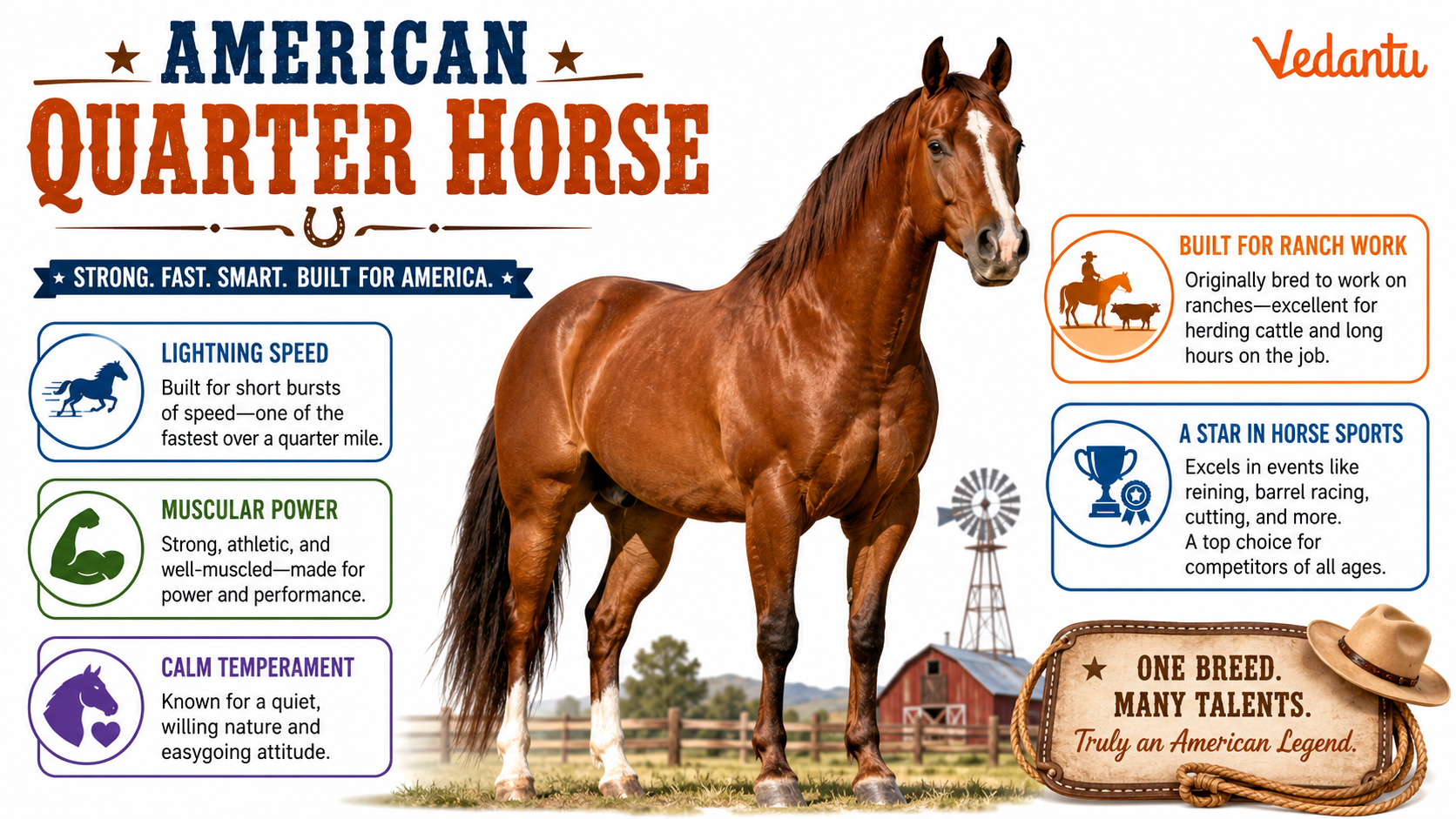
Quick Facts About American Quarter Horse
| Feature | Details |
|---|---|
| Common Name | American Quarter Horse |
| Animal Group | Mammal |
| Origin | United States |
| Height | 14–16 hands (about 142–163 cm) |
| Weight | 450–550 kg |
| Lifespan | 25–30 years |
| Diet | Herbivore (grass, hay, grains) |
| Speed | Up to 88 km/h over short distances |
| Use | Racing, ranch work, rodeo, riding |
Appearance and Physical Characteristics
- Strong, muscular body with a broad chest.
- Powerful hindquarters built for quick acceleration.
- Short, refined head with alert eyes.
- Strong legs with solid hooves.
- Available in many colours like bay, black, chestnut, palomino, and grey.
Habitat and Distribution
The American Quarter Horse habitat is mostly linked to human settlements since it is a domesticated breed.
- Originally developed in the United States.
- Commonly found on farms, ranches, and equestrian centres.
- Lives in stables, barns, and open pastures.
- Adapts well to different climates – from cold regions to warm plains.
Diet and Feeding Habits
The American Quarter Horse diet is simple but requires proper care and balance.
As herbivores, they spend many hours grazing and chewing, which helps in proper digestion.
Behaviour and Lifestyle
- Calm, gentle, and easy to train.
- Highly intelligent and responsive.
- Strong bond with owners and riders.
- Energetic during work but relaxed at rest.
- Used in rodeos for barrel racing and cattle herding.
Their quick reflexes and sharp turns make them perfect for ranch activities and short-distance races.
Life Cycle of American Quarter Horse
- Birth: A baby horse is called a foal.
- Young Stage: Foals stand and walk within a few hours of birth.
- Growing Stage: Young horses are called yearlings at one year old.
- Adult Stage: Fully grown by 4–5 years of age.
- Lifespan: Can live up to 30 years with proper care.
What Makes the American Quarter Horse Special?
Temperament and Domestic Life
The American Quarter Horse is one of the best horses for families and riders.
- Easy to handle and train.
- Patient with children and new riders.
- Requires regular grooming and exercise.
- Needs proper veterinary care and hoof trimming.
Importance of American Quarter Horse
Amazing Facts About American Quarter Horse
- Can reach speeds of up to 88 km/h in short bursts.
- Over 5 million Quarter Horses are registered worldwide.
- They are especially skilled at quick turns.
- Have a naturally low centre of gravity for balance.
- Often used in Western-style riding events.
- Known for their strong work ethic.
Fun Facts for Kids
- A baby horse is called a foal.
- Quarter Horses love to run and play in open fields.
- They can sleep both standing up and lying down.
- Their powerful back legs help them jump and sprint.
- They are one of the most popular horse breeds in America.
FAQs on American Quarter Horse Breed Profile: History, Speed, and Personality
1. What is an American Quarter Horse?
The American Quarter Horse is a strong and fast horse breed famous for sprinting short distances.
- Originated in the United States in the 1600s
- Known for winning quarter-mile races
- Very popular in Western riding and ranch work
- Recognized by the American Quarter Horse Association (AQHA)
2. Why is it called a Quarter Horse?
The name Quarter Horse comes from its amazing speed in quarter-mile races.
- Can outrun other horse breeds in short distances
- Reaches speeds up to 55 miles per hour
- Bred specially for sprint racing
- Popular in early American colonial horse racing
3. What does an American Quarter Horse look like?
An American Quarter Horse has a muscular body and a calm expression.
- Strong chest and powerful hindquarters
- Short, refined head with wide eyes
- Height: about 14–16 hands
- Comes in colors like bay, chestnut, black, palomino, and gray
4. What is the personality of an American Quarter Horse?
The American Quarter Horse temperament is gentle, smart, and easy to train.
- Friendly and calm around children
- Quick learner in riding lessons
- Loyal and hardworking
- Great for beginners and experienced riders
5. What are American Quarter Horses used for?
The American Quarter Horse is used for racing, ranch work, and horse shows.
- Barrel racing and rodeo events
- Working cattle on ranches
- Western pleasure and trail riding
- Short-distance sprint competitions
6. Are American Quarter Horses good for kids?
Yes, American Quarter Horses are considered one of the best horse breeds for kids.
- Calm and patient nature
- Easy to handle and train
- Strong but not too tall
- Commonly used in riding schools
7. How long do American Quarter Horses live?
An American Quarter Horse usually lives between 25 and 30 years.
- Needs proper food and clean water
- Regular exercise and grooming
- Routine veterinary care
- Safe and comfortable stable environment
8. How fast is an American Quarter Horse?
The American Quarter Horse is one of the fastest horses over short distances.
- Can run up to 55 mph
- Best at quarter-mile sprints
- Faster than many breeds in short races
- Powerful acceleration from a standing start
9. Where did the American Quarter Horse originate?
The American Quarter Horse originated in colonial America.
- Developed in the 1600s
- Bred from English horses and Native American horses
- Popular in Virginia and other early colonies
- Now the most registered breed in the world
10. What is the American Quarter Horse Association (AQHA)?
The American Quarter Horse Association (AQHA) is the official organization that registers and protects the breed.
- Founded in 1940
- Keeps records of registered horses
- Organizes competitions and events
- Promotes responsible horse ownership
