






What Is a Potoo? Habitat, Diet, Behavior and Fun Facts
The Potoo is one of the most mysterious birds found in tropical forests. Known for its incredible camouflage and large glowing eyes, this night-loving bird blends perfectly with tree branches. Potoo facts reveal that it is an expert at staying still and silent to avoid predators. With its strange appearance and ghost-like call, the Potoo is truly one of nature’s most fascinating birds.
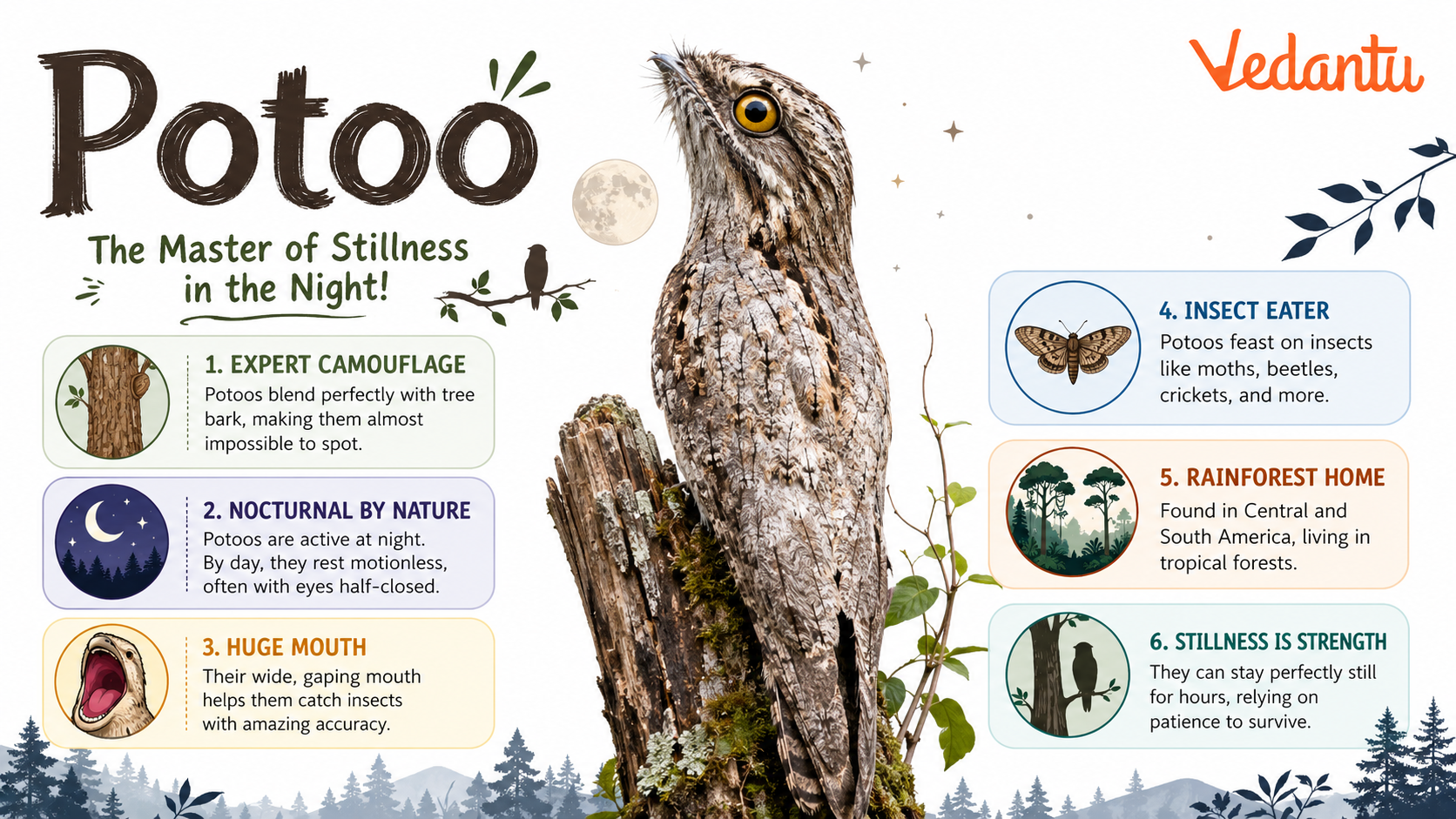
Quick Facts About Potoo
| Feature | Details |
|---|---|
| Common Name | Potoo |
| Scientific Name | Nyctibius (Genus) |
| Animal Group | Bird |
| Size | 21–58 cm (depending on species) |
| Weight | 145–650 grams |
| Habitat | Tropical forests of Central and South America |
| Diet | Insects (carnivorous insectivore) |
| Activity | Nocturnal (active at night) |
| Conservation Status | Mostly Least Concern |
Appearance and Physical Characteristics
- Medium-sized bird with a large head and wide mouth.
- Huge round eyes adapted for night vision.
- Grey, brown, and white feathers that look like tree bark.
- Short legs and strong claws for gripping branches.
- Very small beak but extremely wide mouth opening.
Potoo Habitat and Distribution
- Found in Central and South America.
- Lives in tropical rainforests and woodlands.
- Prefers tall trees where it can perch high.
- Often sits on tree stumps or broken branches.
- Avoids open grasslands and deserts.
The Potoo habitat includes warm and humid regions with dense tree cover. Its bark-like feathers help it blend perfectly into forest environments.
Diet and Feeding Habits
The Potoo diet helps control insect populations in forests, making it important for maintaining ecological balance.
Behaviour and Lifestyle
- Solitary bird; usually seen alone or in pairs.
- Active at night and rests during the day.
- Relies on camouflage instead of fighting predators.
- Turns its head slowly to watch surroundings.
- Rarely builds traditional nests.
Sound or Call
Life Cycle of a Potoo
- Egg Stage: The female lays a single egg directly on a tree stump or branch.
- Incubation: Both parents take turns keeping the egg warm.
- Chick: The baby is covered in soft feathers and depends on parents for food.
- Growing Up: The chick learns to stay still and blend in.
- Adult: Fully grown Potoos become expert hunters at night.
What Makes the Potoo Special?
Importance and Role in Nature
- Controls insect populations naturally.
- Helps maintain balance in forest ecosystems.
- Acts as part of the food chain.
- Shows how camouflage helps animals survive.
Amazing Potoo Facts
- There are 7 different species of Potoos.
- The Great Potoo is the largest species.
- Potoos have special eyelid slits to see even when eyes are closed.
- They rarely flap wings during the day.
- Their appearance has inspired many forest legends.
- They depend more on hiding than flying away.
- Their feathers help break up their body shape visually.
Interesting Facts About Potoo
Fun Facts for Kids
- Potoos look like wooden statues during the day.
- They hunt like silent ninjas of the forest.
- They only lay one egg at a time.
- Their calls can sound spooky at night.
- They are experts at playing “freeze”!
FAQs on Potoo Bird: The Master of Tree-Trunk Camouflage
1. What is a Potoo?
A Potoo is a mysterious night bird known for its excellent camouflage and big eyes.
- It is a type of nocturnal bird found in Central and South America.
- It belongs to the bird family Nyctibiidae.
- Potoos are related to nightjars and frogmouths.
- They are famous for looking like broken tree branches during the day.
2. Where do Potoos live?
Potoos live in warm forests and woodlands across the Americas.
- They are found in rainforests, tropical forests, and savannas.
- Countries include Brazil, Colombia, Peru, and parts of Mexico.
- They prefer areas with tall trees for roosting and nesting.
3. Why do Potoos look like tree branches?
Potoos look like tree branches because they use camouflage to stay safe from predators.
- Their gray and brown feathers match tree bark.
- They stand very still during the day.
- This behavior helps them hide from hawks, monkeys, and other predators.
- This survival trick is called protective camouflage.
4. What do Potoos eat?
Potoos mainly eat insects that they catch at night.
- Their diet includes moths, beetles, and flying insects.
- They hunt by flying out from tree branches.
- Their wide mouths help them catch prey easily.
5. Are Potoos nocturnal birds?
Yes, Potoos are nocturnal birds, meaning they are active at night.
- They sleep during the day while perched upright.
- They hunt and call after sunset.
- Their large eyes help them see in the dark.
6. How many types of Potoos are there?
There are seven known species of Potoos in the world.
- The most famous is the Common Potoo (Nyctibius griseus).
- Other species include the Great Potoo and Long-tailed Potoo.
- Each species lives in slightly different forest habitats.
7. How do Potoos take care of their babies?
Potoos lay one egg and carefully protect it until it hatches.
- The egg is placed on top of a tree stump or branch.
- Both parents may help guard the chick.
- The parent uses camouflage to keep the baby safe.
8. Why do Potoos have big yellow eyes?
Potoos have large yellow eyes to help them see clearly at night.
- Big eyes improve night vision.
- They can spot flying insects in low light.
- Some species have special slits in their eyelids to watch for danger while resting.
9. Are Potoos dangerous to humans?
No, Potoos are harmless birds and are not dangerous to humans.
- They do not attack people.
- They mostly avoid contact by staying still and hidden.
- Their spooky look and calls may sound scary, but they are gentle forest birds.
10. What sound does a Potoo make?
A Potoo makes loud, haunting calls that echo through the forest at night.
- Their call sounds like a sad whistle or wail.
- Each species has a unique bird call.
- These sounds help them communicate and mark territory.
