



NCERT Solutions for Class 9 Social Science Chapter 1 PDF Download
Let’s Analyse
Question 1: Observe your surroundings and identify a change that has taken place in your locality over the past five years. It could be related to transport, housing, education, technology, or the environment.
Discuss in groups:
(a) What was the situation earlier?
(b) What has changed?
(c) What might have caused this change?
(d) How has it affected people’s lives?
Prepare a short report and present it in class.
Answer:
Over the past five years, transportation in my locality has improved considerably. Earlier, the roads were narrower, and public transport was limited. Today, wider roads and better bus services have made travelling more convenient. Population growth, urban development, and increasing transportation needs have contributed to this change. As a result, connectivity has improved, and people can travel more easily for work, education, and other daily activities.
Let’s Explore
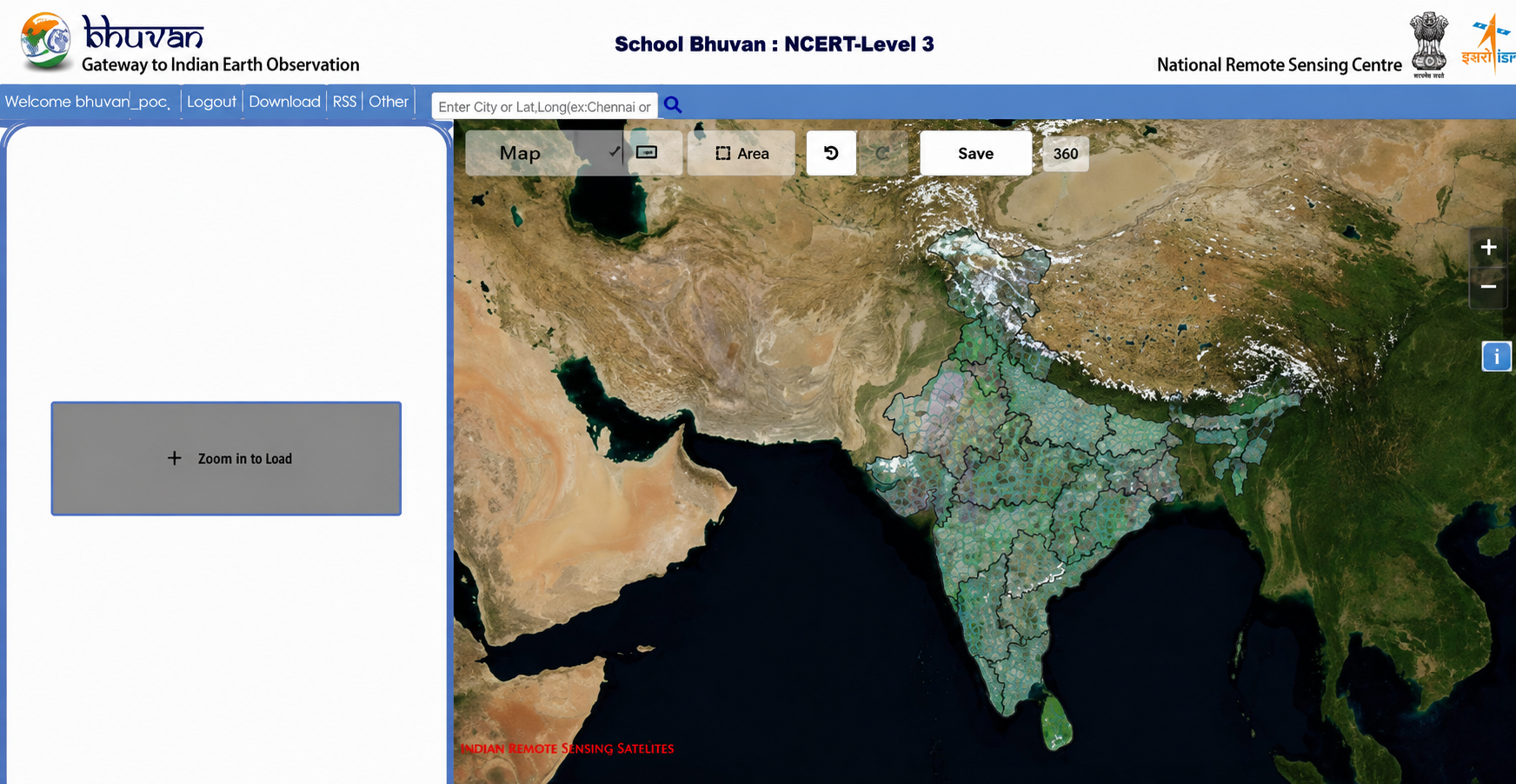
Question 1: With the help of NCERT’s School Bhuvan portal, you can also map your own village/city. You can access and explore the NCERT School Bhuvan portal by visiting the website: https://bhuvanappl.nrsc.gov.in/mhrd_ncert/
Answer:
I used the NCERT School Bhuvan Portal to explore and map my city. It helped me locate features such as roads, schools, hospitals, parks, and water bodies. The digital map provided a better understanding of the area's geographical layout. This activity showed me how mapping technology can be used to study places and support planning and development.
Very Short Answer Type Questions
Question 1: Name any two scientific methods used in modern historiography.
Answer:
Two scientific methods used in modern historiography are Carbon-14 dating and human genetics.
Question 2: Which ancient Indian text discusses administration and governance in detail?
Answer:
The Arthashastra, written by Kautilya, discusses administration and governance in detail.
Question 3: What is meant by empirical evidence?
Answer:
Empirical evidence refers to information obtained through observation, factual data, and systematic investigation.
Question 4: Name any one literary source used by historians to study the past.
Answer:
Travelogues are one type of literary source used by historians to study the past. Other examples include memoirs, correspondence, folklore, and oral traditions.
Question 5: Which institution promotes local self-governance in villages?
Answer:
The Panchayati Raj Institution promotes local self-governance in villages.
Short Answer Type Questions
Question 1: How does the Itihasa-Purana tradition help in preserving India’s cultural heritage?
Answer:
The Itihasa-Purana tradition preserves India’s cultural heritage through stories, legends, traditions, and accounts passed down across generations. It communicates cultural values, ideals, and beliefs while strengthening people’s sense of identity and connection with the past.
Question 2: Explain the holistic approach of Indian political thought.
Answer:
Indian political thought connected governance with dharma, artha, and rajadharma. It considered political power a responsibility towards justice, public welfare, and good governance rather than simply a means of exercising authority.
Question 3: Why does Social Science encourage students to observe and analyse the world around them?
Answer:
Social Science develops students’ ability to observe, question, and analyse issues affecting society, politics, the economy, and the environment. By examining evidence and using logical reasoning, students can understand different situations better, make informed decisions, and become responsible citizens.
Long Answer Type Questions
Question 1: Explain how different sources help historians reconstruct the past.
Answer:
Historians use a variety of archaeological and literary sources to reconstruct the past. Archaeological evidence includes monuments, excavated sites, artefacts, sculptures, paintings, and architectural remains. Literary sources include travelogues, memoirs, correspondence, genealogical records, folklore, oral traditions, and revenue documents.
Historians also use scientific techniques such as Carbon-14 dating and human genetics to examine and verify evidence. By comparing information from different sources, historians can develop a more reliable and detailed understanding of past societies and events.
Question 2: Explain the importance of Panchamahabhutas?
Answer:
The Panchamahabhutas represent five elements of nature: Earth (Prithvi), Water (Apah), Fire (Agni), Air (Vayu), and Space (Akasha). This concept reflects the close relationship between humans and the natural environment.
These elements influence aspects of life such as settlements, occupations, architecture, food practices, and health. The idea also highlights the importance of living in harmony with nature, which remains relevant when addressing environmental challenges today.
Key Benefits of Understanding Social Science Class 9
Understanding Social Science helps students see how history, geography, governance, and economic activities connect with real life. It encourages them to observe their surroundings, use evidence, and think beyond memorising facts.
Builds analytical and observation skills.
Connects different Social Science disciplines.
Makes concepts easier through real-life activities.
Useful for quick revision with an understanding social science class 9 PDF.
Strengthens preparation with NCERT Class 9 Understanding Social Science concepts.
Related Study Materials for Class 9 Social Science Chapter 1 Understanding Social Science
Explore More NCERT Solutions for Class 9 Social Science Chapters
Related Study Material for Class 9 Social Science
FAQs on NCERT Solutions for Class 9 Social Science Chapter 1 Understanding Social Science 2026-27
1. What is Chapter 1 Understanding Social Science about?
Chapter 1 introduces students to the purpose of Social Science and explains how different disciplines help us understand people, society, places, events, and the world around us.
2. Why does Chapter 1 connect different Social Science subjects?
History, Geography, Political Science, and Economics often deal with related aspects of human life. Studying their connections helps students develop a broader understanding instead of viewing each subject separately.
3. What are the main sources used to study the past in Chapter 1?
Historians use archaeological remains, monuments, artefacts, literary works, travelogues, oral traditions, documents, and scientific methods to gather and verify information about the past.
4. What is empirical evidence in Understanding Social Science Class 9?
Empirical evidence is information obtained through observation, facts, and systematic investigation. It allows researchers to support their conclusions with evidence rather than assumptions.
5. What is the importance of Panchamahabhutas in Chapter 1?
The Panchamahabhutas - Earth, Water, Fire, Air, and Space—reflect the relationship between humans and nature and help students understand how natural elements influence different aspects of human life.
6. How does Chapter 1 help students understand history better?
The chapter shows how historians examine different types of evidence and compare sources to reconstruct past events. This helps students understand that historical knowledge is developed through careful analysis.
7. Why is observation important in Class 9 Social Science?
Observation helps students relate classroom concepts to things they see around them, such as changes in their locality, patterns of development, and interactions within society.
8. How can Class 9 students prepare for Understanding Social Science effectively?
Students should read the NCERT chapter carefully, understand its examples and activities, and practise the textbook questions. Revising the key ideas regularly can make Class 9 SST Understanding Social Science easier to follow and remember.
9. How do NCERT Solutions help with Understanding Social Science Class 9?
NCERT Solutions explain the textbook questions in simple language and help students check their answers. Students looking for an Understanding Social Science Class 9 PDF NCERT resource can also use the solutions for revision and answer-writing practice.
10. Is Understanding Social Science important for Class 9 Social Science preparation?
Yes. Understanding Social Science establishes the basic ideas students need to approach Social Science in Class 9. These solutions can support revision and exam preparation for the 2026-27 academic session.
