



NCERT Solutions for Class 7 Social Science Chapter 5 India, a Home to Many
The Big Questions
Question 1: What has made India a home for people from different parts of the world?
Answer: India’s long tradition of tolerance, acceptance, and hospitality has made it a welcoming home for people from different parts of the world. Its location along ancient land and sea trade routes attracted traders, travellers, scholars, and settlers.
Indian values such as Vasudhaiva Kutumbakam, meaning “the world is one family”, encouraged respect for people from different cultures and faiths. As a result, many communities felt safe, accepted, and free to preserve their identities in India.
Question 2: Why did oppressed or persecuted people from other countries seek refuge in India?
Answer:
Many people faced persecution in their countries because of their religion, beliefs, or cultural identity. They were often denied freedom, safety, and the right to practise their faith.
India offered them protection, dignity, religious freedom, and an opportunity to live peacefully. Therefore, several persecuted communities came to India seeking safety and a better life without fear.
Question 3: What is it about the nature of Indian society that enables people to assimilate here?
Answer:
Indian society is inclusive and respectful of different religions, cultures, languages, and traditions. It values tolerance, kindness, compassion, and peaceful coexistence.
People who came to India were not forced to abandon their original identity. They could preserve their religious beliefs and customs while adopting local languages, food habits, clothing, and social practices. This flexibility helped different communities become a part of Indian society while maintaining their unique traditions.
Let’s Explore
Question 1: Look at the two pictures below. Is the place shown in both the photographs the same? Why is the Maharaja of Travancore (the name of the kingdom in and around Kochi at that time) giving such an expensive gift to the Jewish synagogue for the Torah (religious book of the Jews)? (Page 128)
Answer:
Yes, both photographs show the same place—the Jewish Synagogue in Kochi, Kerala.
The Maharaja of Travancore gave an expensive gift for the Torah because the Jewish community was respected and accepted in his kingdom. The gift reflects the ruler’s support for religious freedom and his respect for the Jewish faith.
It also shows that Jewish people were able to live peacefully and practise their religion freely in India.
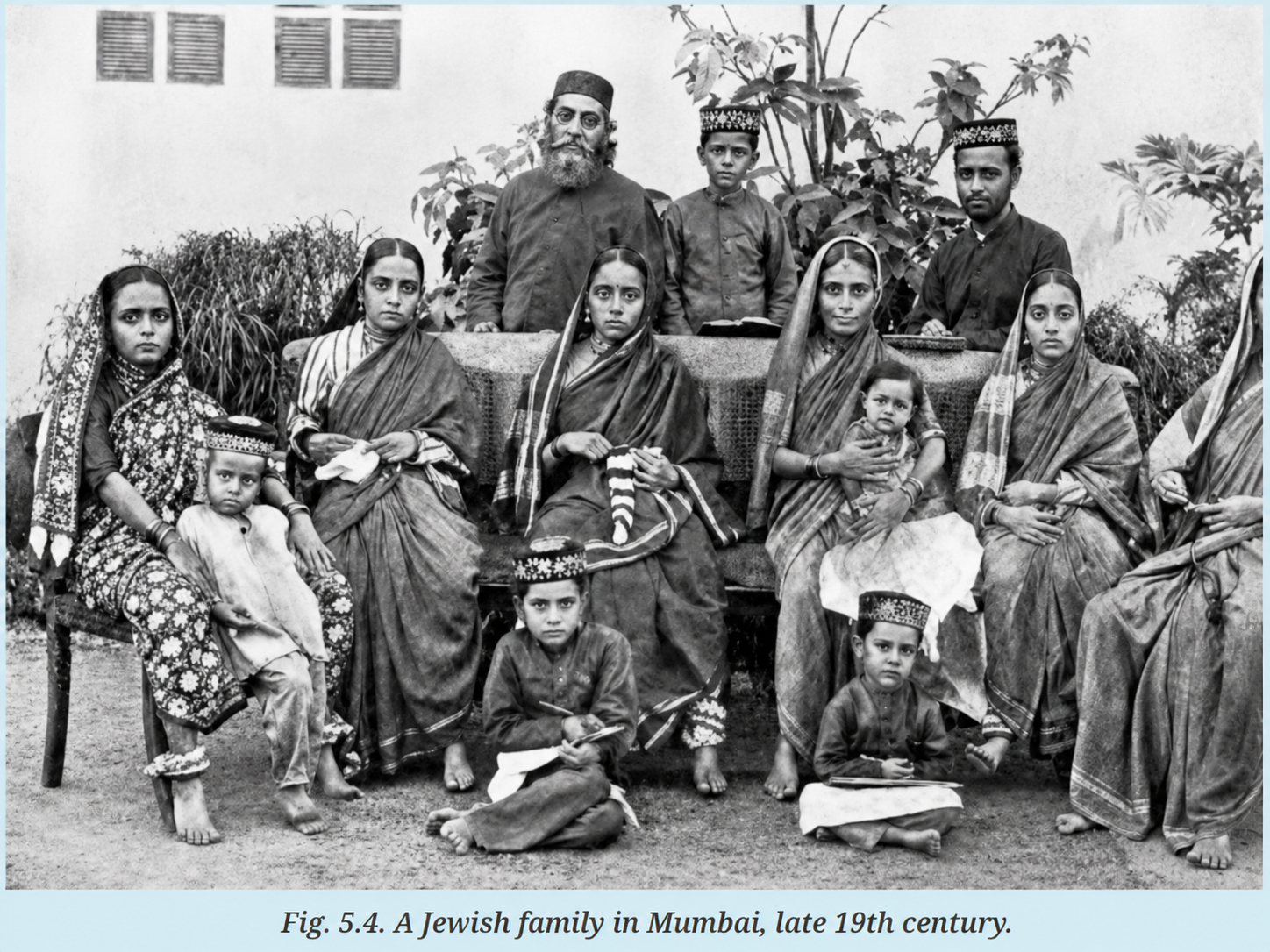
Question 2: Observe the picture Fig. 5.4. What clues do you get about the integration of the Jewish community into Indian society over time? (Page 129)
Answer:
The picture shows a Jewish family wearing Indian-style clothing and living in an Indian social setting. These details suggest that the Jewish community gradually adopted local customs, languages, clothing, and ways of life.
At the same time, they continued to follow their own religion and preserve their traditions. This reflects the peaceful integration of the Jewish community into Indian society.
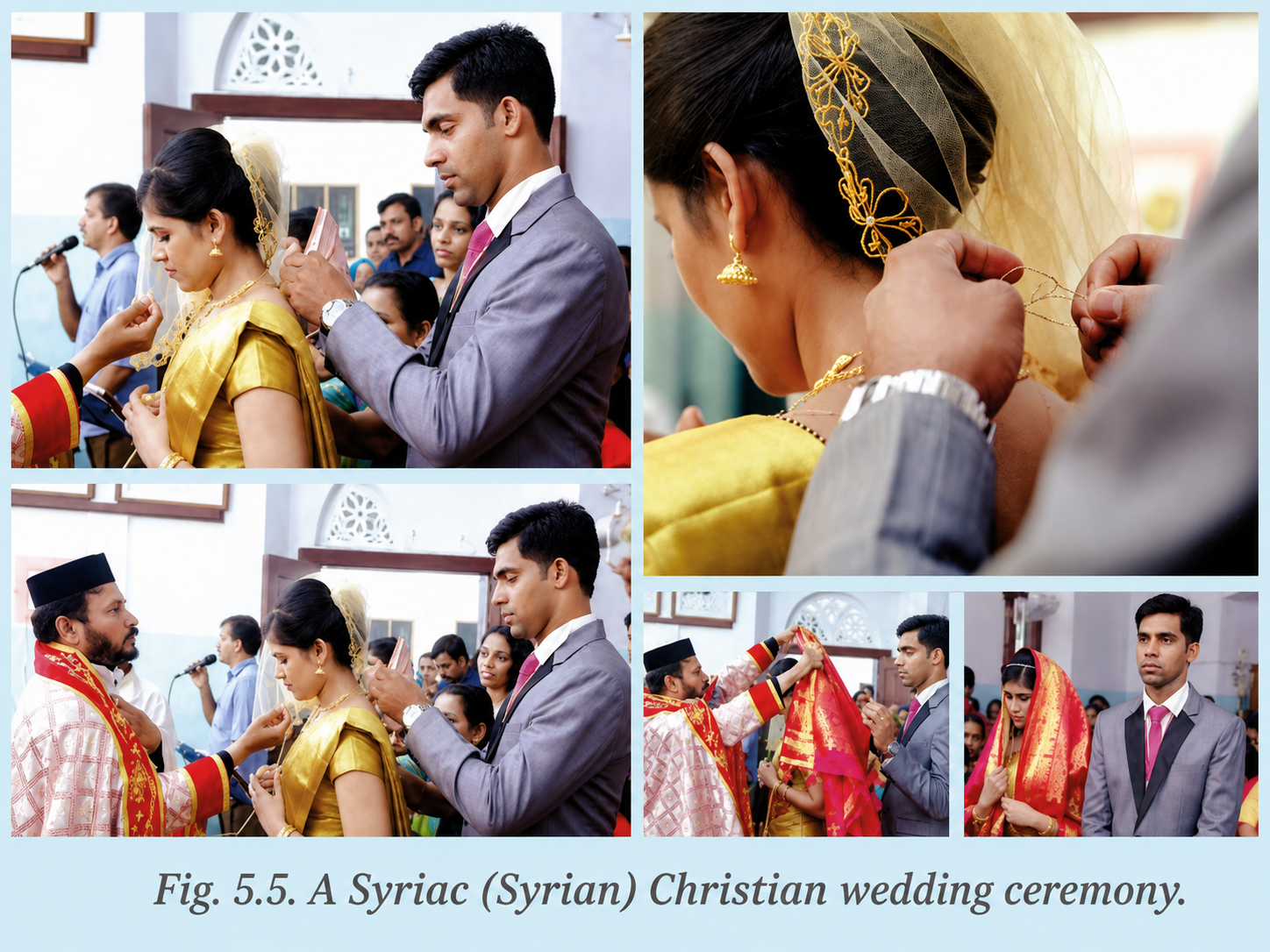
Question 3: Observe the pictures below. What are the clues you get about the integration of the Syriac Christian community into Indian society? (Page 130)
Answer:
The pictures show Indian-style clothing, jewellery, and wedding customs being followed along with Christian religious rituals.
This suggests that the Syriac Christian community adopted many local cultural traditions while continuing to practise Christianity. Their customs reflect a blend of Christian faith and Indian culture, showing their successful integration into Indian society.
Question 4: This painting of a Parsi bride getting ready for her wedding shows many aspects of Indian culture. Do any of them seem familiar to you? Based on what you see, can you draw any conclusions about the integration of Parsi culture in India? (Page 132)
Answer:
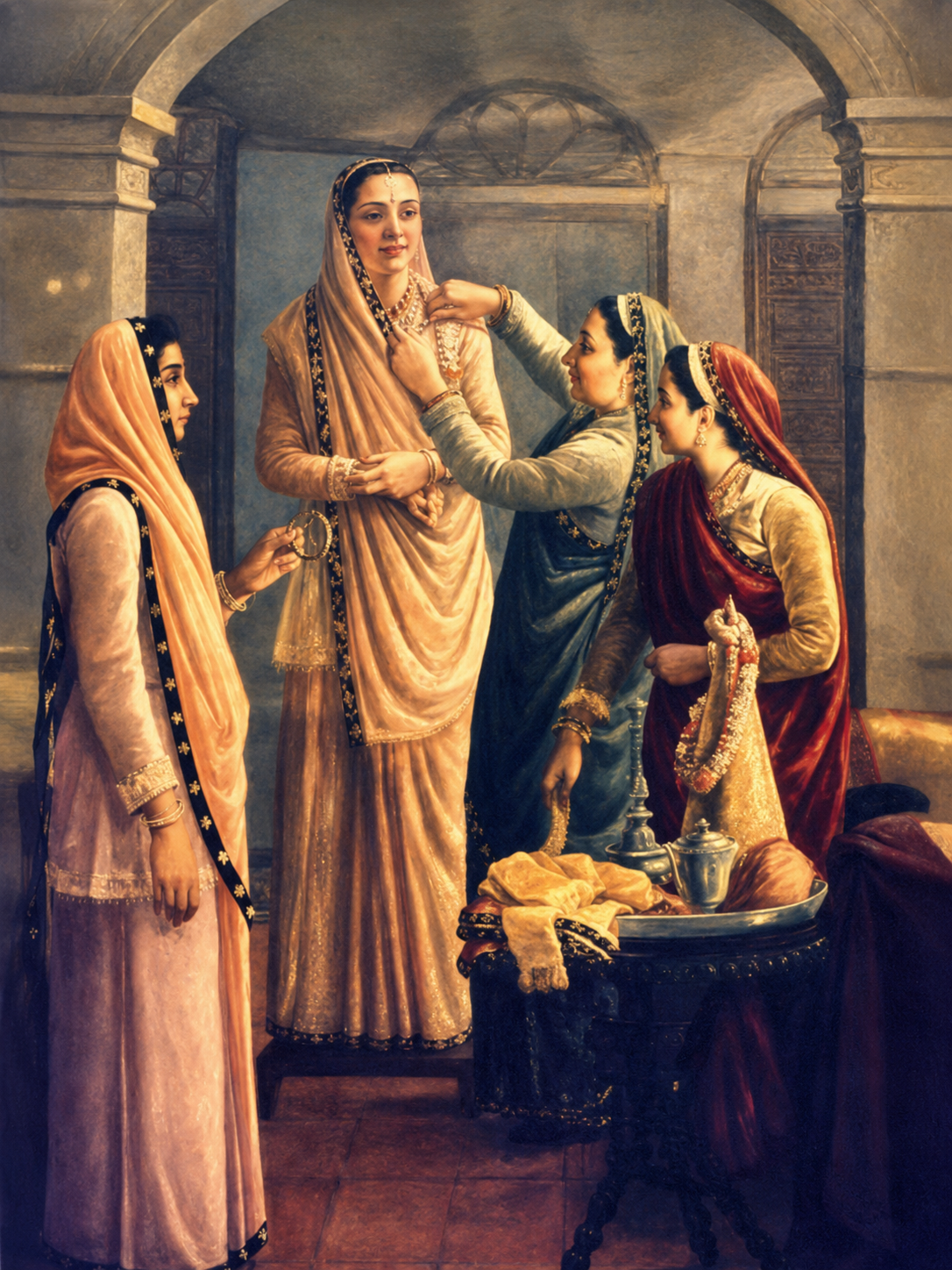
Yes, several features in the painting appear familiar. The bride is wearing Indian-style clothes, jewellery, and makeup. Some wedding customs also resemble those followed by other Indian communities.
These features show that the Parsis adopted several Indian cultural practices while preserving their own religion and traditions. This indicates that Parsi culture became closely integrated with Indian society over time.
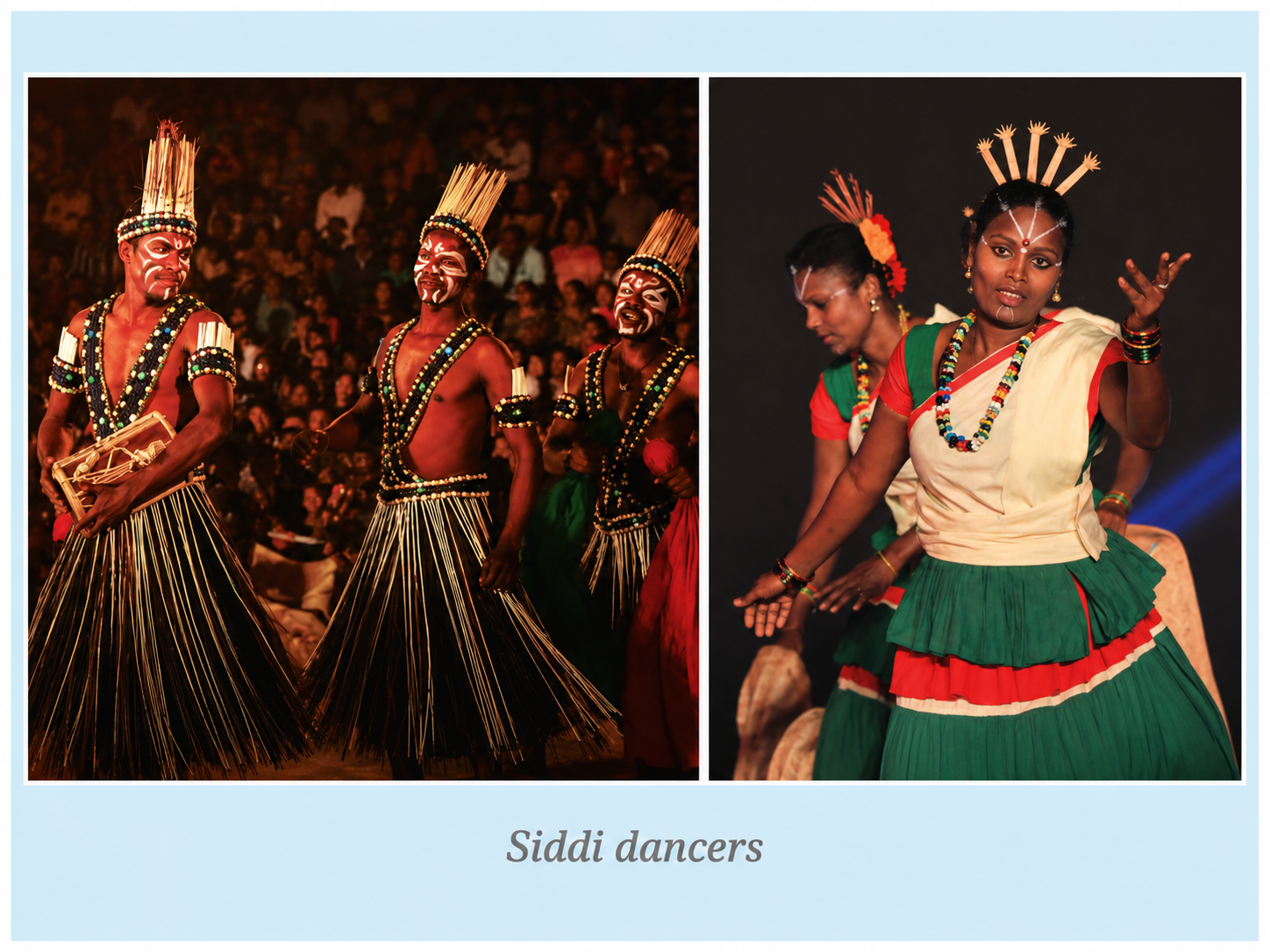
Question 5: What clues do you get about African and Indian cultural integration from the pictures here and above? Identify and name a few features that are distinctly Indian. (Page 134)
Answer:
The pictures show a clear blending of African and Indian cultures among the Siddi community. The Siddis wear Indian-style clothes and ornaments and participate in local customs and festivals.
Some distinctly Indian features include sarees, turbans, jewellery, traditional clothing, and local musical instruments. Their dance and music retain African influences while also including Indian styles.
This combination shows how the Siddi community adapted to Indian society while preserving parts of its African heritage.
Question 6: Are there communities in your neighbourhood whose ancestors might have come to India centuries ago and made it their home? Have a class discussion on what their experience may have been. (Page 140)
Answer: Students can discuss communities in their neighbourhood whose ancestors may have come to India long ago. They may explain how these communities adopted local languages and customs while continuing to preserve some of their original traditions.
Question 7: Identify similar values in any story or local tradition etc. known to you. You could ask your guardians or relatives too. Collect these stories and create a class manuscript. You could include illustrations. (Page 140)
Answer:
One story that reflects kindness and acceptance is the story of Sudama and Krishna. Krishna welcomes his childhood friend Sudama with love and respect even though Sudama is poor. The story teaches friendship, compassion, equality, and the value of treating a guest with honour.
Another example is the tradition of langar in Sikhism. In a Gurudwara, everyone sits together and eats the same food, regardless of religion, caste, or economic status. This practice reflects equality, sharing, service, and care for all.
Students can collect similar stories from their families or local communities and prepare a class manuscript with suitable illustrations.
Think About it
Question 1: Imagine this scenario – A stranger knocks at your door at midnight. It is raining heavily outside, and the stranger seeks shelter for the night claiming that his car broke down while he was driving in the vicinity. Your family goes into a huddle to discuss the pros and cons of letting a stranger into the house at night. Form two groups to discuss the arguments for and against in this scenario. Now extend this scenario to a country like India – when refugees seek shelter in India, will similar arguments apply? (Page 126)
Answer: One group may argue that the stranger should be given shelter because helping a person in distress reflects kindness, compassion, and humanity. The heavy rain and broken car suggest that the person may genuinely need help.
The other group may raise concerns about safety, trust, and the risk of allowing an unknown person into the house at night. They may suggest verifying the person’s identity or contacting the police before providing help.
Similar arguments may apply when refugees seek shelter in India. Welcoming refugees reflects compassion and the spirit of Vasudhaiva Kutumbakam. However, the country must also consider security, available resources, legal procedures, and the needs of its own citizens.
Thus, both families and countries must balance humanity and compassion with caution and responsibility.
Question 2: What do you think dissolving the sugar in the milk without spilling it meant? (Page 131)
Answer:
Dissolving sugar in milk without spilling it symbolised the Parsis’ promise that they would peacefully blend into Indian society without displacing anyone.
Just as sugar makes milk sweeter, the Parsis promised that their community would enrich Indian society through its skills, values, and contributions while respecting local traditions
India, a Home to Many Class 7 Solutions (Exercise)
Question 1: On the outline of a world map, try to trace the routes that the communities mentioned in this chapter may have used to reach India. What types of physical geographies did they have to negotiate?
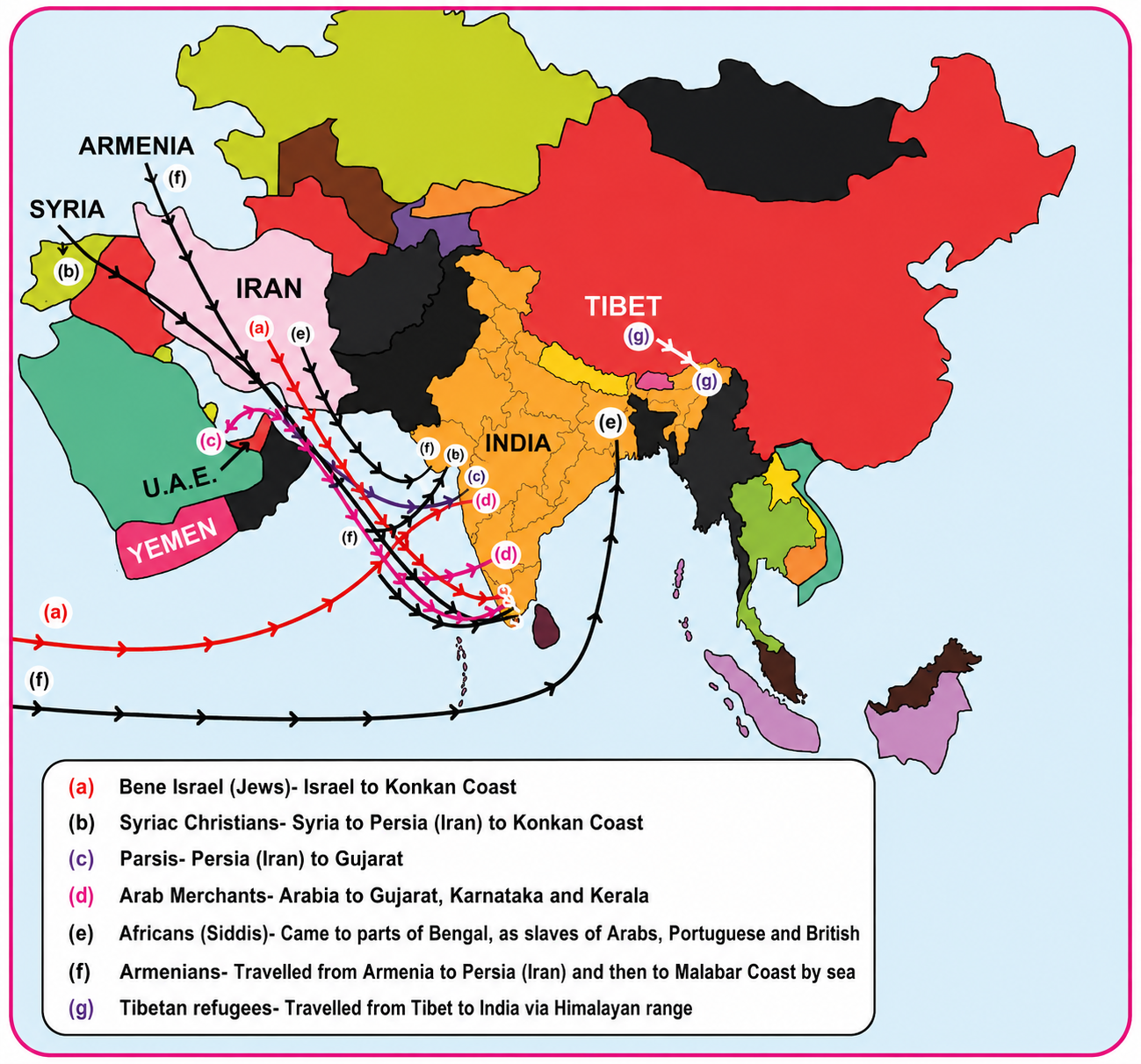
Answer: Different communities used both land and sea routes to reach India.
The Jews, Parsis, Arabs, Armenians, and Bahá’ís mainly travelled from West Asia through land routes or across the Arabian Sea. Syriac Christians also reached India through trade routes connecting West Asia with the western coast of India. Tibetan refugees crossed the high Himalayan mountains.
During these journeys, the communities had to cross seas, deserts, mountain ranges, river valleys, and long stretches of unfamiliar land. Sea travellers also faced storms, strong winds, and difficult navigation, while those crossing mountains faced extreme cold, high altitude, and steep paths.
Students can mark these possible routes on an outline map of the world.
Question 2: What are the key values intrinsic to Indian culture that enable it to welcome people of different backgrounds?
Answer:
Indian culture values tolerance, compassion, hospitality, peaceful coexistence, and respect for all religions.
The idea of Vasudhaiva Kutumbakam, meaning “the world is one family”, encourages people to treat humanity as one community. The principle of Atithi Devo Bhava, meaning “a guest is like God”, teaches respect and hospitality towards visitors.
These values helped India welcome people from different backgrounds and allowed them to preserve their beliefs and traditions while becoming part of Indian society.
Question 3: Homi Bhabha, Sam Maneckshaw, Ratan Tata, Fali Nariman, Nani Palkivala, and Cornelia Sorabji are a few names of Parsis who excelled in their respective fields. Find out more about people from other communities that made India their home and their contributions.
Answer: Some people from other communities who made India their home and made important contributions include:
Mother Teresa: Born in present-day North Macedonia, she devoted her life to serving poor and sick people in India.
The Dalai Lama: A Tibetan spiritual leader who found refuge in India and has promoted peace, compassion, and non-violence.
Annie Besant: Born in Britain, she supported India’s freedom movement and contributed to education and social reform.
Sister Nivedita: Born in Ireland, she became a disciple of Swami Vivekananda and worked for women’s education and social development in India.
These individuals show how people from different backgrounds contributed meaningfully to Indian society.
Question 4: Take up a class project. Divide the class into groups. Each group takes up a small project to study a little more about the communities that we have been listed here. Share what you have gathered with your classmates through one of these ways – drama, posters, song, painting, etc.
Answer: Students can complete this activity in groups by selecting one of the communities discussed in the chapter and researching its history, migration, traditions, and contributions to India.
For example, one group may study the Parsi community, including its migration from Persia, settlement in Gujarat, cultural traditions, and contributions to industry, education, science, law, and social service.
The findings can be presented through a poster, chart, role-play, song, painting, or short drama.
Class 7 Social Science Chapter 5 India, a Home to Many Solutions
Vedantu provides NCERT Solutions for Class 7 Social Science Chapter 5 India, a Home to Many from Exploring Society India and Beyond Part 2 for the 2026-27 academic session. The chapter explores how India welcomed people who arrived as traders, travellers, settlers, and refugees from different regions of the world.
The solutions provide clear answers to textbook questions, picture-based activities, map work, discussions, and class projects. Students can use these resources for homework, quick revision, classroom learning, and exam preparation. The downloadable FREE PDF also makes it easier to study the complete chapter offline.
CBSE Class 7 Social Science Chapter 5 Study Materials
Students can use the Chapter 5 study materials below to revise important concepts, practise additional questions, and strengthen their understanding of India’s cultural diversity and inclusive traditions.
Explore More NCERT Solutions for Class 7 Social Science Chapters
Related Study Material for Class 7 Social Science
FAQs on NCERT Solutions for Class 7 Social Science Chapter 5 India, a Home to Many – Exploring Society India and Beyond Part 2 (2026-27)
1. What is covered in Class 7 Social Science Chapter 5 India, a Home to Many?
The chapter explains how different communities came to India, why they chose India as their home, and how they became part of Indian society while preserving their own religions and traditions.
2. Which book contains Class 7 Social Science Chapter 5 India, a Home to Many?
India, a Home to Many is Chapter 5 of the NCERT Class 7 Social Science textbook Exploring Society India and Beyond Part 2.
3. Why did persecuted communities seek refuge in India?
Many communities faced religious persecution and a lack of freedom in their homelands. India offered them safety, dignity, religious freedom, and an opportunity to live peacefully.
4. Which communities are discussed in India, a Home to Many?
The chapter discusses communities such as Jews, Syriac Christians, Parsis, Siddis, Tibetans, Armenians, Bahá’ís, and other groups that made India their home.
5. What does Vasudhaiva Kutumbakam mean?
Vasudhaiva Kutumbakam means “the world is one family”. It reflects the Indian value of treating people from different backgrounds with respect, kindness, and acceptance.
6. What does Atithi Devo Bhava teach us?
Atithi Devo Bhava means “a guest is like God”. It teaches people to welcome and respect guests with kindness, care, and hospitality.
7. What does the story of sugar dissolving in milk symbolise?
It symbolises the Parsis’ promise that they would blend peacefully into Indian society and enrich it without displacing or harming anyone.
8. How did different communities integrate into Indian society?
These communities adopted local languages, clothing, food, and customs while continuing to follow their own religions and preserve their cultural identities.
9. How do NCERT Solutions for Chapter 5 help students?
The solutions provide clear answers to textbook questions, picture-based activities, map work, discussions, and projects. They help students complete homework and prepare for exams.
10. Where can students download Class 7 Social Science Chapter 5 solutions?
Students can download the FREE PDF of NCERT Solutions for Class 7 Social Science Chapter 5 India, a Home to Many from Vedantu for easy learning and revision.
