








Eulers Theorem formula proof and solved examples in number theory
Euler’s theorem for Homogeneous Functions is used to derive a relationship between the product of the function with its degree and partial derivatives of it.
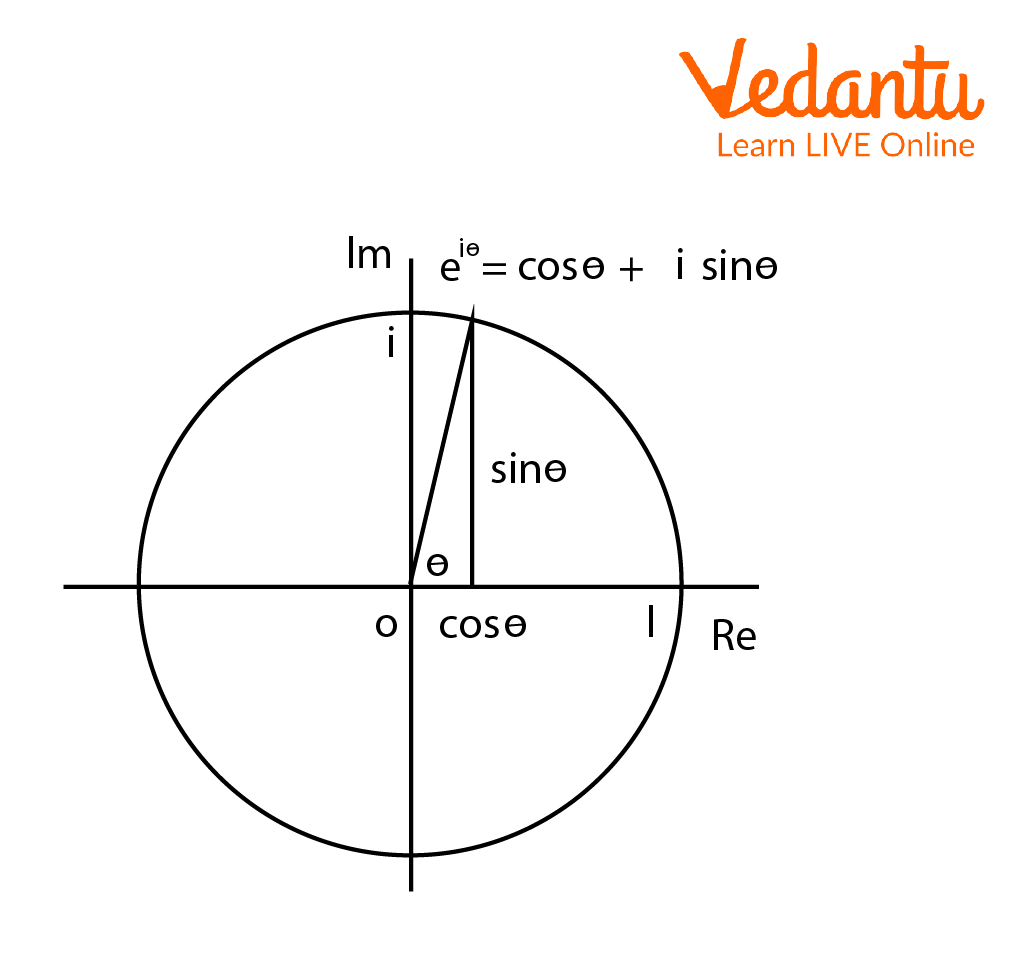
Euler’s Theorem
In this article, we will first discuss the statement of the theorem followed by the mathematical expression of Euler’s theorem and prove the theorem. We will also discuss the things for which Euler’s Theorem is used and is applicable. A brief history of mathematician Leonhard Euler will also be discussed after whom the theorem is named so.
History of Leonhard Euler
Image:
Leonhard Euler,
Name: Leonhard Euler
Born: 15 April 1707
Died: 18 September 1783
Statement of Euler’s Theorem
Euler's theorem states that if $(f$) is a homogeneous function of the degree $n$ of $k$ variables $x_{1}, x_{2}, x_{3}, \ldots \ldots, x_{k}$, then
$x_{1} \dfrac{\partial f}{\partial x_{1}}+x_{2} \dfrac{\partial f}{\partial x_{2}}+x_{3} \dfrac{\partial f}{\partial x_{3}}+\ldots \ldots+x_{k} \dfrac{\partial f}{\partial x_{k}}=n f$
Here, we will be discussing 2 variables only. So, if $f$ is a homogeneous function of degree $n$ of variables $x$ and $y$, then from Euler's Theorem, we get
$x \dfrac{\partial f}{\partial x}+y \dfrac{\partial f}{\partial y}=n f$
Proof of Euler’s Theorem
Proof:
Let $f=u[x, y]$ be a homogenous function of degree $n$ of the variables $x, y$.
$f=u[x, y] \ldots \ldots \ldots[1]$
Now, we know that
$u[X, Y]=t^{n} u[x, y] \ldots \ldots \ldots[2]$
This is because when $u$ is a function of $X, Y$, then it becomes a function of $x, y, t$ because $X, Y$ are a function of $t$.
This means that
$X=x t^{n} Y=y t^{n}$
Now, we will consider the above equations for degree 1.
$X=x t \ldots \ldots \ldots[3] \\$
$Y=y t \ldots \ldots \ldots[4]$
where $t$ is an arbitrary parameter.
Now, we will differentiate the equation [3] partially w.r.t. $t$.
$X=x t \\$
$\Rightarrow \dfrac{\partial}{\partial t} X=\dfrac{\partial}{\partial t} x t \\$
$\Rightarrow \dfrac{\partial X}{\partial t}=x \dfrac{\partial t}{\partial t} \\$
$\Rightarrow \dfrac{\partial X}{\partial t}=x \ldots \ldots \ldots[5]$
Again, we will differentiate the equation [4] partially w.r.t. $t$.
$Y=y t \\$
$\Rightarrow \dfrac{\partial}{\partial t} Y=\dfrac{\partial}{\partial t} y t \\$
$\Rightarrow \dfrac{\partial Y}{\partial t}=y \ldots \ldots \ldots[6]$
Now, we will substitute $t=1$ in equation [3].
$X=x t \\$
$\Rightarrow X=x[1]$
Multiplying the terms, we get
$X=x \ldots \ldots \ldots \ldots \text { [7] }$
Now, we will substitute $t=1$ in equation [4].
$Y=y t \\$
$\Rightarrow Y=y[1]$
Multiplying the terms, we get
$Y=y \ldots \ldots \ldots \ldots[8]$
We will now differentiate the equation [1] partially w.r.t. $x$.
$f=u[x, y] \\$
$\Rightarrow \dfrac{\partial}{\partial x} f=\dfrac{\partial}{\partial x} u[x, y] \\$
$\Rightarrow \dfrac{\partial f}{\partial x}=\dfrac{\partial u}{\partial x} \ldots \ldots \ldots \ldots .[9]$
Partial differentiation of $y$ w.r.t. $x$ is $\underline{\underline{0} \text {. }}$
Now, we will differentiate the equation [1] partially w.r.t. $y$.
$f=u[x, y] \\$
$\Rightarrow \dfrac{\partial}{\partial y} f=\dfrac{\partial}{\partial y} u[x, y] \\$
$\Rightarrow \dfrac{\partial f}{\partial y}=\dfrac{\partial u}{\partial y} \ldots \cdots \cdots[10]$
Partial differentiation of $x$ w.r.t. $y$ is 0 .
Now, we will differentiate the equation [2] partially w.r.t. $t$.
Since $u$ is a function of $X, Y$ and $X, Y$ are a function of $x, y$, and $t$, thus apply the chain rule of partial differentiation to differentiate.
$u[X, Y]=t^{n} u[x, y] \\$
$\Rightarrow \dfrac{\partial u}{\partial x} \cdot \dfrac{\partial X}{\partial t}+\dfrac{\partial u}{\partial y} \cdot \dfrac{\partial Y}{\partial t}=n t^{n-1} u[x, y] \ldots \ldots \ldots[\text { [11] }$
We will substitute $x$ for $\dfrac{\partial x}{\partial t}, y$ for $\dfrac{\partial Y}{\partial t}, \dfrac{\partial f}{\partial x}$ for $\dfrac{\partial u}{\partial x}, \dfrac{\partial f}{\partial y}$ for $\dfrac{\partial u}{\partial y}$ in equation [11]. Thus, the equation [11] becomes:
$\Rightarrow \dfrac{\partial u}{\partial x} \cdot \dfrac{\partial X}{\partial t}+\dfrac{\partial u}{\partial y} \cdot \dfrac{\partial Y}{\partial t}=n t^{n-1} u[x, y]$
Using the result of equations [7] and [8], we can write the above equation as
$\Rightarrow \dfrac{\partial f}{\partial x} \cdot x+\dfrac{\partial f}{\partial y} \cdot y=n t^{n-1} u[x, y] \ldots \ldots \ldots \text { [12] }$
We will again substitute $t=1$ and $f$ for $u[x, y]$ in the equation [12], we get
$\Rightarrow \dfrac{\partial f}{\partial x} \cdot x+\dfrac{\partial f}{\partial y} \cdot y=n[1]^{n-1} f \\$
$\Rightarrow \dfrac{\partial f}{\partial x} \cdot x+\dfrac{\partial f}{\partial y} \cdot y=n f$
Hence proved.
Limitations of Euler's Theorem
Euler’s Theorem cannot be applied to non-homogeneous differential equations. It is only applicable to homogeneous differential equations.
Euler’s Theorem is very complex to understand and needs knowledge of ordinary and partial differential equations.
Application of Euler’s Theorem
Euler’s theorem has wide application in electronic devices which work on the AC principle.
Euler’s formula is used by scientists to perform various calculations and research.
Solved Examples
1. If $u(x, y)=\dfrac{x^{2}+y^{2}}{\sqrt{x+y}}$, prove that $x \dfrac{\partial u}{\partial x}+y \dfrac{\partial u}{\partial y}=\dfrac{3}{2} u$.
Ans:
Given $u(x, y)=\dfrac{x^{2}+y^{2}}{\sqrt{x+y}}$
We can say that
$\Rightarrow u(\lambda x, \lambda y)=\dfrac{\lambda^{2} x^{2}+\lambda^{2} y^{2}}{\sqrt{\lambda x+\lambda y}} \\$
$\Rightarrow u(\lambda x, \lambda y)=\dfrac{\lambda^{2}\left(x^{2}+y^{2}\right)}{\lambda^{1 / 2} \sqrt{x+y}} \\$
$\Rightarrow u(\lambda x, \lambda y)=\dfrac{\lambda^{3 / 2}\left(x^{2}+y^{2}\right)}{\sqrt{x+y}} u$
is a homogeneous function of degree $\dfrac{3}{2}$
By Euler's Theorem,
$x \dfrac{\partial u}{\partial x}+y \dfrac{\partial u}{\partial y}=\dfrac{3}{2} u$
2. If $v(x, y)=\log \left(\dfrac{x^{2}+y^{2}}{x+y}\right)$, prove that $x \dfrac{\partial v}{\partial x}+y \dfrac{\partial u}{\partial y}=1$
Ans:
Given that
$v(x, y)=\log \left(\dfrac{x^{2}+y^{2}}{x+y}\right)$
Change into an exponential function.
Let $e^{v}=\dfrac{x^{2}+y^{2}}{x+y}=f(x, y)$
$f(x, y)=\dfrac{\lambda^{2} x^{2}+\lambda^{2} y^{2}}{\lambda x+\lambda y}$
$\Rightarrow f(x, y)=\dfrac{\lambda^{2}\left(x^{2}+y^{2}\right)}{\lambda(x+y)} f$ is a homogeneous function of degree 1.
By Euler's Theorem,
$x \dfrac{\partial f}{\partial x}+y \dfrac{\partial f}{\partial y}=1 \times f$
$\Rightarrow f x \dfrac{\partial}{\partial x} e^{v}+y \dfrac{\partial}{\partial y} e^{v}=e^{v}$ exists.
$\Rightarrow x^{v} \dfrac{\partial f}{\partial x}+y e^{v} \dfrac{\partial f}{\partial y}=e^{v} \\$
$\Rightarrow x \dfrac{\partial f}{\partial x}+y \dfrac{\partial f}{\partial y}=\dfrac{e^{v}}{e^{v}}=1$
Hence Proved.
3. If $u=\tan ^{-1}(x+y)$, then $x \dfrac{\partial u}{\partial x}+y \dfrac{\partial u}{\partial y}=$
Ans:
Given that
$\tan u=x+y \tan u$ is a homogeneous of degree $=1$
$\sum_{l} \dfrac{x d \tan u}{d x}=n \tan u \sec ^{2} u \\$
$\Rightarrow \dfrac{x d u}{d x}=\tan u \\$
$\Rightarrow \sum_{a} \dfrac{x d u}{d x}=\dfrac{1}{2} \sin 2 u \\$
$\Rightarrow x \dfrac{\partial u}{\partial x}+y \dfrac{\partial u}{\partial y}=\dfrac{1}{2} \sin 2 u$
Important Formulas to Remember
The function $f(x, y)$ is said to be a homogeneous function if
$f(\lambda x, \lambda y)=\lambda^{n} f(x, y), \text { for any non zero constant } \lambda .$
Here, $n$ is the degree of homogeneous function $f$.
If $f$ is a homogeneous function of degree $n$ of variables $x$ and $y$, then
$x \dfrac{\partial f}{\partial x}+y \dfrac{\partial f}{\partial y}=n f$
Conclusion
Euler’s Theorem has a wide range of applications in daily life and it is a fundamental tool of algebra. In this article, we have discussed Euler's theorem and its proof along with its applications of it in daily life.


FAQs on Eulers Theorem Explained with Formula and Proof
1. What is Euler’s Theorem in number theory?
Euler’s Theorem states that if gcd(a, n) = 1, then aφ(n) ≡ 1 (mod n), where φ(n) is Euler’s totient function. This theorem applies when a and n are coprime integers. It is a generalization of Fermat’s Little Theorem and is widely used in modular arithmetic and cryptography.
2. What is the formula for Euler’s Theorem?
The formula for Euler’s Theorem is aφ(n) ≡ 1 (mod n) provided that gcd(a, n) = 1. Here:
- a is an integer coprime to n
- n is a positive integer
- φ(n) is Euler’s totient function
This formula is fundamental in solving problems involving modular exponentiation.
3. What is Euler’s totient function φ(n)?
Euler’s totient function φ(n) counts the number of positive integers less than n that are coprime to n. For example:
- If n is prime, φ(n) = n − 1
- If n = pk, then φ(n) = pk − pk−1
- If n = pq (distinct primes), then φ(n) = (p − 1)(q − 1)
The totient function is essential for applying Euler’s Theorem.
4. How do you use Euler’s Theorem to solve modular exponent problems?
To use Euler’s Theorem, reduce large powers using aφ(n) ≡ 1 (mod n) when gcd(a, n) = 1. Steps:
- Check that gcd(a, n) = 1
- Find φ(n)
- Rewrite the exponent using multiples of φ(n)
- Reduce using modular arithmetic
This simplifies calculations involving very large exponents.
5. Can you give an example of Euler’s Theorem?
Yes, for example, to find 3100 mod 10, use Euler’s Theorem. Since gcd(3,10)=1 and φ(10)=4:
- 34 ≡ 1 (mod 10)
- 100 = 4 × 25
- 3100 = (34)25
Therefore, 3100 ≡ 1 (mod 10).
6. What is the difference between Euler’s Theorem and Fermat’s Little Theorem?
Fermat’s Little Theorem is a special case of Euler’s Theorem when n is prime. Specifically:
- Fermat: If p is prime and gcd(a, p)=1, then ap−1 ≡ 1 (mod p)
- Euler: If gcd(a, n)=1, then aφ(n) ≡ 1 (mod n)
Euler’s Theorem works for any positive integer n, not just primes.
7. When can Euler’s Theorem be applied?
Euler’s Theorem can be applied when a and n are coprime, meaning gcd(a, n)=1. The conditions are:
- n must be a positive integer
- a must share no common factors with n other than 1
If gcd(a, n) ≠ 1, the theorem does not apply directly.
8. Why is Euler’s Theorem important in cryptography?
Euler’s Theorem is important in cryptography because it forms the mathematical foundation of the RSA algorithm. In RSA:
- φ(n) is computed for n = pq (two primes)
- Modular exponentiation ensures secure encryption and decryption
The theorem guarantees that encrypted messages can be correctly decrypted using modular inverses.
9. How do you calculate φ(n) for composite numbers?
To calculate φ(n) for composite n, first factorize n into primes and use the formula:
φ(n) = n(1 − 1/p₁)(1 − 1/p₂)...
Example: For n = 12:
- 12 = 22 × 3
- φ(12) = 12(1 − 1/2)(1 − 1/3)
- φ(12) = 12 × 1/2 × 2/3 = 4
10. What are common mistakes when using Euler’s Theorem?
A common mistake is applying Euler’s Theorem when gcd(a, n) ≠ 1. Other frequent errors include:
- Incorrect calculation of φ(n)
- Forgetting to reduce the exponent modulo φ(n)
- Confusing it with Fermat’s Little Theorem
Always verify the coprime condition and compute φ(n) carefully before applying the formula.
