








Class Interval Definition Formula and How to Find Class Width
The Class interval is nothing but the difference between the upper-class limit and the lower-class limit. For example, if the lower limit is 5 and the upper limit is 8 then, the class interval will be 4, i.e, the difference between the upper limit and the lower limit. In this article, we will discuss class intervals in detail.

Class Interval
Intervals in Maths
The intervals in Maths are measured in the number. it includes the number which comes between two particular defined numbers. It cannot be defined in terms of the kind or any non-measurable factor. it should be in number only.
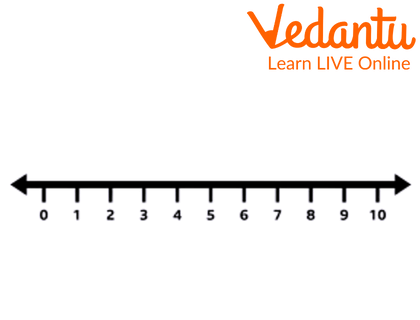
The numbers that mark from left to right of the intervals are called endpoints of the intervals; it may or may not be included in the intervals. The endpoints intervals can be included and cannot be included. It all depends on how you are going to collect or the requirements made by the organisation. Here, it all depends upon the given question, if it’s mentioned that it is included, then it should be included in the class interval otherwise not.
Types of Intervals in Maths
The types of intervals are the following:
Open Interval
Closed Interval
Half Bounded Interval
Bounded Set
How to Calculate Class Interval?
The class interval can be calculated by the difference between the upper-class limit and the lower-class limit.
Example Question:
Example 1: Given is the frequency distribution that represents the number of wins by a cricket team:
Ans: Class interval = Upper-class limit – Lower-class limit
So, in this given question, the lowest numbers in wins is the lower limit and the highest number is the upper class limit.
Class interval \[ = {\rm{ }}30{\rm{ }}-{\rm{ }}26{\rm{ }} = 4\]
Or \[35{\rm{ }}-{\rm{ }}31{\rm{ }} = {\rm{ }}4{\rm{ }}.\]
All the class intervals will be 4.
Example 2: Calculate the class interval of the following table:
Ans: Class interval = Upper-class limit – Lower-class limit
\[ = {\rm{ }}30{\rm{ }}-{\rm{ }}21\]
\[ = {\rm{ }}9\]
Solved Questions
1. Calculate the class interval if the upper limit is 85 and the lower limit is 45.
Ans: Class interval = Upper-class limit – Lower-class limit
\[ = {\rm{ }}85{\rm{ }}-{\rm{ }}45\]
\[ = {\rm{ }}40\]
2. What is the lower limit if the class interval is 50 and the upper limit is 98?
Ans: Class interval = Upper-class limit – Lower-class limit
\[50{\rm{ }} = {\rm{ }}98{\rm{ }}-\]lower limit
Lower limit \[ = {\rm{ }}98{\rm{ }}-{\rm{ }}50\]
Lower limit \[ = {\rm{ }}48.\]
3. Calculate the class interval if the upper limit is 87.25 and the lower limit is 65.45.
Ans: Class interval = Upper-class limit – Lower-class limit
\[ = {\rm{ }}87.25{\rm{ }}-{\rm{ }}65.45\]
\[ = {\rm{ }}21.8\]
Summary
In this topic, we have learned about the class interval. Class interval is the difference between the upper limit and the lower limit. Class interval in Maths is always represented in the number. The formula for the class interval is Class interval = Upper-class limit – Lower class limit.


FAQs on Class Interval in Statistics Explained Clearly
1. What is a class interval in statistics?
A class interval is a range of values used to group data in a frequency distribution table. It represents the span between a lower and upper limit.
- Example: In the interval 10–20, 10 is the lower limit and 20 is the upper limit.
- Class intervals are used to organize large datasets into manageable groups.
- They are commonly used in grouped frequency distributions and histograms.
2. How do you find the class interval?
The class interval (class width) is found by subtracting the lower class limit from the upper class limit.
- Formula: Class Interval = Upper Limit − Lower Limit
- Example: For 20–30, class interval = 30 − 20 = 10.
- All intervals in a grouped frequency table are usually kept equal for clarity.
3. What is the formula for class width?
The class width is calculated as Upper Class Limit − Lower Class Limit.
- Formula: Class Width = U − L
- If classes are continuous, use boundaries instead.
- Example: For 5–15, class width = 10.
4. What is the difference between class interval and class width?
A class interval is the entire range (e.g., 10–20), while class width is the numerical size of that range (e.g., 10).
- Class interval: 10–20
- Class width: 20 − 10 = 10
- Both terms are related but not identical in meaning.
5. How do you calculate the number of class intervals?
The number of class intervals is found by dividing the range by the chosen class width.
- Formula: Number of Classes = Range ÷ Class Width
- Range = Maximum − Minimum
- Example: If range = 50 and class width = 10, classes = 50 ÷ 10 = 5.
6. What is the range in relation to class interval?
The range is the difference between the highest and lowest values and helps determine suitable class intervals.
- Formula: Range = Maximum − Minimum
- Example: If max = 80 and min = 30, range = 50.
- The range guides how many equal class intervals to create.
7. What are class limits and class boundaries?
Class limits are the smallest and largest values in a class, while class boundaries remove gaps between intervals.
- Class limits: 10–20 (10 lower, 20 upper)
- Class boundaries: 9.5–20.5 (for continuous data)
- Boundaries ensure no overlap in grouped data.
8. What is an example of a class interval in a frequency distribution?
An example of a class interval in a frequency distribution is 0–10, 10–20, 20–30 with corresponding frequencies.
- 0–10 : 5 students
- 10–20 : 8 students
- 20–30 : 7 students
- Each interval groups data into equal ranges for analysis.
9. Why are equal class intervals important?
Equal class intervals ensure uniform data grouping and accurate graphical representation.
- They make histograms proportional and easy to interpret.
- They simplify calculations of mean, median, and mode.
- Unequal intervals may distort comparisons unless adjusted.
10. What are common mistakes when forming class intervals?
Common mistakes when forming class intervals include overlapping ranges and unequal widths.
- Overlapping intervals like 10–20 and 20–30 without clear boundaries.
- Unequal class widths without proper justification.
- Choosing too many or too few classes for the dataset size.
