








Boolean Theorems Definition Laws Proofs and Solved Examples
Boolean theorems are the fundamental tools of Boolean Algebra. Boolean theorems are either used to transform the expression or can be used to simplify the terms of the expression. In this article, we will discuss the important boolean postulates and theorems and Laws of Boolean Algebra in detail.
Boolean algebra is based on logical reasoning and hence removes the uncertainty of answers as being based on objectivity rather than subjectivity. Boolean algebra forms the basis of computer programming and binary systems.
Table of Contents
Boolean Laws and Theorems: An Introduction
History of Augustus De Morgan
Basic Theorems of Boolean Algebra
Laws of Boolean Algebra
Limitations of Boolean Theorem
Applications of Boolean Theorem
History of Augustus De Morgan
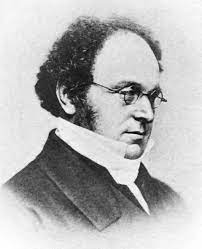
Augustus De Morgan
Image credit: Wikimedia
Name: Augustus De Morgan
Born: 27 June 1806
Died: 18 March 1871
Field: Mathematics
Nationality: British
Basic Theorems of Boolean Algebra
There are two most important Boolean Theorems also known as De Morgan’s Theorem or Laws.
De Morgan’s First Theorem: According to De Morgan’s First Theorem, the complement of the product of the variables is equal to the sum of the complements of variables separately.
Mathematically:
$(A . B)^{\prime}=A^{\prime}+B^{\prime}$
Truth table for First Theorem for verification of above expression:
Truth Table for First Theorem
From the last two columns, we have: $(A . B)^{\prime}=A^{\prime}+B^{\prime}$.
Hence, De Morgan’s First Theorem is proved.
De Morgan’s Second Theorem: According to De Morgan’s Second Theorem, the complement of the sum of the variables is equal to the product of the complements of the variables separately.
Expressing it mathematically:
$(A+B)^{\prime}=A^{\prime} . B^{\prime}$
Truth table for Second Theorem for verification of above expression:
Truth Table for Second Theorem
From the last two columns, we have: $(A+B)^{\prime}=A^{\prime} . B^{\prime}$
Hence, De Morgan’s second Theorem is proved.
Laws of Boolean Algebra
Commutative Law
Any binary operations satisfying the following expression are commutative operations. Commutative law does not have any effect on the output of a logic circuit.
$A.B=B.A$
$A+B=B+A$
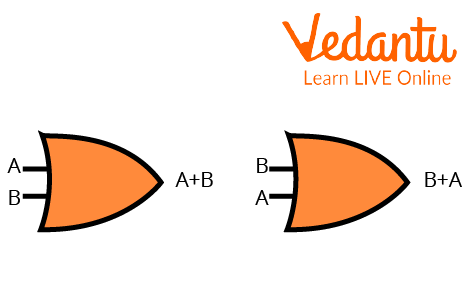
Commutative law
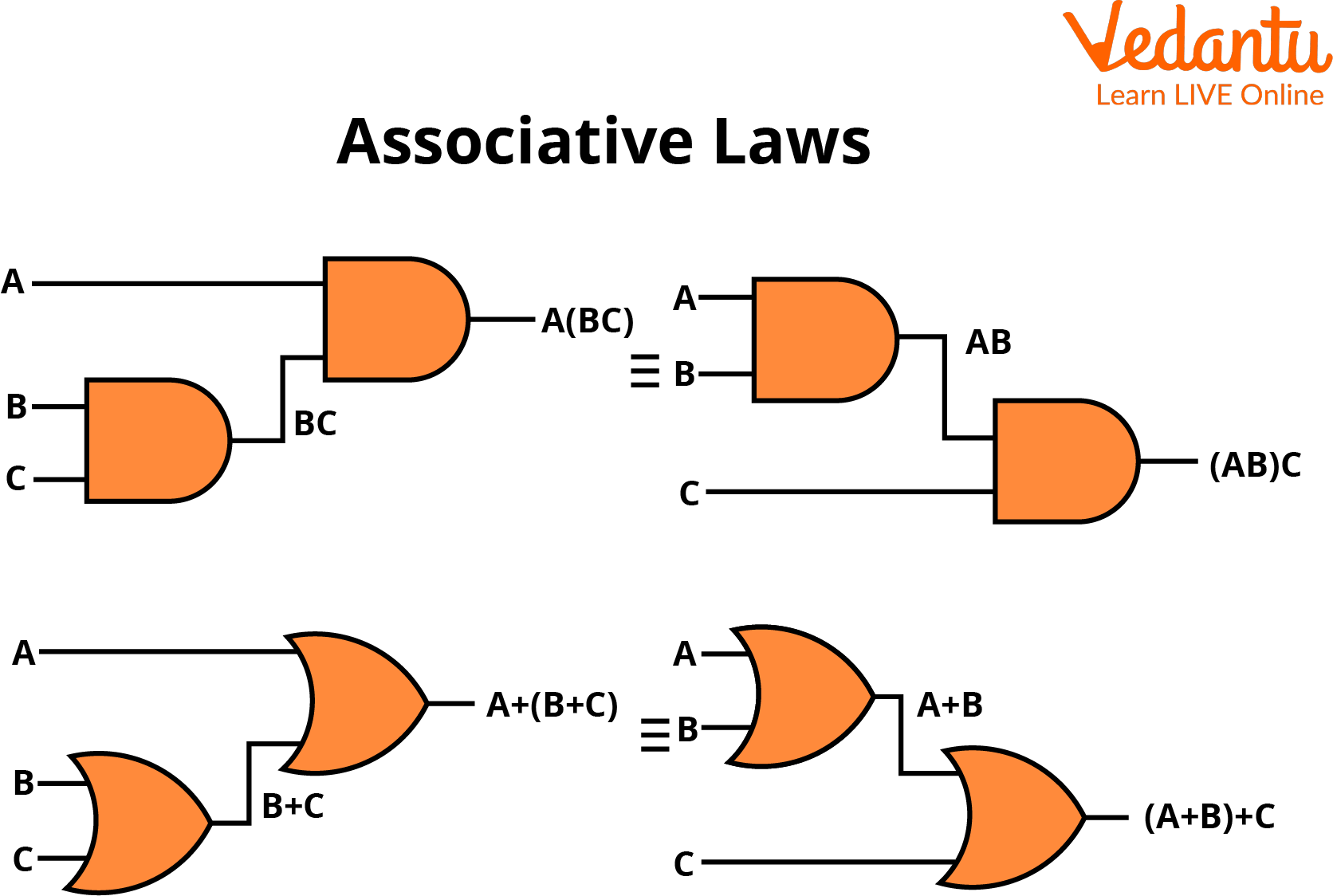
Associative Law
According to this law, the order in which the logic operations are performed is irrelevant as their effect is the same.
A.(B.C)=(A.B).C
(A+B)+C=A+(B+C)
Distributive Law
The operations satisfying the following conditions are said to satisfy this law:
A.(B+C)=(A.B)+(A.C)
AND Law
The laws using the AND operation are called AND laws.
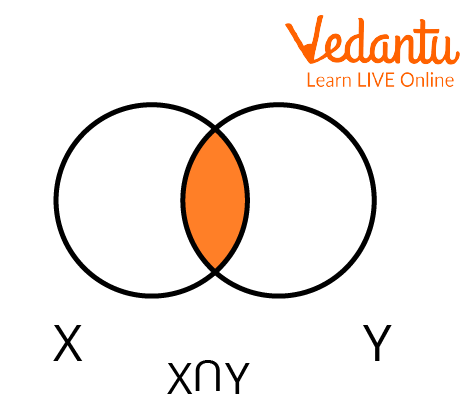
AND Operator
$A .0=0$
$A \cdot 1=A$
$A . A=A$
$A . \bar{A}=0$
OR Law
The laws using the OR operation are called OR laws.
OR Operator
$A+0=A$
$A+1=1$
$A+A=A$
$A+\bar{A}=1$
Inversion Law
The inversion law states that double inversion of a variable will give the original variable.
Limitations of Boolean Theorem
Boolean theorems are not applicable in case of ternary coding which uses base 3 instead of 2 as in binary coding.
Applications of Boolean Theorem
Boolean Theorem is a fundamental tool of Boolean Algebra.
Digital world is completely based on Boolean algebra. Everything works on binary coding.
Electronic systems and electronic circuits wholly work in principle of Boolean Algebra.
Solved Examples
1. Find the complement of $\bar{A} B+C \bar{D}$
Ans: $\overline{\bar{A} B+C \bar{D}}=\overline{(\bar{A} B}) \cdot(\overline{C \bar{D}})$
$\Rightarrow (A+\bar{B}) \cdot(\bar{C}+D)$
2. Find the complement of $A B+C D=0$
Ans: $A B+C D=0$
Taking complement on both sides.
$\Rightarrow \overline{A B+C D}=\bar{O} $
$\Rightarrow \overline{A B} \cdot \overline{C D}=1 $
$\Rightarrow (\bar{A}+\bar{B}) \cdot(\bar{C}+\bar{D})=1$
3. Simplify the Boolean expressions $(X+Y)(X+\bar{Y})(\bar{X}+Z)$
Ans: $(X+Y)(X+\bar{Y})=X X+X \bar{Y}+Y X+Y \bar{Y} $
$\Rightarrow X+X \bar{Y}+Y X+O, \text { as } X X=X \text { and } Y \overline{Y}= 0$
$\Rightarrow X+X(\bar{Y}+Y), \text { as } \bar{Y}+Y=1$
$\Rightarrow X+X \cdot 1, \text { as } X \cdot 1=X $
$\Rightarrow X+X $
$\Rightarrow X$
Now
$(X+Y)(X+\bar{Y})(\bar{X}+Z) $
$\Rightarrow X(\bar{X}+Z) $
$\Rightarrow X \bar{X}+X Z, \text { by distributive law }$
$\Rightarrow 0+X Z $
$\Rightarrow X Z$
Conclusion
In the article, we have discussed the detailed proof of Boolean Theorem and Boolean Laws. In the world of digitisation, everything works in the binary system and hence in Boolean algebra. So, for the growth of human society Boolean Algebra is a great tool and eases our day to day life.
Important Formulas to Remember
$(A . B)^{\prime}=A^{\prime}+B^{\prime}$
$(A + B)^{\prime}=A^{\prime}.B^{\prime}$
Important Points to Remember
Boolean Algebra works on logical reasoning.
Boolean Algebra has two trues either TRUE or FALSE i.e., $0,1$.
List of Related Links
FAQs on Boolean Theorems in Digital Logic with Laws and Proofs
1. What are Boolean theorems in Boolean algebra?
Boolean theorems are fundamental laws and identities that simplify and manipulate Boolean expressions involving variables that take values 0 and 1. These theorems are used in digital logic design and switching theory.
- They involve operations like AND (·), OR (+), and NOT (′).
- They help reduce complex logic circuits into simpler forms.
- Example: A + 0 = A (Identity Law).
2. What is the identity law in Boolean algebra?
The identity law states that a Boolean variable remains unchanged when combined with the identity element: A + 0 = A and A · 1 = A. These laws preserve the original value of the variable.
- OR identity: Adding 0 does not change the value.
- AND identity: Multiplying by 1 does not change the value.
- Example: If A = 1, then 1 + 0 = 1 and 1 · 1 = 1.
3. What is the null law in Boolean algebra?
The null law states that combining a Boolean variable with the null element gives a fixed result: A + 1 = 1 and A · 0 = 0. These operations override the variable’s value.
- OR with 1 always results in 1.
- AND with 0 always results in 0.
- Example: If A = 0, then 0 + 1 = 1 and 0 · 0 = 0.
4. What is the idempotent law in Boolean algebra?
The idempotent law states that repeating a Boolean variable does not change its value: A + A = A and A · A = A. This means duplication has no effect.
- OR operation: A variable ORed with itself equals the same variable.
- AND operation: A variable ANDed with itself equals the same variable.
- Example: If A = 1, then 1 + 1 = 1 and 1 · 1 = 1.
5. What is the complement law in Boolean algebra?
The complement law states that a variable combined with its complement gives a fixed result: A + A′ = 1 and A · A′ = 0. A complement represents the opposite value.
- If A = 1, then A′ = 0.
- If A = 0, then A′ = 1.
- Example: 1 + 0 = 1 and 1 · 0 = 0.
6. What is the commutative law in Boolean algebra?
The commutative law states that the order of variables does not affect the result: A + B = B + A and A · B = B · A. This applies to both OR and AND operations.
- Example (OR): 1 + 0 = 0 + 1 = 1.
- Example (AND): 1 · 0 = 0 · 1 = 0.
7. What is the associative law in Boolean algebra?
The associative law states that grouping of variables does not affect the result: (A + B) + C = A + (B + C) and (A · B) · C = A · (B · C). Parentheses can be rearranged freely.
- Example (OR): (1 + 0) + 1 = 1 + (0 + 1) = 1.
- Example (AND): (1 · 1) · 0 = 1 · (1 · 0) = 0.
8. What is the distributive law in Boolean algebra?
The distributive law allows expansion of Boolean expressions: A · (B + C) = A·B + A·C and A + (B · C) = (A + B)(A + C). It distributes AND over OR and OR over AND.
- Example: If A=1, B=0, C=1,
Left side: 1 · (0 + 1) = 1 · 1 = 1
Right side: (1·0) + (1·1) = 0 + 1 = 1.
9. What are De Morgan’s theorems in Boolean algebra?
De Morgan’s theorems state that the complement of a sum equals the product of complements and vice versa: (A + B)′ = A′ · B′ and (A · B)′ = A′ + B′. These laws are used to simplify complemented expressions.
- They convert OR operations into AND operations and vice versa.
- Example: If A=1 and B=0,
(1 + 0)′ = 1′ = 0,
A′ · B′ = 0 · 1 = 0.
10. How do you simplify Boolean expressions using Boolean theorems?
Boolean expressions are simplified by applying Boolean theorems step by step to reduce terms and eliminate redundancies. The goal is to obtain a minimal form.
- Step 1: Apply identity, null, and idempotent laws.
- Step 2: Use complement and De Morgan’s theorems where needed.
- Step 3: Apply distributive law to factor or expand.
- Example: Simplify A + A·B.
Using distributive law: A + A·B = A(1 + B).
Since 1 + B = 1, result is A.
