








How to Solve 2 Digit Addition and Subtraction with Step by Step Examples
Kids, suppose you have 12 chocolates and your parents asked you to give 4 chocolates to your friend. Now, how many chocolates you are left with? Yes, you are right! Now, you are left with 8 chocolates. But do you know the name of the method using which you found the correct number of chocolates you are left with? We'll be doing 2-digit addition and subtraction today.
Adding two-digit integers together is known as two-digit addition. The outcome is referred to as the total of the two numbers. The practice of removing two or more numbers with two digits from one another is known as two-digit subtraction.
What is Addition?
There are four basic operations of arithmetic, i.e., addition, subtraction, multiplication, and division. Among these, today we will be talking about the addition. Adding two whole numbers will result in the combination of the two values. Every arithmetic operation has its unique symbol. In addition, the sign is ‘+’.
For example:
What number of balls does Rishi have altogether if he has 3 green balls and 2 blue balls?
The total number of balls is $3 + 2 =5$.
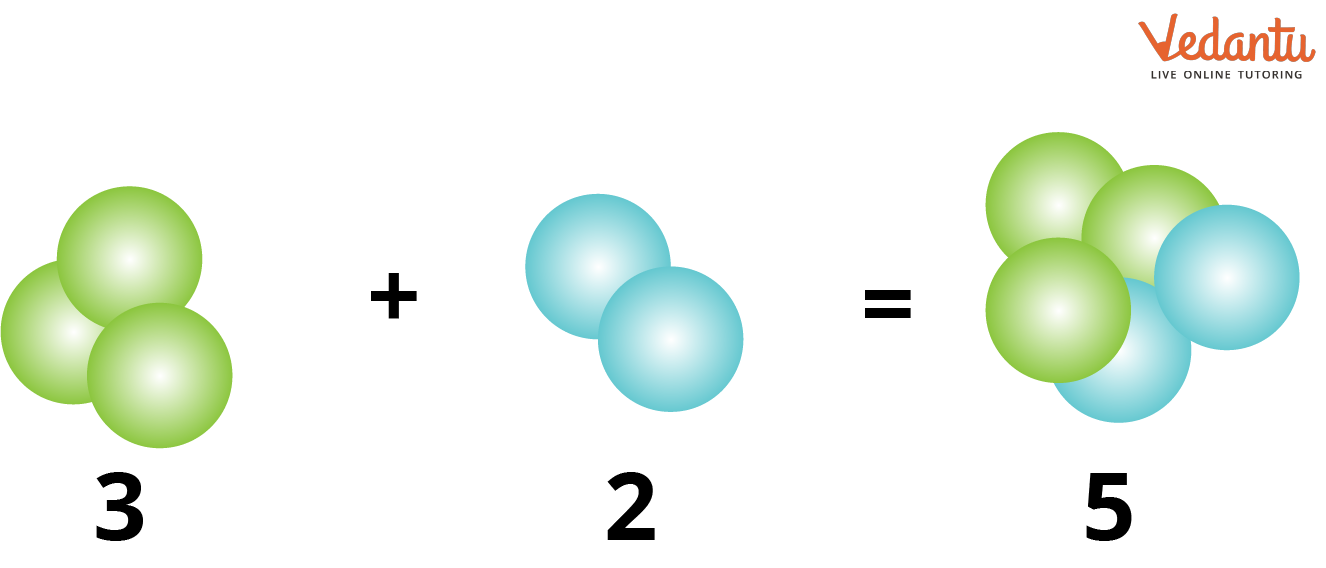
Sum of $3 + 2$ balls
What is Subtraction?
Subtraction means taking away things from a group or several things. Every arithmetic operation has its unique symbol. In subtraction, the sign is ‘-’.
Try to write the larger number first and the smaller number directly below when subtracting two numbers. After that, remove each column one at a time.
Suppose, Kriti has 10 chocolates and she gives up 2 chocolates. Then what is the total number of chocolates that Kriti has?
The total number of chocolates that Kriti has $10 - 2 = 8$.
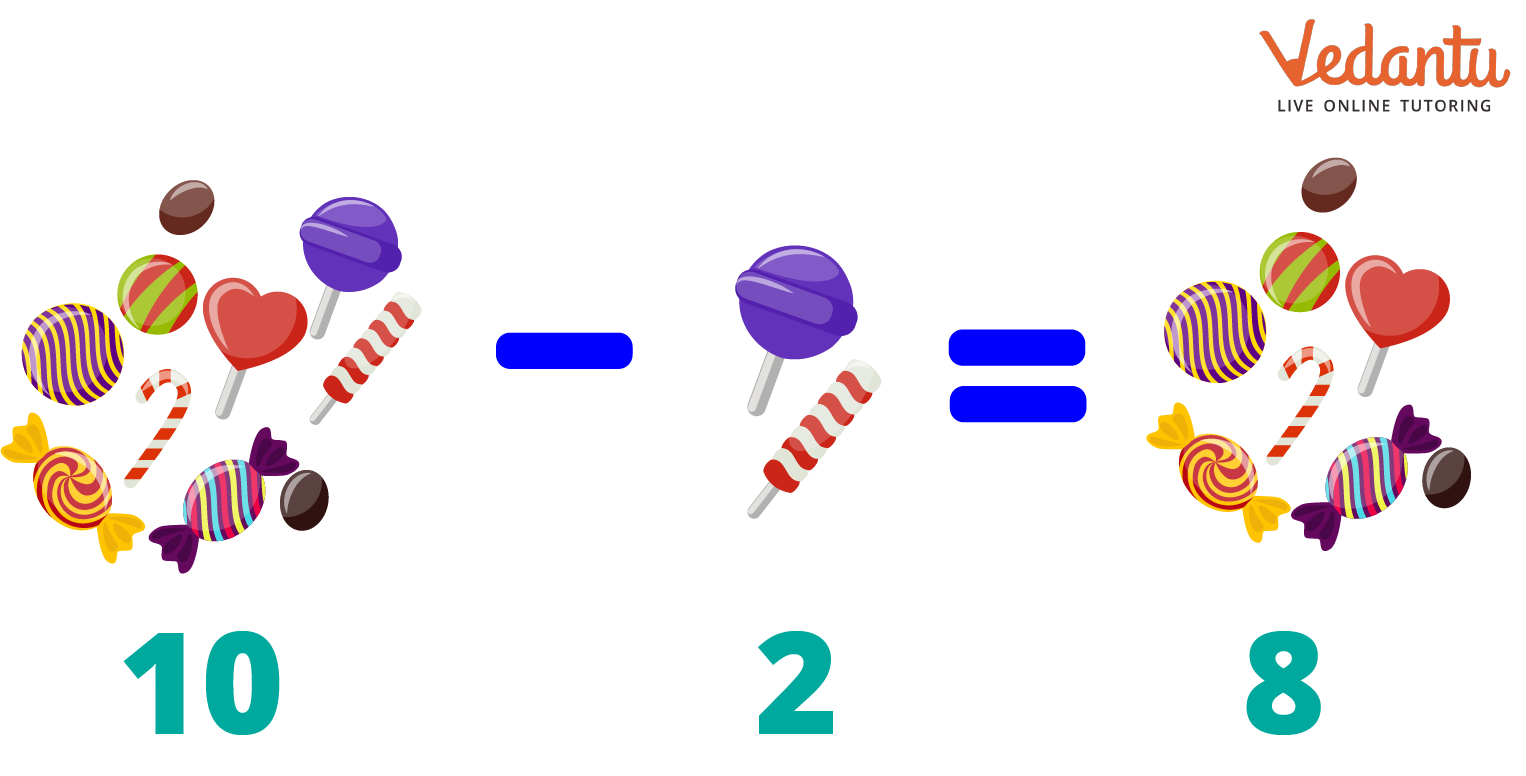
Difference of $10 - 2$ chocolates
How Does Adding and Subtracting 2-Digit Numbers Works?
In addition, the place value of the numbers is given more importance. Here, the place value is expressed as ones and tens. To add 2-digit numbers, first, we need to arrange them column-wise according to their place values. Digits are added one by one. Here, the numbers are called addends, and the answer is known as their sum.
There are two methods for regrouping, namely 2-digit addition and subtraction with regrouping. Without regrouping, 2-digit addition and subtraction are also possible.
In subtraction, the place value of the numbers is also given more importance. After subtraction, the number of things reduces or becomes less. The subtraction consists of the minuend, subtrahend, and difference.
It can be written as $Minuend{\rm{ }} - {\rm{ }}Subtrahend{\rm{ }} = {\rm{ }}Difference$.
Types of Addition
2-Digit Addition with Regrouping:
There is a condition in the ‘regrouping’ method. Here, we have to move the extra number to the next column if the sum of the numbers in either of the columns is more than 9.
For example: Take the addition of 29 and 52
As there is a carry-over value of 1, hence, the result will be 81.
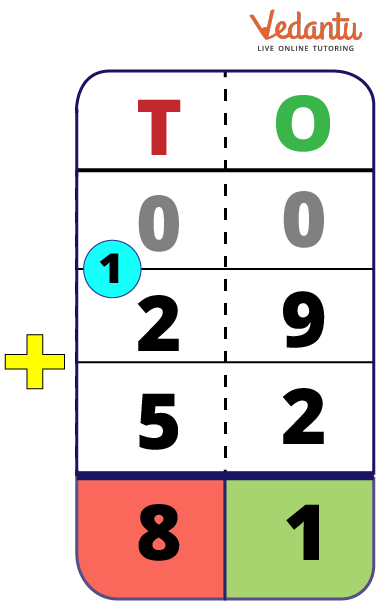
Sum of $29 + 52$
2 Digit Addition without Regrouping:
The ‘Without regrouping’ method is very simple. Here, when the sum is less than or equal to 9, we write the number according to its place value column. It does not carry forward any number.
For example: Take the addition of 20 and 34
As there are no carry-over value, hence, the result will be 54.
Types of Subtraction
2 Digit Subtraction with Regrouping:
If the number at the bottom is greater than the top, take 1 from the tens column and add it to the number at the one's position. The number at the ten's place will decrease by one after adding 1 to the one's position. Now subtract the numbers.
For example: Take the subtraction of 71 and 49
Firstly, subtract 9 from 1. Since we cannot subtract larger numbers from smaller ones, we borrow 1 from the digit that is at the ten’s place in the minuend to make the one’s digit larger.
So, 1 becomes 11, now we can subtract 9 from 11 and the result will be 2 at the one’s column.
After giving the borrow to one’s column, the digit at the ten’s column reduced to 6.
Now, subtract 4 from 6, we get 2 at the ten’s column.
So, the final difference is 22.
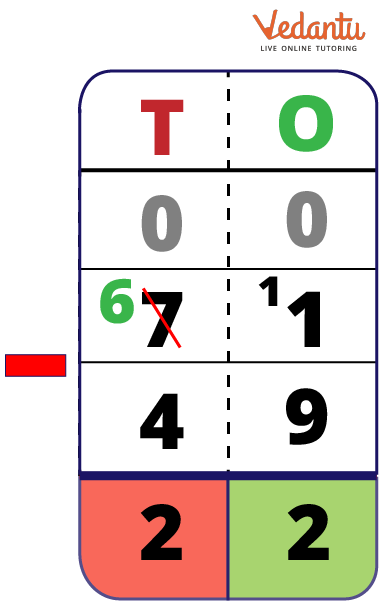
Difference of 49 and 71
2 Digit Subtraction Without Regrouping:
The ‘Without regrouping’ method is very simple. Here, always put the greater value at the top and find the difference between the place value according to the column. It does not take carry/borrow from any number.
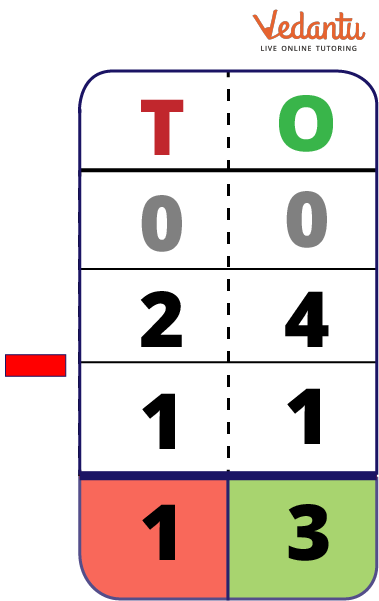
Difference of $24 - 11$
2 Digit Addition and Subtraction Word Problems
Let us look at some 2 Digit Addition and Subtraction Worksheets:
Example 1: Suppose Sima already has 88 pens and her mother just gave her 11 more. What is Sima's total number of pens?
Solution:
According to the question, Sima already has = 88 pens and her mother gave = 11pens more.
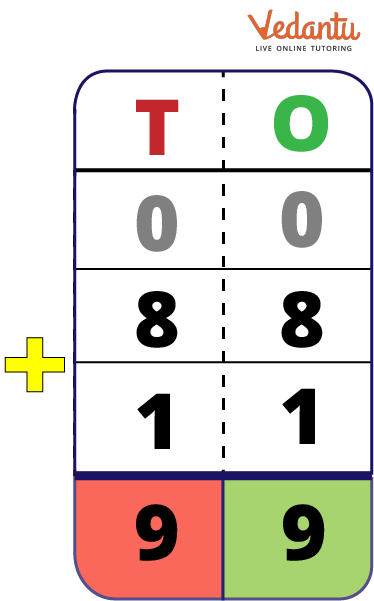
Sum of $88 + 11$
Now, Sima has a total of $= 88 + 11 = 99$ pens
Therefore, the total number of pens that Sima has is 99.
Example 2: Suppose Tina already has 99 oranges. She gave up and 55 oranges . Then her father gave her 12 oranges. What is Tins's total number of oranges?
Solution:
According to the question, Tina already has = 99 oranges, she gave up =55 oranges and her father gave = 12 oranges.
First, arrange the numbers with the smaller number followed by the bigger one, $= 99 - 55 = 44$
Then, adding the given and the obtained number,
$\begin{array}{l} = 44 + 12\\ = 56\end{array}$
Hence, Tina has a total of 56 oranges.
Example 3: 54 of the 66 flowers that Rishi had were sold. Now, how many flowers does Rishi have altogether?
Solution:
According to the question, Rishi had = 66 flowers and he sold = 54 flowers.
First, arrange the numbers with the smaller number followed by the bigger one,
$\begin{array}{l} = 66 - 54\\ = 12\end{array}$
Hence, Rishi has a total of 12 flowers.
Conclusion
Performing addition and subtraction is very crucial in our day-to-day lifestyle. It is required in every step of life. Like, when we go out shopping or to the office, schools and colleges and while playing games. We were taught addition and subtraction as kids, and we still use them regularly.
The number of items increases with addition, while the number of items decreases with subtraction. Thus, it is obvious that both are completely at odds with one another.
FAQs on 2 Digit Addition and Subtraction with Regrouping and Without Regrouping
1. What is 2 digit addition in maths?
Two digit addition is the process of adding two numbers that each have a tens digit and a ones digit. In 2 digit addition, you add the ones first and then the tens. For example:
- Example: 34 + 25
- Add ones: 4 + 5 = 9
- Add tens: 3 + 2 = 5
- Final answer: 59
2. How do you add two digit numbers step by step?
To add two digit numbers, line up the digits by place value and add from right to left. Follow these steps:
- Step 1: Write the numbers one below the other (tens under tens, ones under ones).
- Step 2: Add the ones digits.
- Step 3: Add the tens digits.
- Step 4: Combine the results.
- 6 + 2 = 8
- 4 + 3 = 7
- Answer: 78
3. What is carrying in 2 digit addition?
Carrying in 2 digit addition happens when the sum of the ones digits is 10 or more and you regroup into the tens place. For example:
- Example: 27 + 38
- 7 + 8 = 15 (write 5, carry 1 to tens)
- 2 + 3 + 1 (carried) = 6
- Final answer: 65
4. How do you subtract two digit numbers?
To subtract two digit numbers, subtract the ones first and then the tens while keeping place values aligned. Follow these steps:
- Step 1: Write numbers vertically (tens under tens, ones under ones).
- Step 2: Subtract the ones digits.
- Step 3: Subtract the tens digits.
- 5 − 3 = 2
- 7 − 2 = 5
- Answer: 52
5. What is borrowing in 2 digit subtraction?
Borrowing in 2 digit subtraction occurs when the top ones digit is smaller than the bottom ones digit and you regroup from the tens place. For example:
- Example: 52 − 38
- 2 is smaller than 8, so borrow 1 ten (making 12 − 8)
- 12 − 8 = 4
- 4 − 3 = 1
- Final answer: 14
6. What is the place value method for 2 digit addition and subtraction?
The place value method means breaking numbers into tens and ones before adding or subtracting. Example for addition:
- 47 + 21
- (40 + 20) + (7 + 1)
- 60 + 8 = 68
- 64 − 22
- (60 − 20) + (4 − 2)
- 40 + 2 = 42
7. Can you give an example of 2 digit addition with carrying?
Yes, 2 digit addition with carrying involves regrouping when the ones sum is 10 or more. Example:
- 58 + 27
- 8 + 7 = 15 (write 5, carry 1)
- 5 + 2 + 1 = 8
- Final answer: 85
8. What is the difference between addition and subtraction of two digit numbers?
The difference is that addition combines numbers to find a total, while subtraction finds how much is left or the difference between numbers. In 2 digit addition:
- You add tens and ones.
- You may use carrying (regrouping).
- You subtract tens and ones.
- You may use borrowing (regrouping).
9. What are common mistakes in 2 digit addition and subtraction?
Common mistakes in 2 digit addition and subtraction usually involve place value errors and forgetting to regroup. These include:
- Not lining up tens and ones correctly.
- Forgetting to carry in addition.
- Forgetting to borrow in subtraction.
- Subtracting the bigger digit from the smaller one without regrouping.
10. Why is learning 2 digit addition and subtraction important?
Learning 2 digit addition and subtraction is important because it builds strong place value and mental maths skills. These skills help students:
- Solve everyday problems like money and measurements.
- Prepare for larger number operations.
- Understand regrouping and number relationships.
