






Which Are the Largest and Longest Rivers of India by Length?
Rivers play a crucial role in shaping the geography, economy, and civilization of India. The longest rivers in India are not only important from a geographical perspective but also hold cultural, historical, and agricultural significance. These rivers provide water for irrigation, drinking, transportation, and hydroelectric power. Questions related to the longest rivers in India are frequently asked in school exams, competitive exams like UPSC, SSC, Railways, and other state-level exams. In this article, we will explore the major longest rivers in India, their origin, length, tributaries, and importance in a structured and easy-to-understand manner.
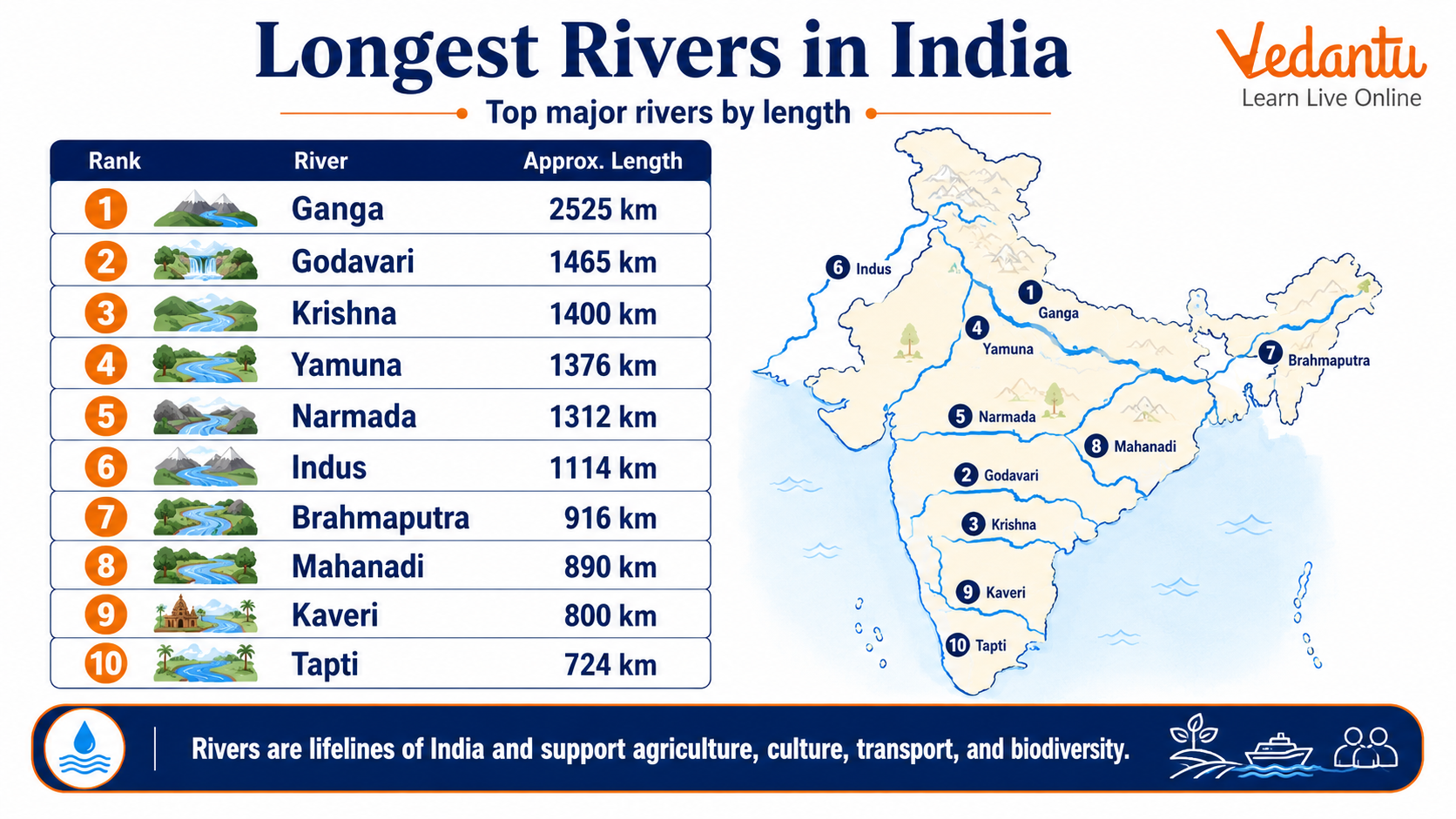
Top 10 Longest Rivers in India
| Rank | River | Length in India (Approx. km) |
|---|---|---|
| 1 | Ganga | 2525 km |
| 2 | Godavari | 1465 km |
| 3 | Krishna | 1400 km |
| 4 | Yamuna | 1376 km |
| 5 | Narmada | 1312 km |
| 6 | Indus | 1114 km (in India) |
| 7 | Brahmaputra | 916 km (in India) |
| 8 | Mahanadi | 851 km |
| 9 | Kaveri | 800 km |
| 10 | Tapti | 724 km |
The Ganga is the longest river in India, followed by Godavari and Krishna. Some rivers like Indus and Brahmaputra have a greater total length, but only a part of their course lies within India.
Brief Description of Major Longest Rivers
1. Ganga River
The Ganga originates from the Gangotri Glacier in Uttarakhand and flows through northern India before emptying into the Bay of Bengal. It is the most sacred river in India and supports one of the most fertile plains in the world.
- Origin - Gangotri Glacier
- Major tributaries - Yamuna, Ghaghara, Gandak, Kosi
- Drains into - Bay of Bengal
2. Godavari River
Godavari is the longest river in South India and is often called the Dakshin Ganga. It originates in Maharashtra and flows eastward into the Bay of Bengal.
- Origin - Trimbakeshwar, Maharashtra
- States covered - Maharashtra, Telangana, Andhra Pradesh
- Drains into - Bay of Bengal
3. Krishna River
The Krishna River originates from the Western Ghats near Mahabaleshwar in Maharashtra. It is one of the most important rivers in peninsular India.
- Origin - Mahabaleshwar, Maharashtra
- Major tributaries - Tungabhadra, Bhima
- Drains into - Bay of Bengal
4. Yamuna River
Yamuna is the largest tributary of the Ganga and originates from the Yamunotri Glacier. It flows through major cities like Delhi and Agra.
- Origin - Yamunotri Glacier
- Major cities - Delhi, Mathura, Agra
- Joins - Ganga at Prayagraj
5. Narmada River
The Narmada flows westward, unlike most major Indian rivers. It originates from the Amarkantak Plateau and drains into the Arabian Sea.
- Origin - Amarkantak Plateau
- Flows between - Vindhya and Satpura ranges
- Drains into - Arabian Sea
Importance of the Longest Rivers in India
The longest rivers in India are vital for the country's development and sustainability. They support agriculture, generate electricity, and serve as transportation routes.
- Provide water for irrigation and farming
- Support hydroelectric power projects
- Help in transportation and trade
- Hold religious and cultural significance
- Maintain ecological balance and biodiversity
Important Points for Competitive Exams
- Ganga is the longest river in India.
- Godavari is the longest river in South India.
- Narmada and Tapti flow westward into the Arabian Sea.
- Brahmaputra is known as Tsangpo in Tibet.
- Indus originates near Lake Mansarovar in Tibet.
Conclusion
The longest rivers in India are lifelines of the nation, supporting millions of people and diverse ecosystems. From the sacred Ganga to the powerful Brahmaputra and the extensive Godavari, each river plays a unique role in shaping India’s geography and culture. Understanding these rivers is essential for academic learning as well as for various competitive examinations. A clear knowledge of their origin, length, tributaries, and drainage patterns helps build a strong foundation in Indian geography.
FAQs on Longest Rivers in India: Complete Guide for Students
1. Which is the longest river in India?
The Ganga River is the longest river in India, flowing over approximately 2,525 km.
- Originates from the Gangotri Glacier in Uttarakhand
- Flows through states like Uttarakhand, Uttar Pradesh, Bihar, and West Bengal
- Empties into the Bay of Bengal
- Also known as the Ganges River
This river is considered the most sacred and economically important river in India.
2. What are the top 5 longest rivers in India?
The top 5 longest rivers in India are ranked based on their total length within the country.
1. Ganga – 2,525 km
2. Godavari – 1,465 km
3. Krishna – 1,400 km
4. Yamuna – 1,376 km
5. Narmada – 1,312 km
These major rivers of India play a crucial role in agriculture, irrigation, and hydroelectric power generation.
3. Which is the longest river in South India?
The Godavari River is the longest river in South India, stretching about 1,465 km.
- Known as the “Dakshin Ganga” (Ganga of the South)
- Originates from Trimbakeshwar, Maharashtra
- Flows through Maharashtra, Telangana, Andhra Pradesh
- Drains into the Bay of Bengal
It is one of the most important peninsular rivers in India.
4. Which river is known as the Dakshin Ganga?
The Godavari River is popularly known as the Dakshin Ganga because of its length and religious importance in South India.
- Second longest river in India
- Major river of the Deccan Plateau
- Supports irrigation and farming in southern states
This title highlights its cultural and economic importance similar to the Ganga.
5. Which is the longest river in North India?
The Ganga River is the longest river in North India and the most significant river system in the region.
- Originates in the Himalayas
- Forms the fertile Indo-Gangetic Plain
- Major tributaries include Yamuna, Ghaghara, and Kosi
It is vital for agriculture, drinking water, and religious activities.
6. Which river has the largest drainage basin in India?
The Ganga River Basin is the largest drainage basin in India.
- Covers nearly 26% of India’s land area
- Supports around 40% of India’s population
- Includes major tributaries like Yamuna and Son
The Ganga basin is one of the most fertile and densely populated river basins in the world.
7. Which is the longest west-flowing river in India?
The Narmada River is the longest west-flowing river in India.
- Length: 1,312 km
- Originates from Amarkantak Plateau
- Flows into the Arabian Sea
- Forms the famous Marble Rocks at Bhedaghat
It is one of the major rivers flowing westward in the peninsular region.
8. What is the difference between Himalayan rivers and Peninsular rivers?
The main difference lies in their origin, water source, and flow pattern.
- Himalayan Rivers (Ganga, Yamuna, Brahmaputra): Perennial, glacier-fed, form large deltas
- Peninsular Rivers (Godavari, Krishna, Narmada): Seasonal, rain-fed, flow over rocky terrain
This distinction is important for understanding Indian river systems in geography and competitive exams.
9. Which is the second longest river in India?
The Godavari River is the second longest river in India after the Ganga.
- Total length: 1,465 km
- Largest river in Peninsular India
- Important tributaries include Pravara and Indravati
It plays a key role in irrigation and hydroelectric projects in southern India.
10. Why are rivers important in India?
Rivers in India are vital for agriculture, economy, culture, and daily life.
- Provide irrigation and drinking water
- Generate hydroelectric power
- Support transportation and fisheries
- Hold strong religious and cultural significance
Major rivers like the Ganga, Yamuna, Godavari, and Krishna are lifelines of Indian civilization.
