Class 4 Hindi Chapter 8 Important Questions and Answers on Onam Ke Rang
These Class 4 Hindi Chapter 8 important questions and answers include 17 solved questions based on Onam Ke Rang and its textbook exercises. Students can practise multiple-choice questions, very short answers, short answers and long answers.
The Class 4 Hindi Chapter 8 important questions MCQ section checks important facts about Onam, King Mahabali, Lord Vishnu and the Aranmula boat race. The written questions help students describe the festival, understand the story and practise writing answers in simple Hindi.
Class 4 Hindi Chapter 8 Onam Ke Rang MCQs
प्रश्न 1. ओणम का त्योहार मुख्य रूप से किस राज्य में मनाया जाता है?
(क) तमिलनाडु
(ख) केरल
(ग) कर्नाटक
(घ) महाराष्ट्र
उत्तर: (ख) केरल
प्रश्न 2. ओणम के त्योहार पर बच्चे अपने घरों के आँगन में क्या बनाते हैं?
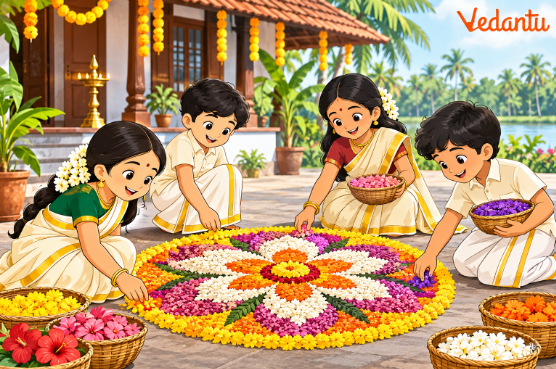
(क) मिट्टी के खिलौने
(ख) पूक्कलम (फूलों की रंगोली)
(ग) रेत के घर
(घ) कागज़ की नावें
उत्तर: (ख) पूक्कलम (फूलों की रंगोली)
प्रश्न 3. राजा महाबली से तीन पग भूमि किसने माँगी थी?
(क) इंद्रदेव ने
(ख) महाविष्णु ने वामन रूप में
(ग) नारद मुनि ने
(घ) ब्रह्मा जी ने
उत्तर: (ख) महाविष्णु ने वामन रूप में
प्रश्न 4. महाबली ने महाविष्णु से कौन-सा वरदान माँगा था?
(क) स्वर्ग का राज्य पाने का
(ख) अधिक धन-संपत्ति पाने का
(ग) वर्ष में एक बार अपनी प्रजा से मिलने धरती पर आने का
(घ) तीन पग भूमि वापस लेने का
उत्तर: (ग) वर्ष में एक बार अपनी प्रजा से मिलने धरती पर आने का
प्रश्न 5. तिरुवोणम के दिन आँगन में बनाई गई कलाकृतियाँ महाबली के चले जाने के बाद ही क्यों हटाई जाती हैं?
(क) क्योंकि मान्यता है कि महाबली तीसरे दिन पाताल लोक लौट जाते हैं।
(ख) क्योंकि फूल केवल तीन दिन ही खिलते हैं।
(ग) क्योंकि तीसरे दिन नौका-दौड़ होती है।
(घ) क्योंकि उस दिन नया त्योहार शुरू होता है।
उत्तर: (क) क्योंकि मान्यता है कि महाबली तीसरे दिन पाताल लोक लौट जाते हैं।
प्रश्न 6. ओणम के त्योहार पर आरन्मुला में किस प्रतियोगिता का आयोजन किया जाता है?
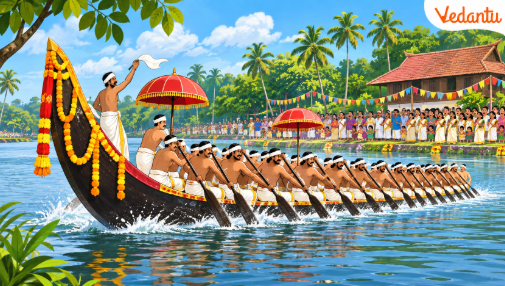
(क) घुड़दौड़
(ख) नौका-दौड़
(ग) कबड्डी
(घ) पतंगबाज़ी
उत्तर: (ख) नौका-दौड़
Class 4 Hindi Chapter 8 Onam Ke Rang Very Short Answer Questions
प्रश्न 7. पाठ के अनुसार, ओणम का त्योहार कब मनाया जाता है?
उत्तर: पाठ के अनुसार, ओणम का त्योहार श्रावण महीने के श्रावण नक्षत्र के दिन मनाया जाता है।
प्रश्न 8. 'त्रिविक्रम' किसे कहा गया है?
उत्तर: तीनों लोकों को जीतने वाले भगवान विष्णु को 'त्रिविक्रम' कहा गया है।
प्रश्न 9. ओणम के अवसर पर केरल में कौन-सा प्रसिद्ध नृत्य किया जाता है?
उत्तर: ओणम के अवसर पर केरल में प्रसिद्ध नृत्य 'कथकली' का आयोजन होता है।
प्रश्न 10. 'हल्की-हल्की' और 'ऊँचे-ऊँचे' शब्दों का प्रयोग करके एक-एक वाक्य बनाइए।
उत्तर:
हल्की-हल्की: सुबह हल्की-हल्की हवा चल रही थी।
ऊँचे-ऊँचे: मंदिर के पास ऊँचे-ऊँचे पेड़ हैं।
Class 4 Hindi Chapter 8 Onam Ke Rang Short Answer Questions
प्रश्न 11. ओणम के त्योहार की शुरुआत में बच्चे क्या-क्या करते हैं?
उत्तर: ओणम के त्योहार पर बच्चे सुबह-सुबह नहा-धोकर फूल चुनने निकलते हैं। वे बाग-बगीचों से लाल, पीले और सफेद फूल लाते हैं। सूर्योदय होते ही वे अपने घरों के आँगन को गोबर से लीपते हैं। इसके बाद आँगन में रंग-बिरंगे फूलों से पूक्कलम बनाते हैं। इसी के साथ ओणम का त्योहार शुरू होता है।
प्रश्न 12. ओणम के समय केरल की प्रकृति कैसी दिखाई देती है?
उत्तर: ओणम के समय वर्षा के बादल छँट जाते हैं और केरल का प्राकृतिक सौंदर्य निखर उठता है। समुद्र की लहरें और तट की रेत चमकने लगती हैं। हल्की हवा में नारियल के पेड़ों के पत्ते लहलहाते हैं। पक्षी चहचहाते हैं और रंग-बिरंगी तितलियाँ फूलों पर मँडराती हैं। ऐसा लगता है मानो प्रकृति भी ओणम के स्वागत की तैयारी कर रही हो।
प्रश्न 13. ओणम के भोज में कौन-कौन से खाद्य पदार्थ होते हैं?
उत्तर: ओणम के भोज में चावल, तरह-तरह की सब्जियाँ, खीर, पापड़ और कई प्रकार के स्वादिष्ट फल होते हैं। इस अवसर पर विशेष प्रीतिभोज आयोजित किए जाते हैं। भोज के बाद लोग खेल-कूद, संगीत और नृत्य में भाग लेते हैं।
प्रश्न 14. महाबली के शासन के बारे में लोकगीत में क्या बताया गया है?
उत्तर: लोकगीत के अनुसार, महाबली के राज्य में सभी लोग एक समान थे। वहाँ दुख और दरिद्रता नहीं थी। कोई चोरी या धोखा नहीं करता था। लोग झूठ नहीं बोलते थे और नाप-तौल में बेईमानी नहीं करते थे। हर जगह प्रेम और प्रसन्नता थी।
Class 4 Hindi Chapter 8 Onam Ke Rang Long Answer Questions
प्रश्न 15. ओणम का त्योहार राजा महाबली और वामन की किस पौराणिक कथा पर आधारित है?
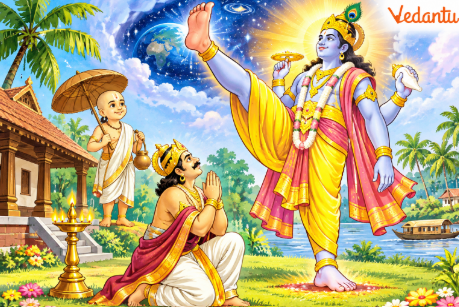
उत्तर: ओणम का त्योहार राजा महाबली और भगवान विष्णु के वामन रूप की पौराणिक कथा पर आधारित है।
राजा महाबली का शासन: प्राचीन काल में महाबली नाम के एक राजा केरल पर शासन करते थे। उनके राज्य में लोग बहुत प्रसन्न थे।
वामन का आगमन: एक दिन महाविष्णु वामन का रूप धारण करके महाबली के पास आए। उन्होंने राजा से तीन पग भूमि माँगी।
महाबली का वचन: महाबली ने तुरंत तीन पग भूमि देने का वचन दे दिया।
त्रिविक्रम का रूप: महाविष्णु ने अपना वामन रूप छोड़कर विशाल त्रिविक्रम रूप धारण किया। उन्होंने दो पगों में स्वर्ग, पृथ्वी और पाताल को नाप लिया।
तीसरा पग: तीसरा पग रखने के लिए जगह न बचने पर महाबली ने अपना सिर झुका दिया।
महाबली का वरदान: महाविष्णु ने प्रसन्न होकर महाबली को पाताल लोक का राज्य दिया। महाबली ने वर्ष में एक बार अपनी प्रजा से मिलने धरती पर आने की अनुमति माँगी। महाविष्णु ने उनकी बात मान ली।
इसी मान्यता के अनुसार, केरल के लोग हर वर्ष राजा महाबली के स्वागत में ओणम का त्योहार मनाते हैं।
प्रश्न 16. ओणम का त्योहार केरल में किस प्रकार मनाया जाता है?
उत्तर: ओणम केरल का प्रसिद्ध त्योहार है। इसे सभी लोग मिल-जुलकर बड़े उत्साह से मनाते हैं।
पूक्कलम बनाना: बच्चे रंग-बिरंगे फूल चुनकर घरों के आँगन में पूक्कलम बनाते हैं।
नए कपड़े पहनना: तिरुवोणम के दिन घर के सभी सदस्य नए कपड़े पहनते हैं।
महाबली का स्वागत: लोग भगवान विष्णु और महाबली की मूर्तियाँ सजाते हैं। मूर्तियों के सामने दीपदान जलाकर रखते हैं और उन्हें चावल के आटे तथा सफेद द्रोण-पुष्पों से सजाते हैं।
विशेष भोजन: ओणम के भोज में चावल, सब्जियाँ, खीर, पापड़ और फल परोसे जाते हैं।
खेल-कूद और नृत्य: लोग खेल-कूद, संगीत और नृत्य में भाग लेते हैं। कथकली, तुम्बितुल्लल और कैकोट्टिकलि जैसे नृत्य भी किए जाते हैं।
नौका-दौड़: आरन्मुला में नावों की प्रतियोगिता होती है। इसे देखने के लिए हजारों लोग एकत्र होते हैं।
इस प्रकार ओणम का त्योहार लोगों को साथ मिलकर खुशियाँ मनाने का अवसर देता है।
प्रश्न 17. ओणम का त्योहार हमें क्या सीख देता है? पाठ के आधार पर लिखिए।
उत्तर: ओणम का त्योहार हमें प्रेम, समानता और मिल-जुलकर रहने की सीख देता है।
सबको समान समझना: महाबली के शासन में सभी लोग एक समान थे। हमें भी सबके साथ समान व्यवहार करना चाहिए।
सच्चाई और ईमानदारी: महाबली के राज्य में झूठ और धोखा नहीं था। हमें भी सच बोलना चाहिए और ईमानदार रहना चाहिए।
वचन निभाना: महाबली ने वामन को दिया अपना वचन निभाया। हमें भी अपने वचन पूरे करने चाहिए।
मिल-जुलकर रहना: ओणम के समय सभी लोग साथ मिलकर त्योहार की तैयारियाँ करते हैं और खुशियाँ मनाते हैं।
दूसरों से प्रेम करना: महाबली अपनी प्रजा से बहुत प्रेम करते थे। हमें भी सबके साथ प्रेम और आदर से रहना चाहिए।
सीख: ओणम हमें सिखाता है कि सभी के साथ प्रेम से रहना चाहिए। हमें सच्चाई और ईमानदारी का साथ देना चाहिए तथा मिल-जुलकर खुशियाँ बाँटनी चाहिए।
Important Topics to Prepare for Class 4 Hindi Chapter 8 Onam Ke Rang
The story of King Mahabali, the traditions related to Onam, and how people are celebrating the festival. After reading about it, students can use Class 4 Hindi Chapter 8 important questions with answers to test their understanding.
Students should also practise writing a few sentences about festivals celebrated in their families. The textbook activities help them recognise Indian traditions, use descriptive Hindi words and learn to work with classmates.
Download Class 4 Hindi Chapter 8 Important Questions PDF from Vedantu
Vedantu's Class 4 Hindi Chapter 8 important questions PDF covers Onam Ke Rang from the NCERT Veena textbook. The PDF contains 17 solved questions about the Onam festival, King Mahabali, Lord Vishnu's Vamana form, traditional celebrations and Hindi language exercises.
Students looking for a Class 4 Hindi Chapter 8 important questions PDF download can use the questions to revise the chapter and practise writing answers in simple Hindi.
The PDF includes MCQs, very short answers, short answers and long answers.
Students can use the PDF in the following ways:
Chapter Revision: Recall the main events in the Mahabali and Vamana story.
MCQ Practice: Revise facts about Pookkalam, Thiruvonam and the Aranmula boat race.
Story Understanding: Explain why Mahabali asks to return to Kerala every year.
Festival Traditions: Revise the clothes, food, dances and activities mentioned in the chapter.
Vocabulary Practice: Learn important words about nature, festivals and traditional games.
Hindi Grammar: Practise repeated descriptive words and sentence formation.
Written Answers: Describe Onam celebrations and Kerala's natural beauty.
Long Answer Practice: Write about the Mahabali and Vamana story in the correct order.
Self-Assessment: Solve the questions before checking the answers.
Offline Revision: Save the PDF on a device for regular practice.
This Class 4 Hindi Chapter 7 important questions and answers PDF brings together MCQs, short answers, long answers and grammar practice for the 2026–27 session. For more textbook practice, try the Class 4 Hindi Chapter 7 question answer exercises as well.
Additional Study Material for Class 4 Hindi (Veena) Chapter 8 Onam Ke Rang
Students can use these resources alongside the Class 4 Hindi Chapter 8 important questions and answers to understand the lesson and complete its textbook exercises.
Class 4 Hindi Veena Chapter-Wise Important Questions and Answers
The NCERT Class 4 Hindi Veena textbook contains 13 numbered chapters. Students can practise important questions from the remaining chapters after completing Onam Ke Rang.
Important Study Materials for Class 4 Hindi
FAQs on Important Questions and Answers Class 4 Hindi Chapter 8 Onam Ke Rang (Veena) | 2026–27
1. How can students identify describing words in Onam Ke Rang?
The textbook asks students to find words that describe the colour, size or other qualities of things. For example, 'सफेद' describes the colour of the flowers, while 'नन्हे-नन्हे' tells us that they are very small. Students can find more describing words in the lesson and write sentences using them.
2. What are Talappanthukali and Kilithattukali in Class 4 Hindi Chapter 8?
Talappanthukali and Kilithattukali are traditional games mentioned in the lesson. Talappanthukali involves a ball made from coconut leaves, which players throw and catch. Kilithattukali is played in an area divided into sections, with one player taking a special role. The textbook asks students to match these games with their descriptions.
3. What should students learn about Kerala from the 'Yeh Bhi Janiye' activity?
The Yeh Bhi Janiye activity asks students to collect information about Kerala with help from teachers and books. They should find out about the state's language, capital, clothing, main crop, dances and festivals. This activity helps children learn more about Kerala beyond the Onam celebrations.
4. How can students complete the 'Madhur Smritiyan' activity in Onam Ke Rang?
The Madhur Smritiyan activity asks students to speak with older family members about happy memories. Students can ask which past occasions their family members remember fondly and write a few sentences about them. They can also describe how they thank family members for the things they do.
5. What does the textbook teach about judging people by their appearance?
The last page of Onam Ke Rang explains that people should not judge someone's abilities by their height or appearance. It asks students to learn about people who have achieved success despite physical disabilities. The activity teaches children to respect others and recognise their abilities.
6. How can Vedantu's Class 4 Hindi Chapter 8 important questions with answers help students revise Onam Ke Rang?
Vedantu's Class 4 Hindi Chapter 8 important questions with answers help students practise MCQs and written answers about the Mahabali story, Onam traditions and Kerala's culture. The solved questions show how to select important points and write clear Hindi answers. Students can also use the Class 4 Hindi Chapter 8 important questions PDF alongside Vedantu's NCERT Solutions to practise and check their answers.