Class 12 History Chapter 12 Framing the Constitution Important Questions with Answers PDF
This set contains 24 solved questions: six MCQs, five very short answers, seven short answers and six long answers. The questions explore the arguments of Jawaharlal Nehru, B.R. Ambedkar, Somnath Lahiri, B. Pocker Bahadur, N.G. Ranga, Jaipal Singh, Dakshayani Velayudhan, Hansa Mehta, K. Santhanam and other Assembly members. It also includes questions on the historical circumstances that influenced the drafting process.
Class 12 History Chapter 12 Important Questions MCQ Practice
Q1. Who introduced the Objectives Resolution in the Constituent Assembly on 13 December 1946?
(a) B.R. Ambedkar
(b) Jawaharlal Nehru
(c) Rajendra Prasad
(d) Sardar Vallabhbhai Patel
Answer: (b) Jawaharlal Nehru.
Explanation: Nehru introduced the Objectives Resolution, which outlined the ideals that would guide India's future Constitution, including sovereignty, justice, equality, and citizens' rights.
Q2. Who chaired the Drafting Committee of the Indian Constitution?
(a) K.M. Munshi
(b) B.N. Rau
(c) B.R. Ambedkar
(d) Alladi Krishnaswamy Aiyar
Answer: (c) B.R. Ambedkar.
Explanation: B.R. Ambedkar chaired the Drafting Committee and guided the Draft Constitution through detailed discussions in the Constituent Assembly. Other members and constitutional advisers also contributed significantly.
Q3. Which member argued in August 1947 that separate electorates were necessary to protect Muslim political representation?
(a) B. Pocker Bahadur
(b) N.G. Ranga
(c) K. Santhanam
(d) Hansa Mehta
Answer: (a) B. Pocker Bahadur.
Explanation: B. Pocker Bahadur believed minority communities should be able to choose representatives who understood their specific concerns. Most nationalist members opposed separate electorates because they feared further communal divisions.
Q4. Who argued that the real minorities were India's poor and oppressed masses rather than only religious communities?
(a) R.V. Dhulekar
(b) N.G. Ranga
(c) Gopalaswami Ayyangar
(d) J.B. Kripalani
Answer: (b) N.G. Ranga.
Explanation: Ranga believed poverty and social inequality prevented millions from exercising their rights effectively. He argued that constitutional promises needed economic and social support.
Q5. Which Constituent Assembly member strongly defended provincial powers and warned against an overburdened Centre?
(a) K. Santhanam
(b) Balakrishna Sharma
(c) Jawaharlal Nehru
(d) H.C. Mookerjee
Answer: (a) K. Santhanam.
Explanation: Santhanam argued that states needed sufficient powers and financial resources to function effectively. He believed excessive centralisation could weaken both the states and the Union.
Q6. Who expressed concern that aggressively promoting Hindi could create fear among non-Hindi-speaking communities?
(a) Hansa Mehta
(b) G. Durgabai
(c) Dakshayani Velayudhan
(d) Sarojini Naidu
Answer: (b) G. Durgabai.
Explanation: G. Durgabai warned that imposing one language could damage relations between regions. She supported a more inclusive approach that respected India's linguistic diversity.
Class 12 History Chapter 12 Very Short Answer Questions
Q7. When did the Constituent Assembly first meet, and how long did it take to frame the Constitution?
Answer: The Constituent Assembly first met on 9 December 1946. The Constitution was adopted on 26 November 1949 after nearly three years of discussion. The Assembly held eleven sessions, with sittings spread over 165 days.
Q8. Who was B.N. Rau, and what contribution did he make to constitution-making?
Answer: B.N. Rau was the Constitutional Adviser to the Government of India. He studied constitutional systems in other countries and prepared background material that assisted the Assembly and its drafting process.
Q9. What were separate electorates?
Answer: Separate electorates were an electoral arrangement in which members of a particular religious community voted separately to elect representatives of that community. The demand was debated and rejected during the framing of the Constitution of independent India.
Q10. What did N.G. Ranga mean when he said poor people needed a ladder?
Answer: Ranga meant that legal rights alone were not enough for people facing poverty and discrimination. They needed practical support, opportunities and protection to exercise those rights.
Q11. What is universal adult franchise?
Answer: Universal adult franchise means that every eligible adult citizen has the right to vote without discrimination based on property, wealth, education, caste, religion or gender.
Class 12 History Chapter 12 Short Answer Questions
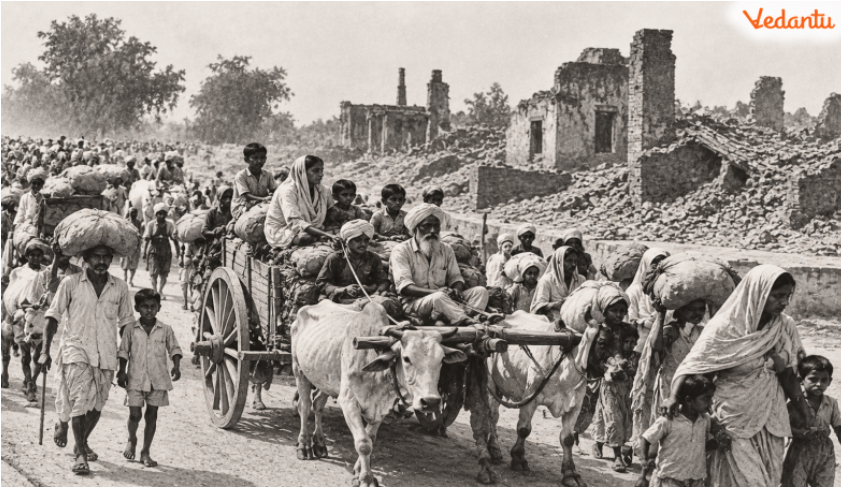
Q12. Why was the making of the Indian Constitution described as taking place during a tumultuous time?
Answer: The Constituent Assembly worked during a period marked by freedom, political uncertainty and severe communal violence.
1. Independence: India became independent on 15 August 1947 after a long anti-colonial struggle.
2. Partition: The division of British India created India and Pakistan, accompanied by widespread violence and displacement.
3. Refugee Crisis: Millions of people crossed the new borders, leaving behind their homes and livelihoods.
4. Communal Tensions: Relations between religious communities had been damaged by riots and political disputes.
5. Princely States: The future relationship between the princely states and independent India remained a major concern.
6. Different Political Views: Assembly members held different opinions about landownership, economic development, religion and democratic rights.
7. Need for a Shared Future: The Constitution had to protect individual freedoms while helping build national unity.
Conclusion: The Constitution was drafted not simply to establish a new government but also to address the difficulties facing a newly independent and divided country.
Q13. Why was the Constituent Assembly considered politically diverse even though Congress members formed a large majority?
Answer: The Constituent Assembly contained members with different political, social and economic beliefs.
1. Indirect Election: Members were chosen by provincial legislatures elected in 1945–46, not directly by all adult citizens.
2. Congress Majority: Congress dominated the Assembly. Approximately 82% of its members belonged to the Congress.
3. Differences Within Congress: Members did not agree on every issue. Some supported socialism, while others defended existing property relations.
4. Different Religious Views: Some members strongly supported secular politics, while others maintained closer relationships with communal organisations.
5. Role of Independent Voices: Members such as Somnath Lahiri criticised the influence of British colonial authority.
6. Debates on Representation: Delegates differed over separate electorates, safeguards for minorities and protections for disadvantaged communities.
7. Public Participation: Newspapers published debates, while members of the public sent their opinions and demands to the Assembly.
Conclusion: Although one party dominated numerically, the Assembly's debates contained competing views about how the new country should be governed.
Q14. What different responsibilities did Nehru, Patel, Rajendra Prasad, Ambedkar and the constitutional advisers perform?
Answer: Constitution-making depended on several important figures rather than one individual.
Why their roles mattered: The Constitution required political agreement, legal drafting, administrative knowledge and careful examination of conflicting opinions.
Conclusion: The Constitution emerged through collective debate and drafting, not from any single leader's decisions.
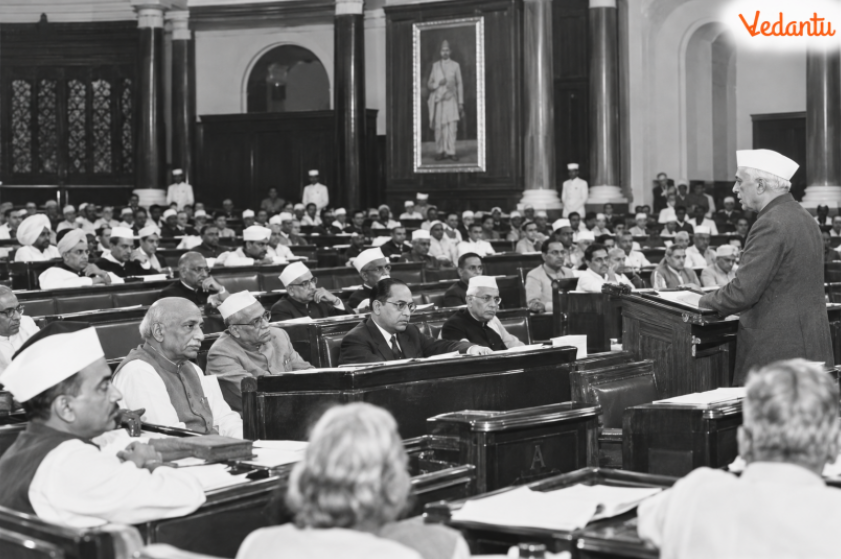
Q15. Why did Somnath Lahiri question the Constituent Assembly's independence during its early sessions?
Answer: Somnath Lahiri, a Communist member, believed that the Assembly was still working under the influence of British rule.
1. British Authority Continued: When the Assembly began meeting in December 1946, India had not yet become independent.
2. Limited Interim Government: The interim administration operated while the Viceroy and British authorities retained significant powers.
3. British-Designed Process: Lahiri criticised the fact that the Assembly had been established through arrangements made under colonial rule.
4. Demand for Genuine Freedom: He argued that constitution-making should reflect the independent will of Indians rather than limitations imposed by Britain.
5. Support for Popular Sovereignty: Lahiri believed that people should be the ultimate source of political authority.
6. Difference from Nehru: While Nehru emphasised the ideals of the Objectives Resolution, Lahiri questioned whether those ideals could be realised while colonial power continued.
Conclusion: Lahiri's criticism reminds historians that the Assembly began its work before independence, when the relationship between British authority and Indian political aspirations was still contested.
Q16. Why did B. Pocker Bahadur demand separate electorates, and why did leaders such as Patel oppose them?
Answer: The debate over separate electorates reflected different views on minority protection and national unity after Partition.
B. Pocker Bahadur's Argument
1. Bahadur believed that religious minorities had distinct political concerns.
2. He argued that representatives elected by their own communities would understand these concerns better.
3. He feared that without separate electorates, minority voices might not be adequately heard.
4. He presented separate electorates as a method of ensuring meaningful political representation.
Arguments Against Separate Electorates
1. Sardar Patel and several others believed the system had encouraged division during colonial rule.
2. They associated separate electorates with the political divisions that had contributed to Partition.
3. They feared that continuing the system could strengthen separate political identities at the expense of a shared national identity.
4. Members such as R.V. Dhulekar argued that minority protections should not reproduce earlier colonial political arrangements.
Comparison
Conclusion: The Assembly rejected separate electorates but continued discussing other constitutional protections for disadvantaged and minority groups.
Q17. How did N.G. Ranga and Jaipal Singh differ in their arguments for protecting disadvantaged communities?
Answer: Both speakers believed the Constitution should protect vulnerable people, but their concerns differed.
N.G. Ranga's Position
1. Ranga argued that the poor and economically oppressed were the real minorities in India.
2. He believed that formal legal rights were not enough for people who lacked land, education or resources.
3. He wanted the government to create conditions in which poor people could exercise their rights.
4. His argument emphasised economic inequality and the need for practical support.
Jaipal Singh's Position
1. Jaipal Singh spoke on behalf of Adivasi communities.
2. He described how tribal people had experienced exploitation, displacement and the loss of access to forests and land.
3. He demanded equal opportunities and protection against continued neglect.
4. He supported reservation of legislative seats for tribal communities so that they could represent themselves.
Conclusion: Their speeches showed that social justice required addressing different forms of inequality.
Q18. Why did Dakshayani Velayudhan and Hansa Mehta argue that constitutional rights should produce real social equality?
Answer: Both women challenged forms of inequality that could survive even after political independence.
Dakshayani Velayudhan's Views
1. She demanded the immediate removal of the social disabilities imposed by caste.
2. She argued that the oppression experienced by historically disadvantaged castes could not be solved only through political promises.
3. She emphasised moral change and the removal of discriminatory social practices.
4. Her arguments drew attention to the continuing importance of caste in everyday life.
Hansa Mehta's Views
1. Hansa Mehta demanded social, economic and political justice for women.
2. She argued that women were not asking for special privileges.
3. She wanted equality to form the basis of respect and cooperation between women and men.
4. She emphasised equal citizenship instead of treating women as a permanently separate political category.
Conclusion: Both speakers believed that the Constitution should help change unequal social relationships, not merely create new political institutions.
Class 12 History Chapter 12 Long Answer Questions
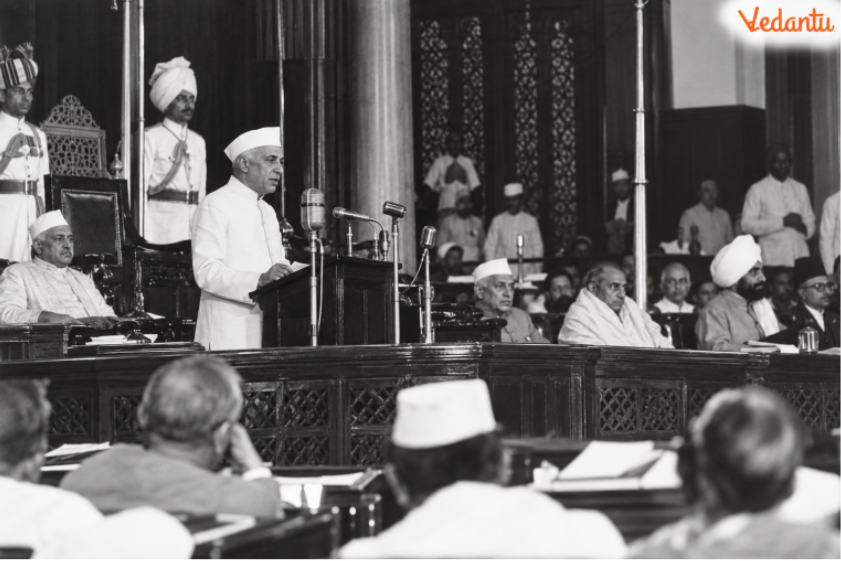
Q19. What was the Objectives Resolution introduced by Jawaharlal Nehru? Explain the vision of an independent India it expressed.
Answer: Jawaharlal Nehru introduced the Objectives Resolution in the Constituent Assembly on 13 December 1946. It outlined guiding principles for India's future Constitution and expressed the national movement's political aspirations.
1. Independent and Sovereign Republic
The Resolution envisioned India as an independent, sovereign republic.
The country's political authority would no longer be derived from British rule.
2. Sovereignty of the People
Nehru maintained that the government should ultimately derive its authority from the people.
Political power was to be exercised on their behalf.
3. Justice
The Resolution called for social, economic and political justice.
This reflected an understanding that freedom should improve the lives of ordinary Indians.
4. Equality
It promised equality of status and opportunity.
Citizens should not be disadvantaged because of their social background.
5. Fundamental Freedoms
The proposed constitutional order would protect civil liberties, including freedom of expression, belief and association, subject to law and public morality.
6. Protection of Minorities
Nehru recognised the need to safeguard minorities and communities that had experienced oppression.
7. Protection of Disadvantaged Groups
The Resolution acknowledged the importance of protecting backward and tribal areas and disadvantaged communities.
8. Territorial Integrity
India's territorial unity and political independence would be protected.
9. International Responsibility
The Resolution expressed a desire for India to contribute to international peace and the welfare of humanity.
10. Learning from Other Democracies
Nehru did not want the Constitution simply to copy Western political systems.
He argued that democratic institutions needed to be adapted to Indian conditions.
11. Social and Economic Change
The constitutional vision sought to combine political freedom with social and economic improvement.
12. Debate Within the Assembly
Not every member accepted the Resolution without criticism.
Somnath Lahiri, for example, questioned the Assembly's independence while British authority continued.
Historical Significance
The Objectives Resolution influenced the ideals later expressed in the Preamble and other constitutional provisions.
Conclusion: The Objectives Resolution established a vision of India based on popular sovereignty, justice, equality, freedom and national unity. It provided a common direction for the debates that followed.
Q20. How did the Constituent Assembly debate the protection of religious minorities, Dalits, Adivasis and women? Explain the different viewpoints expressed by its members.
Answer: One of the Assembly's greatest challenges was deciding how a democratic Constitution could protect people who had experienced political exclusion or social discrimination.
Members disagreed over whether equality required common rights, separate political representation or additional safeguards.
Part A: Religious Minorities
1. B. Pocker Bahadur's Demand
Bahadur argued that religious minorities should have separate electorates.
He believed that representatives chosen by their own communities could better protect minority interests.
2. Opposition from Nationalists
Many members opposed separate electorates because they associated them with colonial policies and the divisions surrounding Partition.
3. Patel's Argument
Sardar Patel believed that separate electorates could continue dividing people into competing political communities.
He preferred common citizenship and shared political institutions.
Part B: Economically Oppressed People
4. N.G. Ranga's View
Ranga argued that the poor were the real minorities because economic hardship prevented them from enjoying ordinary democratic rights.
5. Need for Practical Support
He believed that legal equality was insufficient unless people had the resources and opportunities to exercise their freedoms.
Part C: Adivasi Communities
6. Jaipal Singh's Argument
Jaipal Singh described the historical exploitation and dispossession of tribal people.
7. Reservation in Legislatures
He supported reserved legislative seats to ensure that Adivasi voices were heard in representative institutions.
8. Equal Opportunities
He wanted constitutional protections to help tribal communities overcome exclusion and disadvantage.
Part D: Dalits and Historically Oppressed Castes
9. Opposition to Untouchability
Assembly members debated how to end the social disabilities imposed on people treated as untouchable.
10. Reservation and Representation
They supported measures to improve the political and employment opportunities of historically disadvantaged castes.
11. Dakshayani Velayudhan's Argument
She emphasised the immediate removal of caste-based social disabilities.
She also believed that changing social attitudes was necessary for genuine equality.
Part E: Women's Rights
12. Hansa Mehta's Argument
Hansa Mehta demanded equality and justice for women, not special privileges.
13. Equal Citizenship
Her position emphasised equal treatment and mutual respect between women and men.
14. Wider Meaning of Equality
The Assembly's debates showed that equal rights could require both constitutional guarantees and changes in society.
Comparison of Important Voices
Conclusion: The debates demonstrated that democracy had to address many forms of disadvantage. The Constitution's framers attempted to combine common citizenship with measures designed to protect vulnerable communities.
Q21. Why did the Constituent Assembly debate the division of powers between the Centre and the states? Compare the arguments of K. Santhanam, Nehru and Ambedkar.
Answer: The Constituent Assembly had to decide how much authority should belong to the Union government and how much should remain with the states.
This question became especially important after Partition, when concerns about national unity and political stability were widespread.
1. The Need for a Federal Structure
India had regions with distinct languages, economies, and political traditions.
A federal arrangement was expected to accommodate these differences while maintaining national unity.
2. Three Lists of Subjects
The Draft Constitution divided government responsibilities into three lists.
3. Powers of the Centre
The proposed Constitution gave the Union significant authority over important subjects.
It also placed several matters on the Concurrent List.
4. K. Santhanam's Concern
Santhanam, a representative from Madras, feared that the Centre would become overloaded with responsibilities.
He argued that excessive centralisation could make administration inefficient.
5. Financial Independence of States
Santhanam believed states needed adequate revenue to provide education, sanitation, roads, and other public services.
Without financial resources, they would become dependent on the Central Government.
6. Strengthening the Union Through Strong States
Santhanam did not argue that the Centre should be powerless.
He believed that an effective Union required capable state governments.
7. Nehru's Position
Nehru supported a strong Centre, particularly after Partition.
He believed that a weak central authority could struggle to maintain peace, coordinate national development and represent India internationally.
8. Ambedkar's Argument
Ambedkar also supported a strong and united Centre.
He considered it necessary for national stability.
9. Concern About Communal Violence
The riots accompanying Partition strengthened the argument for a government capable of responding to major crises.
10. Economic Planning
Supporters of a strong Centre believed it could coordinate resources and development across regions.
11. Provincial Opposition
Several provincial members feared the states would lose too much authority.
They wanted a greater share of legislative and financial powers.
12. Constitutional Outcome
The Constitution established a federal arrangement, assigning substantial powers to the Union.
Comparison of Viewpoints
Conclusion: The division of powers emerged from competing concerns about regional autonomy and national stability. The final framework reflected the strong influence of those who wanted an effective Union government.
Q22. Why did the language question create intense debate in the Constituent Assembly? Explain the views of Gandhi, R.V. Dhulekar, G. Durgabai and other members.
Answer: India's linguistic diversity made choosing a common language one of the most sensitive issues in the Constituent Assembly.
Members wanted a language that could support national communication without reducing the importance of regional languages.
1. Gandhi's Support for Hindustani
Gandhi believed that Hindustani, which combined elements of Hindi and Urdu, could serve as a common language.
He valued its use among ordinary people and its mixed cultural origins.
2. Inclusive Language
Gandhi supported a language that could incorporate words from regional and foreign languages.
He did not want it to become exclusively Sanskritised Hindi or Persianised Urdu.
3. Language and Communal Identity
During the late colonial period, Hindi and Urdu increasingly became associated with separate political and religious identities.
This made language debates more contentious.
4. R.V. Dhulekar's Argument
Dhulekar strongly supported using Hindi in the Assembly.
He argued that members involved in making India's Constitution should understand Hindustani.
5. Reaction to Dhulekar
His aggressive position caused objections from other members.
The Assembly President intervened during the debate.
6. G. Durgabai's Concern
Durgabai warned that non-Hindi-speaking regions feared linguistic domination.
She argued that an overly aggressive campaign for Hindi could weaken national unity.
7. Protection of Regional Languages
Members from southern India wanted recognition of the cultural importance of regional languages.
8. Shankarrao Deo's Position
Deo supported Hindustani but argued that the concerns of non-Hindi-speaking communities should be taken seriously.
9. T.A. Ramalingam Chettiar's Warning
Chettiar emphasised mutual adjustment.
He believed that forcing a language on unwilling communities would produce lasting resentment.
10. Need for Compromise
Many members recognised that a democratic language policy could not depend on the wishes of only one region.
11. Constitutional Arrangement
The constitutional settlement adopted Hindi in the Devanagari script as the official language of the Union, while allowing continued use of English for an initial period and protecting linguistic diversity.
12. Historical Significance
The debate showed how language can connect to questions of identity, culture, and political equality.
Comparison of Main Arguments
Conclusion: The language debate revealed the difficulty of combining national unity with cultural diversity. Members recognised that agreement required accommodation rather than the domination of one linguistic community.
Q23. Why was granting voting rights to every adult Indian a significant decision? Explain how universal adult franchise challenged earlier political inequalities.
Answer: Universal adult franchise was one of the most important democratic decisions made while framing India's Constitution.
It established the principle that eligible adults should have an equal right to participate in elections.
1. Limited Voting Under Colonial Rule
The British had introduced elected legislative bodies through constitutional reforms.
However, voting remained restricted by qualifications relating to property, education and other conditions.
2. Government of India Act of 1935
Under the 1935 Act, the electorate remained limited.
Under colonial rule, only around 10–15% of adults could vote
3. Equal Political Rights
The new Constitution moved towards voting rights for every eligible adult, regardless of wealth or social status.
4. Rejection of Property Qualifications
Land or property ownership would no longer determine whether a person could participate in elections.
5. Inclusion of Women
Women would receive voting rights on the same basis as men.
This challenged older ideas that political participation was mainly a male responsibility.
6. Inclusion of Poor Citizens
Workers, peasants and people without formal education would also have the right to vote.
7. Challenge to Social Hierarchies
India had long experienced inequalities based on caste, class and gender.
Universal adult franchise recognised citizens as political equals.
8. Comparison with Other Democracies
In countries such as Britain and the United States, voting rights expanded gradually through long political struggles.
Independent India adopted broad adult suffrage from the beginning of its democratic system.
9. Trust in Ordinary Citizens
The decision reflected confidence that ordinary Indians could participate responsibly in choosing representatives.
10. Relationship with Popular Sovereignty
Universal adult franchise gave practical meaning to the idea that political authority should come from the people.
11. Democratic Representation
It ensured that elected governments had to consider the interests of a wide range of social groups.
12. Historical Importance
The decision helped establish India as a representative democracy despite widespread poverty, social inequality and low literacy.
Conclusion: Universal adult franchise was a major break from colonial restrictions. It placed the principle of equal citizenship at the centre of independent India's political system.
Q24. How did the Constituent Assembly attempt to establish a democratic and secular republic? Explain the historical importance of its debates and final decisions.
Answer: The Constituent Assembly worked to create a political system that could hold together a diverse country while protecting freedom, equality and justice.
Its decisions reflected colonial rule, the national movement, and the violence of Partition.
1. Popular Sovereignty
The Constitution established that political authority came from the people, not a monarch or colonial government.
2. Representative Democracy
The new republic would be governed through elected representatives.
3. Universal Adult Franchise
Every eligible adult citizen was given the right to vote without discrimination based on property, education or gender.
4. Fundamental Rights
The Constitution protected essential freedoms and recognised the equality of citizens before the law.
5. Freedom of Religion
Citizens were given constitutional protection for religious freedom.
6. Protection of Cultural Rights
Religious and linguistic minorities received protections relating to cultural and educational interests.
7. Opposition to Untouchability
The Constitution prohibited untouchability.
This was an important step towards addressing caste-based discrimination.
8. Recognition of Social Disadvantages
Assembly members debated how historically disadvantaged communities could receive meaningful protection and political representation.
9. Rejection of Separate Electorates
The Assembly opposed dividing political representation through separate electorates based on religious communities.
10. Secular Political Framework
The constitutional arrangement required the state to treat religions without discrimination while allowing a role for social reform.
11. Strong Union Government
A strong Centre was considered important for national unity, coordination and stability.
12. Regional Powers
States retained specified responsibilities within the federal arrangement.
13. Linguistic Accommodation
The language debate highlighted the need to protect cultural differences while establishing methods of communication for the Union.
14. Role of Public Debate
Assembly discussions were reported in newspapers, and members of the public submitted opinions.
This brought wider social concerns into the constitution-making process.
15. Collective Decision-Making
Important disagreements were settled through arguments, committee work and compromises.
16. Rights and Social Change
Members such as N.G. Ranga, Jaipal Singh, Dakshayani Velayudhan and Hansa Mehta emphasised that democratic rights should improve people's everyday lives.
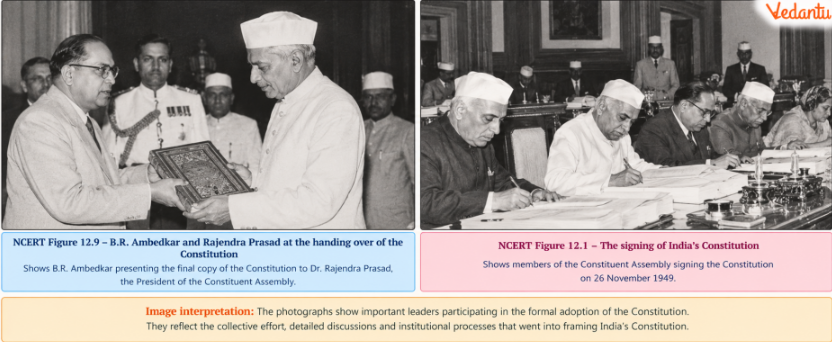
17. Adoption of the Constitution
The Assembly adopted the Constitution on 26 November 1949.
It came into effect on 26 January 1950.
18. Historical Significance
The Constitution created a political framework through which people divided by religion, language and social position could participate in a shared democratic system.
Conclusion: The Constitution was the outcome of sustained discussion over the meaning of freedom, equality, citizenship and national unity. It sought to turn the aspirations of the independence movement into institutions and rights for the new republic.
Why Practise Class 12 History Chapter 12 Important Questions with Vedantu?
Practising Class 12 History Chapter 12 Important Questions helps students understand why India's Constitution was written in a particular way and how different members influenced its provisions. These solved chapter-based questions focus on the speeches, disagreements and decisions that shaped the republic.
How to Prepare Class 12 History Chapter 12 Important Questions with Vedantu?
Revise important dates: Learn 9 December 1946, 13 December 1946, 15 August 1947, 26 November 1949 and 26 January 1950.
Connect speakers with arguments: Remember what Nehru, Ambedkar, Patel, Ranga, Jaipal Singh and Santhanam said.
Practise comparisons: Differentiate the arguments for and against separate electorates, greater state powers and Hindi as the common language.
Use source extracts: Identify the speaker, the main argument and the historical circumstances behind each statement.
Analyse historical images: Relate photographs of Partition, Assembly meetings and constitutional ceremonies to the chapter's themes.
Important Study Material Links for Class 12 History Chapter 12
Chapter-Wise Important Questions for Class 12 History
Important Study Materials for Class 12 History
FAQs on Important Questions and Answers for Class 12 History Chapter 12 – Framing the Constitution (Themes in Indian History-III) | 2026-27
1. Why did the Constituent Assembly begin its work before India became independent?
The Assembly first met in December 1946 under the constitutional arrangements made during the final phase of British rule. Its members began discussing the future political system before independence was achieved in August 1947.
2. Why did Partition influence the debates on India's Constitution?
Partition caused communal violence, displacement and uncertainty. Assembly members had to consider how minority rights, national unity and public security could be protected in the new republic.
3. How were the members of the Constituent Assembly chosen?
Members were mainly elected indirectly by provincial legislatures following the elections of 1945–46. The Assembly was not elected through universal adult franchise, which became an important feature of the Constitution it produced.
4. Why is Jawaharlal Nehru's Objectives Resolution considered important?
The Resolution outlined ideals such as sovereignty, justice, equality, freedom and the protection of disadvantaged groups. It helped establish the principles that guided later constitutional discussions.
5. Why did Somnath Lahiri criticise the Constituent Assembly?
Lahiri believed that the Assembly was working within a system shaped by British authority. He questioned whether a Constitution could fully express the people's will while India remained under colonial rule.
6. Why did B. Pocker Bahadur support separate electorates for Muslims?
Bahadur believed that minorities needed representatives chosen by their own communities to protect their particular concerns. He feared that their interests might not receive adequate attention in a common electoral system.
7. Why did Sardar Vallabhbhai Patel oppose separate electorates?
Patel feared that separate electorates would deepen communal divisions. In the aftermath of Partition, he believed that shared citizenship and common political institutions were essential for national unity.
8. What did N.G. Ranga mean when he called the masses the real minorities?
Ranga argued that poor and oppressed people were often unable to exercise their rights because they lacked resources and opportunities. He believed democracy required practical support for disadvantaged communities.
9. Why did Jaipal Singh demand reservation for tribal communities?
Jaipal Singh argued that Adivasis had experienced dispossession, exclusion and unequal treatment. He supported reserved legislative seats to ensure they could represent their interests and participate meaningfully in politics.
10. How did Dakshayani Velayudhan and Hansa Mehta contribute to debates on equality?
Dakshayani Velayudhan emphasised ending caste-based social disabilities, while Hansa Mehta demanded equal social, economic and political rights for women. Both highlighted the need for equality in everyday life.
11. Why did K. Santhanam oppose giving too many powers to the Centre?
Santhanam argued that a Centre burdened with excessive responsibilities might become ineffective. He wanted states to have sufficient powers and financial resources to meet local development needs.
12. Why did Nehru and Ambedkar favour a strong Central Government?
They believed a strong Centre was necessary to maintain national unity, ensure stability and coordinate important public matters. The violence and uncertainty surrounding Partition strengthened these concerns.
13. Why did Gandhi prefer Hindustani over highly Sanskritised Hindi or Persianised Urdu?
Gandhi believed Hindustani was more accessible to ordinary people and reflected India's mixed cultural traditions. He wanted a language that could promote communication without creating divisions between communities.
14. Why was universal adult franchise a major achievement of the Constituent Assembly?
It gave every eligible adult citizen the right to vote regardless of wealth, education or gender. This was a major departure from colonial voting arrangements, which allowed only a limited proportion of adults to participate.