



Why Do We Celebrate National Wild Life Day?
National Wildlife Day 2026 is an awareness day dedicated to wildlife protection, endangered species, habitat conservation and respect for the natural world. It reminds us that wildlife is not limited to forests or distant national parks. Birds, insects, animals, rivers, lakes, oceans and even our neighbourhood spaces are all part of the living world around us.
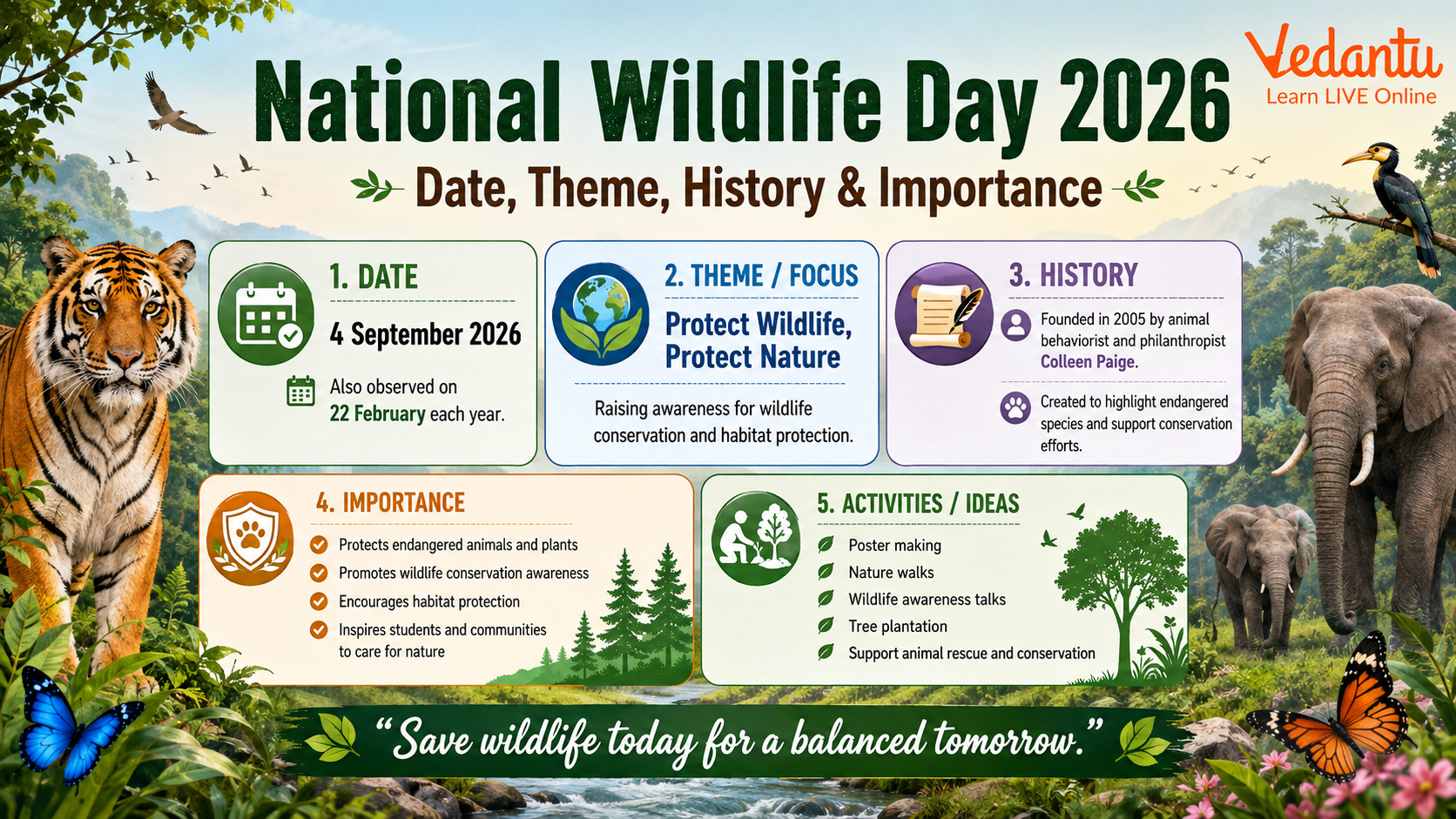
The day encourages people to learn about endangered species, understand habitat loss, support ethical conservation efforts and take small actions to protect nature. For students, National Wildlife Day is a meaningful occasion to learn about biodiversity, ecosystems, conservation and the role humans play in protecting wildlife.
When is National Wildlife Day 2026?
National Wildlife Day is commonly observed on September 4 every year. Some awareness calendars also mark it on February 22, which is connected with Steve Irwin’s birthday.
So, National Wildlife Day 2026 will be observed on Friday, September 4, 2026.
What is National Wildlife Day?
National Wildlife Day is a special awareness day that encourages people to learn about wildlife and support conservation efforts. It focuses on endangered species, habitat protection, animal welfare, ecosystem preservation and the need to reduce human impact on nature.
The purpose of this wildlife day is to remind people that animals need safe habitats, clean water, food sources and balanced ecosystems to survive. When forests, rivers, oceans and grasslands are damaged, the wildlife that depends on them is also affected.
National Wildlife Day 2026 Theme
The official National Wildlife Day 2026 theme has not been confirmed in the provided content. Until an official theme is announced, the safest educational focus can be:
Protect Wildlife, Preserve Habitats and Respect Nature
Schools, students and content creators should avoid claiming an official theme unless it is published by a reliable source. However, activities and posters can focus on endangered species, habitat protection, conservation, climate awareness and responsible human behaviour.
History of National Wildlife Day
National Wildlife Day was founded in 2005 by Colleen Paige, a pet lifestyle expert and author. The day was created in honour of wildlife conservationist Steve Irwin and later continued in his memory.
The aim of the day is to educate the public about endangered animals and the importance of conservation and preservation. It encourages people to understand that wildlife protection is not only the responsibility of governments or experts. Students, families, communities and organisations can also contribute through awareness and responsible action.
National Wildlife Day in India
Many people search for National Wildlife Day in India or National Wildlife Day of India to learn how this awareness day can be connected with Indian wildlife and conservation.
In India, the day can be used to discuss the importance of protecting animals such as tigers, elephants, rhinos, snow leopards, lions, turtles, birds and other species found in forests, wetlands, grasslands and coastal ecosystems. It can also help students understand the role of national parks, wildlife sanctuaries, biodiversity hotspots and conservation projects.
However, students should remember that National Wildlife Day and World Wildlife Day are different observances. World Wildlife Day is observed on March 3, while National Wildlife Day is commonly observed on September 4.
Why is National Wildlife Day Important?
National Wildlife Day is important because many species around the world face threats from habitat loss, pollution, climate change, illegal wildlife trade, overuse of natural resources and human-wildlife conflict.
Wildlife plays an important role in maintaining ecological balance. Birds help in seed dispersal, bees and butterflies support pollination, predators control animal populations, and aquatic species help maintain healthy water ecosystems. When one species declines, the entire ecosystem can be affected.
This day helps students and communities understand that conservation is not just about saving animals. It is also about protecting forests, rivers, oceans, wetlands, grasslands and the natural systems that support life on Earth.
What Does Wildlife Conservation Mean?
Wildlife conservation means the planned protection of wild animals, plants and their habitats. It includes efforts to prevent extinction, reduce habitat destruction, restore damaged ecosystems and protect natural resources from overuse.
Conservation may include:
Protecting forests and grasslands
Reducing pollution
Preventing illegal hunting and wildlife trade
Supporting animal rescue and rehabilitation
Creating awareness about endangered species
Restoring damaged habitats
Encouraging responsible tourism
Teaching communities how to live safely with wildlife
For students, conservation begins with awareness and small responsible actions.
How to Observe National Wildlife Day
National Wildlife Day can be observed through learning, awareness and responsible action. Students, families and schools can take part in simple activities that encourage respect for nature.
Ways to observe the day include:
Learn about endangered species.
Visit an ethical wildlife sanctuary, rescue centre or zoo.
Take a nature walk and observe local birds, insects and plants.
Make a poster on wildlife conservation.
Watch a documentary about animals and habitats.
Avoid littering in natural spaces.
Plant native trees or support green spaces.
Share awareness messages using #NationalWildlifeDay.
Discuss how human actions affect animal habitats.
Support organisations that work for wildlife rescue and rehabilitation.
National Wildlife Day Activities for Students
Students can celebrate this day through creative and educational activities. These activities help them understand wildlife conservation in a simple and practical way.
Useful activities include:
Poster-making on endangered animals
Essay writing on wildlife conservation
Speech on National Wildlife Day 2026
Drawing competition on animals and habitats
Quiz on Indian wildlife
Classroom discussion on habitat loss
Nature walk or bird-watching activity
Chart on food chains and ecosystems
Slogan-writing on wildlife protection
Awareness assembly in school
These activities can help students connect classroom learning with real-world environmental issues.
National Wildlife Day Poster and Slogan Ideas
A National Wildlife Day poster should be simple, visual and message-driven. Students can include animals, forests, rivers, birds, oceans and conservation messages.
Poster heading ideas:
National Wildlife Day 2026
Protect Wildlife, Protect Life
Save Animals, Save Ecosystems
Wildlife Needs Safe Habitats
Respect Nature and Protect Wildlife
Every Species Matters
Let Wildlife Live
Slogan ideas:
Save wildlife, save the planet.
Protect habitats before it is too late.
Wildlife is part of Earth’s balance.
Every animal has a role in nature.
Conservation begins with awareness.
Nature protects us when we protect nature.
A safe habitat means a safer future.
Difference Between National Wildlife Day and World Wildlife Day
National Wildlife Day and World Wildlife Day both focus on wildlife protection, but they are observed on different dates.
Both days remind people that wildlife protection is necessary for a healthy planet.
Key Takeaways
National Wildlife Day 2026 will be observed on September 4, 2026. Colleen Paige founded it in 2005, and it focuses on awareness of endangered species, conservation, and habitat protection.
The official National Wildlife Day 2026 theme has not been confirmed in the provided content. Until then, students can focus on the broader message of protecting wildlife, preserving habitats and respecting nature.
Conclusion
National Wildlife Day 2026 is an important awareness day that reminds us to protect animals, habitats and ecosystems. Wildlife exists not only in forests but also in our rivers, oceans, skies, gardens and neighbourhoods. For students, this day is a chance to understand conservation, learn about endangered species and take small steps toward protecting nature. By respecting wildlife and preserving habitats, we help maintain the balance of life on Earth.
FAQs on National Wildlife Day 2026: Date, Theme, History, Importance and Conservation Ideas
1. What is National Wildlife Day?
National Wildlife Day is an awareness day that focuses on wildlife protection, endangered species, habitat conservation and the need to protect animals and ecosystems.
2. When is National Wildlife Day 2026?
National Wildlife Day 2026 will be observed on Friday, September 4, 2026. Some calendars also mark National Wildlife Day on February 22.
3. What is the National Wildlife Day 2026 theme?
The official National Wildlife Day 2026 theme has not been confirmed in the provided content. A safe awareness focus is wildlife protection, habitat preservation and conservation.
4. Who founded National Wildlife Day?
National Wildlife Day was founded by Colleen Paige in 2005. It was created in honour of wildlife conservationist Steve Irwin and later continued in his memory.
5. Why is National Wildlife Day celebrated?
National Wildlife Day is celebrated to raise awareness about endangered species, habitat loss, wildlife conservation and the need to protect natural ecosystems.
6. Is there a National Wildlife Day in India?
National Wildlife Day can be observed in India as an awareness day to discuss wildlife conservation, endangered animals, national parks, sanctuaries and habitat protection.
7. What is National Wildlife Day of India?
People may use the term National Wildlife Day of India to search for wildlife awareness content related to India. It can be used to discuss Indian wildlife, conservation projects and student activities, but it should not be confused with World Wildlife Day.
8. What is the difference between National Wildlife Day and World Wildlife Day?
National Wildlife Day is commonly observed on September 4, while World Wildlife Day is observed on March 3. Both days promote wildlife awareness and conservation.
9. What does wildlife conservation mean?
Wildlife conservation means protecting wild animals, plants and their habitats from threats such as pollution, habitat loss, illegal hunting and environmental damage.
10. How can students celebrate National Wildlife Day?
Students can celebrate National Wildlife Day through poster-making, essay writing, wildlife quizzes, nature walks, drawing competitions, slogan writing and classroom discussions on conservation.
11. What are some National Wildlife Day activities?
Activities include visiting ethical wildlife centres, learning about endangered species, planting native trees, watching wildlife documentaries, creating posters and sharing awareness messages.
12. Why is wildlife important?
Wildlife is important because every species plays a role in maintaining ecological balance. Animals, birds, insects, plants and aquatic life all support healthy ecosystems.
13. What are the main threats to wildlife?
The main threats to wildlife include habitat loss, pollution, climate change, illegal hunting, wildlife trade, deforestation and human-wildlife conflict.
14. How can we protect wildlife?
We can protect wildlife by reducing pollution, avoiding plastic waste, protecting habitats, supporting conservation efforts, respecting animals and spreading awareness.
15. What is a good slogan for National Wildlife Day?
A good slogan for National Wildlife Day is: “Protect wildlife, preserve habitats and respect nature.”



