Maha Ashtami Wishes and Rituals
Durga Ashtami 2026 will be celebrated on Monday, 19 October 2026, during Sharad Navratri. Also known as Maha Ashtami or Durgashtami, this auspicious festival is dedicated to Goddess Durga and her eighth form, Maa Mahagauri. Devotees celebrate the day by offering prayers, observing fasts, performing Kanya Puja and seeking the Goddess's blessings for peace, courage and prosperity.
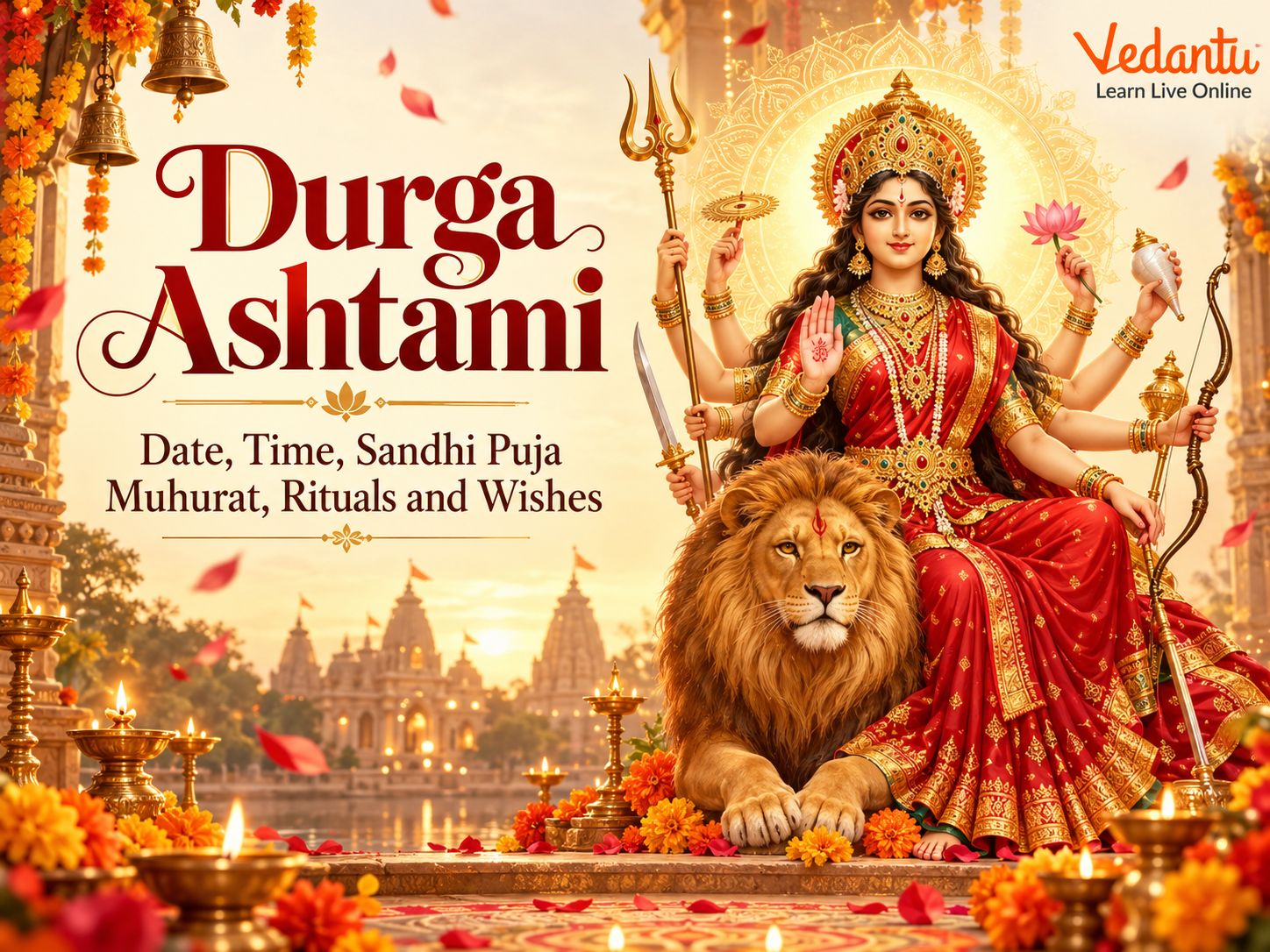
In 2026, Ashtami Tithi begins on 18 October and ends on the morning of 19 October. Since Navami Tithi begins on the same day, devotees should pay particular attention to the puja timings. Here are the important dates, Sandhi Puja Muhurat, religious traditions, Kanya Pujan Vidhi and greetings for Durga Ashtami.
Also Read: Ram Navami 2026? Get the Correct Date, Time and Wishes
When is Durga Ashtami in October 2026?
Durga Ashtami falls on Monday, 19 October 2026. According to the Hindu calendar, it is observed on the Ashtami Tithi of Shukla Paksha in the month of Ashwin.
The Durga Ashtami October 2026 date and time details are given below.
Source: Drik Panchang. All timings are in Indian Standard Time (IST) for New Delhi. Local Panchang timings and regional observances may vary.
In 2026, Ashtami and Navami fall on the same calendar date according to the New Delhi festival calendar. The transition between these two tithis is observed through Sandhi Puja, an important ritual during Durga Puja.
What is the Significance of Durga Ashtami?
Durga Ashtami celebrates the divine strength of Goddess Durga and the victory of good over evil. It is one of the most important days of Sharad Navratri, when devotees pray for protection, wisdom, courage and well-being.
According to Hindu religious traditions, Goddess Durga represents Shakti, the divine feminine energy that protects the world from negative forces. Her victory over the demon Mahishasura symbolises the triumph of righteousness over evil.
Maha Ashtami is especially important because:
Worship of Shakti: The day honours Goddess Durga as the source of divine strength and protection.
Maa Mahagauri Puja: Devotees worship the eighth form of Navadurga, associated with purity, peace and compassion.
Kanya Puja: Young girls are honoured as representations of the divine feminine.
Sandhi Puja: Special prayers mark the transition between Ashtami and Navami.
Spiritual Reflection: Fasting, prayer and charitable acts encourage discipline, gratitude and kindness.
The festival also brings families and communities together through temple prayers, traditional offerings and cultural celebrations.
Why is Maa Mahagauri Worshipped on Durga Ashtami?
Maa Mahagauri is the eighth form of Goddess Durga among the Navadurga. She is traditionally depicted wearing white garments, seated on a bull and holding a trident and damaru.
Her name reflects her radiant and peaceful appearance. Devotees believe that worshipping Maa Mahagauri helps remove negativity and encourages purity of thought, patience and inner peace.
On Durga Ashtami, devotees offer flowers, light diyas, recite prayers and seek her blessings for happiness and prosperity.
Maa Mahagauri Mantra:
ॐ देवी महागौर्यै नमः॥
Om Devi Mahagauryai Namah.
This mantra is traditionally recited while worshipping Maa Mahagauri.
Durga Ashtami Sandhi Puja Time 2026: When is the Muhurat?
The Durga Ashtami Sandhi Puja time in 2026 is 10:27 AM to 11:15 AM on Monday, 19 October, according to Drik Panchang for New Delhi.
Sandhi Puja is performed during the 48-minute period when Ashtami Tithi ends and Navami Tithi begins. It includes the final 24 minutes of Ashtami and the first 24 minutes of Navami.
Why is Sandhi Puja Important?
According to the Devi Mahatmya, Goddess Durga's fierce manifestation, Chamunda, defeated the demons Chanda and Munda. Sandhi Puja honours this powerful form of the Goddess.
In Bengali Durga Puja traditions, devotees may offer 108 lamps, 108 lotus flowers and special prayers during this period. The ritual represents the destruction of evil and the protection of righteousness.
The exact timing should be checked against the local Panchang because it can vary by location.
Durga Puja 2026 Ashtami Anjali Time and Traditions
Pushpanjali, commonly called Anjali, is one of the most important rituals of Durga Puja Ashtami. During this ceremony, devotees offer flowers to Goddess Durga while chanting sacred mantras.
In 2026, Maha Ashtami falls on 19 October, but the Ashtami Anjali time is not the same for every temple or puja pandal.
Different communities follow their own Panchang calculations and organise Anjali sessions according to local traditions.
For example, some Kolkata community pujas following the Gupta Press or Surya Siddhanta almanac are planning Ashtami Anjali around 6:45 AM to 7:00 AM on 19 October. This is not a universal muhurat for all locations.
Devotees should confirm their local temple or puja committee's schedule before attending.
How is Ashtami Pushpanjali Performed?
Bathe and wear clean traditional clothes before visiting the temple or pandal.
Collect flowers and other offerings provided for the puja.
Stand before the Goddess with folded hands.
Listen to the priest and repeat the Pushpanjali mantras.
Offer the flowers respectfully at the appropriate moment.
Receive prasad and seek the Goddess's blessings.
Pushpanjali is particularly important in West Bengal, Assam, Odisha and other regions where community Durga Puja celebrations are prominent.
How to Perform Durga Ashtami Puja at Home?
Durga Ashtami Puja can be performed at home through simple prayers and traditional offerings. The exact rituals may differ according to regional and family customs.
Items Required for Durga Ashtami Puja
Idol or picture of Goddess Durga or Maa Mahagauri
Fresh flowers and garlands
Kumkum, roli, turmeric and akshat
Diya, ghee or oil, and incense
Clean water and a puja plate
Fruits, coconut and sweets
Red or white cloth, according to family tradition
Traditional bhog or prasad
Durga Ashtami Puja Vidhi
Clean the puja area: Begin by bathing and preparing a clean space for worship.
Place the Goddess's image: Set the idol or picture of Maa Durga on a clean platform.
Light a diya: Offer flowers, incense and prayers.
Invoke Maa Mahagauri: Recite her mantra and pray for peace, strength and well-being.
Offer bhog: Present fruits, sweets or traditional homemade prasad.
Perform aarti: Sing devotional prayers and seek the Goddess's blessings.
Perform Kanya Puja: Families observing this tradition may invite young girls for a ceremonial meal.
Distribute prasad: Share the offerings respectfully with family members and devotees.
The puja can be simple or elaborate depending on household traditions. Devotion and respectful participation remain central to the observance.
What is Kanya Puja on Durga Ashtami?
Kanya Puja, also called Kanjak Pujan or Kumari Puja in different traditions, is a ritual in which young girls are honoured as manifestations of Goddess Durga.
In many North Indian households, nine girls are traditionally invited to represent the nine forms of Navadurga. Some families also invite a young boy, who is symbolically associated with Bhairav.
The girls are welcomed respectfully, offered prayers and served a traditional meal. The ceremony emphasises respect for the divine feminine and the importance of kindness and generosity.
How to Perform Kanya Pujan on Durga Ashtami?
Invite young girls with the consent of their parents or guardians.
Prepare a clean and comfortable place for them to sit.
Welcome them respectfully and offer to wash their feet, according to custom.
Apply a tilak and offer flowers or a chunri if appropriate.
Serve traditional prasad, such as halwa, puri and kala chana.
Offer small gifts or dakshina according to family tradition.
Seek their blessings and thank them for participating.
Children's comfort, preferences and hygiene should be respected throughout the ceremony.
What is the Best Time for Kanya Puja in 2026?
For families observing Kanya Puja on Ashtami, the morning of 19 October 2026, before Ashtami Tithi ends at 10:51 AM, is relevant according to the New Delhi Panchang.
Families who traditionally perform Kanya Puja on Navami may follow their customary timing after the beginning of Navami Tithi.
There is no single universal Kanya Puja muhurat for every community. Local traditions and the regional Panchang should guide the observance.
What Bhog is Offered on Durga Ashtami?
The most common Durga Ashtami bhog in many North Indian households is halwa, puri and kala chana. These foods are offered to the Goddess and served during Kanya Puja.
The offerings vary by family and region. In many traditions, puja food is prepared without onion or garlic.
How is Durga Ashtami Celebrated Across India?
Durga Ashtami is celebrated across India, but its customs vary according to local religious and cultural traditions.
Although the rituals differ, the celebrations share a common theme of devotion to Goddess Durga and respect for divine strength.
Durga Ashtami Wishes and Greetings to Share with Family and Friends
Durga Ashtami wishes are a thoughtful way to share festive joy and seek Maa Durga's blessings for loved ones.
Here are some greetings suitable for messages, greeting cards and social media.
Happy Durga Ashtami! May Maa Durga bless you with courage, happiness and peace.
May Maa Mahagauri fill your home with positivity, wisdom and prosperity. Shubh Durga Ashtami!
Wishing you and your family a blessed Maha Ashtami filled with devotion, love and happiness.
May Goddess Durga guide you through every challenge and inspire you to follow the path of goodness.
On this auspicious Durga Ashtami, may your prayers bring hope, strength and joy to your life.
Durga Ashtami Wishes in Hindi
Here are some simple Durga Ashtami wishes in Hindi to share with family and friends.
माँ दुर्गा की कृपा से आपके जीवन में सुख, शांति और समृद्धि बनी रहे। दुर्गा अष्टमी की हार्दिक शुभकामनाएँ!
माँ महागौरी आपके जीवन के सभी कष्ट दूर करें और खुशियों से आपका घर भर दें। शुभ महाअष्टमी!
दुर्गा अष्टमी के पावन अवसर पर माँ दुर्गा आपको साहस, शक्ति और सफलता का आशीर्वाद दें।
माँ दुर्गा का आशीर्वाद आपके परिवार पर हमेशा बना रहे। जय माता दी!
इस दुर्गा अष्टमी पर आपके जीवन में नई आशा, सकारात्मकता और खुशियों का आगमन हो।
Durga Ashtami Images and Greetings for Sharing
Durga Ashtami images often feature Maa Durga, Maa Mahagauri, glowing diyas, lotus flowers and traditional festive decorations.
Images with short greetings, such as Happy Durga Ashtami, Shubh Maha Ashtami or जय माता दी, can be shared with family and friends.
For an educational festival page, the most useful images include:
Maa Mahagauri illustration: Showing the eighth form of Navadurga and her traditional attributes.
Sandhi Puja illustration: Explaining the transition from Ashtami to Navami.
Kanya Puja illustration: Showing the traditional ceremony and offerings.
Durga Ashtami greeting banner: Featuring a short festive message.
These visuals help readers understand the religious traditions while making the page more engaging.
FAQs on Durga Ashtami 2026: Date, Time, Sandhi Puja Muhurat, Rituals and Wishes
1. Navratri Ashtami kab hai? (नवरात्रि अष्टमी कब है?)
Sharad Navratri Ashtami will be observed on Monday, 19 October 2026. It is the day dedicated to Maa Mahagauri, the eighth form of Goddess Durga.
2. Durga Ashtami kab hai 2026? (दुर्गा अष्टमी कब है 2026?)
Durga Ashtami 2026 is on 19 October, Monday. The Ashtami Tithi begins on 18 October at 8:27 AM and ends on 19 October at 10:51 AM, according to Drik Panchang for New Delhi.
3. Durga Ashtami kab ki hai? (दुर्गा अष्टमी कब की है?)
Durga Ashtami is celebrated during Sharad Navratri in the month of Ashwin. In 2026, its main observance is on Monday, 19 October.
4. Durga Ashtami kab hai October 2026?
Durga Ashtami is on 19 October 2026. Although Ashtami Tithi starts on 18 October, the main festival is observed on 19 October according to the New Delhi Panchang.
5. When is Durga Ashtami in 2026, and why does its date change every year?
Durga Ashtami falls on 19 October 2026. Its Gregorian date changes because it follows the Hindu lunar calendar and is observed during Ashwin Shukla Ashtami.
6. When is Durga Ashtami celebrated during Durga Puja?
Durga Ashtami, also called Maha Ashtami, is observed during the main days of Durga Puja. It precedes the Maha Navami rituals and is marked by Pushpanjali, special worship and Sandhi Puja.
7. What is the Durga Ashtami 2026 time for Sandhi Puja?
Sandhi Puja will be held from 10:27 AM to 11:15 AM on 19 October 2026 in New Delhi. The 48-minute ritual covers the transition from Ashtami to Navami.
8. Can Kanya Puja be performed on Navami instead of Ashtami?
Yes. Many families perform Kanya Puja on either Ashtami or Navami according to their traditions. In 2026, both tithis occur on 19 October in the New Delhi calendar, so the timing depends on the family's customary observance.
9. Which Goddess is worshipped on Durga Ashtami?
Maa Mahagauri, the eighth form of Navadurga, is worshipped on Durga Ashtami. The festival also honours Goddess Durga, while Sandhi Puja is associated with her fierce form, Chamunda.
10. What should devotees offer on Durga Ashtami?
Devotees commonly offer flowers, fruits, coconut, sweets and traditional prasad to Goddess Durga. Halwa, puri and kala chana are especially common during Kanya Puja in many North Indian households.
11. Is Durga Ashtami on 18 or 19 October 2026?
The main Durga Ashtami observance in New Delhi is on 19 October 2026. However, Ashtami Tithi begins on 18 October at 8:27 AM, which explains why both dates appear in some festival calendars.
12. What is the difference between Durga Ashtami and Maha Navami?
Durga Ashtami is associated with Maa Mahagauri and Maha Ashtami rituals, while Maha Navami is associated with Maa Siddhidatri and the concluding Navratri worship. In 2026, both are listed on 19 October in the New Delhi Panchang because Navami begins at 10:51 AM that day