



Dhanteras 2026: When Is Dhanteras and What Is the Shubh Muhurat?
Dhanteras 2026 will be celebrated on Friday, 6 November 2026, in India. Also called Dhantrayodashi, it marks the beginning of the five-day Diwali festival and is associated with prayers for health, prosperity and family well-being. People traditionally worship Lord Dhanvantari, Goddess Lakshmi and Lord Kubera, light diyas and purchase items such as gold, silver or utensils.
For the main Diwali puja two days later, read Diwali Lakshmi Puja.
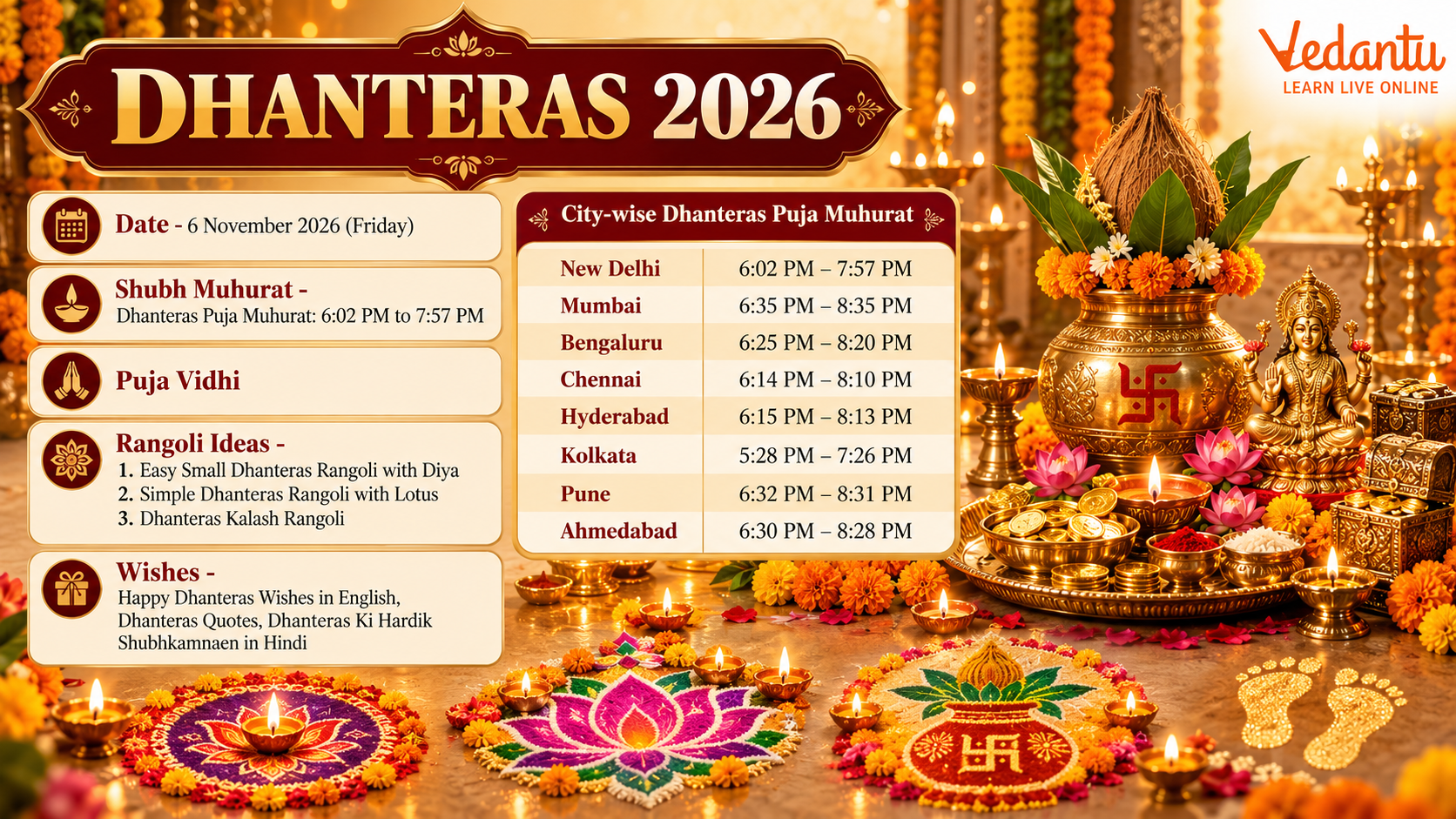
If you're wondering Dhanteras kab hai 2026 or whether it falls on 6 or 7 November, the correct festival date is 6 November, Friday. Trayodashi Tithi begins at 10:30 AM on 6 November and ends at 10:47 AM on 7 November. For New Delhi, the Dhanteras puja muhurat is 6:02 PM to 7:57 PM on 6 November.
Here you'll find the date, verified puja timings, city-wise muhurat, traditional shopping customs, Dhanteras puja vidhi and the significance of the festival.
Dhanteras 2026 Date and Puja Muhurat: Quick Overview
The following timings are based on New Delhi, India, as published by Drik Panchang. Timings in other cities may differ.
Important: These are New Delhi reference timings in Indian Standard Time. Use the Panchang for your city when planning a puja.
Learn about Choti Diwali and Naraka Chaturdashi and explore the complete Five Days of Diwali calendar.
Dhanteras 2026 Date: November 6 or November 7?
Dhanteras is on 6 November 2026, not 7 November, in India.
The confusion arises because Trayodashi Tithi extends across both dates. It begins on Friday morning and ends on Saturday morning.
Friday, 6 November: Trayodashi begins at 10:30 AM and continues through the evening.
Saturday, 7 November: Trayodashi ends at 10:47 AM.
Dhanteras puja is traditionally associated with Trayodashi during Pradosh Kaal, the period after sunset. Since Trayodashi is present during Pradosh Kaal on 6 November, the festival is observed on Friday.
Therefore, if you're searching for Dhanteras kitne tarikh ko hai, Dhanteras kis din hai or Dhanteras kab ki hai, the answer is Friday, 6 November 2026.
Dhanteras 2026 Shubh Muhurat and Trayodashi Tithi Timings
The Dhanteras muhurat is especially important for families planning Lakshmi-Kubera puja or Dhanvantari worship.
Dhanteras Puja Muhurat 2026
For New Delhi, the recommended Dhanteras puja muhurat is 6:02 PM to 7:57 PM on 6 November 2026.
This time falls within the evening Pradosh period and the favourable Vrishabha Lagna window used in traditional Panchang calculations.
What Is Pradosh Kaal on Dhanteras?
Pradosh Kaal is the period beginning around sunset. In many Dhanteras traditions, this is considered an appropriate period for evening worship and lighting Yama Deepam.
On 6 November 2026, the New Delhi Pradosh Kaal is 5:33 PM to 8:09 PM.
What Is Vrishabha Kaal?
Vrishabha Kaal refers to the period when Taurus is the ascendant. In traditional astrology, this fixed ascendant is regarded as favourable for Lakshmi-Kubera worship.
For New Delhi, Vrishabha Kaal is 6:02 PM to 7:57 PM.
These are traditional calendar-based observances, not scientific guarantees of financial or personal outcomes.
Dhanteras 2026 City-Wise Puja Muhurat in India
Dhanteras puja timings are not identical across India because sunset and local astronomical calculations differ.
Here are the city-wise Dhanteras puja muhurats for Friday, 6 November 2026.
Source: Drik Panchang, Dhantrayodashi 2026. All times are local to the respective cities.
For smaller towns or other locations, check your city-specific Panchang instead of assuming that New Delhi's puja time applies everywhere.
Dhanteras 2026 Shopping Muhurat: When to Buy Gold, Silver and Utensils
Purchasing gold, silver or household utensils on Dhanteras is a popular tradition associated with prosperity and new beginnings.
However, the Dhanteras puja muhurat is not automatically the only auspicious shopping period.
People may choose shopping times based on local Choghadiya periods, Trayodashi Tithi, family traditions or the guidance of their local Panchang.
What Is the Auspicious Shopping Time on Dhanteras 2026?
For New Delhi, Trayodashi Tithi begins at 10:30 AM on 6 November and ends at 10:47 AM on 7 November.
These are the tithi boundaries, not a single recommended shopping muhurat.
Some calendars identify separate favourable Choghadiya intervals for shopping. Because these windows depend on the city and the particular calendar method, the exact shopping slots should be checked against a reliable local Panchang before planning a purchase.
Is It Necessary to Buy Gold on Dhanteras?
No. Buying gold is a popular custom, but it is not compulsory for celebrating Dhanteras.
Families may choose a silver coin, a steel or brass utensil, a small household item or simply perform the traditional puja according to their beliefs and budget.
The festival is also associated with good health, gratitude and well-being, not only expensive purchases.
Dhanteras Ke Din Kya Kharidna Chahiye? What to Buy on Dhanteras 2026
If you're wondering Dhanteras ke din kya kharidna chahiye, several purchases are traditionally considered auspicious.
These associations vary across communities and regions.
What Should You Avoid Buying on Dhanteras?
Some households traditionally avoid purchasing sharp objects, broken items or certain metals on Dhanteras.
These restrictions are based on regional customs and beliefs. They are not universal rules, and there is no need to make unnecessary purchases or avoid essential household items because of them.
What Is Dhanteras? Meaning of Dhanteras and Dhantrayodashi
Dhanteras is a Hindu festival celebrated on the thirteenth lunar day of Krishna Paksha in the month of Kartik. It marks the beginning of the Diwali celebrations.
The word Dhanteras combines:
Dhan: Wealth or prosperity.
Teras: The thirteenth day of the lunar fortnight.
The festival is also known as Dhantrayodashi and Dhanvantari Jayanti.
Although Dhanteras is often associated with buying gold and silver, its wider cultural significance includes health, prosperity, gratitude, family welfare and religious worship.
Why Is Dhanteras Celebrated? History and Significance
Dhanteras is associated with the traditional account of Samudra Manthan, or the churning of the cosmic ocean.
According to Hindu mythology, Lord Dhanvantari emerged during Samudra Manthan carrying a pot of Amrit, the nectar of immortality.
Lord Dhanvantari is traditionally revered as the divine physician and is closely associated with Ayurveda and health.
For this reason, Dhanteras is also celebrated as Dhanvantari Jayanti.
Why Is Dhanteras Associated With Wealth?
Goddess Lakshmi is traditionally associated with prosperity, while Lord Kubera is regarded as the guardian of wealth.
Families worship these deities on Dhanteras and pray for well-being, financial stability and a peaceful home.
The festival reminds people that prosperity can include good health, happiness and meaningful relationships, not merely material possessions.
Which Gods Are Worshipped on Dhanteras?
Three principal deities are commonly associated with Dhanteras worship.
Lord Dhanvantari
Lord Dhanvantari is revered as the divine physician and is associated with Ayurveda, health and healing.
Many devotees pray for good health and the well-being of their families.
Goddess Lakshmi
Goddess Lakshmi is worshipped as the goddess of prosperity, fortune and abundance.
Families may offer flowers, sweets and prayers during the evening puja.
Lord Kubera
Lord Kubera is traditionally regarded as the guardian or treasurer of wealth.
His worship is associated with prayers for financial stability and the responsible use of resources.
Some households also observe Yama Deepam as part of the day's traditions.
Families who want quieter celebrations can also explore ways to celebrate Green Diwali.
Dhanteras Puja Vidhi 2026: How to Perform Dhanteras Puja at Home
If you're searching for Dhanteras ki puja kaise kare, here is a simple way to understand the traditional household observance.
Puja customs differ by family and region, so these are general steps rather than compulsory instructions.
Items Commonly Used for Dhanteras Puja
You may prepare:
An image or idol of Lord Dhanvantari, Goddess Lakshmi or Lord Kubera.
A clean cloth and puja platform.
Diyas and oil or ghee.
Flowers and incense.
Kumkum, turmeric and rice grains.
Fruits, sweets or other offerings.
Water in a clean vessel.
A puja thali.
Step-by-Step Dhanteras Puja Vidhi
Step 1: Clean and prepare the puja area.
Clean the space where your family performs worship. Place the images or idols respectfully on a prepared platform.
Step 2: Light a diya.
Light a diya in a safe place and begin the worship according to your family's tradition.
Step 3: Offer prayers to Lord Dhanvantari.
Pray for health, wisdom and the well-being of family members.
Step 4: Worship Goddess Lakshmi and Lord Kubera.
Offer flowers, sweets and prayers for prosperity, harmony and happiness.
Step 5: Recite prayers or mantras.
You may chant a familiar prayer or mantra according to your household's custom.
Step 6: Conclude the puja and share prasad.
Complete the worship with aarti or a closing prayer and distribute prasad among family members.
Step 7: Observe Yama Deepam, if followed in your family.
Some households place a diya outside the entrance in the evening as part of the traditional Yama Deepam observance.
Always place lamps away from flammable materials and supervise open flames.
Yama Deepam on Dhanteras 2026: Meaning and Ritual
Yama Deepam, also called Yam Deepdaan, is a traditional lamp-lighting ritual observed on Dhanteras.
In Hindu tradition, it is associated with prayers to Lord Yama and protection from untimely death.
Why Is Yama Deepam Lit?
According to traditional beliefs and stories, lighting a lamp for Lord Yama expresses a prayer for the longevity and well-being of family members.
It is a symbolic religious observance, not a guaranteed way to prevent illness or accidents.
How Is Yama Deepam Performed?
In many households:
A clay or flour lamp is prepared.
Oil and cotton wicks are placed in the lamp.
The lamp is lit during the evening.
It is traditionally placed near the entrance, often facing south.
Family members offer prayers for protection and well-being.
The details vary by tradition. Some families use a four-wicked lamp, while others follow different local customs.
For 2026, Yama Deepam is observed on the evening of Friday, 6 November.
Dhanteras Mantras and Traditional Prayers
Devotees may recite prayers dedicated to Lord Dhanvantari, Goddess Lakshmi and Lord Kubera.
Lord Dhanvantari Prayer
ॐ धन्वन्तरये नमः।
Om Dhanvantaraye Namah.
This short invocation is offered in reverence to Lord Dhanvantari.
Goddess Lakshmi Prayer
ॐ श्रीं महालक्ष्म्यै नमः।
Om Shreem Mahalakshmyai Namah.
This is a traditional invocation to Goddess Mahalakshmi.
Lord Kubera Prayer
ॐ कुबेराय नमः।
Om Kuberaya Namah.
This short invocation is dedicated to Lord Kubera.
Families may follow longer prayers, aarti or mantras according to their customary practice.
How Is Dhanteras Celebrated in India?
Dhanteras celebrations usually involve preparing the home for Diwali and observing traditions associated with health and prosperity.
Cleaning and Decorating Homes
Families clean their homes and decorate entrances with flowers, lamps and rangoli.
Lighting Diyas
Diyas are lit during the evening as part of festive and religious observances.
Buying Household Items
Some people purchase jewellery, coins or utensils according to their budget and family customs.
Performing Dhanteras Puja
Devotees offer prayers to Lord Dhanvantari, Goddess Lakshmi and Lord Kubera.
Sharing Sweets and Greetings
Families exchange festive greetings, distribute sweets and spend time together as the Diwali celebrations begin.
Happy Dhanteras 2026 Wishes and Shubh Dhanteras Greetings
Looking for Happy Dhanteras or Dhanteras wishes in English? Share these short greetings with family and friends.
Happy Dhanteras 2026! Wishing you good health, peaceful moments and a home filled with happiness.
May this Dhanteras bring new hope, family togetherness and meaningful opportunities into your life.
Shubh Dhanteras! May your celebrations be bright and your coming days be filled with joy.
Wishing you and your family a beautiful Dhanteras filled with gratitude and good wishes.
May the blessings of Lord Dhanvantari inspire health, wisdom and care for one another.
Happy Dhanteras! May every new beginning bring you closer to your dreams.
Wishing you a prosperous and peaceful Dhanteras. Enjoy the warmth of family celebrations.
May your festive season begin with happiness, kindness and beautiful memories. Shubh Dhanteras!
Dhanteras Rangoli and Decoration Ideas
A colourful Dhanteras rangoli can make your entrance feel festive and welcoming.
Some simple ideas include:
A diya-shaped rangoli decorated with flower petals.
A lotus rangoli with a small lamp at the centre.
Traditional geometric rangoli patterns.
A colourful welcome design using marigold flowers.
A small rangoli featuring the words Shubh Dhanteras.
For image-focused searches such as Dhanteras rangoli, simple Dhanteras rangoli designs or Dhanteras images, a dedicated page containing original, labelled visual examples would be more useful than descriptions alone.
For additional patterns, explore Rangoli Designs for Diwali.
Conclusion
Dhanteras 2026 falls on Friday, 6 November, with the New Delhi puja muhurat from 6:02 PM to 7:57 PM. Although Trayodashi continues into 7 November, the festival is observed on Friday because the relevant evening worship period falls on that date.
Dhanteras celebrates health, prosperity and auspicious beginnings through prayer, family traditions and festive customs. Whether you perform puja, light diyas or make a small household purchase, celebrate thoughtfully and follow your local Panchang for accurate timings.
Happy Dhanteras 2026!
FAQs on Dhanteras 2026 Date: November 6 or 7? Puja Muhurat, Shopping Time and Significance
1. Dhanteras kab hai 2026 mein?
Dhanteras 2026 is on Friday, 6 November 2026. It marks the beginning of Diwali celebrations. The New Delhi evening puja muhurat is from 6:02 PM to 7:57 PM, according to Drik Panchang.
2. Is Dhanteras on November 6 or 7 in 2026?
Dhanteras is celebrated on 6 November 2026 in India. Trayodashi Tithi continues until 10:47 AM on 7 November, but the relevant evening Pradosh Kaal occurs on 6 November.
3. What is the Dhanteras 2026 puja muhurat?
For New Delhi, Dhanteras 2026 puja muhurat is 6:02 PM to 7:57 PM on Friday, 6 November. Times differ by city, so use your local Panchang for the most accurate calculation.
4. What time does Trayodashi Tithi begin and end in 2026?
Trayodashi Tithi begins at 10:30 AM on 6 November 2026 and ends at 10:47 AM on 7 November 2026, according to Drik Panchang's New Delhi reference.
5. Dhanteras kitne tarikh ko hai?
Dhanteras is on 6 November 2026, Friday. The date is sometimes confused with 7 November because the Trayodashi lunar period continues into Saturday morning.
6. What should we buy on Dhanteras 2026?
Gold, silver, brass or steel utensils, coriander seeds and household items are traditional choices. These purchases are associated with prosperity in different communities. Buying something expensive is not compulsory.
7. What is the best time to buy gold on Dhanteras 2026?
The auspicious gold-buying time depends on your city's Panchang and the tradition followed. Trayodashi begins at 10:30 AM on 6 November, but that does not mean the entire tithi is a single shopping muhurat. Check locally calculated Choghadiya times.
8. What is Dhanteras and why is it celebrated?
Dhanteras, or Dhantrayodashi, marks the beginning of Diwali celebrations. According to Hindu tradition, Lord Dhanvantari emerged during Samudra Manthan carrying Amrit. The festival honours health, prosperity and auspicious beginnings.
9. Which God is worshipped on Dhanteras?
Lord Dhanvantari, Goddess Lakshmi and Lord Kubera are commonly worshipped on Dhanteras. Dhanvantari is associated with Ayurveda and health, Lakshmi with prosperity, and Kubera with wealth.
10. How can I perform Dhanteras puja at home?
Clean the worship area, light a diya, offer flowers and sweets, pray to Lord Dhanvantari, Goddess Lakshmi and Lord Kubera, and conclude with aarti or a family prayer. Specific rituals vary by household tradition.
11. What is Yama Deepam on Dhanteras?
Yama Deepam is a traditional evening ritual in which a lamp is lit in honour of Lord Yama. It symbolises prayers for the family's longevity and well-being. In 2026, it is observed on the evening of 6 November.
12. Is it compulsory to purchase gold or silver on Dhanteras?
No. Gold and silver purchases are customs associated with prosperity, not compulsory requirements. Families can celebrate through prayers, diyas, gratitude and time together without buying expensive items.
13. Why is Dhanteras also called Dhanvantari Jayanti?
According to Hindu mythology, Lord Dhanvantari appeared during the churning of the ocean carrying a pot of Amrit. As he is traditionally associated with Ayurveda and health, the day is also known as Dhanvantari Jayanti.
14. Is the Dhanteras puja time the same in Delhi, Mumbai and Bengaluru?
No. For 6 November 2026, New Delhi's puja muhurat is 6:02–7:57 PM, Mumbai's is 6:35–8:35 PM and Bengaluru's is 6:25–8:20 PM. These times are city-specific.
15. What is the meaning of Shubh Dhanteras?
Shubh Dhanteras is an auspicious greeting shared during the festival. It expresses good wishes for health, happiness, peace and prosperity. It can be used in cards, text messages and family greetings.


