




What is bilirubin and how it is formed and processed in the liver
Bilirubin may be a dark yellow material that's primarily created once the body breaks down Hb, that is, the supermolecule in red blood cells that carries chemical elements. Bilirubin is found in gall, which is fluid in your liver that's concerned with digesting food. Most bilirubin is eliminated within the BM or excrement.
The bilirubin takes a look and checks the health of your liver by measuring the number of bilirubin in your blood or in your excrement.
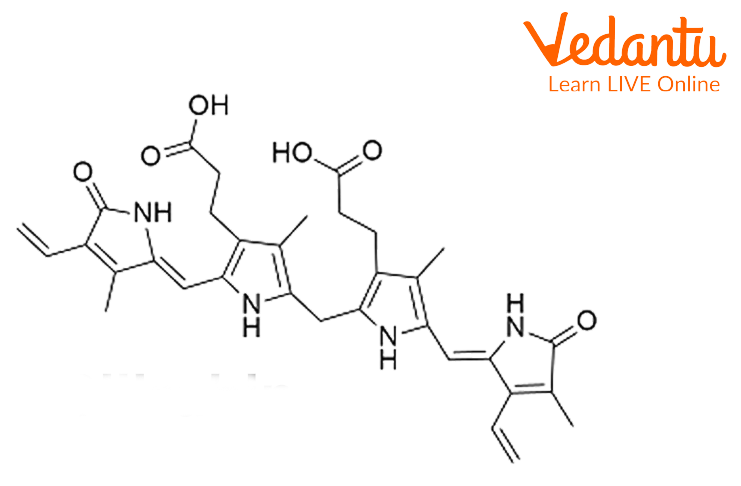
Bilirubin Structure
Definition of Bilirubin
Substance fashioned once red blood cells are dampened. Bilirubin is a component of the digestive juice that is created within the liver and is held on within the vesica. The abnormal buildup of bilirubin causes jaundice.
The amount of bilirubin factory-made relates to the number of blood cells destroyed. About 0.5 to a pair of grams square measure made daily. It's not a famous performance and may be venomous to the foetal brain.
Bilirubin within the blood is sometimes in an exceedingly free, or unconjugated, state; it's connected to simple protein, a protein because it is transported. Once within the liver, it conjugates with glucuronic acid made of the sugar aldohexose. It's then targeted to concerning,1000 times the strength found in plasm.
In humans, bilirubin is believed to be unconjugated till it reaches the liver. In dogs, sheep, and rats, there's no bilirubin within the blood, although it's a gift within the liver.
Direct and Indirect Bilirubin
What is Direct Bilirubin?
Direct bilirubin, additionally referred to as conjugated bilirubin, is the changed sort of merchandise obtained once the dissimilation of Hb.
The indirect bilirubin is conjugated with glucuronic acid by the accelerator glucuronyltransferase. This conjugation makes the direct bilirubin less venomous and simple to egest. Direct bilirubin is soluble in water.
The total bilirubin of our body is the addition of direct and indirect bilirubin. The bilirubin’s normal range or traditional bilirubin values for adults are:
Total bilirubin: zero.3 to 1.9 mg/dL
Direct bilirubin: zero.0 to 0.3 mg/dL.
What is Indirect Bilirubin?
Indirect bilirubin, additionally called unconjugated haematoidin, is the direct product of the breakdown of Hb. The unconjugated bilirubin binds to albumin, facilitating straightforward transport from blood to the liver. However, this manner of indirect bilirubin is very toxic; thus, it's reborn to direct bilirubin within the liver with the assistance of enzymes, which is a smaller amount cytotoxic.
Indirect bilirubin is very soluble in lipids and is oleophilic. It is, however, insoluble in water. If you have got high bilirubin, your symptoms can depend upon the underlying cause. you'll be able to have gently high bilirubin and haven't any symptoms in any respect. With moderately high bilirubin, you'll solely have jaundice, which may be a yellow colour to your eyes and skin. Jaundice is the main sign of high bilirubin levels.
Symptoms of High Bilirubin
Abdominal pain or swelling
Chills
Fever
Chest pain
Weakness
Lightheadedness
Higher levels of bilirubin are caused because of many reasons like, hemolytic anaemia, which is maybe a condition wherever our body starts obtaining too many RBCs.
Genetic bad
Gallstones
Gilbert’s syndrome
Hepatitis
Bilirubin Blood Test
A bilirubin biopsy measures the amount of bilirubin in your blood. If your liver is healthy, it'll take away most of the bilirubin from your body. If your liver is broken, bilirubin will break off your liver and into your blood. Once an excessive amount of bilirubin gets into the blood, it will cause jaundice, a condition that causes your skin and eyes to show yellow.
Need for a Bilirubin Check
Your physician might order a bilirubin blood test:
If you have got symptoms like jaundice, dark urine, or abdomen pain. These might be symptoms of liver disease, cirrhosis, or different liver diseases. they will even be signs of vesica unwellness.
To find out if there's a blockage within the gall ducts, the tubes that carry gall from your liver.
To check on existing disease or disorder.
To diagnose disorders associated with issues with breaking down red blood cells. High bilirubin levels in the blood are also a symptom of a condition known as hemolytic anaemia. During this condition, the body destroys red blood cells quicker than it makes them.
Interesting Facts
Kernicterus (Bilirubin Encephalopathy)
Lipid-soluble, unconjugated, indirect bilirubin fraction is venomous to the developing central system, particularly once indirect bilirubin concentrations are high and exceed the binding capability of albumin.
Important Questions
What is the most important supply of bilirubin?
Ans: Roughly, eighty percent of bilirubin is formed from the breakdown of hemoprotein in old red blood cells, and untimely destroyed erythroid cells within the bone marrow. The rest originates from the turnover of varied heme-containing proteins found in alternative tissues, primarily the liver and muscles.
Is bilirubin affected by lights?
Ans: Bilirubin may be a substance absorbing light within the colour spectrum, and it's well recognised to endure each isomerisation and oxidation reaction in serum exposed to visible radiation, leading to reduced measured bilirubin values.
Conclusion
Serum bilirubin could be a yellow pigment found in gall, a fluid created by the liver. Bilirubin may also be measured with a piddle check. Direct bilirubin, conjointly called conjugated bilirubin, is the changed style of the merchandise obtained when the biological process of bilirubin. The indirect haematoidin is conjugated with glucuronic acid by the protein glucuronyltransferase. This conjugation makes the direct bilirubin less cyanogenic and simple to expel.


FAQs on Bilirubin Structure Metabolism and Clinical Significance
1. What is bilirubin?
Bilirubin is a yellow pigment formed during the breakdown of hemoglobin from old red blood cells. It is produced when heme is degraded in macrophages of the spleen, liver, and bone marrow. The process involves:
- Conversion of heme to biliverdin
- Reduction of biliverdin to unconjugated bilirubin
- Transport to the liver for further processing
2. How is bilirubin formed in the body?
Bilirubin is formed from the breakdown of hemoglobin in aged red blood cells. The step-by-step process includes:
- Destruction of old erythrocytes by macrophages
- Separation of hemoglobin into globin and heme
- Conversion of heme to biliverdin by heme oxygenase
- Reduction of biliverdin to unconjugated bilirubin
3. What is the difference between conjugated and unconjugated bilirubin?
The main difference is that unconjugated bilirubin is water-insoluble, while conjugated bilirubin is water-soluble. Key distinctions include:
- Unconjugated bilirubin: Not yet processed by the liver, transported bound to albumin, lipid-soluble
- Conjugated bilirubin: Processed in the liver by adding glucuronic acid, water-soluble, excreted in bile
4. What is the function of bilirubin in the body?
Bilirubin primarily serves as a waste product of hemoglobin breakdown and contributes to bile formation. Its biological roles include:
- Excretion of excess heme from red blood cell turnover
- Contribution to the color of bile, feces (via stercobilin), and urine (via urobilin)
- Acting as a mild antioxidant in low concentrations
5. How is bilirubin metabolized and excreted?
Bilirubin is metabolized in the liver and excreted through bile into the intestine. The process occurs in stages:
- Transport of unconjugated bilirubin to the liver bound to albumin
- Conjugation with glucuronic acid in hepatocytes
- Secretion of conjugated bilirubin into bile ducts
- Conversion by intestinal bacteria into urobilinogen
- Excretion as stercobilin in feces or urobilin in urine
6. Why does high bilirubin cause jaundice?
High bilirubin causes jaundice because excess bilirubin deposits in tissues, giving the skin and eyes a yellow color. When bilirubin accumulates in the blood (a condition called hyperbilirubinemia):
- It diffuses into skin and sclera
- Yellow pigmentation becomes visible
- Liver dysfunction, hemolysis, or bile duct obstruction may be the cause
7. What is normal bilirubin level in adults?
The normal total bilirubin level in adults is approximately 0.1 to 1.2 mg/dL. It is typically divided into:
- Unconjugated (indirect) bilirubin
- Conjugated (direct) bilirubin
8. What causes high bilirubin levels?
High bilirubin levels are caused by increased production, decreased liver processing, or impaired bile excretion. Common causes include:
- Excessive red blood cell breakdown (hemolysis)
- Liver diseases such as hepatitis or cirrhosis
- Bile duct obstruction (e.g., gallstones)
- Genetic disorders like Gilbert syndrome
9. Why is bilirubin high in newborns?
Bilirubin is high in newborns because their liver enzymes are not fully mature to process bilirubin efficiently. This condition, called physiological neonatal jaundice, occurs due to:
- Increased breakdown of fetal red blood cells
- Immature UDP-glucuronyl transferase activity
- Limited ability to conjugate bilirubin
10. How does phototherapy reduce bilirubin levels?
Phototherapy reduces bilirubin levels by converting unconjugated bilirubin into water-soluble forms that can be excreted without liver conjugation. Blue light exposure:
- Changes bilirubin into lumirubin and other photoisomers
- Makes it water-soluble
- Allows excretion through urine and bile



