






What Is a Plant Hopper? Diet, Habitat, Life Cycle and Fun Facts
A Plant Hopper is a small but fascinating insect known for its powerful jumping ability and plant-loving lifestyle. These insects are commonly found sitting on leaves and stems, where they feed on plant sap. Plant hopper facts reveal that although they look delicate, they are excellent jumpers and can quickly escape danger. With unique body shapes and sometimes colorful wings, plant hoppers are important parts of many ecosystems.
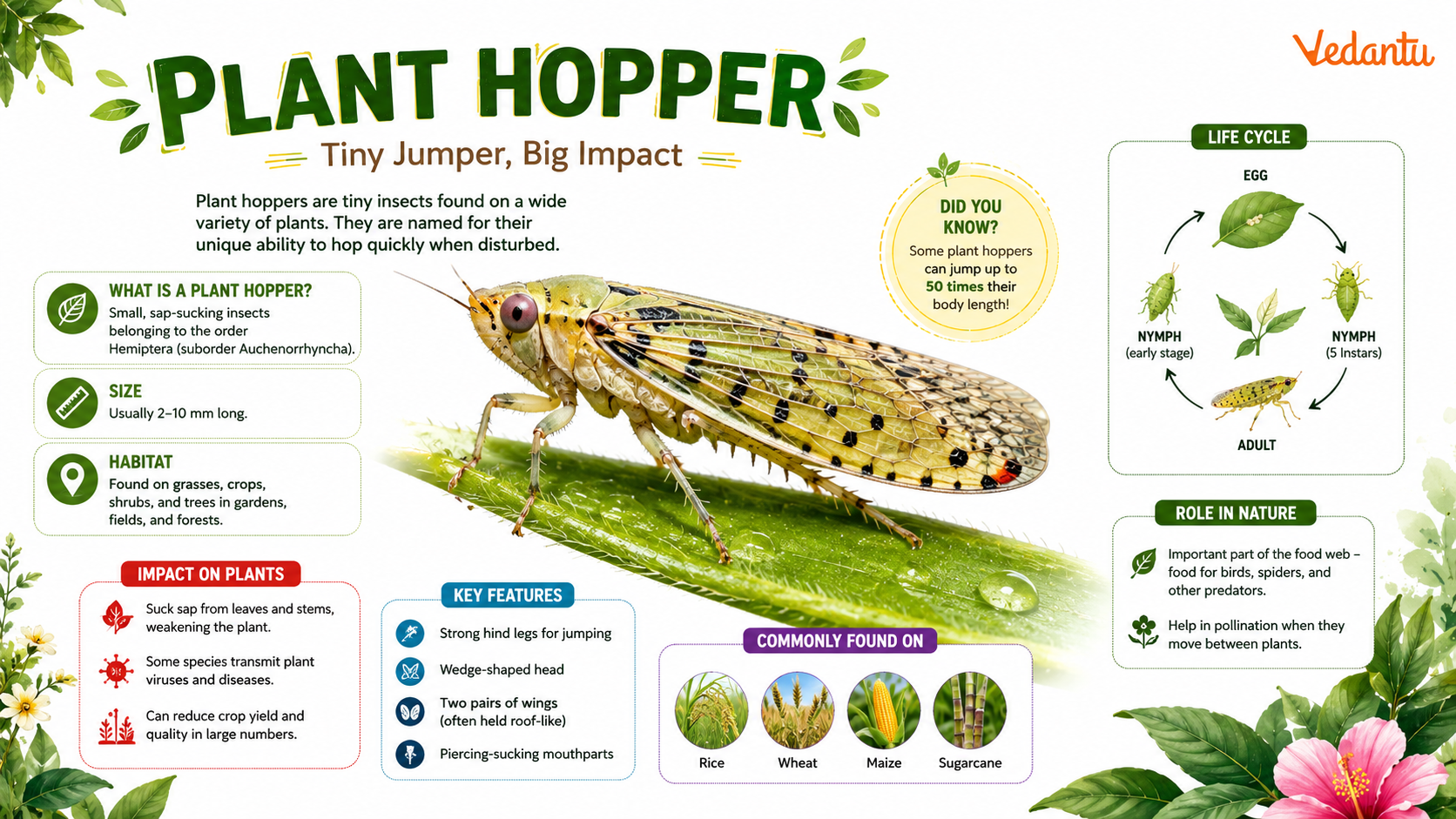
Quick Facts About Plant Hopper
| Feature | Details |
|---|---|
| Common Name | Plant Hopper |
| Scientific Superfamily | Fulgoroidea |
| Animal Group | Insect |
| Size | Usually 3 mm to 20 mm long |
| Habitat | Grasslands, farms, forests, gardens |
| Diet | Plant sap |
| Movement | Jumping and short flights |
| Life Cycle | Egg → Nymph → Adult |
Appearance and Physical Characteristics
- Small, wedge-shaped or triangular body
- Strong hind legs for powerful jumping
- Two pairs of wings (in most adults)
- Large compound eyes
- Short antennae
Plant Hopper Habitat and Distribution
The plant hopper habitat includes almost every place where plants grow. They are found all over the world, especially in warm and tropical regions.
- Grasslands and meadows
- Crop fields like rice and sugarcane farms
- Forests and shrubs
- Home gardens and parks
Since they depend on plants for food, plant hoppers usually stay close to stems, leaves, or the underside of foliage.
Diet and Feeding Habits
The plant hopper diet mainly consists of plant sap. They are herbivores and use a special mouthpart to suck liquid from plants.
- Feed on sap from stems and leaves
- Use needle-like mouthparts to pierce plant tissue
- Some species prefer specific crops like rice
In large numbers, certain plant hoppers can damage crops by weakening plants and spreading plant diseases.
Behaviour and Lifestyle
When disturbed, plant hoppers instantly jump away to avoid predators.
They are more active during warm seasons when plants are growing.
Their body colour often matches leaves and stems.
Some adults can make short flying movements between plants.
Plant Hopper Life Cycle
- Egg: Female lays eggs on plant tissues.
- Nymph: Young plant hoppers look like small adults but without fully developed wings.
- Adult: Fully grown with wings (in most species) and able to reproduce.
This process is called incomplete metamorphosis because there is no pupal stage.
What Makes Plant Hopper Special?
Special hind legs help them jump far and fast.
Many species feed on specific types of plants.
There are thousands of plant hopper species around the world.
Their body shape helps them hide from birds and predators.
Types and Diversity
The superfamily Fulgoroidea includes many types of plant hoppers. Some common examples include:
- Brown Plant Hopper (common in rice fields)
- Lanternfly (bright and colorful species)
- Flatid Plant Hoppers
- Delphacid Plant Hoppers
Importance and Role in Nature
Eaten by birds, spiders, and other insects.
Help control plant growth in natural ecosystems.
Their presence shows the health of plant ecosystems.
Some species affect crops and are studied by scientists.
Amazing Plant Hopper Facts
- There are over 12,000 known species of plant hoppers worldwide.
- Some species produce waxy secretions to protect themselves.
- Lanternflies, a type of plant hopper, are brightly colored.
- They can communicate through vibrations on plant stems.
- Plant hoppers belong to the order Hemiptera.
- Some species are important agricultural pests.
Interesting Facts About Plant Hopper
- Young nymphs sometimes look fluffy due to wax threads.
- They rarely bite humans because they feed only on plants.
- The brown plant hopper is a major pest in Asian rice fields.
- Their jumping action happens in milliseconds.
Fun Facts for Kids
FAQs on Plant Hopper: Tiny Jumping Insect with Amazing Skills
1. What is a plant hopper?
A plant hopper is a small jumping insect that feeds on plant sap using its straw-like mouth.
- Belongs to the order Hemiptera
- Known for its strong hind legs that help it hop
- Feeds on plant juices from stems and leaves
- Often found in gardens, farms, and grassy areas
- Sometimes confused with leafhoppers and treehoppers
2. Why are plant hoppers called plant hoppers?
They are called plant hoppers because they live on plants and can jump quickly from one plant to another.
- Use powerful back legs to hop long distances
- Escape predators like birds and spiders
- Move easily between crops and grasses
- Their jumping ability is similar to grasshoppers
3. What do plant hoppers eat?
Plant hoppers feed mainly on plant sap, which is the liquid inside plants.
- Use a sharp mouthpart called a proboscis
- Drink sap from leaves, stems, and roots
- Commonly feed on rice plants, grasses, and crops
- Can weaken plants by removing nutrients
4. Are plant hoppers harmful to plants?
Yes, some plant hopper species can damage crops and garden plants.
- Cause yellowing and wilting of leaves
- Spread plant diseases and viruses
- Reduce crop yield in farms
- Example: Brown planthopper is a serious rice pest
5. Where do plant hoppers live?
Plant hoppers live in places where plants grow, especially in warm environments.
- Found in gardens, forests, and farms
- Common in tropical and temperate regions
- Hide under leaves and stems
- Lay eggs on plant surfaces
6. How big is a plant hopper?
Most plant hoppers are small insects measuring only a few millimeters long.
- Usually between 3–10 mm in size
- Have soft bodies and folded wings
- Can be green, brown, or transparent
- Small size helps them hide from predators
7. How do plant hoppers protect themselves?
Plant hoppers protect themselves mainly by jumping quickly and blending into plants.
- Use camouflage to match leaf colors
- Hop away when disturbed
- Some produce waxy coatings for protection
- Avoid predators like birds and ants
8. What is the life cycle of a plant hopper?
The plant hopper life cycle includes egg, nymph, and adult stages.
- Female lays eggs on plant tissue
- Eggs hatch into nymphs (young insects)
- Nymphs look like small adults without wings
- Grow and molt several times before becoming adults
9. What is the difference between a plant hopper and a grasshopper?
Although both can jump, a plant hopper is smaller and feeds on sap, while a grasshopper eats leaves.
- Plant hoppers belong to Hemiptera
- Grasshoppers belong to Orthoptera
- Plant hoppers suck plant juice
- Grasshoppers chew and bite leaves
10. How can farmers control plant hoppers?
Farmers control plant hopper pests using safe and effective farming methods.
- Grow resistant crop varieties
- Use natural predators like spiders and ladybugs
- Practice proper field management
- Apply insecticides carefully when needed
