






What Do Hogs Eat, Where Do They Live, and How Do They Survive?
A hog is a type of wild or domestic pig known for its strong body, sharp sense of smell, and powerful snout. Hogs are found in forests, grasslands, and even farms around the world. Some hogs live in the wild, like wild boars, while others are raised by humans. These animals are intelligent, adaptable, and play an important role in ecosystems and agriculture. Let’s explore amazing hog facts, habitat, diet, characteristics, and more!
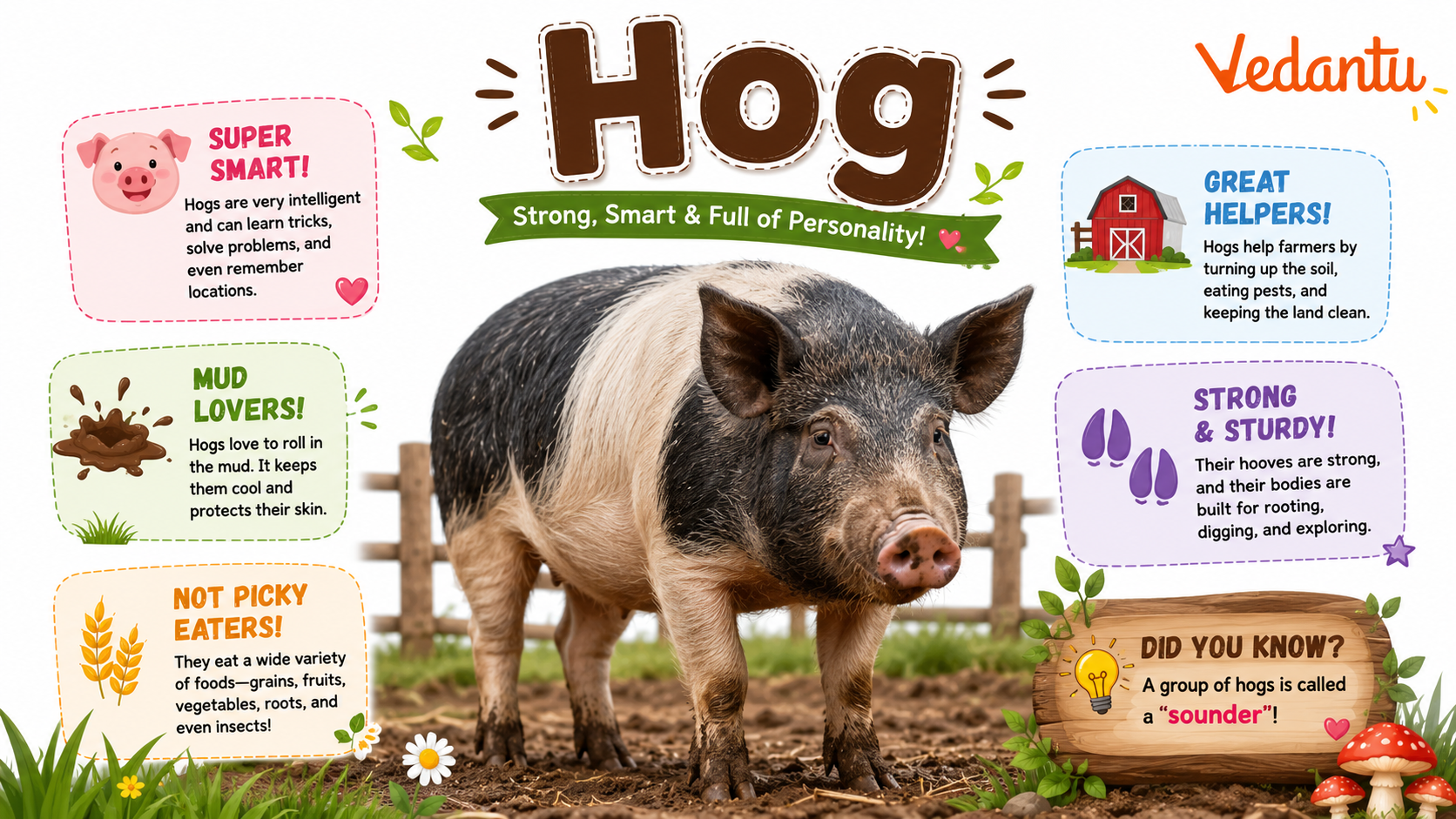
Quick Facts About Hog
| Feature | Details |
|---|---|
| Common Name | Hog |
| Scientific Name | Sus scrofa (wild hog/wild boar) |
| Animal Group | Mammal |
| Diet | Omnivore (plants and small animals) |
| Lifespan | 8–15 years (wild), up to 20 years (domestic) |
| Habitat | Forests, grasslands, wetlands, farms |
| Young One | Piglet |
| Conservation Status | Least Concern (wild boar) |
Appearance and Physical Characteristics
- Strong, heavy body with short legs.
- Thick skin covered with coarse hair or bristles.
- Long snout used for digging and finding food.
- Sharp tusks (especially in males).
- Small eyes but very powerful sense of smell.
- Colour ranges from brown and black to grey.
Hog Habitat and Distribution
The hog habitat is very diverse because hogs are highly adaptable animals.
- Found in Europe, Asia, Africa, and the Americas.
- Live in forests, grasslands, swamps, and farmlands.
- Prefer areas near water sources.
- Build simple nests using grass and leaves.
Wild hogs can survive in cold mountains as well as warm tropical regions.
Diet and Feeding Habits
Hog diet: Hogs are omnivores, meaning they eat both plants and animals.
Behaviour and Lifestyle
- Mostly active at night (nocturnal).
- Live in groups called sounders.
- Communicate using grunts and squeals.
- Can run fast despite heavy body.
- Use tusks for defence against predators.
Sound or Call
Hogs make different sounds like grunts, snorts, and squeals. These sounds help them warn others, call their young, or show excitement.
Life Cycle of a Hog
- Mating: Usually occurs once or twice a year.
- Birth: Female gives birth to 4–12 piglets after about 4 months.
- Piglets: Born with stripes (in wild hogs) for camouflage.
- Growth: Young hogs stay with mother for protection.
- Adult Stage: Become independent in about 1 year.
What Makes Hog Special?
Importance and Role in Nature
- Help in soil mixing by digging.
- Control insect populations.
- Serve as prey for large predators.
- Domestic hogs provide meat and other products.
Amazing Hog Facts
Fun Facts for Kids
- Baby hogs are called piglets.
- Hogs enjoy mud baths on hot days.
- They use their nose like a shovel.
- Some hogs have striped babies for camouflage.
- They are very curious animals!
FAQs on Hog: Fascinating Facts About Wild and Domestic Types
1. What is a hog?
A hog is a large farm animal that belongs to the pig family and is often raised for food.
- A hog is another name for an adult pig, especially one raised on a farm.
- It belongs to the species Sus scrofa domesticus.
- Hogs are known for their strong bodies, curly tails, and flat snouts.
- People also ask: Is a hog different from a pig? (Hog usually means a bigger pig.)
2. What is the difference between a hog and a pig?
The main difference between a hog and a pig is usually their size and age.
- Pig is a general term for all ages.
- Hog often refers to a larger or adult pig.
- Both words describe the same animal species.
- People also search: pig vs hog meaning, hog definition for kids.
3. Where do hogs live?
Hogs live on farms and in some wild habitats around the world.
- Domestic hogs live in barns, pig pens, or farms.
- Wild hogs, also called wild boars, live in forests and grasslands.
- They are found in many countries across the world.
- People also ask: Where do pigs live in the wild?
4. What do hogs eat?
Hogs are omnivores, which means they eat both plants and animals.
- They eat grains like corn and wheat.
- They enjoy fruits and vegetables.
- They may eat insects and small animals.
- People also search: What do pigs eat on a farm?
5. Why are hogs important to humans?
Hogs are important because they provide food and other useful products for people.
- They are raised for pork such as ham and bacon.
- Some products like leather come from hog skin.
- Farmers depend on hog farming for income.
- People also ask: Why are pigs useful animals?
6. Are hogs smart animals?
Yes, hogs are very smart animals with strong learning abilities.
- They can solve simple problems.
- Hogs have good memory.
- They can recognize other hogs and even humans.
- People also search: Are pigs intelligent?
7. What is a baby hog called?
A baby hog is called a piglet.
- A female hog is called a sow.
- A male hog is called a boar.
- Young piglets stay close to their mother for warmth and milk.
- People also ask: What do you call a baby pig?
8. How long do hogs live?
Hogs can live for several years depending on their environment.
- Farm hogs usually live about 6 to 10 years.
- Wild hogs may live around 4 to 8 years.
- Good care and food help hogs live longer.
- People also search: How long do pigs live?
9. What are wild hogs?
Wild hogs are pigs that live in nature instead of on farms.
- They are also called wild boars or feral hogs.
- They have thicker hair and sharp tusks.
- Wild hogs can run fast and defend themselves.
- People also ask: Are wild hogs dangerous?
10. Do hogs like mud?
Yes, hogs love mud because it helps them stay cool and clean.
- Hogs roll in mud to protect their skin from the sun.
- Mud keeps away insects like flies.
- They do not sweat much, so mud cools their bodies.
- People also search: Why do pigs roll in mud?
