






Where Do Bullfrogs Live, What Do They Eat, and How Do They Survive?
Bullfrogs are large, powerful frogs known for their deep croaking sound and strong jumping ability. They are among the biggest frogs in the world and are famous for living near ponds, lakes, and wetlands. These amphibians spend part of their life in water and part on land. With their wide mouths, strong legs, and sharp hunting skills, bullfrogs are expert predators and an important part of aquatic ecosystems.
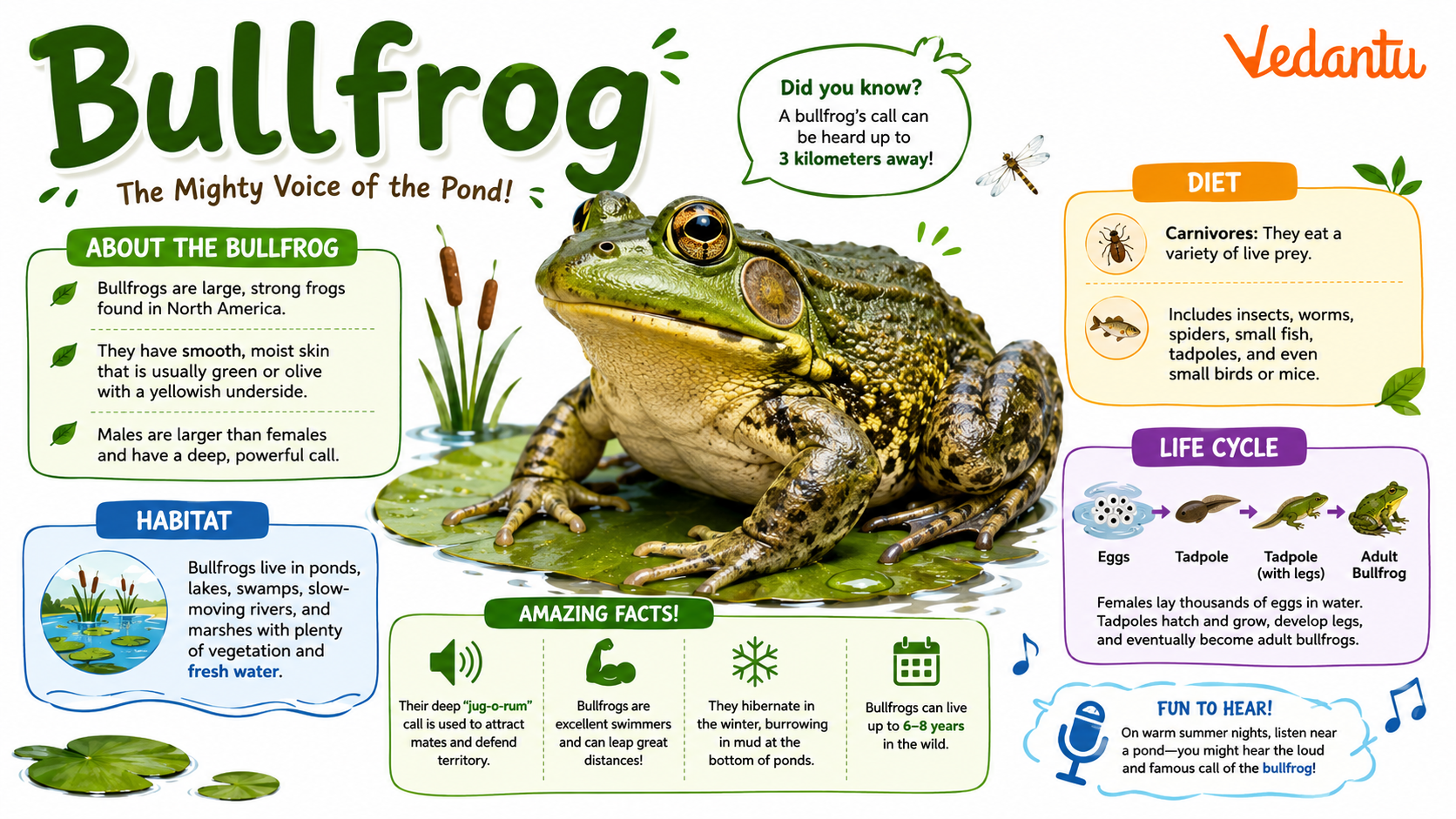
Quick Facts About Bullfrog
| Feature | Details |
|---|---|
| Common Name | Bullfrog |
| Scientific Name | Lithobates catesbeianus |
| Animal Group | Amphibian |
| Size | Up to 20 cm (8 inches) |
| Weight | Up to 500 grams |
| Lifespan | 7–10 years (wild) |
| Habitat | Ponds, lakes, swamps, wetlands |
| Diet | Carnivore (insects, fish, small animals) |
| Sound | Deep, loud croak |
Appearance and Physical Characteristics
- Large and heavy body compared to most frogs.
- Colour: Usually green or olive-brown with darker spots.
- Smooth, moist skin that helps in breathing.
- Long, powerful hind legs for strong jumps and swimming.
- Wide mouth to swallow large prey.
- Large eardrum (tympanum) visible behind the eyes.
Bullfrog Habitat and Distribution
The bullfrog habitat mainly includes freshwater areas. They love warm and calm water bodies.
- Ponds and lakes
- Swamps and marshes
- Slow-moving rivers
- Wetlands with plenty of plants
Bullfrog Diet and Feeding Habits
The bullfrog diet is carnivorous. They are skilled hunters and eat almost anything they can catch and swallow.
They use their sticky tongue to catch prey quickly and swallow it whole.
Behaviour and Lifestyle
- Nocturnal: Mostly active at night.
- Strong swimmers and excellent jumpers.
- Territorial males guard their area during breeding season.
- Cold-blooded: Body temperature changes with surroundings.
- Hide in mud during winter (hibernation).
Bullfrog Life Cycle
The bullfrog life cycle is a fascinating example of metamorphosis.
- Egg Stage: Female lays thousands of eggs in water.
- Tadpole Stage: Eggs hatch into tadpoles with tails and gills.
- Growing Tadpole: Develops legs and lungs over time.
- Adult Frog: Tail disappears, and it becomes a fully grown bullfrog.
What Makes Bullfrogs Special?
Sound or Call
Bullfrogs are famous for their loud croaking call.
- Sounds like a deep “jug-o-rum” noise.
- Mainly made by males.
- Used to attract females and warn other males.
- Heard mostly during breeding season.
Importance and Role in Nature
Amazing Bullfrog Facts
- Bullfrogs are one of the largest frogs in North America.
- They can stay underwater for long periods.
- Their eyes help them see in almost all directions.
- They shed and eat their own skin.
- They can leap great distances compared to their body size.
- Some bullfrogs have been introduced to new countries.
Interesting Facts About Bullfrog
Fun Facts for Kids
- A group of frogs is called an “army.”
- Bullfrogs love sunny spots near water.
- They blink to help push food down their throat.
- They are great jumpers in frog-jumping contests.
- Their croak can sound like a cow’s low call.
FAQs on Bullfrog: Complete Guide to Facts, Habitat, and Behavior
1. What is a bullfrog?
A bullfrog is a large amphibian known for its deep, loud croaking sound.
- It belongs to the frog family and is one of the biggest frogs in North America.
- The scientific name is Lithobates catesbeianus.
- It lives near ponds, lakes, and wetlands.
- It is famous for its strong legs and jumping ability.
2. Why is it called a bullfrog?
The bullfrog gets its name from its deep call that sounds like a cow or bull.
- Male bullfrogs make a loud “jug-o-rum” croak.
- The sound helps attract female frogs.
- The croak can be heard from far away near wetlands and ponds.
3. Where do bullfrogs live?
Bullfrogs live in freshwater habitats with plenty of water and plants.
- They are found in North America and other parts of the world.
- They prefer ponds, marshes, lakes, and slow-moving rivers.
- They stay close to water because their skin needs moisture.
4. What do bullfrogs eat?
Bullfrogs are carnivores and eat many small animals they can catch.
- They eat insects, spiders, and worms.
- Larger bullfrogs may eat fish, small birds, and even other frogs.
- They use their long, sticky tongue to catch prey quickly.
5. How big can a bullfrog get?
The American bullfrog is one of the largest frog species in North America.
- It can grow up to 8 inches (20 cm) long.
- It can weigh over 1 pound (0.5 kg).
- Females are usually bigger than males.
6. How do bullfrogs grow and change?
Bullfrogs go through a life cycle called metamorphosis.
- They start as eggs laid in water.
- Eggs hatch into tadpoles with tails and gills.
- Tadpoles slowly grow legs and lose their tails.
- They become adult frogs that breathe with lungs.
7. How long do bullfrogs live?
Bullfrogs can live several years in the wild if they stay safe from predators.
- In nature, they live about 7–9 years.
- In captivity, they may live up to 16 years.
- Their lifespan depends on habitat, food, and safety.
8. Are bullfrogs dangerous?
Bullfrogs are not dangerous to humans but can eat small animals.
- They do not attack people.
- They may carry bacteria like Salmonella, so washing hands is important.
- They are important predators in their ecosystem.
9. What are the predators of bullfrogs?
Bullfrogs have many natural predators in the wild.
- Snakes and large fish eat them.
- Birds like herons hunt bullfrogs.
- Humans also hunt them for frog legs.
10. Why are bullfrogs important to the ecosystem?
Bullfrogs play an important role in keeping nature balanced.
- They control insect populations.
- They are food for larger animals and birds.
- They help scientists study amphibians and wetland health.
