








Definition Types Units and Solved Examples of Measurement
You might have definitely heard the words - big, small, long, short etc. Do you know how we understand that a thing is long or short, big or small? For this calculation, we measure. Do you know what measurement is? It is nothing but a process of determining a number that represents the size or amount of something. Measurement plays a significant role in engineering, science, construction, other technical fields, and almost all other activities.
What is the Measurement?
Measurement is defined as the act of determining the size of an object i.e., its length, weight, capacity, or other aspects. It can be better understood as a process of defining physical items using numbers. Let’s understand with an example:
Measurement Example
Look at the 2 guitars below.

Different lengths of Guitars
Here, we can say that the left guitar is smaller than the right guitar.
Although we are comparing two guitars here, we still don’t know the individual measurement of the two guitars. Hence, the statement “Left guitar is smaller than the right guitar” is serving a very limited purpose.
But, if we say the length of the left guitar is one metre whereas the length of the second guitar is 2 metres, therefore the first guitar is bigger than the second guitar by 1 metre.
This reason is giving us a better conclusion mathematically as here we know the measurement of individual guitars and their difference.
Units of Measurement
The different units of measurement are:
Length
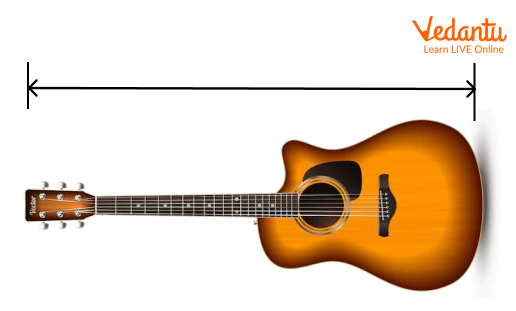
Length, also known as distance, measures the size of something from one end to the other.
Example of Length: The length of the guitar given here is one meter (slightly more than one yard).
Length
Area
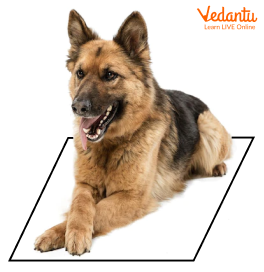
The area is the region occupied by a two-dimensional object such as a triangle, square, or circle, in a plane.
Example of Area: The dog is sitting inside one square meter tile.
Area
Volume
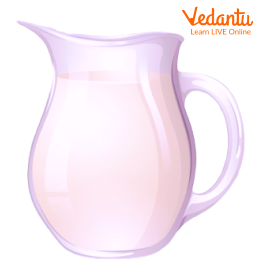
Volume, also known as capacity, is defined as the amount of space occupied by a three-dimensional object.
Volume
Here, the jug has exactly one litre or slightly more than 2 pints of water in it.
Mass (Weight)
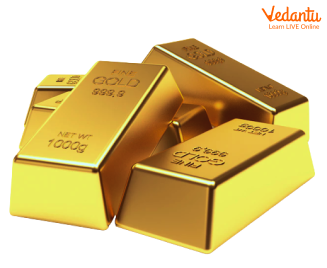
Mass is defined as the amount of matter in any solid object or any volume of a liquid or gas.
Example of Mass: Here, the mass of a bar of gold is one kilogram or slightly more than 2 pounds.
Mass (weight)
Temperature
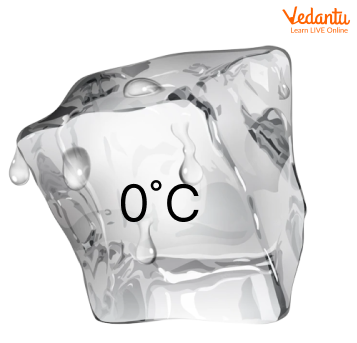
Temperature defines how cold or hot an object is. The temperature is generally measured using the thermometer on a Celsius or Fahrenheit scale.
Example of Temperature: The block of ice here measures 0⁰ Celsius or 32⁰ Fahrenheit.
Temperature
Time
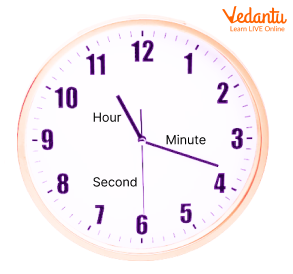
Time is defined as the ongoing sequence of events taking place. The time is measured in seconds, minutes, hours, days, weeks, months, and years.
Example of Time: Here, the clock is showing at half past 6, or it can also be said as 6 hours 30 minutes.
Time
System of Measurement
The two standard systems of measurement are:
Metric System
US Standard Units
Let’s briefly discuss the two measurements systems:
Metric System
The Metric System is the primary system of measurement. It is a measurement system that uses kilometres, litres, and milligrams to measure the length, volume, and weight of different objects. Also, the metric system is based on 10s. For example, a centigram is 10 times larger than the milligram and a litre is 10 times larger than the decilitre.
US Standard Units
The US standard unit is commonly used in the US. The different units of measurement in the US standard system include the following units:
Liquids: Fluid, Ounces, Cups, Pints, Quarts and Gallons
Mass: Pounds, Tons, and Ounces
Length: Feet, Inches, Miles, and Yards.
Temperature: Fahrenheit.
The US Standard Unit is also known as the United States Customary Units.
Conclusion
In short, measurement is all about finding a number that represents the size or amount of something. Also, it is important to learn about measurement because it enables us to quantify the world around us.
FAQs on Understanding Measurement in Mathematics
1. What is measurement in Maths?
Measurement in Maths is the process of comparing a physical quantity with a standard unit to determine its size, length, area, volume, mass, or time. It tells us how much of something there is using fixed units.
- Length is measured in metres (m), centimetres (cm).
- Mass is measured in kilograms (kg), grams (g).
- Time is measured in seconds (s), minutes, hours.
2. What are the basic types of measurement?
The basic types of measurement in Maths are length, mass, time, area, volume, and capacity. These describe different physical quantities.
- Length – distance between two points (metre).
- Mass – amount of matter (kilogram).
- Time – duration of events (second).
- Area – surface covered (square units).
- Volume – space occupied (cubic units).
- Capacity – liquid-holding ability (litre).
3. What is a standard unit of measurement?
A standard unit of measurement is a fixed, universally accepted quantity used to measure physical values. It ensures consistency and accuracy worldwide.
- Metre (m) for length
- Kilogram (kg) for mass
- Second (s) for time
4. What is the difference between area and volume?
Area measures the surface covered by a shape, while volume measures the space occupied by a 3D object. The key difference is in dimensions.
- Area is 2-dimensional and measured in square units (e.g., cm²).
- Volume is 3-dimensional and measured in cubic units (e.g., cm³).
5. How do you convert units in measurement?
Unit conversion in measurement is done by multiplying or dividing by powers of 10 within the metric system. The metric system follows a base-10 pattern.
- 1 metre = 100 centimetres
- 1 kilogram = 1000 grams
6. What tools are used for measurement?
Measurement tools are instruments used to measure different physical quantities accurately. Each tool corresponds to a specific type of measurement.
- Ruler or measuring tape – length
- Weighing scale – mass
- Clock or stopwatch – time
- Measuring cylinder – liquid volume
7. What is the formula for area and volume?
The formula for area and volume depends on the shape being measured. Common formulas include:
- Area of rectangle = length × breadth
- Area of square = side²
- Volume of cube = side³
- Volume of cuboid = length × breadth × height
8. Why is measurement important in daily life?
Measurement is important because it helps us quantify and compare physical quantities in real life. Without measurement, accurate construction, cooking, travel, and trade would not be possible.
- Buying goods by weight (kg)
- Measuring distance in kilometres
- Calculating time in hours and minutes
9. What is the metric system in measurement?
The metric system is a decimal-based system of measurement that uses units like metre, kilogram, and litre. It is based on multiples of 10, making conversions simple.
- 10 millimetres = 1 centimetre
- 100 centimetres = 1 metre
- 1000 metres = 1 kilometre
10. Can you give an example of measurement in Maths?
An example of measurement in Maths is finding the area of a rectangle with length 8 cm and breadth 5 cm. Using the formula:
- Area = length × breadth
- Area = 8 × 5 = 40 cm²
