









Definition formula proof and solved examples of Second Fundamental Theorem of Calculus
The Second Fundamental Theorem of Calculus is used to show the relationship that differentiation and integration operations in Mathematics are inverse of each other. The fundamental theorem of calculus has a rich history. However, the most important names associated with the theorem are Isaac Newton and Gottfried Leibniz. The notations used today are given by Gottfried Leibniz. We will discuss about the Second Fundamental Theorem of Calculus proof and Second Fundamental Theorem Of Calculus examples for better understanding and clarity of the topic.
History of Gottfried Leibniz

Gottfried Leibnitz
Name: Gottfried Leibniz
Born: 1 July 1646
Died: 14 November 1716
Field: Mathematics
Nationality: German
Statement of Second Fundamental Theorem of Calculus
According to the Second Fundamental Theorem of Calculus, the differentiation of an antiderivative function results in original functions.
Mathematically, consider a function $f(x)$ defined over limits
$\dfrac{d}{d x}\left[\int_{a}^{x} f(t) \cdot d t\right]=f(x)$
Second Fundamental Theorem of Calculus Proof
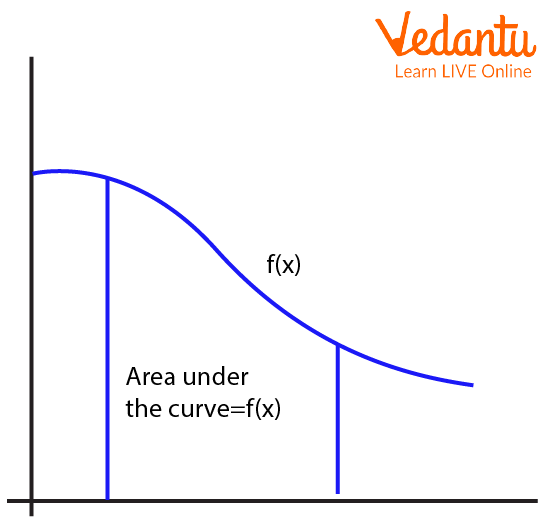
Proof of the Second Fundamental Theorem
The proof includes three steps.
Integrate the given function $f(t)$.
Apply the upper and lower bounds of integration.
Differentiate the obtained expression to finally get the initial function back.
$\dfrac{d}{d x}\left[\int_{a}^{x} f(t) \cdot d t\right]=\dfrac{d}{d x}[F(t)]_{a}^{x} \\$
$\Rightarrow \dfrac{d}{d x}[F(x)-F(a)]=f(x)$
The value of integration of $f(t)$ is $F(t)$.
Now, apply the upper bound limit of $x$ and the lower bound limit of $a$ for the function $F(x)$.
We will get,
$\Rightarrow F(x)-F(a)$ .
The derivation of $F(x)$ is equal to $f(x)$, which is the original function.
Hence the proof of the Second Fundamental Theorem of Calculus.
Limitations of the Second Fundamental Theorem of Calculus
The function being continuous is a vital condition. The theorem is not applicable in the case of non-continuous functions.
The second Fundamental Theorem of Calculus doesn't tell anything about antiderivatives as infinite antiderivatives are corresponding to different arbitrary constants.
Applications of the Second Fundamental Theorem of Calculus
The second Fundamental Theorem of Calculus is used to relate the fundamental elements of calculus, i.e., integration and differentiation.
It is used for some complex differentiation which will not be possible without using this theorem.
Second Fundamental Theorem of Calculus Examples
1. Find the differentiation of the anti-derivative of the function $\dfrac{1}{x}$ across the limits $x$ and $5$.
Ans: The given function is $f(x)=\dfrac{1}{x}$.
Let us find the antiderivative of this function across the limits from $x$ and $5$
$\int_{5}^{x} \dfrac{1}{x} \cdot d x=[\log x]_{5}^{x}$
$\Rightarrow \log x-\log 5$
Now, differentiating the obtained expression.
$\dfrac{d}{d x} \cdot(\log x-\log 5)=\dfrac{1}{x}-0$
$\Rightarrow \dfrac{1}{x}$
Using the second fundamental theorem of calculus,
$\Rightarrow \dfrac{d}{d x} \int_{5}^{x} \dfrac{1}{x}=\dfrac{1}{x}$
Therefore, the differentiation of the anti-derivative of the function $\dfrac{1}{x}$ is $\dfrac{1}{x}$.
2. Prove that the differentiation of the anti-derivative of the function cosx will give the same function.
Ans: The given function is $f(x)=\cos x$
The integration of $\cos x$ is equal to the function $\sin x$.
$\int \cos x \cdot d x=\sin x+C$
Now, differentiating $\sin x+C$,
$\Rightarrow \dfrac{d}{d x}(\sin x+C)=\cos x$
So,
$\Rightarrow \dfrac{d}{d x} \int \cos x d x=\cos x$
3. Find the value of the integral \[\int_{-1}^3\left(x^2-3\right) d x\] using the fundamental theorem of calculus.
Ans: Using FTC 2, \[\int_{a}^b f(x) d x=F(b)-F(a)\] where \[F(x)=\int f(x) d x\].
So, first, we will evaluate the indefinite integral \[\int\left(x^2-3\right) d x\].
\[\int\left(x^2-3\right) d x=\int\left(x^2\right) d x-\int 3 d x \]
\[=\dfrac{x^3}{3}-3 x+C \quad\left(\because \int x^n d x=\dfrac{x^{n+1}}{(n+1)}+C\right) \]
\[=F(x)\]
BY FTC 2,
\[\int_{-1}^3\left(x^2-3\right) d x=\dfrac{x^3}{3}-3 x+C \]
\[=\left[\dfrac{3^3}{3}-3(3)\right]-\left[\dfrac{(-1)^3}{3}-3(-1)\right] \]
\[=9-9+\dfrac{1}{3}-3 \]
\[=-\dfrac{8}{3}\]
Important Formulas to Remember
For a continuous function $f(x)$, we have $\dfrac{d}{d x}\left[\int_{a}^{x} f(t) \cdot d t\right]=f(x)$.
Important Points to Remember
Integration and differentiation are related to each other with the help of the Second Fundamental Theorem of Calculus.
There are a total of three fundamental theorems of calculus.
Conclusion
In the article, we have discussed the detailed proof of the Second Fundamental Theorem of Calculus and its applications. The theorem is quite fundamental in its sense and hence named so. The novel thing about the theorem is the way it connects two different fundamental tools with a relation. This theorem is the backbone of calculus.


FAQs on Second Fundamental Theorem of Calculus Explained with Formula and Proof
1. What is the Second Fundamental Theorem of Calculus?
The Second Fundamental Theorem of Calculus states that if F is an antiderivative of f on [a, b], then ∫ab f(x) dx = F(b) − F(a). This theorem connects definite integrals with antiderivatives.
- Find an antiderivative F(x) of f(x).
- Evaluate F at the upper limit b and lower limit a.
- Subtract: F(b) − F(a).
2. What is the formula for the Second Fundamental Theorem of Calculus?
The formula for the Second Fundamental Theorem of Calculus is ∫ab f(x) dx = F(b) − F(a), where F′(x) = f(x).
- F(x) is any antiderivative of f(x).
- a and b are the limits of integration.
- The result gives the exact area under the curve from a to b.
3. How do you use the Second Fundamental Theorem of Calculus to evaluate a definite integral?
To evaluate a definite integral using the Second Fundamental Theorem of Calculus, find an antiderivative and subtract its values at the limits.
- Step 1: Find F(x) such that F′(x) = f(x).
- Step 2: Compute F(b).
- Step 3: Compute F(a).
- Step 4: Subtract: F(b) − F(a).
4. Can you give an example of the Second Fundamental Theorem of Calculus?
Yes, for example, ∫02 3x² dx can be evaluated using the Second Fundamental Theorem of Calculus.
- Antiderivative of 3x² is x³.
- Evaluate at 2: 2³ = 8.
- Evaluate at 0: 0³ = 0.
- Subtract: 8 − 0 = 8.
5. What is the difference between the First and Second Fundamental Theorem of Calculus?
The First Theorem links differentiation and integration, while the Second Theorem provides a method to evaluate definite integrals using antiderivatives.
- First Fundamental Theorem: If F(x) = ∫ax f(t) dt, then F′(x) = f(x).
- Second Fundamental Theorem: ∫ab f(x) dx = F(b) − F(a).
6. Why is the Second Fundamental Theorem of Calculus important?
The Second Fundamental Theorem of Calculus is important because it makes definite integrals easy to compute using antiderivatives.
- It eliminates the need for Riemann sums.
- It connects differentiation and integration.
- It provides exact area values under curves.
7. Does the function need to be continuous for the Second Fundamental Theorem of Calculus?
Yes, the function f(x) must be continuous on [a, b] for the Second Fundamental Theorem of Calculus to apply directly.
- Continuity guarantees the existence of an antiderivative.
- If f has discontinuities, the theorem may not apply in its standard form.
8. What happens if you reverse the limits of integration?
If you reverse the limits of integration, the value of the definite integral changes sign.
- ∫ab f(x) dx = −∫ba f(x) dx.
- This follows directly from F(b) − F(a).
9. How does the Second Fundamental Theorem of Calculus relate to area under a curve?
The Second Fundamental Theorem of Calculus calculates the exact signed area under a curve between two points.
- The definite integral ∫ab f(x) dx represents area between the graph and x-axis.
- Positive values occur above the x-axis.
- Negative values occur below the x-axis.
10. What are common mistakes when using the Second Fundamental Theorem of Calculus?
Common mistakes include forgetting to evaluate both limits and mixing up the order of subtraction in F(b) − F(a).
- Not subtracting F(a) from F(b).
- Using an incorrect antiderivative.
- Ignoring reversed limits.
- Forgetting constants are not needed in definite integrals.
