








Free Printable Numbers 1 To 10 Worksheets For Tracing And Counting
Counting is a lot of fun. Numbers are a fundamental aspect of children's education, beginning with counting to five or ten and progressing through money, dates, and time. Counting up to ten is the most basic of all skills. Numbers printable ranging from 1 to 10 provide engaging activities that engage children while also reinforcing the number they are hearing or reciting.
Natural numbers can have features that are unique to them, or they might be part of a group of numbers (such as prime numbers) that share the same property. The most basic method of counting numbers from 1 to 10 is to count up louder and louder, then count down softer and quieter. There are a variety of games and activities where students count how much of anything is available in numbers from 1 to 10. Continue reading ahead to know what sort of printable number activities you can engage your child or students in.
Printable Numbers from 1 to 10 - How to Count Them?
We usually pick a number between 1 and 10. When we teach them this, we introduce them to a variety of digits as well as one number with two digits. When counting from 1 to 10, it is preferable to begin at 1 rather than 0. It's because when we say "10," the 0 will show.
Then we may add tracks to the mix. Songs have been shown to improve the memorisation process. It's because kids correlate the teachings with the words and tones when they sing. Furthermore, they are not aware that they are fully involved with the teachings since they recite the lessons while singing.
Don't forget to ask the kids to move their fingers after that. When they say "one," have them raise their pointer finger. This also aids memory since we engage in physical exercise.
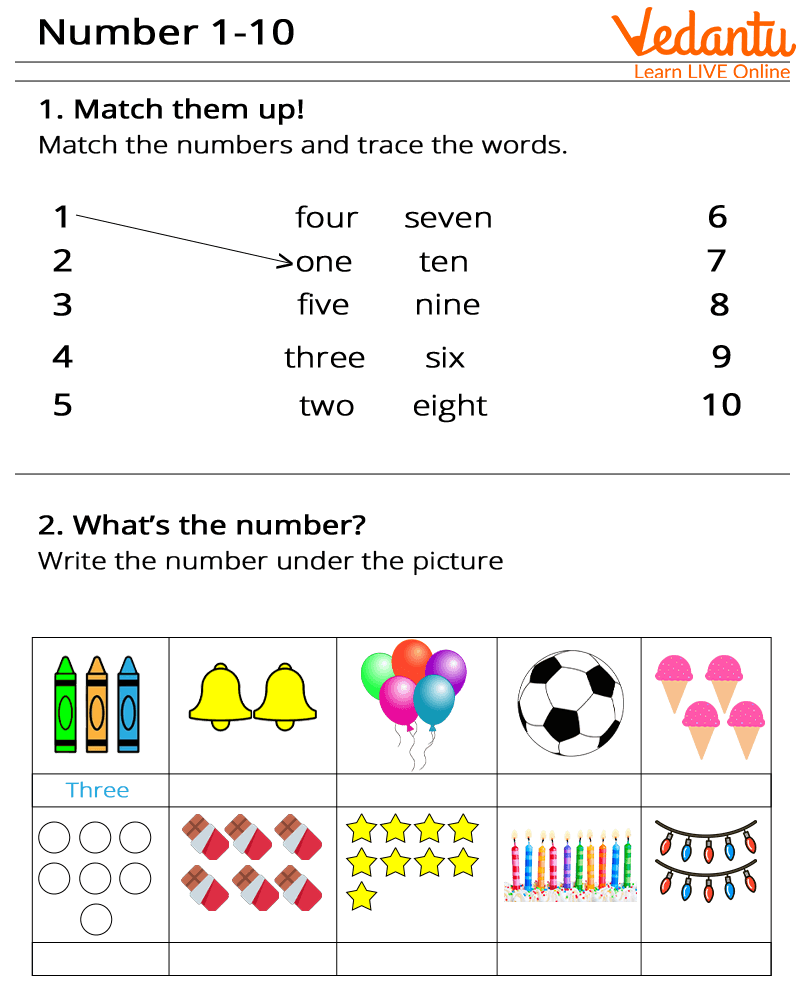
Worksheet for Numbers From 1 to 10
Printable Cards with Number
The five, ten, and twenty frame cards can be used in a variety of classes and activities. If you want them to be more vibrant, print them on coloured card stock paper. Reproduce numerous sets in different colours so that all of the yellow cards, all of the green cards, and so on go together. These cards might also be used in conjunction with the numerical and dot cards found lower down to have the young ones count and match them. These cards are all the same size, making it simple to utilise them together.
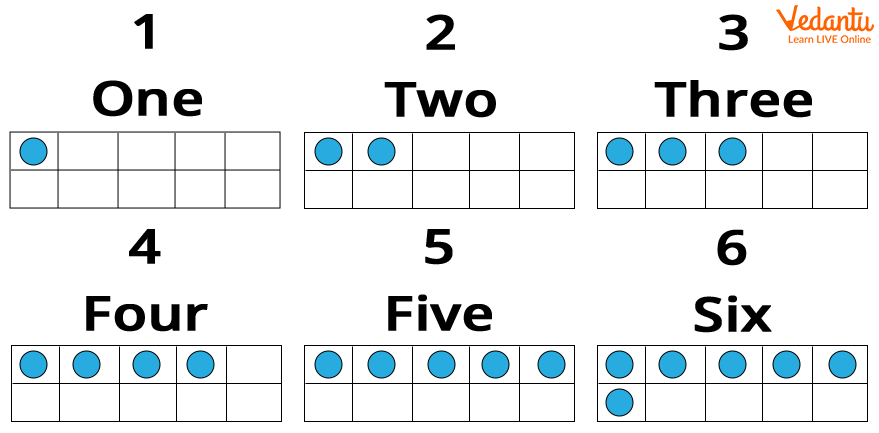
Printable Cards
Printable Number and Dot Cards
Number cards 1 to 30, number dice cards 1 to 12, and random number dot cards 1 to 12 are among the cards available. Since they are all the same size, they may be utilised together. If you want them to be more vibrant, print them on coloured card stock paper. Reproduce numerous sets in different colours so that all of the yellow cards, all of the green cards, and so on go together.
Here are a few examples of how you may make use of them:
Match the numerical cards to the 10 frame cards for the kids to do.
Match the numerical cards to the dotted dice cards with the youngsters.
Children should match the number cards to the dotted cards at random.
Match the dotted dice cards to the random dotted dice cards with the kids.
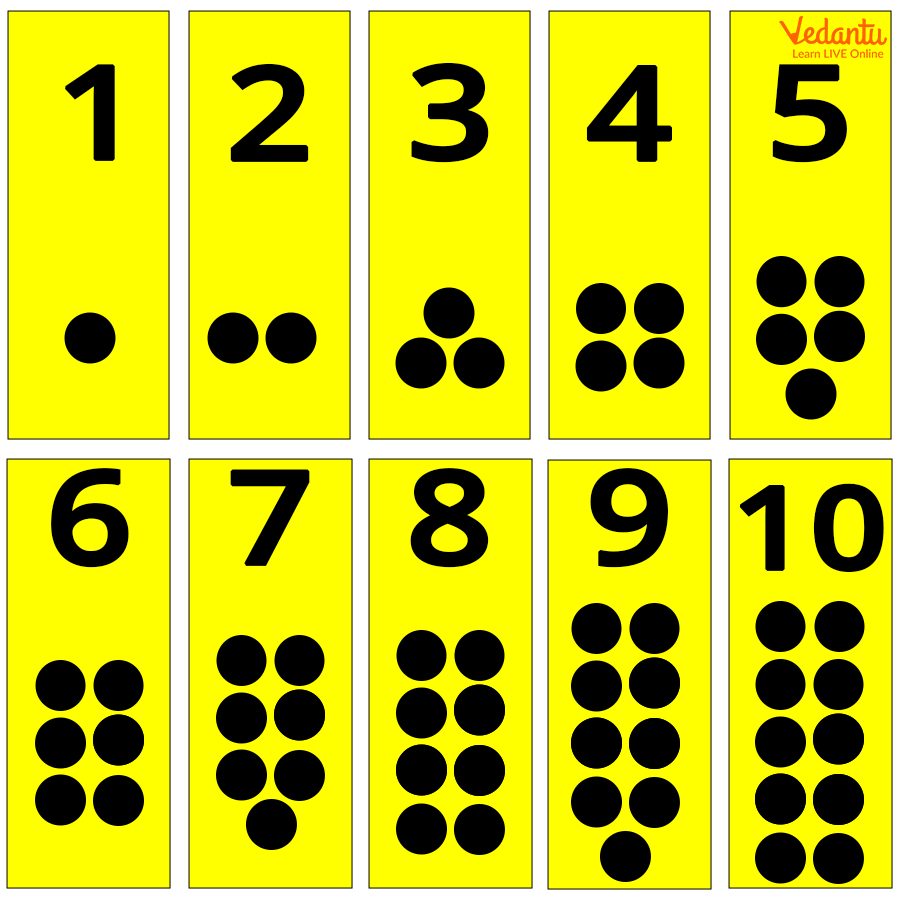
Printable Number and Dot Cards
Numbers on Brick Blocks
Children may practise numerical recognition and formation with the free Brick Block Number Cards. These cards are compact and can be placed in separate work boxes. You may also use them to make remote learning packages. You can also store them in a pencil box along with Legos and a dollar shop base plate.
Number Tiles to Print
There are several applications for the printable number tiles. Place them in the Writing or Maths Centre so that youngsters may attach them on paper. By laminating the tiles, you may use them as learning manipulatives during small group classes. The digits 0 to 30 are included in the big number tiles set. The digits 0 to 9 are included in the little number tiles collection. The reason this set ends at 9 is since if you go higher, you'll only end up with two number tiles.
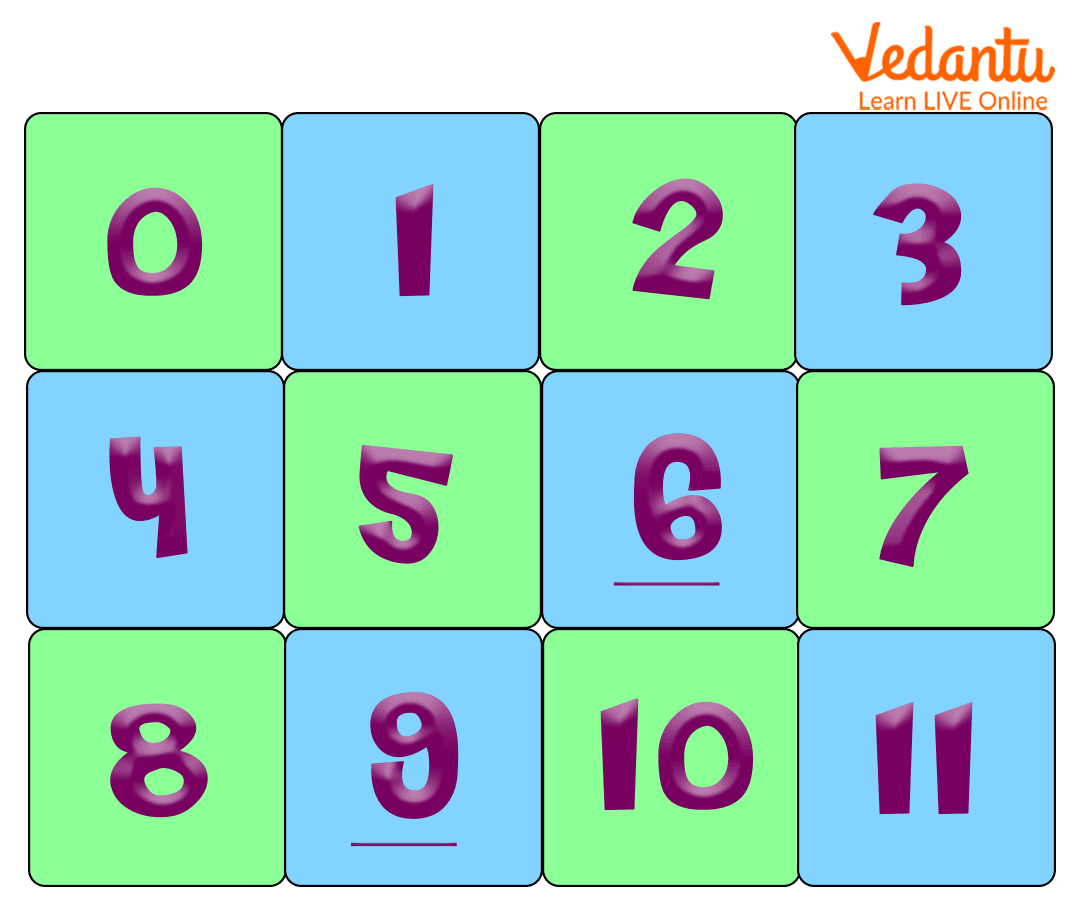
Number Tiles to Print
Conclusion
For a range of number activities, print these huge number sheets. These are perfect for making number books or as wall posters. Count out stickers, foam stickers, little paper shapes, pom poms, or other materials to the kids. However, you may use them with your preschoolers or kindergarteners for some exciting hands-on activities. These enormous printed numerals may be used for a variety of uses.
Use hands-on activities to teach your children their first numbers. They may use stickers to make a simple counting game. These printables might also be used as number colouring pages, with your children filling them in with markers or paint. Perhaps you can try to make some classroom wall posters. These huge printable numerals will be quite useful! They may also be used as play dough mats if they are laminated. Tracing and/or cutting out huge numbers can help children improve their fine motor skills.
FAQs on Printable Numbers 1 To 10 For Early Learning
1. What are printable numbers 1 to 10?
Printable numbers 1 to 10 are number templates from 1 through 10 that can be printed for learning and practice. These worksheets or charts help children recognize, trace, write, and count numbers in early Maths education. They often include:
- Large bold digits from 1 to 10
- Tracing outlines for handwriting practice
- Objects for counting (like 3 apples for number 3)
- Number names such as one, two, three
2. Why are printable numbers 1 to 10 important for preschoolers?
Printable numbers 1 to 10 are important because they build a child’s basic number recognition and counting foundation. Learning these first ten numbers helps children:
- Understand number order from 1 to 10
- Develop counting skills
- Improve handwriting through tracing
- Connect numbers with quantities
3. How do you teach counting from 1 to 10 using printable worksheets?
You can teach counting from 1 to 10 by combining number tracing, object counting, and number matching activities. Follow these steps:
- Step 1: Show the printed digit (for example, 5).
- Step 2: Ask the child to count 5 objects (like 5 stars).
- Step 3: Trace and write the number 5.
- Step 4: Say the number name aloud (“five”).
4. What is the correct order of numbers from 1 to 10?
The correct order of numbers from 1 to 10 is 1, 2, 3, 4, 5, 6, 7, 8, 9, 10. This sequence is called ascending order, meaning numbers increase from smallest to largest. In early Maths learning, children practice:
- Saying the numbers in order
- Writing them correctly
- Identifying missing numbers in the sequence
5. How do you write numbers 1 to 10 in words?
Numbers 1 to 10 in words are written as one, two, three, four, five, six, seven, eight, nine, ten. Matching digits with number names helps children improve spelling and number recognition. For example:
- 1 – one
- 5 – five
- 10 – ten
6. How can I help my child recognize numbers 1 to 10?
You can help your child recognize numbers 1 to 10 by using visual repetition and hands-on counting practice. Effective methods include:
- Displaying printable number charts from 1 to 10
- Playing number matching games
- Counting toys, fingers, or snacks
- Practicing daily number tracing
7. What are some fun activities for learning numbers 1 to 10?
Fun activities for learning numbers 1 to 10 include counting games, coloring sheets, and tracing worksheets. Popular activities are:
- Coloring the correct number of objects
- Connecting dots from 1 to 10
- Number puzzles and flashcards
- Singing counting songs
8. What is the difference between number recognition and counting 1 to 10?
The difference is that number recognition means identifying the symbol (like 7), while counting means determining quantity (like counting 7 objects). For example:
- If a child sees “8” and says “eight,” that is number recognition.
- If a child counts 8 blocks correctly, that is counting.
9. How do you practice tracing numbers 1 to 10?
You practice tracing numbers 1 to 10 by following dotted or outlined number shapes with a pencil or crayon. Follow these steps:
- Step 1: Start at the marked starting point.
- Step 2: Trace along the dotted lines carefully.
- Step 3: Repeat tracing 2–3 times.
- Step 4: Try writing the number independently.
10. What skills should a child learn after mastering numbers 1 to 10?
After mastering numbers 1 to 10, a child should begin learning addition, subtraction, and numbers beyond 10. The next skills typically include:
- Counting from 11 to 20
- Simple addition like 2 + 3 = 5
- Simple subtraction like 7 − 2 = 5
- Understanding greater than and less than
